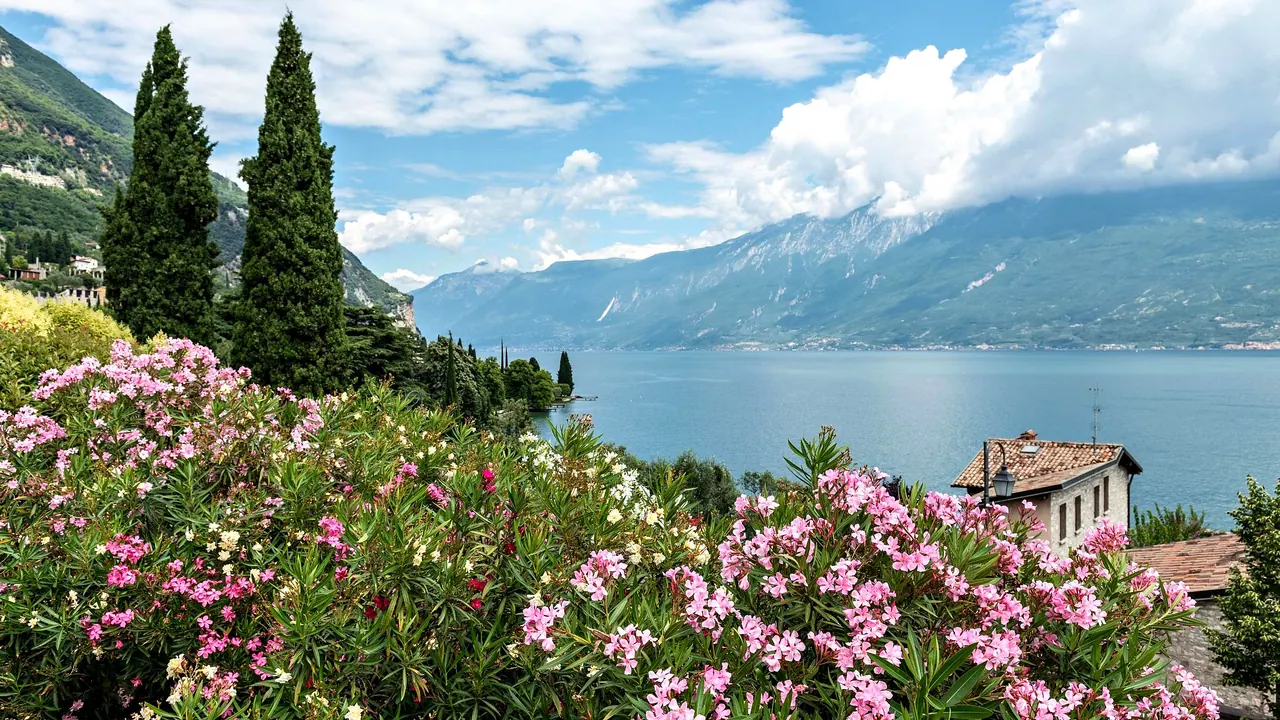
Photos: Lake Garda by Wolfgang Weiser, Pexels License.
Lake Garda or Umbria?
Our verdict in twelve categories, each scored against the same fixed benchmark cities, and the climate month by month, so you can choose for your trip.
Choose Lake Garda for
- beaches
- families
- nature and the outdoors
Lake Garda suits a summer vacation spent on and around the water. Its south and east shores have warm lake swimming from grassy lidos, the north end around Riva, Torbole and Arco is a serious base for climbing, biking and windsurfing, and the theme parks near Peschiera make it an easy choice with children. The trains from its southern towns also put Verona and Venice within a day. What it gives up is depth: its towns offer pleasant half-days of sightseeing rather than great art.
Choose Umbria for
- culture and sights
- prices
- food and drink
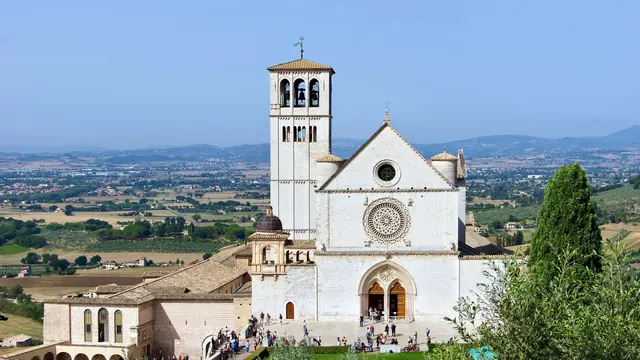
Travellers who come for frescoes, cathedrals and country cooking will be happier in Umbria. Assisi, Orvieto, Perugia and a string of smaller hill towns hold art of the first rank, and the food is built on truffle, Norcia pork and Sagrantino from the Montefalco hills. Farmhouse stays cost less than at the lake. There is no proper swimming beyond a pool or the murky shallows of Trasimeno, and the region is best seen by car.
Scoreboard
Twelve categories on one fixed scale from 0 to 100. The shaded stretch is the gap between the two.
Your match
Pick a travel style or drag the sliders, and both match scores follow your weighting.
Too close to call, 2 points apart
Wins on beaches and families with your weighting.
Wins on culture and sights and prices with your weighting.
What matters to you?
Category by category
What the scores mean for a trip.
Beaches & swimming
Lake Garda is a real swimming destination in summer. The water warms nicely in July and August, and the south and east shores offer pebble coves, the rock shelves at Sirmione and long lawned lidos at Lazise, Bardolino and Desenzano. Don't expect sand, though.
Umbria has no coast. Lake Trasimeno is warm and shallow enough for paddling, but its water is often cloudy, with reeds and soft mud in places. Most visitors swim in a farmhouse pool, and the sea is a long drive away.
Food & drink
Garda is at its best in the glass. Bardolino and pale Chiaretto come from the east shore, white Lugana from the south, and Valpolicella and Amarone from the hills just beyond. Lake fish such as perch, whitefish and trout plays a much bigger part on its menus than it does in Umbria. The harbour fronts of the busiest towns rely on pizza and set menus, though, so the better meals are up in the hill agriturismi.
Umbria eats better, even if the range is narrower and more rustic. Black truffle on handmade strangozzi, Norcia's pork butchery, Castelluccio lentils and Sagrantino tasted at Montefalco estates make food a reason in itself to go, and ordinary village trattorie cook it well. Seafood and international cooking are thin.
Culture & sights
This is Umbria's great advantage. Assisi's basilica with Giotto's frescoes, Orvieto's mosaic-fronted cathedral above its Etruscan tunnels and the Galleria Nazionale in Perugia are major sights, and Gubbio, Spoleto, Todi and Spello add a fresh medieval set piece each day.
Garda's heritage is pleasant but slighter: the moated castle and Roman villa ruins at Sirmione, d'Annunzio's eccentric Vittoriale at Gardone, and castles at Malcesine and Riva. Together they make a few good half-days.
Nightlife
Neither suits a night-owl, and evenings in both mean a long dinner and a stroll. Garda has the only clubs, around Desenzano, which fill on summer weekends alongside its lakefront bars. Umbria's version is Perugia, where students crowd the cathedral steps and wine bars all year, though no clubs.
Nature & outdoors
Garda is the more dramatic outdoor base. Its northern end is a mountain-walled fjord where the Monte Baldo cable car climbs from Malcesine, Arco's limestone draws climbers and the reliable afternoon wind makes Torbole a classic for windsurfing and kitesurfing.
Umbria's countryside is gentler and more spread out, with olive groves and oak woods until the Monti Sibillini in the east. It has highlights such as the June flowering on the Castelluccio plain, rafting in the Valnerina and the Marmore Falls, but they need a car to string together.
Day trips
Both make excellent bases, but for different outings. From Garda's southern shore, trains reach large cities: Verona in under an hour, then Vicenza, Padua and Venice along the same line, with Mantua by road.
Umbria's day trips are small towns by car, with Gubbio, Todi, Bevagna and Norcia within easy reach. Cortona and Montepulciano are just over the Tuscan border, and Rome is a train ride from Orvieto.
Good for families
Garda is one of Italy's main family destinations, and Umbria is not. The south-east shore has Gardaland and its aquarium, water parks and the Parco Natura Viva safari park, plus large campsites with pools and entertainment. Shallow pebble shores and ferry rides add easy days, and older children can try biking or windsurfing in the north.
Umbria works for a quiet farmhouse stay with a pool and animals, with Trasimeno's shallows and the Marmore Falls as outings. Beyond that the main sights are churches and steep, cobbled towns.
Getting around
Umbria is the easier region to tour. Its roads are good and quiet, distances are short, and you leave the car below the hill towns and ride up by escalator or funicular. A regional line also links Perugia, Assisi, Spello and Spoleto.
Garda is easy if you stay in one town and use the ferries. Touring the whole lake is slow: the shore roads are narrow and tunnelled, they jam in summer, and parking in the popular towns is scarce.
Shopping & style
Neither is a shopping destination, but Umbria has more distinctive things to buy. There is painted majolica from Deruta's workshops, hand-loomed linen in Montefalco and Bevagna, cashmere outlets near Perugia, and hams and truffles in Norcia.
Garda's shopping is mostly weekly markets along the lakefronts, plus olive oil, Lugana wine, Limone's lemon products and outdoor gear in Riva and Arco. Anything more serious means a trip to Verona.
Affordability
Umbria is the better value. Its farmhouse stays and small hotels cost less than those across the Tuscan border, many sights are churches that cost little or nothing, and set lunches and local wine are cheap. A hire car and truffle dishes are the main extra costs.
Garda's lakefront hotels in Sirmione, Malcesine and Limone charge high-season prices, and theme parks and ferries add up for families. Campsites and hill agriturismi soften the bill.
Live music & performing arts
Two summer festivals of its own give Umbria the stronger stage, while Garda's best evening of music lies outside the region. At the lake there are concerts and shows in the Vittoriale's open-air amphitheatre at Gardone and band nights in the town squares, and many visitors drive under an hour to the opera festival in Verona's Roman arena.
In Umbria, Umbria Jazz takes over Perugia in July, with big names in the arena and free bands in the old centre's streets. From late June, Spoleto's Festival dei Due Mondi brings opera, dance and theatre to its Roman theatre and opera house. Outside summer the stages there are mostly quiet, though Perugia and Spoleto keep theatre seasons.
Wellness & relaxation
Garda has the real spa tradition. Sirmione's warm sulphur springs feed thermal pools overlooking the lake, a historic villa park near Lazise has open-air thermal pools among old trees, and Gardone and Salò have hotel spas.
Umbria relaxes you through its slow pace rather than its waters: long lunches, farmhouse pools with massage or yoga, and the silence of Assisi and the hermitages on Monte Subasio. Its spa towns such as Nocera Umbra are modest.
When should you go?
Pick your month. The climate figures are measured averages, not a forecast.
Lake Garda in July
Umbria in July
Daytime high, °C
Rainfall in the month, mm
Where the figures come from
Lake Garda's sunshine is measured 28 km from the centre, at Verona / Villafranca.
Umbria's temperatures are measured 53 km from the centre, at Frontone.
Umbria has no rain gauge within 25 km of the centre, so its rainfall comes from a gridded climate dataset read at the destination rather than from a gauge further away.
Temperature and rainfall are climate normals, averaged over the years shown. Lake Garda: 2005-2025 (sunshine 1991-2020, rainfall 1991-2020) normals, Verona / Rivoltella (1.6 km from centre). Umbria: 1991-2020 normals, Frontone (52.9 km from centre).
Around Lake Garda's southern shore, where its climate is measured, the swimming season runs from June into early September, with July highs near 29°C and the sunniest weeks of the year. Rain is spread through the seasons, heavier in late spring and at its wettest in November at 121mm. Spring and early autumn are mild and suit hiking and climbing in the north, while winter is grey and quiet.
Umbria's hill country gets a little hotter at the peak of summer, around 30°C in July, and much drier, with only 32mm that month. Steep towns can be tiring at midday in July and August. May, June and September are the best months for walking the hill towns. Rain returns in earnest from September, and winters are slightly colder than at the lake, with January highs of about 7°C.
Which traveller are you?
For a beach and sun trip, Lake Garda wins easily. Warm summer water, lidos with lawns and jetties at Sirmione, Lazise and Bardolino, and long sunny days make swimming the centre of a stay. Landlocked Umbria offers farmhouse pools and reedy Trasimeno.
On a culture and arts trip, Umbria is the better choice. Giotto's frescoes in Assisi, Orvieto's cathedral and Signorelli's Last Judgement, and Perugino in Perugia sit in hill towns that each reward a full day. Garda's castles and Roman villa fill only half-days.
On a family trip with children, Lake Garda has far more to offer. Gardaland, Parco Natura Viva, and campsites with pools and children's clubs line the south-east shore, and ferries make easy outings. Umbria's steep, cobbled towns are hard work with pushchairs.
Before you go
| Measure | Lake Garda | Umbria |
|---|---|---|
| Official language | Italian | Italian |
| Currency | Euro (EUR) | Euro (EUR) |
| Sockets | CFL230 V, 50 Hz | CFL230 V, 50 Hz |
| Driving side | Right | Right |
| Time zone | UTC+1, UTC+2 in summer | UTC+1, UTC+2 in summer |
| Emergency number | 112 | 112 |
| Main airport | Verona Villafranca Valerio Catullo Airport (VRN)96 non-stop destinations | Perugia San Francesco d'Assisi – Umbria International Airport (PEG)17 non-stop destinations |
| Public holidays this year | 13 days | 13 days |
By the numbers
| Measure | Lake Garda | Umbria |
|---|---|---|
| Population | - | 852,085 |
| People per km² | - | 101 |
Where else could you go?
Every comparison below shares a destination with this one, so you can follow Lake Garda or Umbria somewhere new.
- Lake Comovs Lake Garda
- Tuscanyvs Umbria
- Cinque Terrevs Lake Garda
- Dolomitesvs Lake Garda
- Tuscanyvs Lake Garda
- Austrian Alpsvs Lake Garda