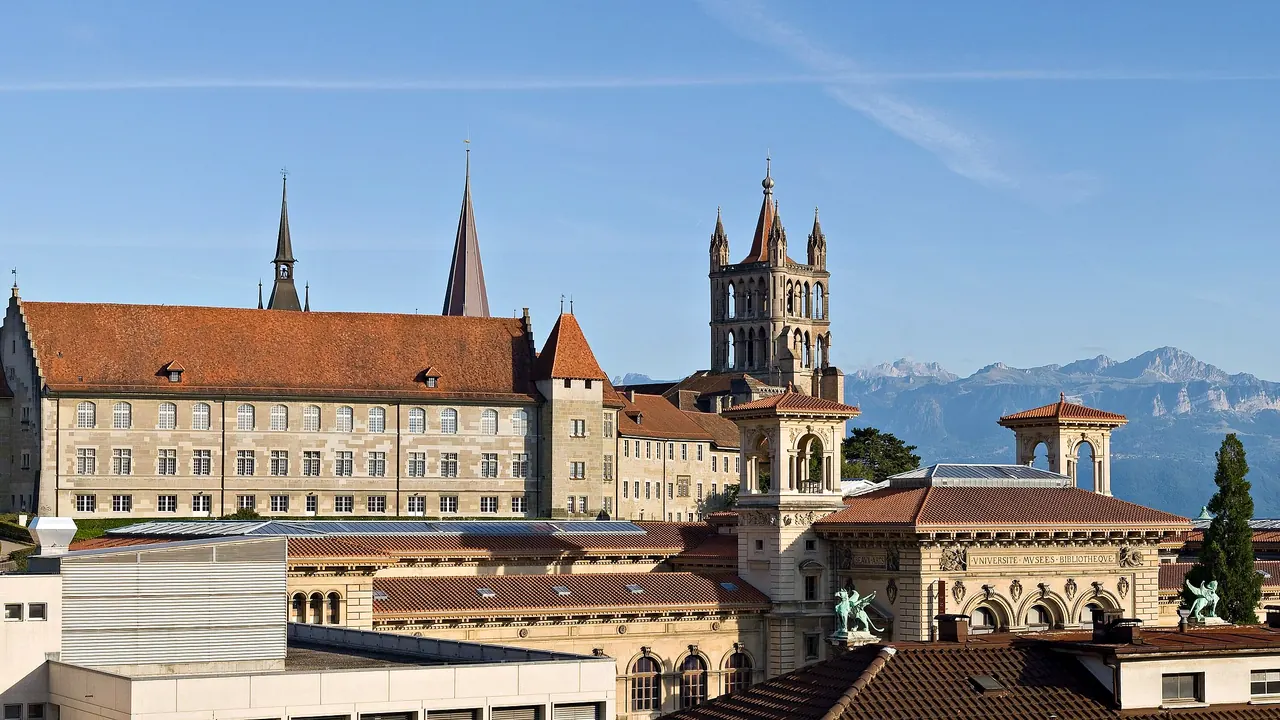
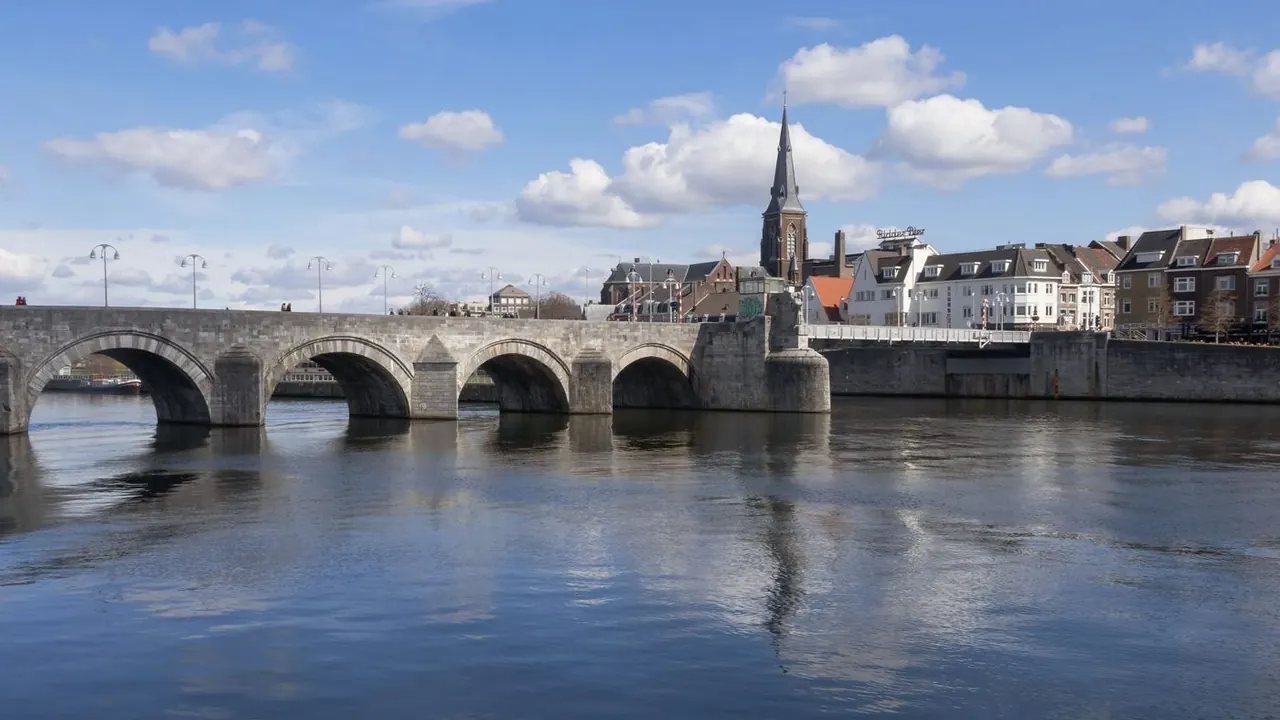
Photos: Lausanne by Christian Mehlführer, CC BY-SA 3.0, cropped; Maastricht by Michielverbeek, CC BY-SA 4.0, cropped.
Lausanne or Maastricht?
Our verdict in twelve categories, each scored against the same fixed benchmark cities, and the climate month by month, so you can choose for your trip.
Choose Lausanne for
- beaches
- nature and the outdoors
- live music and the arts
Lausanne suits travellers who want mountains and water close at hand. The Lavaux vineyard terraces start at the edge of town, the Alps rise across the lake, summer afternoons can be spent swimming at Bellerive, and trains reach the Vaud Alps and the Jura within the hour. It also has the stronger stage and more for children. The catch is cost, because almost everything is expensive.
Choose Maastricht for
- prices
- shopping
- culture and sights
Maastricht is the better pick for an unhurried city weekend of browsing, eating and strolling, and the bill is noticeably lighter. The boutiques in the Stokstraat quarter and the independent shops in Wyck do far more for shoppers than anything in Lausanne. The flat, cobbled centre is easy to walk from end to end, and Aachen, Liège and Tongeren are each a short trip across a border.
Scoreboard
Twelve categories on one fixed scale from 0 to 100. The shaded stretch is the gap between the two.
Your match
Pick a travel style or drag the sliders, and both match scores follow your weighting.
Wins on beaches and nature and the outdoors with your weighting.
Wins on prices and shopping with your weighting.
What matters to you?
Category by category
What the scores mean for a trip.
Beaches & swimming
Neither city is on the coast, but only Lausanne makes swimming a real part of a summer stay. From late June to early September Lake Geneva is warm enough to swim from the lawns and shingle at Vidy and Bellerive. The old lido at Bellerive makes an afternoon of it, with the Alps across the water.
In Maastricht the only option is the old gravel-pit lakes along the Maas. They have small sandy shores and lifeguards, and they are fine on a hot day but no reason to go. If you want to swim there, a hotel with a pool is the practical answer.
Food & drink
The two eat at a similar level. Both lean on regional cooking and have a fine-dining tier that is strong for a city their size. What differs is what is on the plate and in the glass. Lausanne means lake perch, papet vaudois and winter fondue, with Chasselas tasted straight from the growers in the Lavaux caveaux.
Maastricht's cooking is heartier, with zuurvlees, slices of vlaai and Belgian beer, and its terraces on the Vrijthof and the Markt make eating out more of a social occasion. Neither has much street food, but a cheap meal is easier to find in Maastricht.
Culture & sights
Each rewards about two days, but the interest lies in different places. Lausanne's old town is small and steep, crowned by the Gothic cathedral where a night watchman still calls the hours. Most of its weight is in museums: the Olympic Museum at Ouchy, the Plateforme 10 complex by the station and the unusual Collection de l'Art Brut.
Maastricht is more about age and streetscape. It has two Romanesque basilicas, the Helpoort and the medieval walls along the Jeker, a bridge over the Maas that dates from the 13th century, and guided tours through the tunnels in the Sint-Pietersberg. The Bonnefanten is its one major museum.
Nightlife
Neither is a party city, and both depend heavily on students. Lausanne has the clubs. Late bars and dance floors fill the old warehouses of the Flon at weekends, and on summer evenings people gather along the waterfront at Ouchy, though drinks are expensive.
Maastricht is a café town, with Belgian beer in the brown cafés around the Markt and the Vrijthof and very little clubbing. Carnival is the exception, when the whole city turns into a street party for days.
Nature & outdoors
Here Lausanne is in a different league. The French Alps rise straight out of the lake opposite the city, the Lavaux terraces make one of the finest walks in Switzerland, and within an hour you can be hiking or skiing at Les Diablerets, at Glacier 3000 or on the ridges of the Jura.
Maastricht has the surprising hills of South Limburg: marl cliffs on the Sint-Pietersberg, sunken lanes in the Heuvelland that road cyclists love, and heath in the Hoge Kempen park. It is pretty, pastoral country for gentle walks and rides rather than mountain scenery.
Day trips
Both make excellent bases, but Lausanne comes out ahead thanks to the Swiss trains. Montreux and Chillon are about twenty minutes away, Geneva, Bern, Fribourg and Gruyères are easy days out, and boats cross the lake to Évian, almost all of it without a car.
Maastricht's strength is the range of countries. Aachen and Liège are about half an hour away, Tongeren and Valkenburg are closer still, and Cologne and Brussels are within reach for a longer day. Lausanne has more of the big-name sights close by, while from Maastricht you can visit three countries in one week.
Good for families
Lausanne has more for children within the city itself. There is the hands-on Olympic Museum, the aquarium-vivarium, the animal park and pedal boats at Sauvabelin, the lakeside pools in summer and trips on the paddle steamers. The downsides are steep streets and costly family meals.
Maastricht is flat and easy with a buggy, but in town there is little for children beyond the tunnel tours. The caves, cable car and fairy-tale park are about twenty minutes away at Valkenburg.
Getting around
In both, the main sights are within easy reach and you need no car, but getting about feels very different. Lausanne is built on steep levels: the m2 metro climbs more than 300m from the lake to the upper town, stairs and lifts connect the layers, and the main station puts the whole Swiss rail network within reach.
Maastricht is flat and made for walking, with most things about fifteen minutes apart on either bank. Bikes are how the locals get around, and only the countryside villages really call for a bike or a car.
Shopping & style
Maastricht is the better place to shop, and people cross borders to do it. The old houses of the Stokstraat quarter hold fashion and designer boutiques, the Grote Staat covers the high-street brands, and Wyck adds independent shops for interiors, vintage and food.
Lausanne's Rue de Bourg has watchmakers, jewellers and chocolatiers. Beyond Swiss specialities and a bottle of Lavaux wine, though, the range is thin.
Affordability
Neither is cheap, but Maastricht costs far less. Prices there are at the Dutch norm, lower than in the Dutch capital, the walkable centre saves on transport, and staying from Sunday to Thursday helps further.
Lausanne is expensive in every respect, from hotels and wine to taxis and a simple lunch. Travellers watching their money there live on bakery picnics and the free lakeside promenades.
Live music & performing arts
Lausanne has a far more serious stage than its size suggests, and dance leads it. It is home to the Béjart Ballet Lausanne and the Prix de Lausanne, the Théâtre de Vidy stages contemporary work that tours Europe, and there is a full opera season and a respected chamber orchestra. The Montreux Jazz Festival in July is a short train ride away.
In Maastricht most performances take place at the theatre on the Vrijthof, alongside organ concerts in the churches and the big open-air summer concerts on the square. It is solid, but rarely a reason to travel.
Wellness & relaxation
The two offer roughly the same amount of rest, but of different kinds. Lausanne's calm comes from the lake and the grand hotels, whose spas are large and polished. For thermal water, Yverdon-les-Bains is under half an hour by train and Lavey-les-Bains, with Switzerland's hottest springs, under an hour.
Maastricht has more spa history close at hand: the thermal baths above Valkenburg, Aachen with its Roman past and the Belgian town of Spa itself. Its flat, slow-paced centre also makes it easier to unwind in town than in Lausanne's steep streets.
When should you go?
Pick your month. The climate figures are measured averages, not a forecast.
Lausanne in July
Maastricht in July
Daytime high, °C
Rainfall in the month, mm
Where the figures come from
Lausanne's temperatures are measured 40 km from the centre, at Payerne.
Lausanne has no rain gauge within 25 km of the centre, so its rainfall comes from a gridded climate dataset read at the city rather than from a gauge further away.
Temperature and rainfall are climate normals, averaged over the years shown. Lausanne: 1991-2020 (sunshine 1961-1990) normals, Payerne (39.7 km from centre). Maastricht: 1991-2020 normals, Maastricht Airport Zuid Limburg (10 km from centre).
Both cities are at their best from May to September, but their summers feel different. Lausanne gets warmer, reaching about 26°C in July, and is clearly sunnier, which suits swimming in the lake from late June into early September. It is also the wetter of the two, with more than 100mm in every month from May to September. Maastricht peaks at around 24°C, which is comfortable for walking all day, and gets less rain. April is its driest month, so spring and early autumn are good for the hills around it.
Winters are grey in both. Lausanne is a little colder, at around 4°C in December and January, and gets very little sun in town, although skiers can often find sunshine in the mountains above the fog. Maastricht stays slightly milder and drier, so a winter city break of museums and cafés is more comfortable there.
Which traveller are you?
On an outdoors trip, Lausanne is the clear choice. The Lavaux vineyard paths begin just east of town, the Vaud Alps and the Jura are about an hour away for hiking or skiing, and the lake is good for sailing and paddleboarding.
For a trip on a tight budget, Maastricht is far kinder. Hotels, meals and terrace drinks cost about the Dutch norm, and getting around the walkable centre costs nothing. In Lausanne even a simple lunch adds up, so supermarket picnics become a necessity.
On a shopping trip, Maastricht wins easily. The restored Stokstraat quarter is lined with fashion boutiques, Wyck adds independent shops for interiors and vintage, and Dutch, Belgian and German visitors come for whole weekends of it. In Lausanne the best buys are chocolate, watches and wine.
Before you go
| Measure | Lausanne | Maastricht |
|---|---|---|
| Official language | French, German, Italian, Romansh | Dutch |
| Currency | Swiss Franc (CHF) | Euro (EUR) |
| Sockets | CJ230 V, 50 Hz | CF230 V, 50 Hz |
| Driving side | Right | Right |
| Time zone | UTC+1, UTC+2 in summer | UTC+1, UTC+2 in summer |
| Emergency number | 112 | 112 |
| Elevation | 495 m | 49 m |
| Main airport | Geneva International Airport (GVA)52 km from centre150 non-stop destinations | Maastricht Aachen Airport (MST)9 km from centre5 non-stop destinations |
| Public holidays this year | 9 days | 11 days |
By the numbers
| Measure | Lausanne | Maastricht |
|---|---|---|
| City population | 144,873 | 120,227 |
| People per km² | 3,499 | 2,000 |
| Museums within 10 km | 31 | 21 |
| UNESCO World Heritage sites within 50 km | 3 | 6 |
Where else could you go?
Every comparison below shares a destination with this one, so you can follow Lausanne or Maastricht somewhere new.
- Genevavs Lausanne
- Chamonixvs Lausanne
- Bernvs Lausanne
- Annecyvs Lausanne
- Dusseldorfvs Maastricht
- Colognevs Maastricht