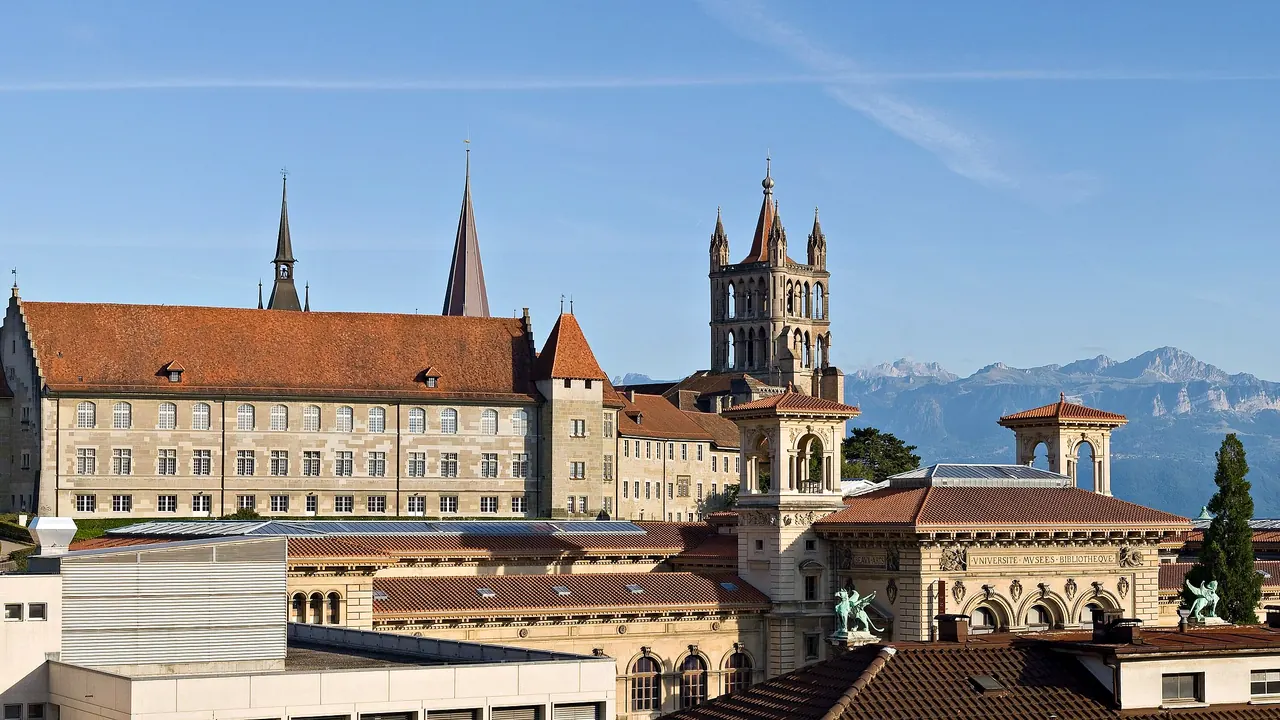
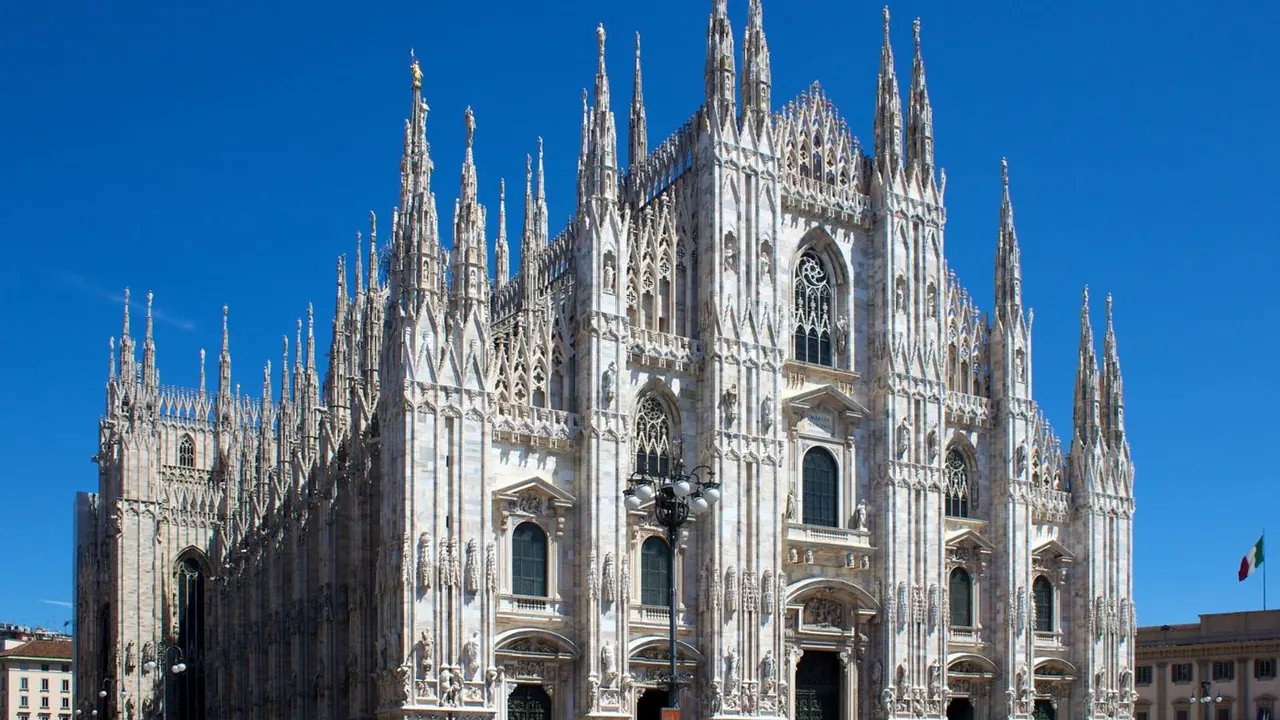
Photos: Lausanne by Christian Mehlführer, CC BY-SA 3.0, cropped; Milan by Jiuguang Wang, CC BY-SA 3.0, cropped.
Lausanne or Milan?
Our verdict in twelve categories, each scored against the same fixed benchmark cities, and the climate month by month, so you can choose for your trip.
Choose Lausanne for
- beaches
- nature and the outdoors
- families
Lausanne suits travellers who want the landscape to be the point of the trip. The Alps rise across the lake, the Lavaux vineyard terraces start at the edge of town, and the trains reach mountain resorts, castles and cheese villages with no car. It is calmer, greener and easier with children, though it is one of the costliest places in Europe to spend a few days.
Choose Milan for
- shopping
- prices
- nightlife
Choose Milan if you want a big city at full stretch: the Last Supper and the Duomo roof, an opera night at La Scala, aperitivo along the Navigli and the fashion houses of the Quadrilatero. Fast trains to Verona, Bergamo, Turin and Lake Como add to all that, and it costs noticeably less than Lausanne, although Milan is not cheap either.
Scoreboard
Twelve categories on one fixed scale from 0 to 100. The shaded stretch is the gap between the two.
Your match
Pick a travel style or drag the sliders, and both match scores follow your weighting.
Wins on beaches and nature and the outdoors with your weighting.
Wins on shopping and prices with your weighting.
What matters to you?
Category by category
What the scores mean for a trip.
Beaches & swimming
Neither city has a beach, but Lausanne puts swimming right on its doorstep. From late June to early September you can walk down to the lawns and shingle at Vidy or the old lido at Bellerive and get into Lake Geneva after an afternoon of sightseeing.
In Milan, swimming in town means public pools or the Idroscalo basin out by Linate. Lake Como or Lake Maggiore means a train ride of about an hour, so it becomes a planned day out rather than something you do on a whim.
Food & drink
Milan is much the stronger city to eat in. Saffron risotto, ossobuco and cotoletta sit alongside excellent Neapolitan pizza and Sicilian pastry from cooks who came from all over Italy, and the evening aperitivo with its plates of snacks is a meal in its own right.
Lausanne's real strength is wine. Chasselas poured by the growers in Lavaux caveaux goes well with lake perch or papet vaudois, and the area has a few celebrated top tables. Between those and the expensive restaurants, though, the choice is fairly plain.
Culture & sights
Milan has the weightier sights. Leonardo's Last Supper, the marble spires of the Duomo roof, the paintings at Brera and Michelangelo's Rondanini Pietà in the Castello are each worth the trip on their own, even if they sit in clusters within a largely modern city.
Lausanne offers a smaller, gentler set: the Gothic cathedral, where a night watchman still calls the hours, steep lanes in the old town, the Olympic Museum at Ouchy and the strange, memorable Collection de l'Art Brut. Two or three days are enough to see it all.
Nightlife
Milan gives you more evenings to choose from. An evening starts with aperitivo on the Navigli towpaths, then moves on to Brera's smarter bars, the relaxed streets of Isola, the gay scene around Porta Venezia or the dress-to-impress clubs near Corso Como.
Lausanne's nightlife gathers almost entirely in the Flon, where students from the university and EPFL fill clubs in old warehouses on Friday and Saturday nights. Most weeknights are quiet.
Nature & outdoors
Lausanne lets you be outdoors without leaving town. A walk uphill takes you into the Sauvabelin forest, the lake is there for sailing or rowing from spring to autumn, and the vineyard paths through the Lavaux terraces start at Lutry, with the French Alps facing you across the water the whole way. Within an hour by train you can reach ski slopes in the Vaud Alps or the cross-country trails of the Jura.
In Milan, the countryside in town amounts to a few parks and level bike rides along the canal towpaths out to the rice fields. Scenery to match Lausanne's begins about an hour north, among the wooded shores of Lake Como and Lake Maggiore and the Grigne ridges above Lecco, which have via ferrata as well as hiking. Skiing there takes a whole day. In Milan the landscape is a trip in itself, while in Lausanne it is part of the view from the street.
Day trips
Both cities make outstanding bases, but Milan's high-speed lines give it the wider reach. Verona's arena, Turin's palaces and Bologna are each about an hour away, with Bergamo's upper town, Bellagio on Lake Como, the Certosa di Pavia, Mantua and Parma all close by.
Lausanne's trips are smaller in scale but just as easy without a car: Chillon castle on its rock, the cheese dairies of Gruyères, Bern's arcades, Geneva, and boats across to Évian.
Good for families
Lausanne is the easier choice with children. The hands-on Olympic Museum, the freshwater aquarium-vivarium, the animal park, pedal boats and lookout tower at Sauvabelin and the paddle steamers on the lake give a family plenty to do. The steep streets are the main hardship, especially with a pushchair.
Milan's flat centre is easier on small legs, and its science museum, with a real submarine, is a fine rainy-day outing. Beyond that, the best things for older children are the theme parks outside the city, and the summer heat wears families down.
Getting around
Both cities are easy to get around without a car, but the problem each one solves is different. Lausanne is built on a steep slope, and the m2 metro does the climbing, rising more than 300m from the lakeshore to the upper town, with stairways and lifts in between.
Milan is flat and spreads wider, served by five colour-coded metro lines and a dense tram network that is pleasant to ride. The main drawbacks are hot platforms in summer and the long transfer from Malpensa.
Shopping & style
This is where the two differ most. Milan is a world fashion capital, with the great Italian houses' flagships in the Quadrilatero, historic shops under the Galleria's glass roof, La Rinascente, design showrooms and antique markets along the Navigli.
In Lausanne, Rue de Bourg and the streets around Saint-François are fine for a Swiss watch, a box of chocolates or a bottle of Lavaux wine. Beyond that the range is narrow.
Affordability
Neither is a cheap city, but Lausanne costs a good deal more. Swiss prices for hotels, meals and wine mean that visitors on a budget picnic from supermarkets and save restaurants for special occasions.
Milan gives you more ways to cut costs. Aperitivo snacks can stand in for supper, office-worker set lunches are good value and transport is fairly priced. Hotels are the exception, and they are hard to find at fair rates during trade fairs and fashion weeks.
Live music & performing arts
Milan has La Scala, among the most famous opera houses anywhere, along with the Piccolo Teatro, a fine symphony orchestra and big summer concerts at San Siro. A determined visitor can get a gallery seat, even if the opening nights are out of reach.
Lausanne's stage life is unusually strong for its size and centres on dance. It is home to the Béjart Ballet and the Prix de Lausanne, and the Théâtre de Vidy stages contemporary work beside the lake. In July, the Montreux Jazz Festival is a short train ride away.
Wellness & relaxation
Lausanne is a little more restful, mostly because its calm lies on the doorstep: lakeside promenades at Ouchy, quiet lanes through the vines and grand hotel spas. For real thermal water, Yverdon-les-Bains and Lavey-les-Bains are easy train trips.
Milan has a thermal spa complex in the city and the 1930s open-air pools of the Bagni Misteriosi. Otherwise it is a city of work, and real rest usually means going to the lakes.
When should you go?
Pick your month. The climate figures are measured averages, not a forecast.
Lausanne in July
Milan in July
Daytime high, °C
Rainfall in the month, mm
Where the figures come from
Lausanne's temperatures are measured 40 km from the centre, at Payerne.
Lausanne has no rain gauge within 25 km of the centre, so its rainfall comes from a gridded climate dataset read at the city rather than from a gauge further away.
Milan's sunshine is measured 41 km from the centre, at Novara / Cameri.
Temperature and rainfall are climate normals, averaged over the years shown. Lausanne: 1991-2020 (sunshine 1961-1990) normals, Payerne (39.7 km from centre). Milan: 1991-2020 (rainfall 1971-2000) normals, Milano / Linate (8 km from centre).
Lausanne is at its best from late May to mid September, when afternoons reach about 26°C in July and the lake is warm enough to swim in from late June. The rain is spread evenly through the year, and summer is in fact the wettest stretch at around 115mm in July, but it is also by far the sunniest. Winter brings grey days around 4°C in town, although the nearby mountains often sit in sun above the fog.
Milan runs warmer at every point in the year. July and August reach about 30°C on the humid plain, which makes long days of sightseeing on foot tiring. April, May and September are more comfortable for walking. The rain comes later than in Lausanne, peaking in October and November at about 128mm, and Milan's winters are a few degrees milder and a little sunnier.
Which traveller are you?
On a shopping trip, Milan is the clear choice. The flagships of the Italian fashion houses on Via Montenapoleone, La Rinascente beside the Duomo, the design showrooms and the vintage shops of Brera leave Lausanne's watches and chocolate looking like a side errand.
For an outdoors trip, Lausanne is the better base. You can walk the Lavaux terraces from town and paddleboard on the lake, and the Vaud Alps and the Jura are about an hour away. From Milan, the mountains begin only after a train ride across the flat plain.
On a food and nightlife trip, Milan wins comfortably. Risotto, ossobuco and the best regional Italian cooking lead into aperitivo along the canals and late clubs around Corso Como. Lausanne offers fine Chasselas and a lively Flon at weekends, but little in the week.
Before you go
| Measure | Lausanne | Milan |
|---|---|---|
| Official language | French, German, Italian, Romansh | Italian |
| Currency | Swiss Franc (CHF) | Euro (EUR) |
| Sockets | CJ230 V, 50 Hz | CFL230 V, 50 Hz |
| Driving side | Right | Right |
| Time zone | UTC+1, UTC+2 in summer | UTC+1, UTC+2 in summer |
| Emergency number | 112 | 112 |
| Elevation | 495 m | 138 m |
| Main airport | Geneva International Airport (GVA)52 km from centre150 non-stop destinations | Milan Malpensa International Airport (MXP)40 km from centre208 non-stop destinations |
| Public holidays this year | 9 days | 13 days |
By the numbers
| Measure | Lausanne | Milan |
|---|---|---|
| City population | 144,873 | 1,354,196 |
| People per km² | 3,499 | 7,453 |
| Museums within 10 km | 31 | 88 |
| UNESCO World Heritage sites within 50 km | 3 | 4 |
Where else could you go?
Every comparison below shares a destination with this one, so you can follow Lausanne or Milan somewhere new.
- Comovs Milan
- Genevavs Lausanne
- Chamonixvs Lausanne
- Bernvs Lausanne
- Annecyvs Lausanne
- Interlakenvs Lausanne