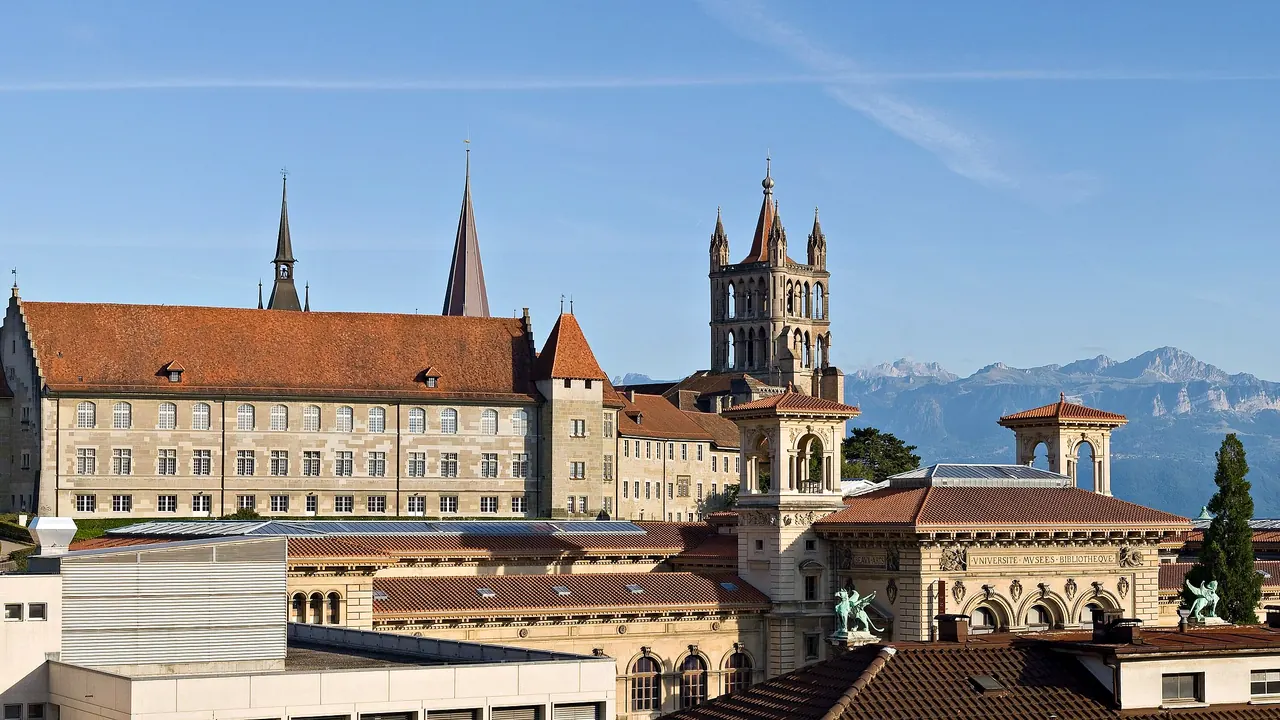
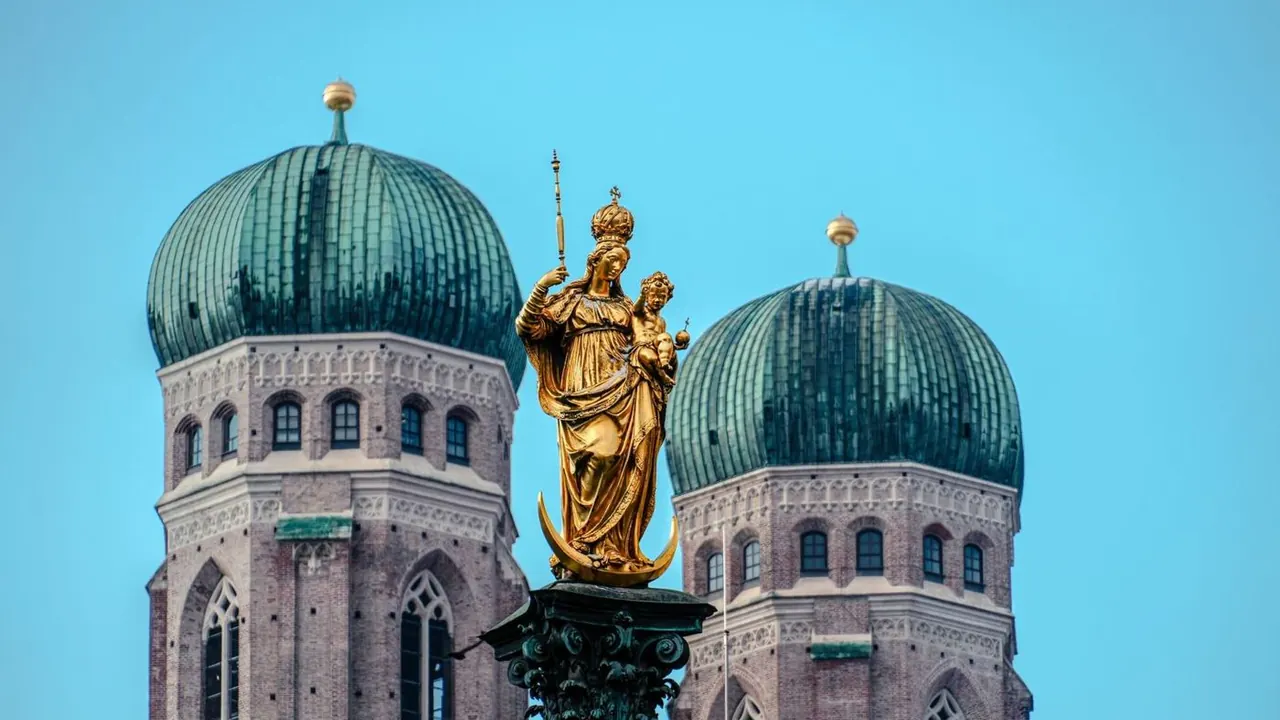
Photos: Lausanne by Christian Mehlführer, CC BY-SA 3.0, cropped; Munich by 0xd1ma, Pexels License.
Lausanne or Munich?
Our verdict in twelve categories, each scored against the same fixed benchmark cities, and the climate month by month, so you can choose for your trip.
Choose Lausanne for
- beaches
- nature and the outdoors
Lausanne suits a slower, more scenic trip built around water and landscape. You get lake swimming from the city's own lawns in summer, Lavaux vineyard walks with Chasselas poured by the growers, the Alps straight across the lake and short train hops to Montreux, Chillon and Gruyères. It works best for couples and walkers who want two or three days of sights and the rest outdoors, and who accept that it is one of the costliest places in Europe to stay.
Choose Munich for
- shopping
- prices
- live music and the arts
Munich is the richer city trip. It has world-class picture galleries and palaces, one of the great opera houses, beer gardens that welcome children, serious shopping and a flat, easy transport network that makes a family stay painless. It is expensive too, but noticeably less so than Lausanne, and it has more to fill evenings and rainy days.
Scoreboard
Twelve categories on one fixed scale from 0 to 100. The shaded stretch is the gap between the two.
Your match
Pick a travel style or drag the sliders, and both match scores follow your weighting.
Wins on beaches and nature and the outdoors with your weighting.
Wins on shopping and prices with your weighting.
What matters to you?
Category by category
What the scores mean for a trip.
Beaches & swimming
Neither city is a beach destination, but in Lausanne the water is closer to hand. Lake Geneva runs along the city's whole front, and in midsummer you can swim from the lawns at Vidy, the old lido at Bellerive or the shingle towards Lutry, all within a short walk or bus ride.
Munich's in-town water is the Isar, where the gravel banks at the Flaucher are better for sunbathing and barbecues than for proper swimming. For a real swim you take the S-Bahn out to the Starnberger See or the Ammersee, which makes a lake day an outing rather than an afternoon.
Food & drink
Munich eats more generously and more sociably. The beer halls and chestnut-shaded beer gardens serve roast pork, Schweinshaxe and white sausage alongside Helles, the Viktualienmarkt is good for grazing in the middle of town, and decent meals are easy to find at every level.
Lausanne's strength is wine more than food. Lake perch, papet vaudois and winter fondue are pleasant, but the real highlights are tasting Chasselas in the Lavaux caveaux and the region's celebrated high-end tables. Between those two extremes the choice thins out, and casual eating takes more searching than in Munich.
Culture & sights
This is one of the widest gaps between the two cities. Munich's Kunstareal alone holds the Alte Pinakothek's old masters, the Glyptothek's antiquities and the Blue Rider painters in the Lenbachhaus. Add the Wittelsbach Residenz, Nymphenburg Palace and the huge Deutsches Museum and you can easily spend a week of sightseeing.
Lausanne offers one fine Gothic cathedral with its night watchman, a steep and atmospheric old town, and a small group of museums led by the Olympic Museum at Ouchy and the unusual Collection de l'Art Brut. It is rewarding, but finished in a couple of days.
Nightlife
Munich has more choice on more nights of the week. Evenings often start in a beer hall and stay there, the Glockenbachviertel has a dense run of cocktail and gay bars, and a few techno clubs run until morning. Then there is the Oktoberfest, which takes over the city for over two weeks from late September.
Lausanne's going out is concentrated in the Flon, the old warehouse valley where student crowds fill clubs and terraces on Friday and Saturday. In summer, evenings by the lake at Ouchy add to that, but midweek the city goes quiet.
Nature & outdoors
Both cities are excellent for the outdoors, and the difference is in how close the scenery comes. From Lausanne the French Alps rise straight out of the lake opposite, and the Lavaux terraces and the Sauvabelin woods start at the city's edge. Sailing and paddleboarding are on the doorstep, and the Jura is near enough for long hikes.
Munich sits on a flat plain, with the Alps an hour south at Garmisch and the Zugspitze. Inside the city it has the bigger green space, though: the English Garden with surfers on the Eisbach wave, and cycle paths running south along the Isar.
Day trips
Lausanne's day trips are short hops through French-speaking Switzerland, most of them an hour or less by train and almost none needing a car. Vevey and Montreux are about twenty minutes along the lake, with the Château de Chillon on its rock just beyond. Gruyères, Fribourg and Bern's arcaded old town are easy rail outings, and boats cross to Évian on the French shore.
Munich's excursions reach further and cross borders, to Nuremberg's castle, Regensburg on the Danube, baroque Salzburg and Innsbruck. Neuschwanstein and Hohenschwangau, the best-known trips, are about two hours away, so expect long, full days. Augsburg, half an hour by train, is the easy exception.
Good for families
Munich makes things easier for parents. It is flat and friendly to pushchairs, and it has the Hellabrunn zoo along the Isar meadows, the children's sections of the Deutsches Museum and beer gardens with their own playgrounds, where parents can relax while children run about.
Lausanne has good outings too: the hands-on Olympic Museum, the aquarium-vivarium, the animal park and pedal boats at Sauvabelin, and paddle-steamer trips on the lake. Its steep streets and very high restaurant bills make a family stay harder work, though.
Getting around
Munich is the easier city to cover. The old town is flat and largely pedestrianised, the U-Bahn, S-Bahn and trams run as one network out to the palaces, the lakes and the airport, and cycling is a pleasure. Its main weak point is delays on the central S-Bahn line.
Lausanne is smaller but built on a steep hillside, and stairs and lifts link its levels. The m2 metro does the heavy climbing from the lakeshore to the upper town, and the Swiss rail network makes onward travel unusually smooth.
Shopping & style
Munich is far ahead for shopping. It has a proper luxury district on Maximilianstrasse and in the Theatinerstrasse arcades, the department stores of the main pedestrian street, independent boutiques in Glockenbach and Schwabing, and Dallmayr's historic delicatessen. Dirndls and lederhosen made by specialist tailors are a purchase you cannot make elsewhere, and the Christmas markets add craft stalls in December.
Lausanne is for a few targeted buys: a Swiss watch or chocolate from Rue de Bourg, and a few bottles of Lavaux wine.
Affordability
Neither is cheap, but Lausanne is in a costlier league, with Swiss prices for rooms, meals, wine and taxis. Budget travellers there live on supermarket picnics and free lakeside walks.
Munich is still dear, especially its hotels during the Oktoberfest and the trade fairs, but day-to-day spending is easier. Beer-hall food is fair value, you can bring your own picnic to a beer garden, and several museums charge only a token fee on Sundays.
Live music & performing arts
Munich is one of Europe's great music cities. The Bavarian State Opera at the National Theatre has world standing, three major orchestras play in halls such as the Herkulessaal, and the rococo Cuvilliés Theatre is an occasion in itself. There is also operetta at the Gärtnerplatztheater and a respected jazz scene.
Lausanne's stage life is smaller and centred on dance. It is home to the Béjart Ballet and the Prix de Lausanne competition, with adventurous contemporary work at the Théâtre de Vidy, and Montreux Jazz is just along the lake in July.
Wellness & relaxation
Munich has a bathing culture of its own. There is the Art Nouveau Müller'sches Volksbad on the Isar, public saunas with infusion rituals in the German textile-free style, and the vast thermal complex at Erding nearby. Long afternoons in the beer gardens and quiet Sundays slow the city down too.
Lausanne offers calm rather than a tradition: lakeside promenades, walks through the Lavaux vines and the spas of the grand hotels. For warm springs you take the train out to Yverdon-les-Bains or Lavey-les-Bains.
When should you go?
Pick your month. The climate figures are measured averages, not a forecast.
Lausanne in July
Munich in July
Daytime high, °C
Rainfall in the month, mm
Where the figures come from
Lausanne's temperatures are measured 40 km from the centre, at Payerne.
Lausanne has no rain gauge within 25 km of the centre, so its rainfall comes from a gridded climate dataset read at the city rather than from a gauge further away.
Temperature and rainfall are climate normals, averaged over the years shown. Lausanne: 1991-2020 (sunshine 1961-1990) normals, Payerne (39.7 km from centre). Munich: 1991-2020 normals, München (1.9 km from centre).
The two climates are almost twins in temperature. Both are cold and grey in winter, with January highs around 4°C, and both warm up through May to a summer peak of about 26°C in Lausanne and 25°C in Munich. Late June to early September is the window for lake swimming in either city. May, June and September are the most comfortable months for walking the streets and heading into the mountains.
Rain is where they part. Lausanne's rain is spread evenly through the year, so its winters are wet as well as dull, with about 86mm in January against Munich's 52mm. Munich keeps most of its rain for May to August, when showers and storms are common, and becomes drier and more settled in September and October. Lausanne gets noticeably more summer sunshine, which suits long days by the lake. Munich's drier early autumn makes it the better choice of the two for a September or October trip.
Which traveller are you?
For a beach and sun trip, Lausanne comes closer, though neither city is a real beach destination. The whole city faces the lake, so warm afternoons can go on swimming, paddleboarding or a boat across to France, with the Alps opposite. Expect fresh water, grass or shingle, and a short summer.
On a culture and arts trip, Munich is the clear choice. Its galleries and palaces could fill a week, and the evenings match the days, with opera and orchestral music of international standing. Lausanne suits a lighter cultural weekend, especially for anyone who loves dance.
On a family trip with children, Munich is the easier pick. Flat streets and plenty of parks mean children can walk about without tiring, and meals out cost noticeably less than across the Swiss border, which adds up over a week. Lausanne works better for a shorter stay with older children who can manage the hills.
Before you go
| Measure | Lausanne | Munich |
|---|---|---|
| Official language | French, German, Italian, Romansh | German |
| Currency | Swiss Franc (CHF) | Euro (EUR) |
| Sockets | CJ230 V, 50 Hz | CF230 V, 50 Hz |
| Driving side | Right | Right |
| Time zone | UTC+1, UTC+2 in summer | UTC+1, UTC+2 in summer |
| Emergency number | 112 | 112 |
| Elevation | 495 m | 519 m |
| Main airport | Geneva International Airport (GVA)52 km from centre150 non-stop destinations | Munich Airport (MUC)29 km from centre210 non-stop destinations |
| Public holidays this year | 9 days | 12 days |
By the numbers
| Measure | Lausanne | Munich |
|---|---|---|
| City population | 144,873 | 1,505,036 |
| People per km² | 3,499 | 4,844 |
| Museums within 10 km | 31 | 75 |
| UNESCO World Heritage sites within 50 km | 3 | 1 |
Where else could you go?
Every comparison below shares a destination with this one, so you can follow Lausanne or Munich somewhere new.
- Genevavs Lausanne
- Chamonixvs Lausanne
- Bernvs Lausanne
- Annecyvs Lausanne
- Interlakenvs Lausanne
- Innsbruckvs Munich