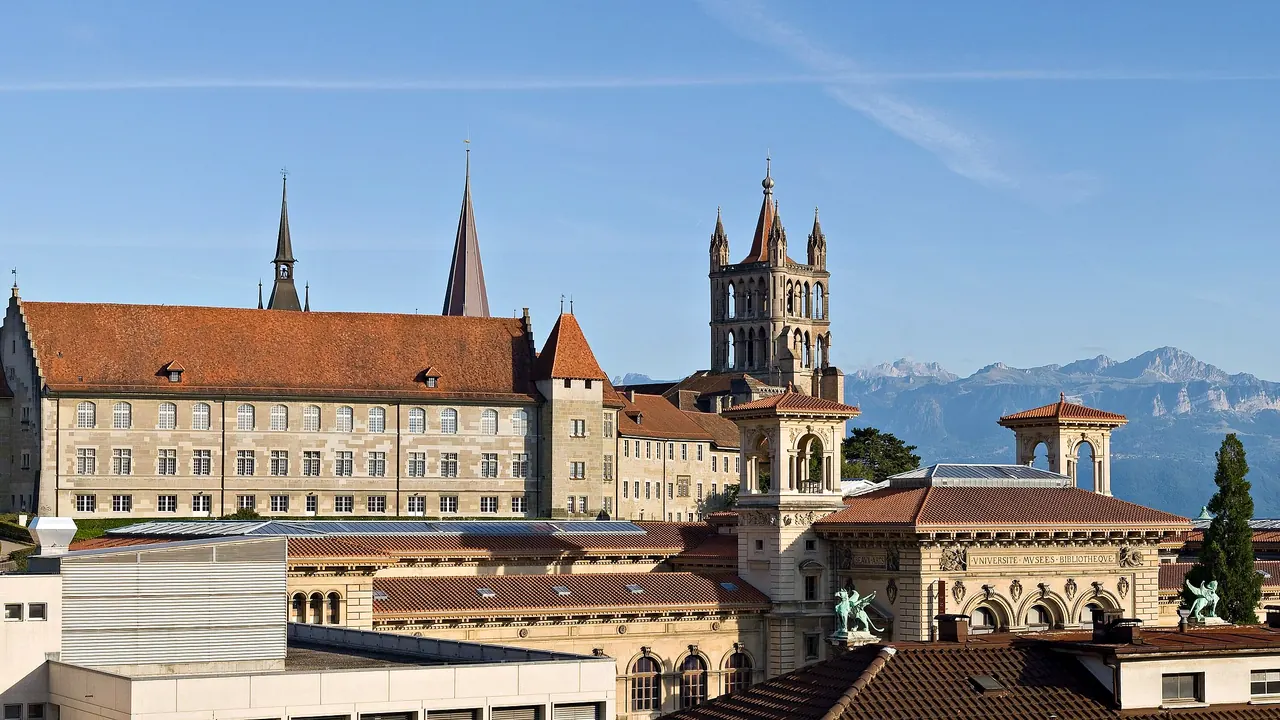
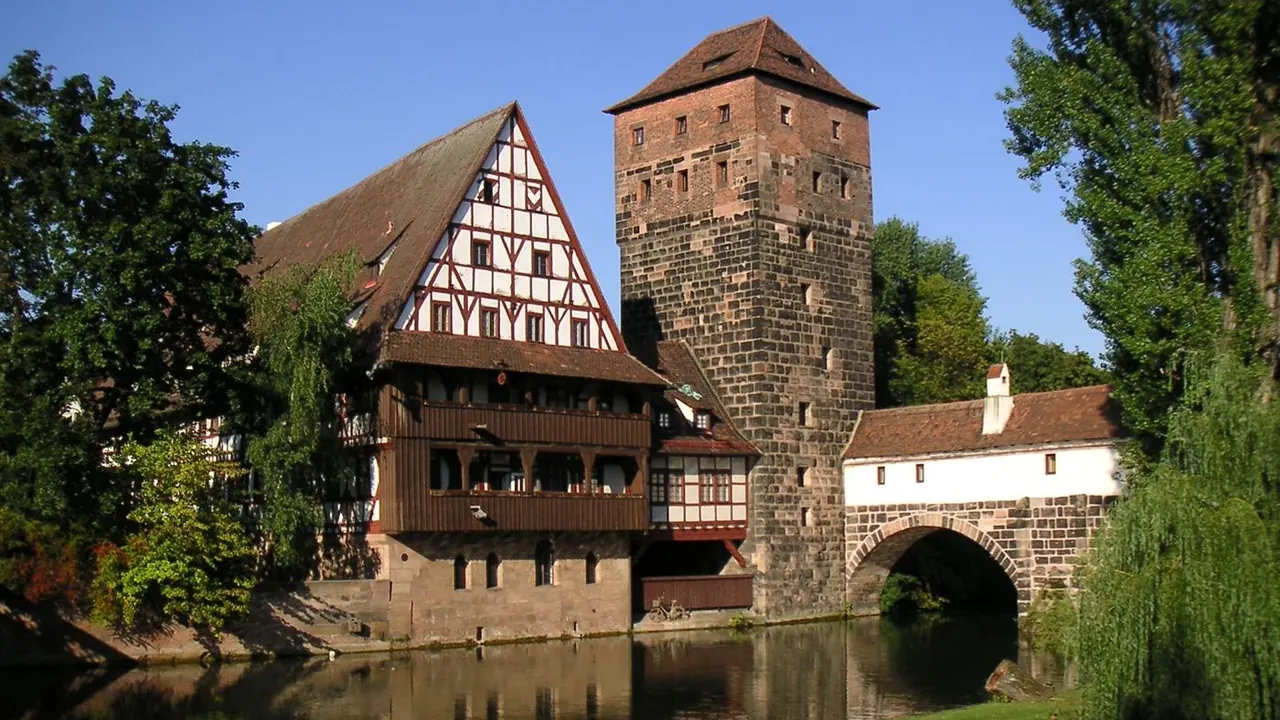
Photos: Lausanne by Christian Mehlführer, CC BY-SA 3.0, cropped; Nuremberg by Horst Gutmann, CC BY 2.0, cropped.
Lausanne or Nuremberg?
Our verdict in twelve categories, each scored against the same fixed benchmark cities, and the climate month by month, so you can choose for your trip.
Choose Lausanne for
- nature and the outdoors
- beaches
- live music and the arts
Lausanne suits travellers who want scenery as much as a city. The Alps rise straight out of the lake opposite, the Lavaux vineyard terraces start just east of town, and in summer you can swim from the waterfront lawns. Add a stage life led by dance and fast trains to mountain resorts and lakeside castles. Choose it for walking, wine and views, and be ready for one of the steepest bills in Europe.
Choose Nuremberg for
- prices
- culture and sights
- shopping
Nuremberg is the better pick for history and for money. Inside its medieval walls are the imperial castle, Gothic churches and Germany's largest museum of its own art and culture, and the Nazi Rally Grounds and the courtroom of the war crimes trials tell the city's twentieth-century story. The countryside is gentler than Lausanne's, but tavern meals, local beer and transport cost far less, and Bamberg and Rothenburg are an easy train ride away.
Scoreboard
Twelve categories on one fixed scale from 0 to 100. The shaded stretch is the gap between the two.
Your match
Pick a travel style or drag the sliders, and both match scores follow your weighting.
Too close to call, 2 points apart
Wins on nature and the outdoors and beaches with your weighting.
Wins on prices and culture and sights with your weighting.
What matters to you?
Category by category
What the scores mean for a trip.
Beaches & swimming
Lausanne has the edge here because the lake is part of the city. On summer days you can walk down to the lawns, piers and shingle at Vidy and Bellerive and be in the water within minutes, and the old Bellerive lido makes an easy afternoon.
In Nuremberg, swimming in open water means an hour's trip to the Brombachsee and the other Franconian lakes, which have small sandy strips. In town you have outdoor pools. Neither city is a beach destination, and both seasons are short.
Food & drink
The two are about level, but you drink wine in one and beer in the other. Lausanne pairs lake perch, papet vaudois and winter fondue with Lavaux Chasselas, which you can taste in village caveaux. It also has some of Switzerland's most celebrated restaurants.
In Nuremberg you eat small beechwood-grilled bratwurst, Schäufele and Lebkuchen, and drink beer from Franconia's many small breweries in taverns and riverside beer gardens. It is heartier and easier to eat cheaply than Lausanne, where budget meals take some finding.
Culture & sights
Nuremberg offers more history to explore. It has almost complete medieval walls, the Kaiserburg, the churches of St Sebaldus and St Lorenz and Dürer's house, and the Germanisches Nationalmuseum alone can fill a day. The Rally Grounds documentation centre and Courtroom 600 add a sobering second layer that Lausanne has nothing to match.
Lausanne's old town is smaller and steeper, built around the Gothic cathedral, where a night watchman still calls the hours. Its museums are the stronger half: the Olympic Museum at Ouchy, the art and photography collections at Plateforme 10 and the unusual Collection de l'Art Brut.
Nightlife
Both are good for an evening out rather than a reason to go, but the style differs. Lausanne goes out in the Flon, a valley of old warehouses full of clubs and late bars that is busy on weekends. Nuremberg is more about bars, with the alternative bars of Gostenhof the most interesting, and a round costs far less there than in Lausanne.
Nature & outdoors
Lausanne is in a different league here. The French Alps fill the view across the lake, and the UNESCO-listed Lavaux terraces give one of Switzerland's best walks right on the edge of town. The lake is good for sailing and rowing, and the Vaud Alps, with skiing and the Glacier 3000, are about an hour away.
Nuremberg's outdoors is quieter: easy walks and cycling in the Reichswald forest, and the limestone towers and caves of Franconian Switzerland, which are good for hiking and rock climbing. You will not find mountains there.
Day trips
Both are excellent bases with no car needed, and the difference is in what you see. From Lausanne you can visit Swiss lake towns and castles: Montreux, the Château de Chillon on its rock, Gruyères, Geneva and Bern's arcades, or take a boat across to Évian.
Nuremberg's day trips are a string of old German towns: Bamberg, Regensburg on the Danube, Würzburg's Residence, and the walled towns of Rothenburg and Dinkelsbühl, with Munich an hour away by fast train.
Good for families
Both work well with children. Lausanne's outings revolve around water and woods: the hands-on Olympic Museum, the aquarium-vivarium, pedal boats and the lookout tower at Sauvabelin, and paddle steamers on the lake. The steep streets are hard work with a pushchair, though.
Nuremberg's long toy-making history gives it a toy museum, a railway museum with full-size locomotives and a zoo in old quarries with a dolphin house. Eating out as a family costs much less than in Lausanne.
Getting around
Lausanne is built on a slope, and that shapes every journey. The metro climbs more than 300m from the lakeshore at Ouchy through the station and the Flon to the upper town, and stairs, bridges and lifts link the levels in between, so walking uphill is real exercise.
Nuremberg is flat by comparison. Its walled centre is small enough to cross on foot in about twenty minutes, and the cobbled climb to the castle is the only effort. One ticket covers the U-Bahn, trams and S-Bahn out to the Rally Grounds, the zoo and Fürth.
Shopping & style
Neither is a shopping destination, so it comes down to what you take home. In Lausanne that means a Swiss watch or chocolate from Rue de Bourg, or a bottle of Lavaux wine. In Nuremberg it means Lebkuchen in decorated tins, wooden toys and crafts from the Handwerkerhof, and in Advent the Christkindlesmarkt makes shopping worth the trip.
Affordability
This is where the two differ most. Lausanne is expensive in every way: hotels, restaurants, wine and taxis. To keep costs down, visitors picnic, walk the free lakeside promenades and save restaurant meals for a treat.
Nuremberg is mid-priced, with filling tavern meals, cheap beer and low transport costs. The one thing to watch is hotel prices during the big trade fairs and Advent. Outside those dates, a stay costs a fraction of the same stay in Lausanne.
Live music & performing arts
Lausanne has the more distinctive stage life, especially for dance. It is home to the Béjart Ballet and the Prix de Lausanne, the Théâtre de Vidy sends its productions on tour across Europe, and the Montreux Jazz Festival in July is a short train ride away.
Nuremberg's programme is respectable but regional. The Staatstheater stages opera, ballet and drama in its Art Nouveau house, the orchestras give a free-feeling open-air concert in the Luitpoldhain, and the Bardentreffen folk weekend fills the squares in summer.
Wellness & relaxation
In Lausanne, relaxing means the lake and the vines. You can stroll the promenades at Ouchy and Vidy, wander the quiet lanes through Lavaux or book into the spa at one of the grand lakeside hotels. For warm water, Yverdon-les-Bains is under half an hour by train, and Lavey, with Switzerland's hottest springs, is under an hour away.
Nuremberg relaxes the German way, in the sauna. A large thermal spa with sauna gardens is a short U-Bahn ride away in Fürth, the leisure pools on the city's edges have nude, mixed saunas, and at Bad Windsheim you can float in saline pools. Otherwise, locals unwind with a slow afternoon in a beer garden by the Pegnitz.
When should you go?
Pick your month. The climate figures are measured averages, not a forecast.
Lausanne in July
Nuremberg in July
Daytime high, °C
Rainfall in the month, mm
Where the figures come from
Lausanne's temperatures are measured 40 km from the centre, at Payerne.
Lausanne has no rain gauge within 25 km of the centre, so its rainfall comes from a gridded climate dataset read at the city rather than from a gauge further away.
Temperature and rainfall are climate normals, averaged over the years shown. Lausanne: 1991-2020 (sunshine 1961-1990) normals, Payerne (39.7 km from centre). Nuremberg: 1991-2020 normals, Nuernberg (5.5 km from centre).
The two cities have almost the same temperatures through the year. Summers peak at about 26°C in Lausanne and 25°C in Nuremberg, and both sit near 4°C in midwinter, so the cold months suit museums, fondue or gingerbread more than long walks. The difference is the rain. Lausanne is much wetter all year and wettest in summer, at about 115mm in July, while Nuremberg's wettest month gets about 77mm. Lausanne makes up for it with more summer sunshine, and it is the only one of the two where you can swim right in town, in the lake from late June to early September.
For walking the streets, May, June and September are the best months in both, warm without being hot. Lausanne's winters are grey in town, but the mountains above the fog are often sunny. Nuremberg's winter has drier weather in its favour.
Which traveller are you?
On an outdoors trip, Lausanne is the clear choice. You can walk the Lavaux vineyard paths, sail or paddleboard on the lake, and within an hour reach the Vaud Alps or the Jura to hike or ski. Nuremberg's forests and Franconian Switzerland are pleasant but much gentler.
For a culture and arts trip, Nuremberg has more to see. It has a walled medieval old town, the Kaiserburg, the Germanisches Nationalmuseum and some powerful twentieth-century history. Lausanne's cathedral and museums fill a couple of days, though its ballet and theatre are stronger.
On a tight budget, go to Nuremberg. Tavern meals, local beer and transport are cheap, and rooms are fairly priced outside trade fairs and Advent. In Lausanne even a simple lunch out costs a lot, so budget travellers end up picnicking by the lake.
Before you go
| Measure | Lausanne | Nuremberg |
|---|---|---|
| Official language | French, German, Italian, Romansh | German |
| Currency | Swiss Franc (CHF) | Euro (EUR) |
| Sockets | CJ230 V, 50 Hz | CF230 V, 50 Hz |
| Driving side | Right | Right |
| Time zone | UTC+1, UTC+2 in summer | UTC+1, UTC+2 in summer |
| Emergency number | 112 | 112 |
| Elevation | 495 m | 209 m |
| Main airport | Geneva International Airport (GVA)52 km from centre150 non-stop destinations | Nuremberg Airport (NUE)5 km from centre56 non-stop destinations |
| Public holidays this year | 9 days | 12 days |
By the numbers
| Measure | Lausanne | Nuremberg |
|---|---|---|
| City population | 144,873 | 531,159 |
| People per km² | 3,499 | 2,848 |
| Museums within 10 km | 31 | 50 |
| UNESCO World Heritage sites within 50 km | 3 | 1 |
Where else could you go?
Every comparison below shares a destination with this one, so you can follow Lausanne or Nuremberg somewhere new.
- Genevavs Lausanne
- Chamonixvs Lausanne
- Bernvs Lausanne
- Annecyvs Lausanne
- Interlakenvs Lausanne
- Baselvs Lausanne