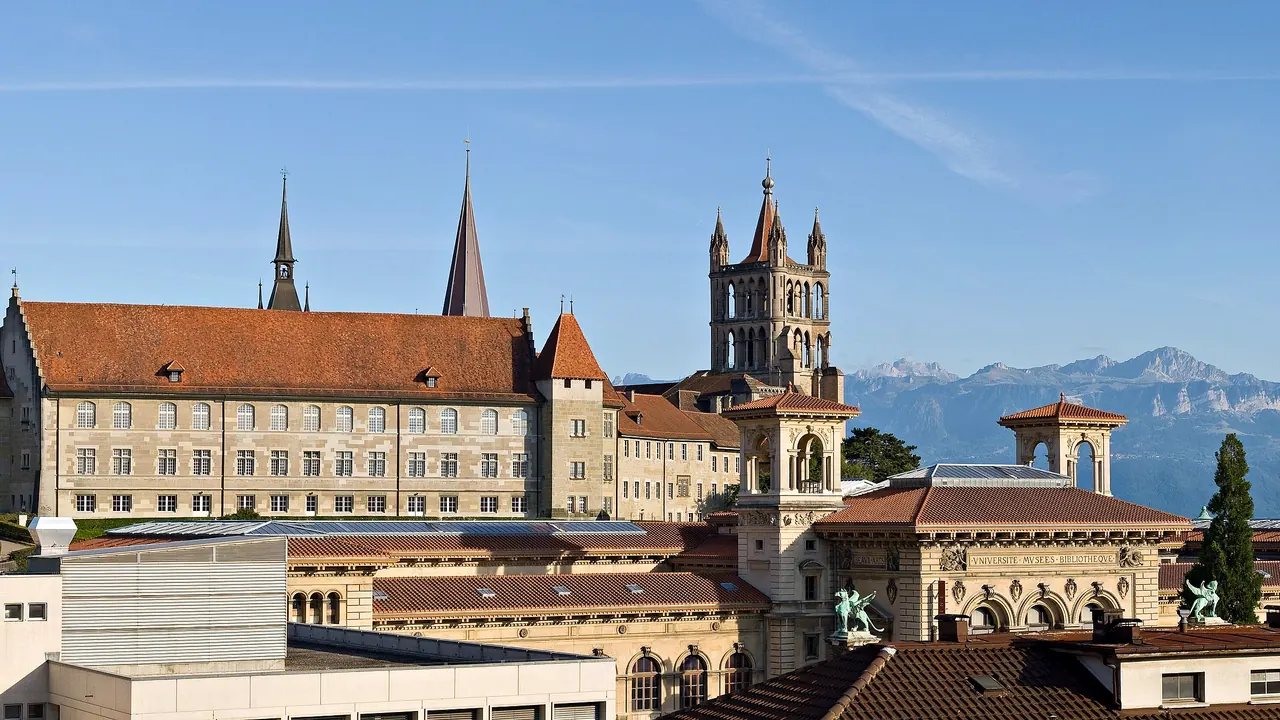
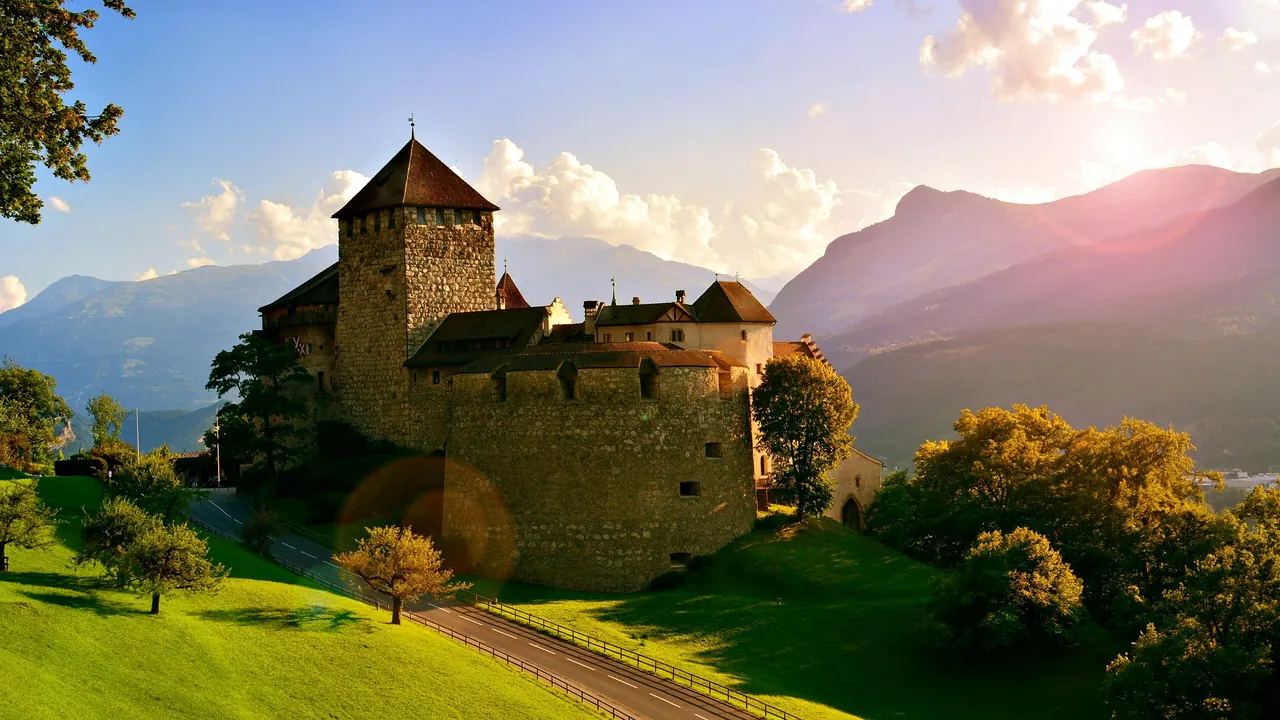
Photos: Lausanne by Christian Mehlführer, CC BY-SA 3.0, cropped; Vaduz by Justin LaBerge, CC BY 2.0, cropped.
Lausanne or Vaduz?
Our verdict in twelve categories, each scored against the same fixed benchmark cities, and the climate month by month, so you can choose for your trip.
Choose Lausanne for
- live music and the arts
- nightlife
- shopping
Lausanne is the fuller trip of the two. It is a real city on Lake Geneva, with a Gothic cathedral above a steep old town, the Olympic Museum and Plateforme 10, a serious dance and theatre scene, and weekend evenings in the Flon. Trains along the lake to Montreux, Chillon, Geneva and Bern make it an easy base without a car, and children have far more to do. Choose it for a mixed week of culture, lake swimming and Lavaux wine.
Choose Vaduz for
Vaduz does not lead in any category we score.
Vaduz is for travellers who want quiet and mountains above everything else. The town is one short pedestrian street with two fine modern art museums. Once dinner is over there is little to do but rest before an early start on the Rätikon trails or the slopes at Malbun. It suits walkers, couples after a slow stay and anyone happy to drive out to St Gallen, Appenzell or Lake Constance.
Scoreboard
Twelve categories on one fixed scale from 0 to 100. The shaded stretch is the gap between the two.
Your match
Pick a travel style or drag the sliders, and both match scores follow your weighting.
Wins on live music and the arts and nightlife with your weighting.
Has no clear advantage with the weighting you have chosen.
What matters to you?
Category by category
What the scores mean for a trip.
Beaches & swimming
Neither has a beach, but Lausanne at least has Lake Geneva at its feet. On summer days you can swim from the lawns and piers at Vidy, Pully and Lutry, or spend an afternoon at the old lido at Bellerive, all without leaving the city.
In Vaduz the Rhine is not for swimming, so a swim means the open-air municipal pools or a drive: half an hour to the Walensee or under an hour to Lake Constance. The water is equally mild in both places, but only in Lausanne does a swim fit into an ordinary day.
Food & drink
Lausanne eats far better. Lake perch, papet vaudois and winter fondue are easy to find, the Saturday market around Riponne brings in cheese and charcuterie from the countryside, and the area has some of Switzerland's most celebrated tables. The Lavaux Chasselas, tasted straight from the growers in village caveaux, gives it a wine culture to match.
Vaduz has a few hotel dining rooms, restaurants on the Städtle and inns in the hills serving Käsknöpfle and rösti. The food is solid but the range is narrow, and there is no market to browse. Its best moment is a glass of the prince's own Pinot Noir from the vines below the castle.
Culture & sights
Lausanne holds two or three days of sightseeing, Vaduz about one. In Lausanne the Gothic cathedral, where a night watchman still calls the hours, crowns an old town of covered stairways and steep lanes. The Olympic Museum, the three museums at Plateforme 10 and the Collection de l'Art Brut give it real depth.
Vaduz makes a short, focused visit. The Kunstmuseum and the Hilti Art Foundation hold strong modern art, and the National Museum and the Postage Stamp Museum explain the principality. The castle is closed to visitors, so you walk up to it for the view rather than go inside.
Nightlife
Lausanne has a proper night out and Vaduz barely has one. Students from the university and the EPFL fill the clubs and late bars of the Flon at weekends, and on summer evenings people gather along the Ouchy waterfront, though weeknights are quiet. In Vaduz a few wine bars and hotel lounges on the Städtle wind down early, and locals who want more cross to Feldkirch or go to Zurich.
Nature & outdoors
Both are superb for the outdoors, but the settings differ. Lausanne's is lake and vineyard: the Lavaux terraces walk from Lutry to Saint-Saphorin, and sailing and paddleboarding on Lake Geneva with the French Alps opposite. The Vaud Alps, Glacier 3000 included, and the Jura are each about an hour away for hiking and skiing.
Vaduz puts the mountains right at the edge of town. Trails climb from the centre through vines and beech forest, Malbun is half an hour up the road, and the Rätikon has high ridge walks such as the Fürstensteig. The flat Rhine dam path suits cyclists. Lausanne gives you more variety, Vaduz more height close at hand.
Day trips
Lausanne is the stronger base, mostly because of its trains. Vevey, Montreux and the Château de Chillon are a short ride along the lake. Geneva, Bern, Fribourg and Gruyères are easy days out, and boats cross to Évian, mostly with no car needed.
Vaduz has a good spread too: medieval Feldkirch, the abbey library at St Gallen, painted Appenzell, Chur, and Bregenz and Lindau on Lake Constance. But it has no station of its own, so public transport means changing at Buchs or Sargans, and a car makes a real difference.
Good for families
Lausanne gives children much more to do. There is the hands-on Olympic Museum, a freshwater aquarium-vivarium, and the animal park, pedal boats and lookout tower at Sauvabelin. Summer adds the pools at Bellerive and paddle steamers on the lake. The price is the steep streets, which are hard going with a pushchair.
Vaduz is the reverse: flat, calm and easy with a buggy, but with nothing built for children. Families spend their time outdoors, at the open-air pools, on gentle walks above Triesenberg or on the beginner slopes at Malbun. That suits older children who like hiking more than small ones.
Getting around
Lausanne is easier to get around despite its slopes. The m2 metro climbs more than 300m from Ouchy to the upper town, and buses and lake boats fill in the rest. The main station puts the whole Swiss rail network on your doorstep.
On the ground Vaduz is simpler: one short, flat street you can walk in minutes, and buses to every village and up to Malbun. Its weakness is getting further afield. With no railway station, any longer journey starts with a bus to Buchs, Sargans or Feldkirch, so many visitors drive.
Shopping & style
Lausanne has several shopping areas and Vaduz has a single street. In Lausanne a browse runs across the levels of the city, from the watchmakers and chocolatiers of Rue de Bourg in the old centre, down past the high-street names around Saint-François, to the old warehouses of the Flon below. On market days, stalls in the old town squares add another stop. It is still a side activity, with no luxury quarter and few independent boutiques, but it can fill an afternoon.
The Städtle in Vaduz takes a few minutes to walk end to end. It has watches, souvenirs and the principality's collectable stamps, and no department store or fashion street to keep you there longer. For real choice you have to make the drive to Zurich. In either place the best thing to bring home is a bottle of local wine.
Affordability
Both are among the most expensive places to stay in Europe, and the gap between them is small. What differs is how much you can do about it. Lausanne is a larger city with more choice of rooms, supermarkets and bakeries for picnics, and free lakeside promenades and parks to fill a day. A glass of Chasselas in a caveau is an affordable treat. Vaduz has only a few hotels and little at the budget end, so some visitors sleep across the border in Austria and come in by bus.
Live music & performing arts
Lausanne is the clear choice for an evening of ballet or theatre. It is home to Béjart Ballet Lausanne and the Prix de Lausanne, and the Théâtre de Vidy stages contemporary work that tours Europe. The opera and the respected chamber orchestra run full seasons, and in July the Montreux Jazz Festival is a short train ride away.
Vaduz's stage life is modest. The national theatre is in neighbouring Schaan, the symphony orchestra plays a short season, and there is a classical music festival in summer. You will find something to see over a week, but with little choice.
Wellness & relaxation
Neither has a bathing tradition of its own, and both rely on springs nearby, but Lausanne has a little more within reach. Its grand lakeside hotels have large spas, and the region is known for clinics and retreats. Yverdon-les-Bains and Lavey-les-Bains, the hottest springs in Switzerland, are both under an hour by train.
Vaduz relies on Bad Ragaz, about twenty-five minutes away, whose thermal bath is fed from the Tamina gorge, and in town only a few hotels have spas. What Vaduz offers instead is stillness everywhere, with quiet streets and early evenings. In Lausanne the calm is mostly found on the edges.
When should you go?
Pick your month. The climate figures are measured averages, not a forecast.
Lausanne in July
Vaduz in July
Daytime high, °C
Rainfall in the month, mm
Where the figures come from
Lausanne's temperatures are measured 40 km from the centre, at Payerne.
Lausanne has no rain gauge within 25 km of the centre, so its rainfall comes from a gridded climate dataset read at the destination rather than from a gauge further away.
Vaduz's temperatures are measured 51 km from the centre, at Sigmarszell-Zeisertsweiler.
Vaduz has no rain gauge within 25 km of the centre, so its rainfall comes from a gridded climate dataset read at the destination rather than from a gauge further away.
Temperature and rainfall are climate normals, averaged over the years shown. Lausanne: 1991-2020 (sunshine 1961-1990) normals, Payerne (39.7 km from centre). Vaduz: 1991-2020 normals, Sigmarszell-Zeisertsweiler (51.3 km from centre).
The two have almost the same winter. Daytime highs sit around 4°C in December and January, which is fine for museums but grey in the valleys, where fog often settles while the mountains above are sunny. Vaduz is drier and a little sunnier through the winter months, which favours clear days up at Malbun. In summer Lausanne is the warmer and brighter one, reaching 26°C in July against 24°C in Vaduz. From late June to early September Lake Geneva is warm enough to swim in, and the lakes near Vaduz have the same short season.
Rain falls all year in both places and is heaviest in summer, when showers and storms are common. Vaduz is wettest in August at 126mm. For long walks in the streets, vineyards and hills, late spring and September are the most comfortable months in either place: mild, long days without the July warmth. From November to March the higher trails are snowbound.
Which traveller are you?
For a culture and arts trip, Lausanne is the clear pick. The cathedral and old town, the Olympic Museum, Plateforme 10 and the Art Brut collection fill several days. Béjart Ballet and the Théâtre de Vidy then give the evenings a depth that Vaduz cannot match.
On a family trip with children, Lausanne again comes out ahead. The aquarium-vivarium, the animal park and pedal boats at Sauvabelin, the lakeside pools and the paddle steamers keep children busy. Vaduz offers safety and flat streets but nothing actually designed for them.
On an outdoors trip, both are excellent, so choose by the kind of terrain you want. Vaduz suits walkers who want high Rätikon ridges and Malbun straight from town. Lausanne suits those who want sailing, the Lavaux vineyard paths, and the Vaud Alps and Jura by train.
Before you go
| Measure | Lausanne | Vaduz |
|---|---|---|
| Official language | French, German, Italian, Romansh | German |
| Currency | Swiss Franc (CHF) | Swiss Franc (CHF) |
| Sockets | CJ230 V, 50 Hz | CJ230 V, 50 Hz |
| Driving side | Right | Right |
| Time zone | UTC+1, UTC+2 in summer | UTC+1, UTC+2 in summer |
| Emergency number | 112 | 112 |
| Elevation | 495 m | 455 m |
| Main airport | Geneva International Airport (GVA)52 km from centre150 non-stop destinations | Zürich Airport (ZRH)81 km from centre226 non-stop destinations |
| Public holidays this year | 9 days | 21 days |
By the numbers
| Measure | Lausanne | Vaduz |
|---|---|---|
| Population | 144,873 | 5,668 |
| People per km² | 3,499 | 328 |
| Museums within 10 km | 31 | 7 |
| UNESCO World Heritage sites within 50 km | 3 | 3 |
Where else could you go?
Every comparison below shares a destination with this one, so you can follow Lausanne or Vaduz somewhere new.