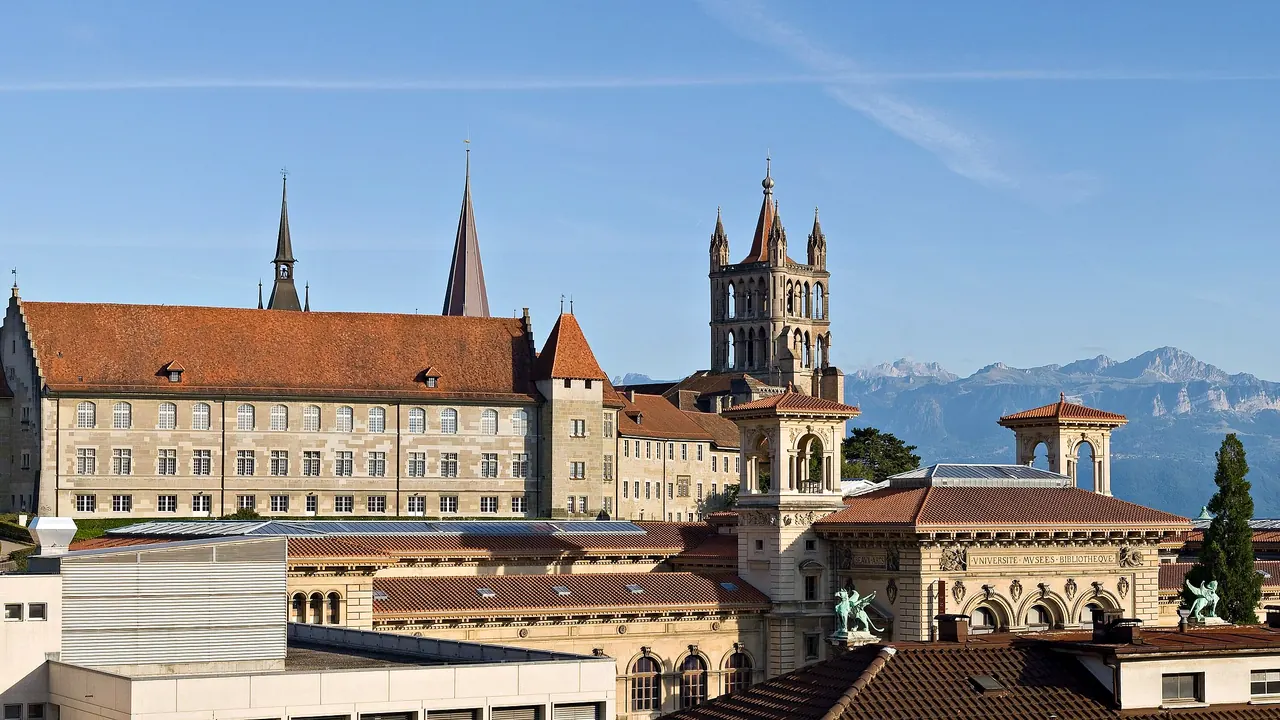
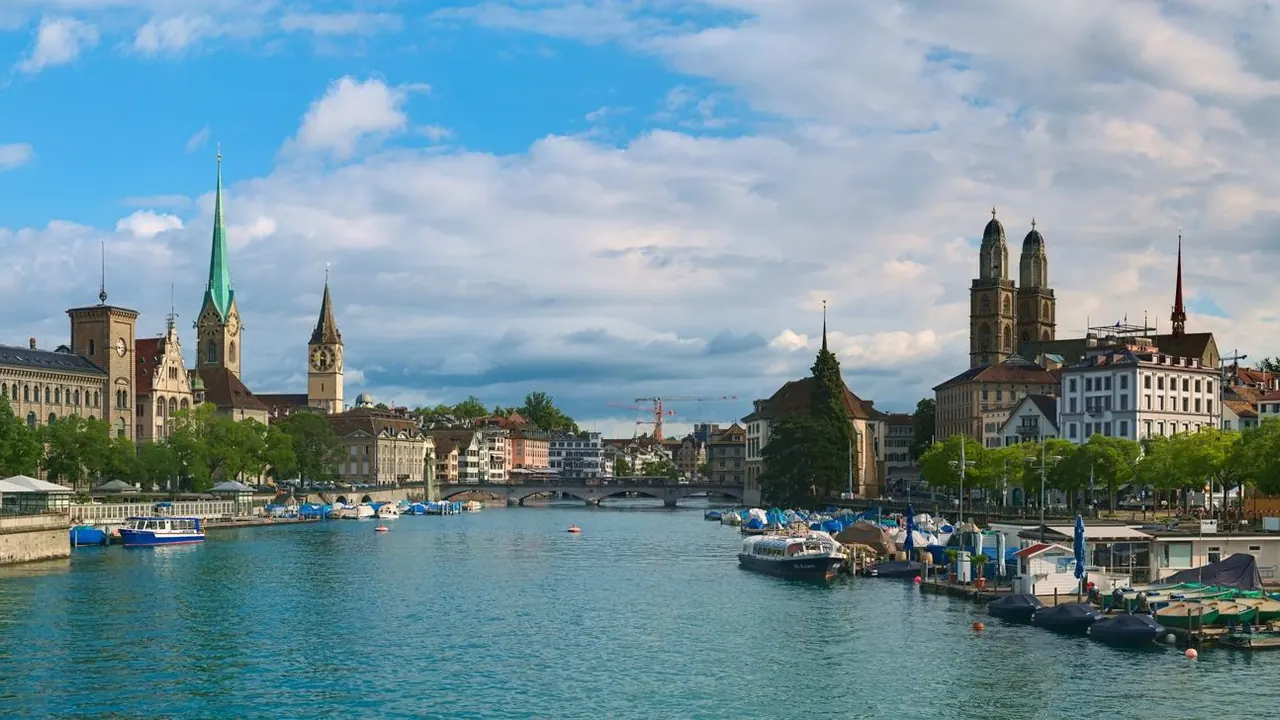
Photos: Lausanne by Christian Mehlführer, CC BY-SA 3.0, cropped; Zurich by Daniel Kraft, CC BY-SA 3.0, cropped.
Lausanne or Zurich?
Our verdict in twelve categories, each scored against the same fixed benchmark cities, and the climate month by month, so you can choose for your trip.
Choose Lausanne for
- prices
- nature and the outdoors
- food and drink
Lausanne suits travellers who want the landscape to lead. The French Alps rise straight out of the lake opposite the town, the Lavaux vineyard terraces start just east of it, and the trains reach Montreux, Gruyères and the Vaud Alps quickly. It is a French-speaking, wine-minded place with a slower pace, a strong dance and theatre scene, and steep streets that reward people who don't mind a climb.
Choose Zurich for
- shopping
- nightlife
- getting around
Zurich is the better pick for a city that works hard for you. Trams take you everywhere on one ticket, Bahnhofstrasse is a serious place to shop, the zoo and lidos keep children busy, and the club scene in Kreis 4 and 5 runs until morning. Opera-goers, families and anyone who wants evenings out as well as days on the lake will get more from it.
Scoreboard
Twelve categories on one fixed scale from 0 to 100. The shaded stretch is the gap between the two.
Your match
Pick a travel style or drag the sliders, and both match scores follow your weighting.
Wins on prices and nature and the outdoors with your weighting.
Wins on shopping and nightlife with your weighting.
What matters to you?
Category by category
What the scores mean for a trip.
Beaches & swimming
Neither city has sand, and both swim in their lake in summer. In Lausanne that means lawns, piers and pebble shores at Vidy and Bellerive, with the old Bellerive lido as the classic afternoon and the French Alps across the water.
Zurich has a bit more variety. Wooden bathing houses line the lake, the historic baths sit right in the old town, and at Letten you can drift down the Limmat with the current, which Lausanne can't offer.
Food & drink
The two eat at much the same level, with different emphases. Lausanne's table is Vaudois and wine-led: lake perch, papet vaudois and Chasselas poured straight from the growers in Lavaux caveaux, plus a proper Saturday market around Place de la Riponne.
Zurich is creamier and more polished. Think veal Geschnetzeltes with rösti in guild-house dining rooms, the Paradeplatz tea rooms and their Luxemburgerli, and a more international, casual spread in Kreis 4 and 5. Neither city has much street food.
Culture & sights
Both reward two or three days, with different strengths. Lausanne's highlight is its Gothic cathedral high above the steep old town, where a night watchman still calls the hours. Its museums lean towards the unusual: the Olympic Museum at Ouchy and the Collection de l'Art Brut.
Zurich is stronger on fine art and history. The Kunsthaus runs from Monet to Giacometti and the Swiss National Museum sits beside the station. The Grossmünster, where the Swiss Reformation began, and Chagall's windows in the Fraumünster give its riverside Altstadt more historical weight.
Nightlife
Zurich is much the better place for a night out. Electronic music runs deep there: clubs in Kreis 4 and 5 and Zurich West stay open until morning at weekends, Langstrasse stays rough-edged and late, and the August Street Parade turns the lake shore into a huge techno gathering.
Lausanne goes out mostly at weekends, in the converted warehouses of the Flon and the old-town wine bars, with students making up much of the crowd. It is enjoyable but small, and quiet by midweek.
Nature & outdoors
Both are excellent bases for the outdoors, and the difference is in the setting. Lausanne has the more dramatic view, with the French Alps rising straight from the lake. The UNESCO-listed Lavaux terraces start at its edge, and it has mountains on two sides: the Vaud Alps and Glacier 3000 to the south-east, the Jura for long hikes and cross-country skiing to the north-west.
Zurich's own hill, the Uetliberg, and the Albis ridge walk are a short train ride away. Within an hour you reach Rigi, Pilatus and the slopes of Flumserberg.
Day trips
Both are first-rate bases with fast trains, and the difference lies in which part of the country is on the doorstep. Lausanne opens up French-speaking Switzerland and its lake: Montreux and the Château de Chillon on its rock in the water, the walled hilltop village of Gruyères with its cheese dairies, Geneva in under an hour, and a boat across to Évian on the French shore.
Zurich reaches into central and northern Switzerland instead, with Lucerne's covered wooden bridges, Basel's museums on the Rhine and St Gallen's abbey library. North of the city, the Rhine Falls near Schaffhausen pair with the painted houses of Stein am Rhein, and Konstanz on Lake Constance is close by. Bern is an easy day out from either.
Good for families
Zurich is the easier city with children. The zoo, with its Madagascar rainforest hall and elephant park, is a full day on its own, and the trams take buggies without fuss. The Technorama in Winterthur and Lucerne's Swiss Museum of Transport make simple days out.
Lausanne has good things too: the hands-on Olympic Museum, the aquarium-vivarium, and pedal boats and a lookout tower in the Sauvabelin woods. But its steep streets make every outing with a pushchair harder work.
Getting around
Zurich is close to effortless. Its flat, walkable old town is laced with trams, and boats, funiculars and the Uetliberg railway all run on one integrated ticket. The airport is a short train ride from the main station.
Lausanne is small but built in steep layers joined by stairs, bridges and lifts. The m2 metro climbs more than 300m from Ouchy to the upper town and handles most of it, but on foot you will feel the gradient.
Shopping & style
Zurich has a real shopping street in Bahnhofstrasse, which runs from the station to the lake past the big watch names, jewellers, fashion houses and department stores. The Niederdorf adds antique shops and the old viaduct arches add design shops.
In Lausanne, Rue de Bourg and the streets around Place Saint-François cover chocolate, watches and the usual international chains, with little beyond that. A bottle of Lavaux wine is its most distinctive buy.
Affordability
Both are among the most expensive places in Europe to visit, and the gap between them is too small to matter. Hotels, meals and drinks will strain any budget in either city.
The savings differ a little. In Lausanne, a glass of Chasselas in a village caveau and the free lakeside promenades are the better-value pleasures. In Zurich, the visitor card that bundles transport and museums, the free lidos and the drinking fountains help most.
Live music & performing arts
Zurich has the bigger stage life. The Opernhaus is one of Europe's most respected opera houses, the Tonhalle Orchestra plays in a grand nineteenth-century hall, and the Rote Fabrik handles jazz, indie and electronic acts. The Schauspielhaus is a leading theatre, though its work is mostly in German.
Lausanne's strength is dance, with the Béjart Ballet and the Prix de Lausanne, along with contemporary theatre at the lakeside Vidy. In July the Montreux Jazz Festival is a short train ride away.
Wellness & relaxation
Zurich has more on hand for a relaxing stay. Its thermal bath fills the stone vaults of the old Hürlimann brewery and has a rooftop pool. In winter the wooden bathing houses turn into saunas with cold lake dips, and Roman-era Baden is twenty minutes away.
Lausanne's calm is mainly in the Lavaux vines, the lakeside promenades and the grand hotel spas. For warm water you go out of town, to Yverdon-les-Bains or to Lavey-les-Bains, which has the hottest springs in Switzerland.
When should you go?
Pick your month. The climate figures are measured averages, not a forecast.
Lausanne in July
Zurich in July
Daytime high, °C
Rainfall in the month, mm
Where the figures come from
Lausanne's temperatures are measured 40 km from the centre, at Payerne.
Lausanne has no rain gauge within 25 km of the centre, so its rainfall comes from a gridded climate dataset read at the city rather than from a gauge further away.
Temperature and rainfall are climate normals, averaged over the years shown. Lausanne: 1991-2020 (sunshine 1961-1990) normals, Payerne (39.7 km from centre). Zurich: 1991-2020 normals, Zurich Town / Ville. (2.2 km from centre).
Both cities follow the same Swiss pattern. Winters are grey and cold, with highs around 4°C from December to February, and fog often sits over the water while the mountains are in sun. The good season for walking and lake swimming runs from late June to early September. Lausanne is the warmer and brighter of the two in high summer, reaching about 26°C in July with noticeably more sunshine. Zurich peaks a couple of degrees lower.
Rain falls all year in both, but in different ways. Zurich has its wettest stretch from May to August, at about 126mm a month, and is the drier of the two in winter. Lausanne stays fairly damp right through autumn and into December. Late spring and September are pleasant for sightseeing in either city, and Lausanne's September is usually a little milder.
Which traveller are you?
On a food and nightlife trip, Zurich is the clear choice. The two cities eat about as well as each other, but Zurich's electronic clubs, Langstrasse bars and summer drinks in the bathing houses keep going far later than Lausanne's small student-led Flon scene.
For a shopping trip, choose Zurich. Bahnhofstrasse has the watchmakers, jewellers and department stores, and the viaduct arches add design shops. Lausanne's Rue de Bourg is fine for a watch or chocolate, but the range is narrow.
For an outdoors trip, Lausanne edges ahead. You can walk the Lavaux terraces from the edge of town, and both the Vaud Alps and the Jura ridges are within an hour. All of it comes with the French Alps across the water.
Before you go
| Measure | Lausanne | Zurich |
|---|---|---|
| Official language | French, German, Italian, Romansh | French, German, Italian, Romansh |
| Currency | Swiss Franc (CHF) | Swiss Franc (CHF) |
| Sockets | CJ230 V, 50 Hz | CJ230 V, 50 Hz |
| Driving side | Right | Right |
| Time zone | UTC+1, UTC+2 in summer | UTC+1, UTC+2 in summer |
| Emergency number | 112 | 112 |
| Elevation | 495 m | 408 m |
| Main airport | Geneva International Airport (GVA)52 km from centre150 non-stop destinations | Zürich Airport (ZRH)9 km from centre226 non-stop destinations |
| Public holidays this year | 9 days | 10 days |
By the numbers
| Measure | Lausanne | Zurich |
|---|---|---|
| City population | 144,873 | 440,935 |
| People per km² | 3,499 | 5,016 |
| Museums within 10 km | 31 | 63 |
| UNESCO World Heritage sites within 50 km | 3 | 1 |
Where else could you go?
Every comparison below shares a destination with this one, so you can follow Lausanne or Zurich somewhere new.