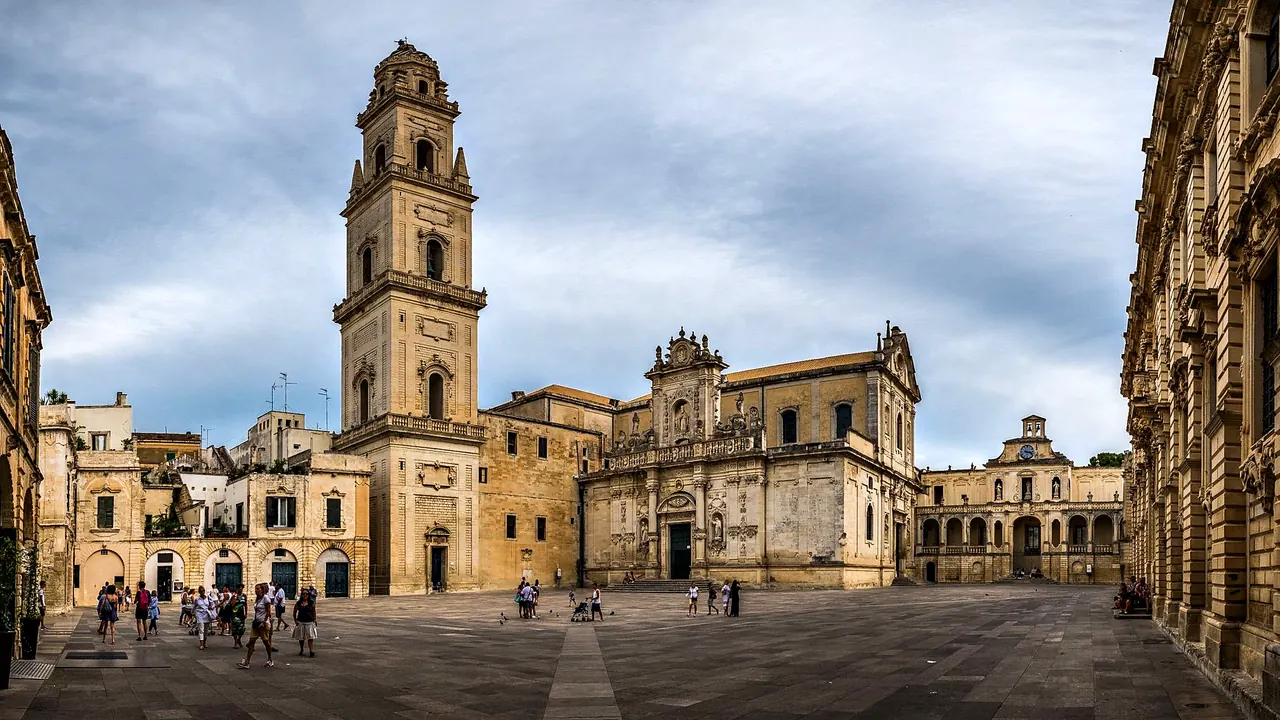
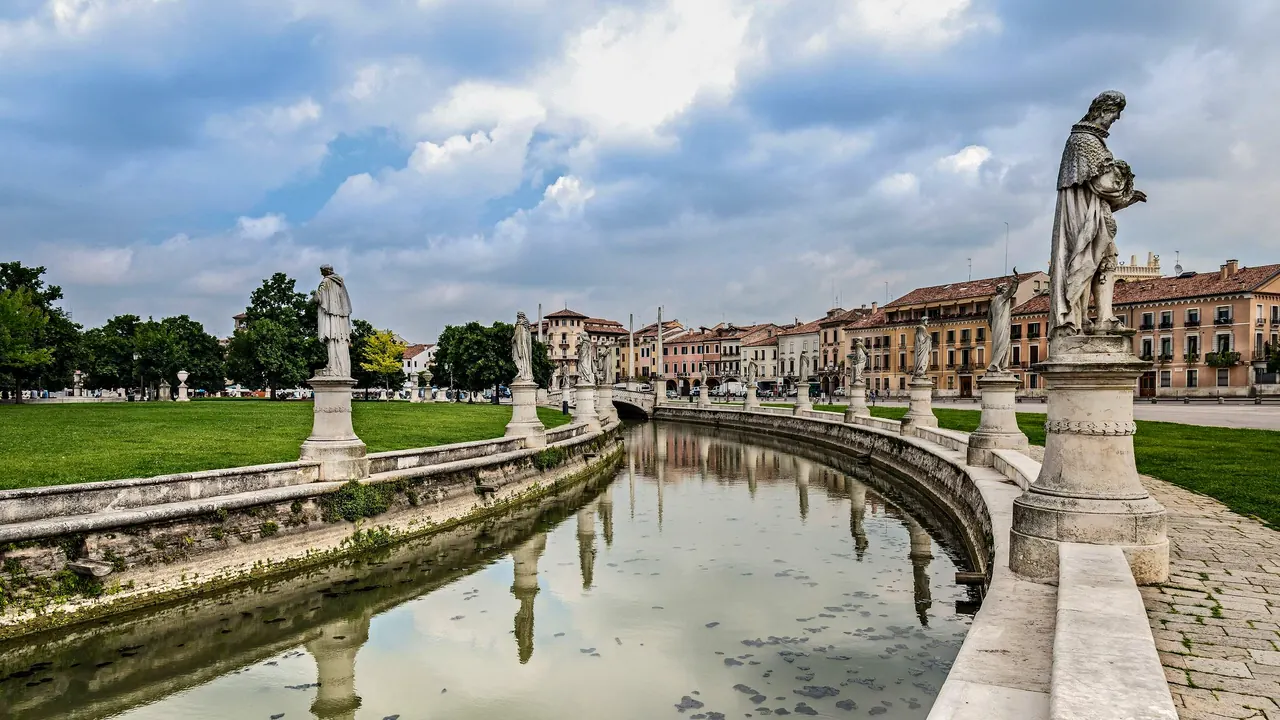
Photos: Lecce by Giuseppe Milo, CC BY 3.0, cropped; Padua by Didier Descouens, CC BY-SA 4.0, cropped.
Lecce or Padua?
Our verdict in twelve categories, each scored against the same fixed benchmark cities, and the climate month by month, so you can choose for your trip.
Choose Lecce for
- beaches
- families
- prices
Lecce is the choice for a summer trip built around the sea. The fine-sand Ionian beaches and the pale coves near Torre dell'Orso are all within an hour, and evenings belong to the honey-coloured Baroque streets of the old town. The cooking, from a warm pasticciotto at breakfast to ciceri e tria at dinner, is found nowhere else in Italy. You will want a hire car, because the coast and the stone towns of the Salento are hard to reach without one.
Choose Padua for
- getting around
- day trips
- wellness
Travellers who want to see a lot of northern Italy without driving will do better in Padua. Its station puts Venice, Vicenza, Verona and Bologna within easy reach, and Giotto's frescoes in the Scrovegni Chapel are reason enough to stop. The thermal pools of Abano Terme are just outside town. It suits spring and autumn and a trip with no beach days in the plan.
Scoreboard
Twelve categories on one fixed scale from 0 to 100. The shaded stretch is the gap between the two.
Your match
Pick a travel style or drag the sliders, and both match scores follow your weighting.
Wins on beaches and families with your weighting.
Wins on getting around and day trips with your weighting.
What matters to you?
Category by category
What the scores mean for a trip.
Beaches & swimming
Here Lecce is far ahead. The Salento coast gives it two seas to choose from: the white coves and sea stacks of Torre dell'Orso to the east, and the long, shallow, clear-water beaches of Porto Cesareo and Punta Prosciutto to the west. In summer the beach shapes the whole stay.
From Padua the sea is an outing of about an hour, to Sottomarina or the Lido of Venice. The water is calm and warm in high summer, but the shore is a flat line of umbrellas, and nobody plans a stay around it.
Food & drink
The two eat about equally well, from opposite ends of Italy. Lecce's table is southern and frugal: chickpeas with fried pasta, orecchiette with turnip tops, fava purée and the dark Negroamaro of the plain, with a pastry and almond-milk iced coffee to start the day.
Padua cooks the Venetian way, with bigoli in duck sauce, baccalà and spring-pea risotto, and its morning markets under the Palazzo della Ragione are the centre of it all. The early-evening spritz is taken standing in the squares. Neither city offers much range beyond its own region.
Culture & sights
Both are rewarding, in quite different ways. Lecce's appeal is the whole townscape: carved limestone facades, Santa Croce, the enclosed cathedral square at dusk and a half-buried Roman amphitheatre, all best enjoyed by wandering, since its museums are modest.
Padua's strength is in particular rooms of world importance. Giotto's Scrovegni frescoes, the UNESCO-listed fourteenth-century fresco cycles, Donatello's work at the Basilica of Saint Anthony and the oldest permanent anatomical theatre each repay planning, and give it a slight edge for anyone who travels for art.
Nightlife
Neither is a party city. Evenings in both revolve around the aperitivo and student crowds, but the seasons run opposite ways. Lecce's wine bars and cocktail lanes stay modest, and in summer the late nights move to beach clubs and open-air discos near Gallipoli, a drive away.
Padua is liveliest on term-time weekday evenings, when spritz drinkers fill Piazza delle Erbe and Piazza dei Signori, and it goes quiet in high summer.
Nature & outdoors
These two are evenly matched, but one faces the sea and the other the hills. Around Lecce the plain is flat olive country, and the outdoors means the coast: clifftop paths from Roca Vecchia towards Leuca, boat trips into sea caves, snorkelling, and wetlands at Le Cesine and Alimini.
Padua has the volcanic Euganean Hills about 15km away, with trails, vineyards and chestnut woods. There are level towpaths along the Brenta, and real mountain walking in the pre-Alps is within about one and a half hours.
Day trips
Padua is one of the best bases in Italy. Venice is under half an hour by train, close enough to visit on several days. Vicenza's Palladio, Verona, Treviso, Bologna and Ferrara are all an hour or less, and the Brenta villas and walled towns like Este and Montagnana lie closer still.
Lecce covers the Salento well, with Otranto's cathedral mosaic, island Gallipoli, Galatina's frescoes and white Ostuni further north. But the list is shorter, and most of it really needs a car.
Good for families
Lecce has the edge with children, mainly because of the sea. The shallow sandy beaches around Porto Cesareo are ideal for small swimmers, and the traffic-free old town fills with families each evening. In July and August, though, the days have to fit around the midday heat.
Padua is flat, safe and welcoming, and Prato della Valle gives children room to run. Its main sights are frescoes and churches, however, so families tend to fill the days with outings to Gardaland or Lake Garda.
Getting around
Padua is much easier to get around. The compact centre is crossed on foot in about 20 minutes under arcades that shelter you from sun and rain. A tram runs from the station, and the main-line railway makes most excursions possible without a car.
Lecce's old town is just as easy on foot, but beyond the walls the slow local trains and summer-only beach buses push most visitors into hiring a car and parking outside the walls.
Shopping & style
Padua offers more, though neither is a shopping destination. Its arcades carry Italian fashion and shoe shops, independent boutiques and university bookshops, and there is a large antiques market in Prato della Valle one Sunday a month.
Lecce's best buys are crafts: papier-mâché saints from old-town workshops, small limestone carvings and Grottaglie ceramics. Beyond those it is mostly olive oil, taralli and souvenirs.
Affordability
Costs are similar, but they work differently. In Lecce, pastries, osterie and B&Bs in old palazzi are cheap for most of the year, but August pushes up rooms and beach loungers, and a hire car adds to the bill.
Padua's saving comes from location. Sleeping there instead of in Venice, and travelling by train rather than car, keeps a regional trip moderate. Rooms only get dearer around trade fairs and graduation season.
Live music & performing arts
Neither has a large stage scene, and the difference is one of season. Lecce comes alive in summer with pizzica, the Salento's tambourine dance, at village festivals and at the open-air Notte della Taranta in Melpignano. Outside summer the city theatres offer a modest programme.
Padua keeps a steady year-round calendar at Teatro Verdi and chamber concerts in the Sala dei Giganti. For major opera, the Fenice and the Arena in Verona are within easy reach.
Wellness & relaxation
Padua is the clear choice for taking the waters. Abano and Montegrotto Terme, about 12km away, form one of Europe's largest thermal districts. Many spa hotels there let day visitors use their hot mineral pools, so a soak fits easily after a morning of sightseeing.
Lecce relaxes in other ways: the long afternoon rest, evenings in the piazzas and quiet masseria retreats. Its sulphur springs at Santa Cesarea Terme, in grottoes above the sea, are a separate outing of up to an hour.
When should you go?
Pick your month. The climate figures are measured averages, not a forecast.
Lecce in July
Padua in July
Daytime high, °C
Rainfall in the month, mm
Where the figures come from
Lecce's temperatures are measured 38 km from the centre, at Brindisi.
Lecce has no rain gauge within 25 km of the centre, so its rainfall comes from a gridded climate dataset read at the city rather than from a gauge further away.
Padua's temperatures are measured 35 km from the centre, at Treviso / Istrana.
Padua has no rain gauge within 25 km of the centre, so its rainfall comes from a gridded climate dataset read at the city rather than from a gauge further away.
Padua's sunshine is measured 36 km from the centre, at Treviso / S. Angelo.
Temperature and rainfall are climate normals, averaged over the years shown. Lecce: 1991-2020 (sunshine 1981-2010) normals, Brindisi (38 km from centre). Padua: 1991-2020 normals, Treviso / Istrana (35.4 km from centre).
Lecce has the longer and more reliable warm season. Summers are hot and very dry, with highs around 30°C in July and August and plenty of sunshine. The sea is warm enough to swim from June well into October and reaches about 25°C at its peak. The rain comes in autumn, and November is the wettest month at around 102mm. Winters are mild enough for walking the streets, though grey.
Padua's summers are just as hot, around 31°C, but humid, and the rain is spread through the whole year with no real dry season. Winters are much colder, around 8°C in January, and fog often settles over the plain. April to early June and September into October are the comfortable months for sightseeing. Lecce is the sunnier of the two in every season.
Which traveller are you?
For a beach and sun trip, Lecce wins clearly. The sandy Ionian shore around Porto Cesareo and the cliffs and coves towards Otranto are close by, and the summer is long and dry. Padua's nearest sand is a day trip to flat, crowded strips.
For a short city break, Padua is the easier choice. A tram, arcaded streets and a compact centre bring the Scrovegni Chapel, the Basilica of Saint Anthony and the markets within one walk, and you arrive by fast train with no need for a car.
On a relaxing and wellness trip, Padua has the stronger hand. Abano and Montegrotto, one of Europe's largest thermal districts, are a short ride from the centre. Lecce offers a slow southern rhythm and masseria spas, but its springs are further away.
Before you go
| Measure | Lecce | Padua |
|---|---|---|
| Official language | Italian | Italian |
| Currency | Euro (EUR) | Euro (EUR) |
| Sockets | CFL230 V, 50 Hz | CFL230 V, 50 Hz |
| Driving side | Right | Right |
| Time zone | UTC+1, UTC+2 in summer | UTC+1, UTC+2 in summer |
| Emergency number | 112 | 112 |
| Elevation | 49 m | 12 m |
| Main airport | Brindisi Airport (BDS)39 km from centre49 non-stop destinations | Venice Marco Polo Airport (VCE)39 km from centre103 non-stop destinations |
| Public holidays this year | 13 days | 13 days |
By the numbers
| Measure | Lecce | Padua |
|---|---|---|
| City population | 94,783 | 206,496 |
| People per km² | 393 | 2,220 |
| Museums within 10 km | 11 | 29 |
| UNESCO World Heritage sites within 50 km | 0 | 5 |
| Swim season, months above 21 °C | 4 months | 4 months |
Where else could you go?
Every comparison below shares a destination with this one, so you can follow Lecce or Padua somewhere new.