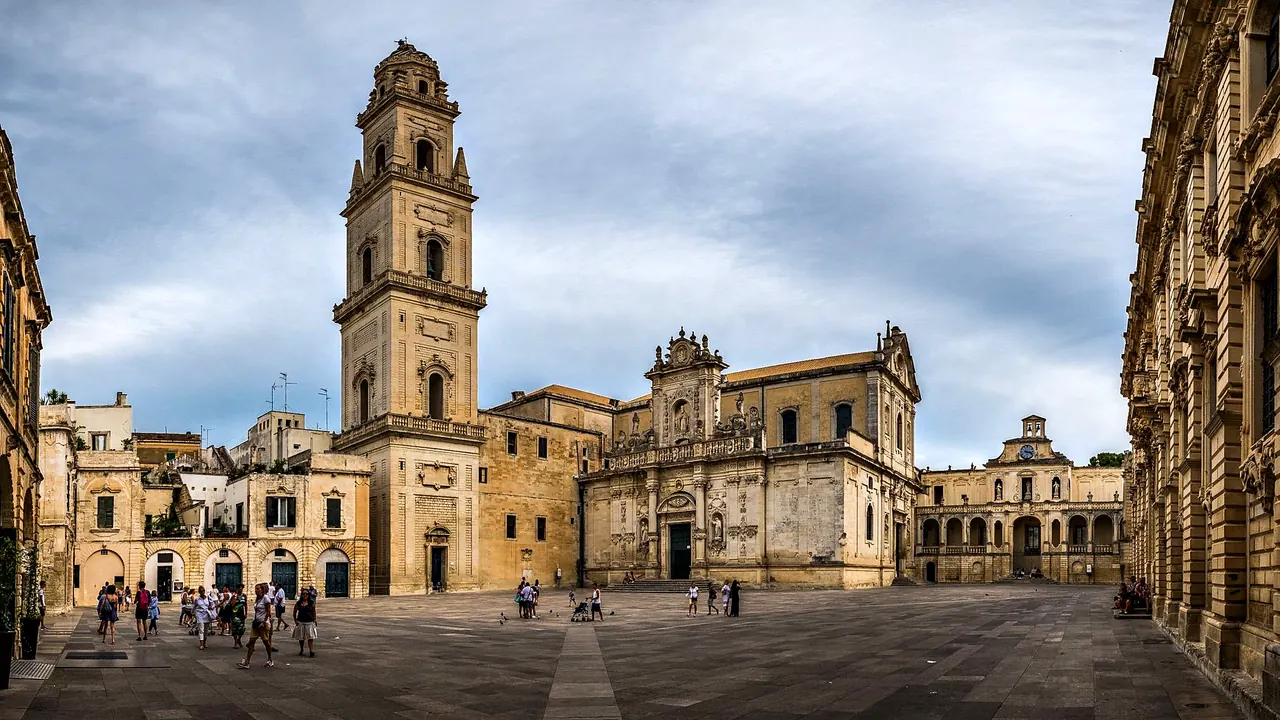
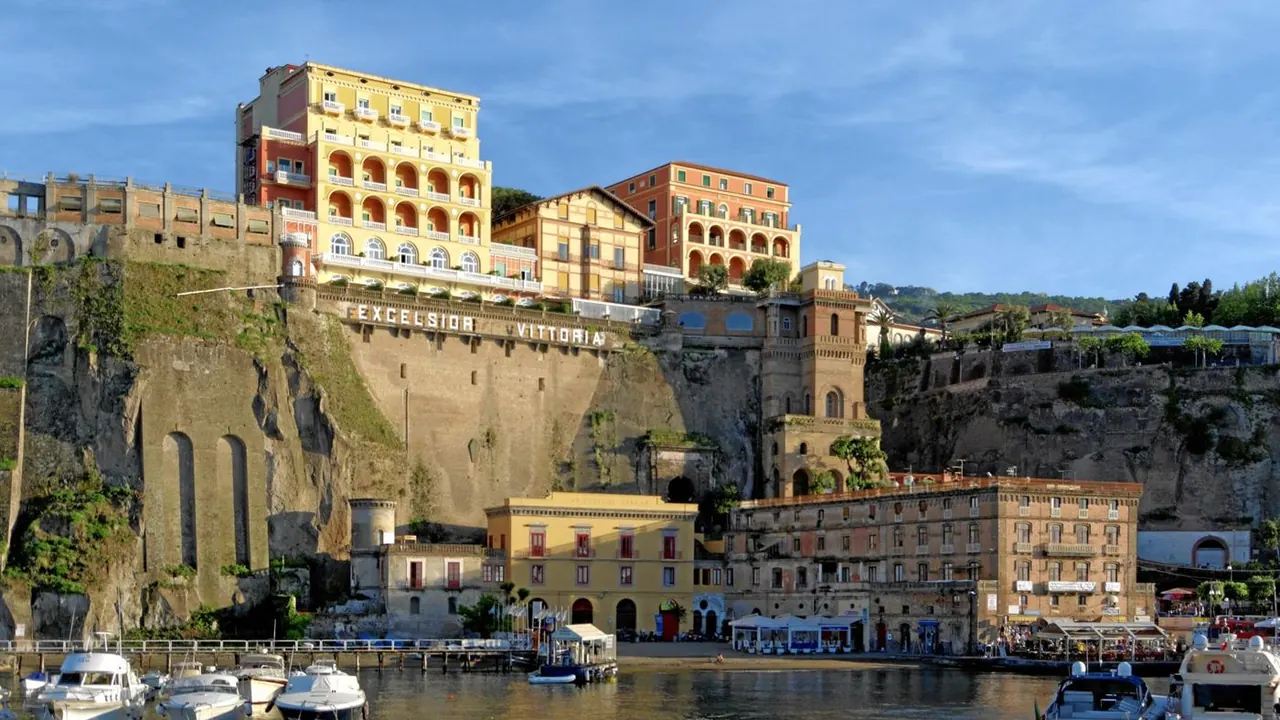
Photos: Lecce by Giuseppe Milo, CC BY 3.0, cropped; Sorrento by Berthold Werner, CC BY-SA 3.0, cropped.
Lecce or Sorrento?
Our verdict in twelve categories, each scored against the same fixed benchmark cities, and the climate month by month, so you can choose for your trip.
Choose Lecce for
- culture and sights
- prices
- live music and the arts
Lecce suits travellers who want the town itself to be the reason for coming. Its Baroque old centre is worth walking for days, the sandy Salento beaches are within half an hour, and money goes further than on the Bay of Naples. It works best with a hire car, for people who like long evenings on the piazza with local wine and, in summer, the pizzica festivals in the villages.
Choose Sorrento for
- nature and the outdoors
- day trips
- getting around
Sorrento is the better choice when the town is a base rather than the point of the trip. Pompeii, Capri, Vesuvius, Naples and the Amalfi Coast are all a train or boat ride away. The peninsula's terraced ridge and cliff paths give walkers far more than Lecce's flat plain, and you can do all of it without a car. In return you pay resort prices and swim from piers rather than off sand.
Scoreboard
Twelve categories on one fixed scale from 0 to 100. The shaded stretch is the gap between the two.
Your match
Pick a travel style or drag the sliders, and both match scores follow your weighting.
Wins on culture and sights and prices with your weighting.
Wins on nature and the outdoors and day trips with your weighting.
What matters to you?
Category by category
What the scores mean for a trip.
Beaches & swimming
Lecce wins if you want to lie on sand, although the town is inland and the shore nearest to it, at San Cataldo, is plain. The good beaches are on two seas. On the Adriatic, roughly half an hour south, there are white limestone coves with rock stacks standing offshore. On the Ionian, the sand runs long and the water stays shallow far out, so you can wade in rather than drop in. You reach both by car or summer bus, and the best-known spots fill up in August.
Swimming in Sorrento is quite different. At Marina Piccola and Marina Grande you lower yourself off wooden piers into deep, clear water, or you stretch out on the rocks by the Roman ruins at the Bagni della Regina Giovanna. It suits confident swimmers, but there is almost no sand, paid lidos take up much of the shore, and for a pebble beach you need a bus to Marina del Cantone or a boat.
Food & drink
Both towns cook the food of their own region and offer little else. In Lecce, pastry and peasant dishes shape the day: a pasticciotto with iced almond coffee for breakfast, chickpeas with fried pasta, fava bean purée with wild chicory and dark Negroamaro wine, mostly eaten cheaply in the osterie of the old town.
Sorrento's cooking leans on the sea and the dairies: gnocchi baked with fior di latte, fish in acqua pazza, lemons in everything, and Neapolitan pizza. The hill villages have more ambitious restaurants than Lecce does, but the streets around Piazza Tasso also have more tourist menus, so choosing where to eat matters more in Sorrento.
Culture & sights
On culture, Lecce is far ahead. The whole old town is a Baroque showpiece carved in honey-coloured limestone, from the facade of Santa Croce to the enclosed Piazza del Duomo at dusk. Half a Roman amphitheatre lies open below Piazza Sant'Oronzo, and older Messapian layers run beneath the streets.
Sorrento's own sights fill a day or two at an easy pace: the cathedral, the cloister of San Francesco, the Museo Correale and the ravine of the Vallone dei Mulini. The great ancient sites the area is famous for lie outside the town, so they are day trips rather than part of a stay in the centre.
Nightlife
Neither town is worth choosing for its nightlife, but Lecce has more going on after dinner. Students keep the wine bars and small cocktail bars in the old-town lanes busy at weekends for most of the year. In summer there are beach clubs and open-air discos around Gallipoli if you are willing to drive.
Evenings in Sorrento are quieter and suit an older crowd: a drink on a terrace over the bay, piano bars with Neapolitan songs, a few pubs, and early nights outside summer. The last trains and ferries leave early, so a night out in Naples or on Capri means staying over.
Nature & outdoors
Sorrento has by far the more dramatic landscape. Its limestone ridge of lemon and olive terraces drops to sheer coast. Trails run to Punta Campanella and down to the protected bay of Ieranto, the Path of the Gods and the beech woods of Monte Faito are close, and Vesuvius stands across the bay ready to climb.
The country around Lecce is a flat plain of olive groves and red earth, better for gentle cycling than for hiking. There, the coast is the outdoors: cliffs and sea caves between Otranto and Leuca, birdwatching at Le Cesine and the Alimini lakes, and good snorkelling and diving.
Day trips
Both towns make good bases, but Sorrento's range is exceptional. Pompeii is half an hour away on the Circumvesuviana, and Herculaneum and Vesuvius fit into the same outing. Capri is a short ferry ride, boats run to Positano and Amalfi in summer, and Naples with its archaeological museum is about an hour away, all without a car.
Lecce covers the Salento well: Otranto and its cathedral mosaic, Gallipoli's old town on its island, Galatina's frescoes, and further north white Ostuni and the trulli of Alberobello. These places are quieter and more spread out than Sorrento's, and most are far easier to reach with a hire car.
Good for families
With young children Lecce is the easier choice, mainly because of the swimming. The shallow, sandy beaches around Porto Cesareo let small children paddle safely, and the traffic-free old town fills with families in the evening.
Sorrento is just as welcoming to children, and older ones enjoy a boat to Capri or a day among the ruins of Pompeii. But swimming there means ladders into deep water, many hotels sit on steep lanes with no pavements, and the coastal bus rides are long. Neither town has much built especially for children.
Getting around
Both town centres are flat and easy on foot. The difference shows once you leave town. Sorrento needs no car at all: the Circumvesuviana, the coast buses and the ferries reach almost everywhere, even if the train is crowded and the summer buses are slow on the hairpins.
From Lecce, fast trains run north to Brindisi and Bari. But the local lines across the Salento are slow and infrequent, and the beach buses run only in summer, so most visitors end up hiring a car and parking outside the walls.
Shopping & style
Neither town is a shopping destination, and both are good for browsing more than buying. Lecce's distinctive things to bring home are cartapesta saints and nativity figures from old-town workshops, small limestone carvings and Grottaglie ceramics, along with olive oil and taralli.
Sorrento has inlaid wood boxes and trays, leather sandals made to measure while you wait, linen and cameos, among a great deal of lemon-themed goods. Its advantage is what lies nearby: the boutiques of Capri and the shops of Naples are a boat or train ride away.
Affordability
Lecce is the cheaper base for most of the year. Eating out costs little, and rooms in the bed and breakfasts of old palazzi are fairly priced outside high summer. August is the exception, when the whole Salento fills with Italian vacationers and rooms and beach-club loungers turn expensive. Most visitors also hire a car to reach the coast, which adds to the bill.
Sorrento's costs fall the other way round. The trains and buses are cheap and you need no car, but sea-view rooms, terrace restaurants, lido sunbeds and private boat trips are priced for one of Italy's most sought-after coasts. Hotel rates drop considerably in spring and late autumn, and the family trattorias and pizzerias away from the main squares are fairly priced, yet a stay here still costs more than a similar one in Lecce.
Live music & performing arts
Lecce offers more to see and hear. The Teatro Politeama Greco and the Teatro Paisiello put on a modest season of opera, concerts and theatre. Summer brings pizzica, the Salento's tambourine dance, to village festivals and to the great open-air night of the Notte della Taranta in Melpignano.
In Sorrento, performances are mostly shows of Neapolitan song and tarantella staged for visitors, plus summer chamber concerts in the cloister of San Francesco. For full-scale opera, you go to the Teatro di San Carlo in Naples, about an hour away.
Wellness & relaxation
Both towns are good for slowing down, and neither has a bathing tradition of its own, so the difference is in the setting. In Lecce the calm comes from the long afternoon closing and from the old masserie in the countryside that have become quiet spa retreats. The sulphur springs at Santa Cesarea Terme, in grottoes and pools on the cliffs, are under an hour away.
Sorrento has cliff-top hotel spas and pools over the bay, and Ischia's thermal gardens are a ferry ride away. The centre gets crowded and noisy in high summer, so a restful stay there works best in spring or autumn.
When should you go?
Pick your month. The climate figures are measured averages, not a forecast.
Lecce in July
Sorrento in July
Daytime high, °C
Rainfall in the month, mm
Where the figures come from
Lecce's temperatures are measured 38 km from the centre, at Brindisi.
Lecce has no rain gauge within 25 km of the centre, so its rainfall comes from a gridded climate dataset read at the city rather than from a gauge further away.
Sorrento has no rain gauge within 25 km of the centre, so its rainfall comes from a gridded climate dataset read at the city rather than from a gauge further away.
Sorrento's sunshine is measured 54 km from the centre, at Grazzanise.
Temperature and rainfall are climate normals, averaged over the years shown. Lecce: 1991-2020 (sunshine 1981-2010) normals, Brindisi (38 km from centre). Sorrento: 2005-2025 (sunshine 1991-2020, rainfall 1991-2020) normals, Capri (17 km from centre).
The two towns have almost the same summer. Highs reach about 30°C in July and August, too hot for sightseeing in the middle of the day, and the sea warms to 26°C. In both, swimming is comfortable from June well into October. The differences are in rain and sunshine. Lecce is the drier and sunnier of the two, with long bright days that last into September. Sorrento's autumn rains come harder and peak in November at about 151mm, against 102mm in Lecce.
For walking, May and the stretch from late September into October suit both, with highs in the low to mid twenties. Spring is noticeably wetter on the Sorrento peninsula, which matters if you plan to hike, while April and May in Lecce are dry and sunny. Winter is mild in both towns but grey and damp, more so in Sorrento.
Which traveller are you?
On a culture and arts trip, Lecce is the clear choice. You can spend days walking its Baroque old town, the Roman amphitheatre and the Messapian layers underground, and summer adds the pizzica nights. Sorrento's own sights take a day or two, although Pompeii is close by.
For an outdoors trip, choose Sorrento. The trail to Punta Campanella, the Path of the Gods, Monte Faito and the crater of Vesuvius give real walking, and boats and kayaks reach the grottoes. Lecce has coastal paths and snorkelling, but the country inland is flat.
On a tight budget, Lecce makes your money go further. Pastries, osteria meals and local wine cost little, and the bed and breakfasts in the old town are fairly priced outside August. Sorrento charges resort rates for rooms and sunbeds, though its trains and buses are cheap.
Before you go
| Measure | Lecce | Sorrento |
|---|---|---|
| Official language | Italian | Italian |
| Currency | Euro (EUR) | Euro (EUR) |
| Sockets | CFL230 V, 50 Hz | CFL230 V, 50 Hz |
| Driving side | Right | Right |
| Time zone | UTC+1, UTC+2 in summer | UTC+1, UTC+2 in summer |
| Emergency number | 112 | 112 |
| Elevation | 49 m | 50 m |
| Main airport | Brindisi Airport (BDS)39 km from centre49 non-stop destinations | Naples International Airport (NAP)30 km from centre131 non-stop destinations |
| Public holidays this year | 13 days | 13 days |
By the numbers
| Measure | Lecce | Sorrento |
|---|---|---|
| City population | 94,783 | 15,407 |
| People per km² | 393 | 1,541 |
| Museums within 10 km | 11 | 6 |
| UNESCO World Heritage sites within 50 km | 0 | 5 |
| Swim season, months above 21 °C | 4 months | 5 months |
Where else could you go?
Every comparison below shares a destination with this one, so you can follow Lecce or Sorrento somewhere new.