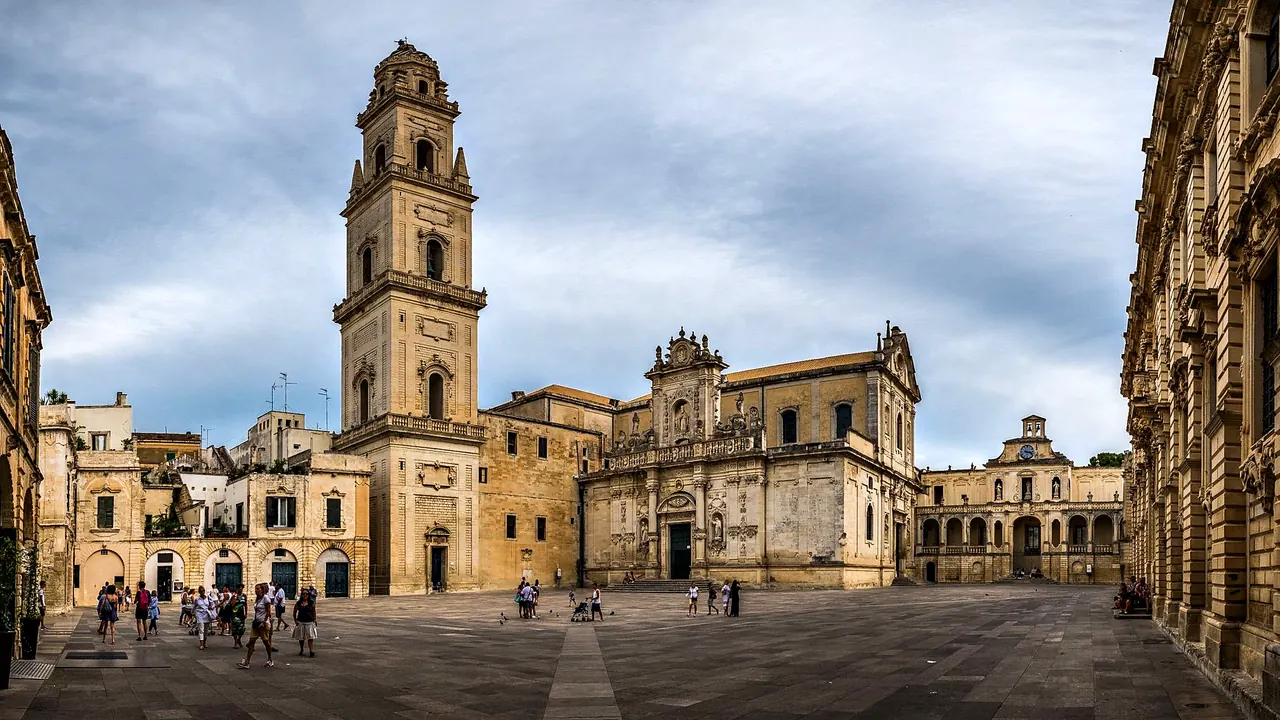
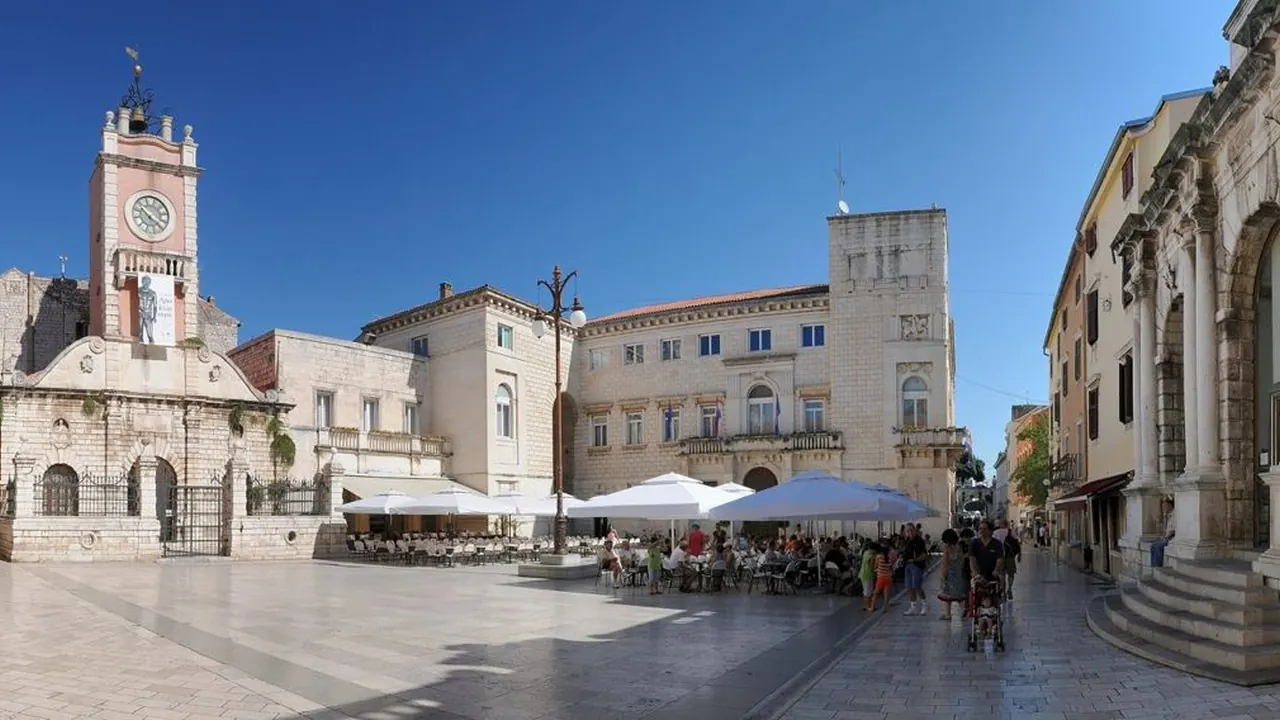
Photos: Lecce by Giuseppe Milo, CC BY 3.0, cropped; Zadar by Böhringer Friedrich, CC BY-SA 2.5, cropped.
Lecce or Zadar?
Our verdict in twelve categories, each scored against the same fixed benchmark cities, and the climate month by month, so you can choose for your trip.
Choose Lecce for
- food and drink
- culture and sights
- live music and the arts
Lecce suits travellers who want to spend their days in town as much as on the sand. Its honey-coloured Baroque old town is the richer place to wander, the Salento cooking is more distinctive than anything on the Dalmatian coast, and evenings of pizzica, theatre or simply sitting in the piazzas give it more depth once the beach day is done. It is also a little gentler on the budget outside August.
Choose Zadar for
- nature and the outdoors
- getting around
- families
Zadar is the better pick for anyone who measures a trip in hikes, boat days and island crossings. The Velebit mountains, the Paklenica gorges, the Kornati archipelago and the waterfalls at Krka all lie within reach, and ferries leave from the edge of a compact, walkable peninsula. The town itself is smaller and quieter, so think of it as a base for the outdoors rather than a destination in its own right.
Scoreboard
Twelve categories on one fixed scale from 0 to 100. The shaded stretch is the gap between the two.
Your match
Pick a travel style or drag the sliders, and both match scores follow your weighting.
Wins on food and drink and culture and sights with your weighting.
Wins on nature and the outdoors and getting around with your weighting.
What matters to you?
Category by category
What the scores mean for a trip.
Beaches & swimming
Both cities offer equally good swimming, but in different ways. Lecce lies inland, so every beach day means a drive or a seasonal bus to the sandy coves of Torre dell'Orso or the shallow, fine-sand shores of Porto Cesareo on the Ionian side.
Zadar has the sea at its doorstep: you can swim off the stone promenade or walk to Kolovare, though the city beaches are pebble and concrete. For sand you take a short trip to Nin or a ferry to Sakarun on Dugi Otok.
Food & drink
Lecce has the stronger and more particular kitchen. Its day is built around local pastries, iced almond coffee and peasant dishes such as fava purée with chicory, all served cheaply in old town osterie and paired with the robust reds of the plain.
Zadar's Dalmatian menu of grilled fish, black risotto and peka is good but repeats from one konoba to the next. Its strongest points are the market by the walls and a glass of Maraschino, not a reason to plan the trip around meals.
Culture & sights
Lecce is the more rewarding town for sightseeing. Its appeal is a whole townscape of richly carved Baroque facades, from Santa Croce to the enclosed Piazza del Duomo, with Roman and Messapian layers beneath, and you could spend days just walking it.
Zadar packs Roman forum, St Donatus and Venetian walls into a small peninsula, adds fine small museums such as the Museum of Ancient Glass, and finishes with the Sea Organ. It is absorbing, but two days covers it.
Nightlife
Neither town is somewhere to come for nightlife, and the evenings feel alike: aperitivo or sunset drinks, then wine bars or café-bars in the old lanes. The difference is the season. Lecce's student population keeps weekends lively for most of the year, while Zadar goes quiet from October to May. In summer, real clubbing means a drive in both cases, to Gallipoli's beach discos or to Zrće on Pag.
Nature & outdoors
Zadar is far better for the outdoors. Mountains, a scattering of islands and two famous lake and waterfall parks are all within day range, along with climbing in Paklenica and sailing among the bare Kornati islands.
Around Lecce the land is flat olive country, so the outdoors means the coast: clifftop paths and sea caves between Roca Vecchia and Leuca, birdwatching at Le Cesine, and snorkelling or diving off rocky shores.
Day trips
Both make excellent bases, so the choice depends on the kind of outing you want. From Lecce the trips are to stone towns: walled Otranto with its cathedral mosaic, island Gallipoli, white Ostuni and the trulli of Alberobello further north.
From Zadar, Šibenik's cathedral, Trogir and Split's palace mix with ferry hops to Ugljan or car-free Silba. In both cases a car makes everything easier.
Good for families
With children the two are much alike. Both old towns are flat and largely free of cars, families stay out late in the piazzas or along the promenade, and neither has a zoo, aquarium or theme park. In Lecce the pleasures are those of an Italian evening, with gelato close at hand and safe lanes to run in. For the beach, the gentle, sandy shallows around Porto Cesareo suit small swimmers best.\n\nZadar gives children more to do on the waterfront itself.
The Sea Organ's music, played by the waves, and the Greeting to the Sun lighting up after dark hold their attention, and the wide promenade suits scooters and pushchairs. For younger ones, the boat out to Ugljan or Pašman is an outing in its own right. When they want sand, Nin's long, shallow beaches are the best choice on this side.
Getting around
Zadar is the easier place to manage without wheels. Its compact peninsula, the footbridge across the harbour and the ferry quay at the edge of the old town let you swim and island-hop on foot, although the parks inland still need a car or tour.
Lecce's centre is just as walkable, but the beaches and Salento towns sit beyond slow local trains and summer-only buses. Most visitors end up hiring a car and parking outside the walls.
Shopping & style
Neither is a shopping destination, though Lecce has a little more character. Its old town workshops make cartapesta saints and nativity figures, and carved local stone and Grottaglie ceramics make good gifts. Zadar's Kalelarga is mostly chains and souvenirs, so the best buys are edible or handmade: Maraschino, Pag cheese and Pag lace from the market by the walls.
Affordability
Lecce gives somewhat better value, with cheap pastries, inexpensive trattoria meals and fairly priced rooms in old palazzi for most of the year. Zadar is reasonable for Croatia's coast, but restaurants on the main streets are priced for visitors, and national park entry and boat excursions soon add up. Both get expensive in August, and in both June and September strike the best balance.
Live music & performing arts
Lecce has more going on. The Politeama Greco and Teatro Paisiello run opera and concert seasons, and the summer pizzica festivals peak at the vast Notte della Taranta in Melpignano.
Zadar's highlight is more intimate: early and chamber music inside ninth-century St Donatus, with klapa singing in the squares. Beyond July and August there is very little.
Wellness & relaxation
Sulphur grottoes in the sea cliffs at Santa Cesarea Terme give Lecce a real spa outing within an hour, and converted masserie in the olive country make quiet retreats with spas of their own. Zadar has only hotel spas at Borik and the old custom of coating yourself in mud in Nin's lagoon. Its best way to unwind costs nothing: watching the sun set over the islands from the Sea Organ steps.
When should you go?
Pick your month. The climate figures are measured averages, not a forecast.
Lecce in July
Zadar in July
Daytime high, °C
Rainfall in the month, mm
Where the figures come from
Lecce's temperatures are measured 38 km from the centre, at Brindisi.
Lecce has no rain gauge within 25 km of the centre, so its rainfall comes from a gridded climate dataset read at the city rather than from a gauge further away.
Zadar has no rain gauge within 25 km of the centre, so its rainfall comes from a gridded climate dataset read at the city rather than from a gauge further away.
Temperature and rainfall are climate normals, averaged over the years shown. Lecce: 1991-2020 (sunshine 1981-2010) normals, Brindisi (38 km from centre). Zadar: 1999-2020 (rainfall 1991-2020) normals, Zadar / Zemunik (9.9 km from centre).
Summer runs much the same in both. July and August reach about 30°C, which makes midday too hot for walking the streets, and both seas are warm enough for swimming from June to September. Lecce's water stays a degree or so warmer into early autumn. Its summer is also the drier of the two, with almost no rain in July and long, sunny days, while Zadar gets a few more summer showers but is just as hot.
The two differ most in spring and autumn. May is warm in both, around 23°C, but Zadar has about twice Lecce's rain, so Lecce is the drier choice for spring sightseeing and early swims. In autumn the rain comes sooner and heavier in Zadar, with 100mm in September, and October and November are the wettest months in both cities. Winter is a few degrees milder in Lecce. For walking either town, April and May are the most comfortable months. Late September is a fair second choice in Lecce, where the autumn rain is lighter.
Which traveller are you?
For a culture and arts trip, Lecce is the clear choice. Its whole old town is a Baroque showpiece of carved limestone churches, with a Roman amphitheatre below the main square, and the opera, theatre and pizzica festivals give evenings more to offer than Zadar's summer concerts.
On an outdoors trip, Zadar wins easily. Paklenica's gorges offer serious hiking and climbing, the Velebit range rises behind the coast, and boats run to the Kornati islands and Telašćica. Lecce's flat olive plain offers cycling and coastal paths, but nothing on that scale.
On a food and nightlife trip, lean towards Lecce for the eating: pasticciotto at breakfast, ciceri e tria at lunch, Negroamaro at dinner. Nights out are equally low-key in both cities, and serious dancing means driving to Gallipoli or to Zrće on Pag.
Before you go
| Measure | Lecce | Zadar |
|---|---|---|
| Official language | Italian | Croatian |
| Currency | Euro (EUR) | Euro (EUR) |
| Sockets | CFL230 V, 50 Hz | CF230 V, 50 Hz |
| Driving side | Right | Right |
| Time zone | UTC+1, UTC+2 in summer | UTC+1, UTC+2 in summer |
| Emergency number | 112 | 112 |
| Elevation | 49 m | 5 m |
| Main airport | Brindisi Airport (BDS)39 km from centre49 non-stop destinations | Zadar Airport (ZAD)10 km from centre66 non-stop destinations |
| Public holidays this year | 13 days | 14 days |
By the numbers
| Measure | Lecce | Zadar |
|---|---|---|
| City population | 94,783 | 70,779 |
| People per km² | 393 | - |
| Museums within 10 km | 11 | 1 |
| UNESCO World Heritage sites within 50 km | 0 | 2 |
| Swim season, months above 21 °C | 4 months | 4 months |
Where else could you go?
Every comparison below shares a destination with this one, so you can follow Lecce or Zadar somewhere new.