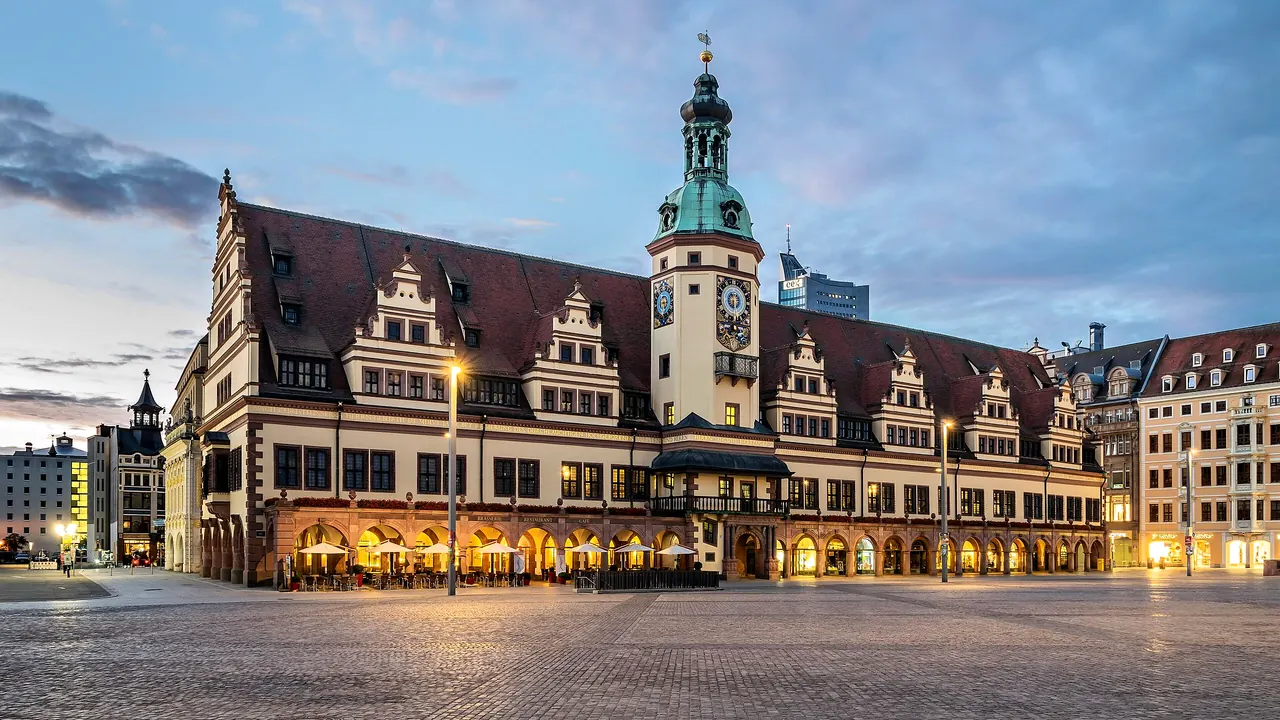
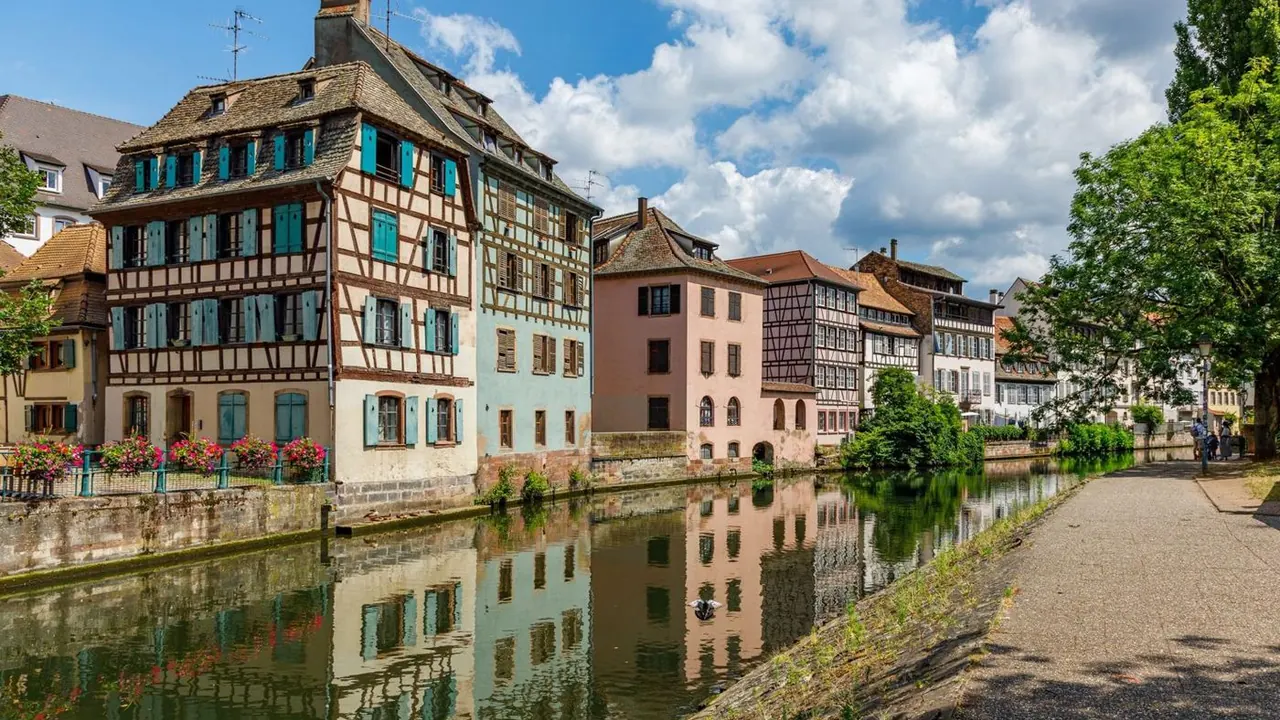
Photos: Leipzig by Krzysztof Golik, CC BY-SA 4.0, cropped; Strasbourg by Edoardo Colombo, Pexels License.
Leipzig or Strasbourg?
Our verdict in twelve categories, each scored against the same fixed benchmark cities, and the climate month by month, so you can choose for your trip.
Choose Leipzig for
- live music and the arts
- beaches
- nightlife
Leipzig suits travellers who build a trip around music and late evenings. Bach's church and choir, the Gewandhaus Orchestra and a club scene in old factories give it more to do after dark than Strasbourg. Beds cost less, and trains run from the one main station to Dresden, Weimar and Berlin. It is the better base for a curious, budget-minded city stay with a strong recent-history thread.
Choose Strasbourg for
- wellness
- food and drink
- nature and the outdoors
Strasbourg is the choice for anyone who travels to eat, drink wine and look at beautiful streets. Its cathedral island and Petite France are lovelier to wander than Leipzig's old town, and winstub cooking with Alsace Riesling beats Saxon fare. The Vosges, the wine villages and the Baden-Baden baths are all close by, so it suits a slower, more scenic trip.
Scoreboard
Twelve categories on one fixed scale from 0 to 100. The shaded stretch is the gap between the two.
Your match
Pick a travel style or drag the sliders, and both match scores follow your weighting.
Too close to call, 1 point apart
Wins on live music and the arts and beaches with your weighting.
Wins on wellness and food and drink with your weighting.
What matters to you?
Category by category
What the scores mean for a trip.
Beaches & swimming
Neither city is a beach destination, but Leipzig's swimming is clearly better. Its flooded lignite mines south of town, the Cospudener See and Markkleeberger See, have real sandy shores, clear water and beach bars, and you can reach them by tram or by bike through the floodplain forest.
Strasbourg has smaller gravel-pit lakes such as the Baggersee, with grassy banks rather than sand, and the Rhine is off limits for swimming. Both are only worth it on a hot July or August afternoon.
Food & drink
Strasbourg is the place to travel for food. Alsace sits where French and German cooking meet, and a meal in a wood-panelled winstub, with choucroute, baeckeoffe or tarte flambée and a pichet of local Riesling, is a reason to go in itself. Foie gras and a real fine-dining tier in the city and nearby villages add depth, though the tourist menus around the cathedral are best avoided.
Leipzig's Saxon cooking is filling and fairly priced but rarely memorable. Its strengths lie elsewhere: sour, salted Gose beer, a coffee-house tradition going back three centuries, and more varied casual international food along the Karli and in Plagwitz than Strasbourg offers.
Culture & sights
Strasbourg has the more striking old town. The pink sandstone cathedral with its astronomical clock, the timber-framed Grande Ile and the locks of Petite France form a UNESCO-listed townscape, and the German-built Neustadt adds imperial grandeur. The Palais Rohan's three museums and the Oeuvre Notre-Dame give it depth indoors.
Leipzig's sights are less picturesque but carry weighty stories: Bach's Thomaskirche, the Nikolaikirche where the 1989 Monday prayers began, the Stasi exhibition at the Runde Ecke and the brooding monument to the 1813 battle. Choose it for music and modern history, Strasbourg for architecture and beauty.
Nightlife
Leipzig is the place for a proper night out. Its club culture grew up in disused factories and warehouses, electronic music leads, weekend nights run past dawn, and the doors are relaxed. The Karli, alternative Connewitz and the canal-side mills of Plagwitz give plenty of choice before the clubs.
Strasbourg's evenings are about bars, not clubs. Student bars and beer cellars in the Krutenau and riverside terraces in summer make for pleasant evenings, but there are few clubs and the city is mostly quiet by midnight on weeknights.
Nature & outdoors
Strasbourg has far better countryside within reach. The Vosges rise above the vineyards about an hour west, with forest trails, castle ruins and the ridge at Mont Sainte-Odile, and the Black Forest offers serious hiking to the east. Level cycle routes along the Rhine and canals start in the city, where storks nest in the riverside woods.
Leipzig is green but flat. The Auwald floodplain forest and canoe routes along its canals are lovely for a gentle day, and the mine lakes suit sailing and paddleboarding, but real hills are two hours away by train.
Day trips
Both are first-rate bases, but the trips differ in character. From Leipzig you go to towns of great history: Dresden and Weimar a little over an hour away, Luther's Wittenberg, Naumburg's cathedral, the Bauhaus at Dessau and Berlin itself, all easy by train with no car needed.
Strasbourg's day trips lean towards wine and scenery. Colmar is half an hour south, the Alsace wine route villages such as Riquewihr and Eguisheim lie between, and Baden-Baden, Freiburg and Basel are across the borders. The wine villages are easier with a car or bike.
Good for families
Families do equally well in either, and the difference lies in the big outing. Leipzig's zoo, with its covered Gondwanaland tropical hall, works in any weather, and in summer the lakes add sandy, shallow shores, with the Belantis theme park beside them.
Strasbourg's centre is mostly car-free, children enjoy boat trips through Petite France, the storks in the Orangerie and the hands-on Le Vaisseau, and Europa-Park, a much larger park than Belantis, is about an hour away.
Getting around
Getting about is easy in both, with flat, walkable centres, trams and good cycle lanes, but the two are laid out differently. Leipzig's old town sits inside a ring road with the main station at its northern edge, and several sights lie well beyond it. That means the tram network does real work, running out to the zoo, Plagwitz and the Battle of the Nations monument, and an underground S-Bahn line heads south to the lakes.
Strasbourg's centre is an island, largely pedestrianised and small enough that you rarely need anything but your feet or a bike, and its separated bike lanes are among the best in France. The trams link it to the station and the European quarter, and one line crosses the Rhine to Kehl.
Shopping & style
Strasbourg has the edge for things to take home: Alsace wines, Soufflenheim and Betschdorf pottery, printed linens and gingerbread, with December's Christmas market as the peak, though many stalls there sell mass-produced goods. The lanes near the cathedral hold independent delis and bookshops.
Leipzig's centre is mostly chains, though its old trade-fair arcades are pleasant in the rain. Its individual side is in the west, with vintage and record shops on Karl-Heine-Strasse and the galleries of the Spinnerei cotton mill.
Affordability
Leipzig is the cheaper stay, mainly because rooms near the old town cost less than in most large German cities. Meals, drinks and taxis are at the national level, so it is mid-priced rather than cheap, and trade-fair weeks push room rates up.
In Strasbourg the room is the main expense, and it jumps during the Christmas market and the European Parliament's sitting weeks. Winstub meals, wine by the pichet and the free cathedral and old town soften the bill.
Live music & performing arts
Leipzig is the stronger music city by a wide margin. The Gewandhaus Orchestra is one of the world's great orchestras, the Thomanerchor sings Bach in his own church most term weekends, and the June Bachfest and the Whitsun Wave-Gotik-Treffen, a huge goth and dark-wave gathering, draw visitors from abroad.
Strasbourg has a solid programme of its own, with the Opéra national du Rhin, the Théâtre National de Strasbourg and the autumn Musica festival for contemporary music. It rewards a visit planned around the season, where Leipzig offers fine music almost any weekend.
Wellness & relaxation
Strasbourg is the better place to unwind. It has its own early twentieth-century public baths with a hammam, and Baden-Baden's Friedrichsbad and Caracalla thermal baths are under an hour away, with more Black Forest spa towns beyond.
Leipzig offers modern sauna complexes and a few lakeside saunas, and the spa towns nearby need a separate trip. Its calm comes from uncrowded streets, quiet Sundays and long walks in the Auwald.
When should you go?
Pick your month. The climate figures are measured averages, not a forecast.
Leipzig in July
Strasbourg in July
Daytime high, °C
Rainfall in the month, mm
Temperature and rainfall are climate normals, averaged over the years shown. Leipzig: 1991-2020 (sunshine 1961-1990, rainfall 1961-1990) normals, Leipzig-Holzhausen (5.7 km from centre). Strasbourg: 1991-2020 normals, Strasbourg (9.1 km from centre).
The two cities share much the same climate, cold in winter and warm without being hot in summer, so May to September is the comfortable stretch for both. Strasbourg runs a degree or two warmer through the year, peaking at about 26°C in July and August against Leipzig's 25°C, and its summer months are a little sunnier. That makes high summer the time for the lakes in either city, and street walking stays pleasant throughout, since neither gets uncomfortably hot.
The rain falls differently. Leipzig's wettest month is June, at around 67mm, while Strasbourg's is May, at about 77mm. If you want dry spring walking, Leipzig's April and May are the safer bet, and for a dry midsummer Strasbourg is. Winters in both hover around 4°C to 6°C by day with little sun, so from November to February the trip moves indoors.
Which traveller are you?
On a trip on a tight budget, Leipzig is the better pick. Rooms within walking distance of the old town cost less than Strasbourg's, beer and simple food in the student districts are fair, and the compact centre means most days need no tram ticket.
For a relaxing and wellness trip, choose Strasbourg. Days fall into an easy rhythm of canal walks, long lunches and level rides along the Rhine, with a thermal spa day just across the border. Avoid December, when market crowds fill the centre.
For classical music lovers, Leipzig is worth planning a whole trip around its calendar. Book concert seats before you travel, aim for a term-time weekend or June, and spend the days at the Bach Museum and Mendelssohn House. Strasbourg's classical programme is thinner.
Before you go
| Measure | Leipzig | Strasbourg |
|---|---|---|
| Official language | German | French |
| Currency | Euro (EUR) | Euro (EUR) |
| Sockets | CF230 V, 50 Hz | CE230 V, 50 Hz |
| Driving side | Right | Right |
| Time zone | UTC+1, UTC+2 in summer | UTC+1, UTC+2 in summer |
| Emergency number | 112 | 112 |
| Elevation | 110 m | 132 m |
| Main airport | Leipzig/Halle Airport (LEJ)13 km from centre20 non-stop destinations | Strasbourg Airport (SXB)10 km from centre43 non-stop destinations |
| Public holidays this year | 11 days | 11 days |
By the numbers
| Measure | Leipzig | Strasbourg |
|---|---|---|
| City population | 615,932 | 293,771 |
| People per km² | 2,068 | 3,752 |
| Museums within 10 km | 40 | 21 |
| UNESCO World Heritage sites within 50 km | 1 | 3 |
Where else could you go?
Every comparison below shares a destination with this one, so you can follow Leipzig or Strasbourg somewhere new.
- Baden-Badenvs Strasbourg
- Colmarvs Strasbourg
- Dresdenvs Leipzig
- Stuttgartvs Strasbourg
- Baselvs Strasbourg
- Heidelbergvs Strasbourg