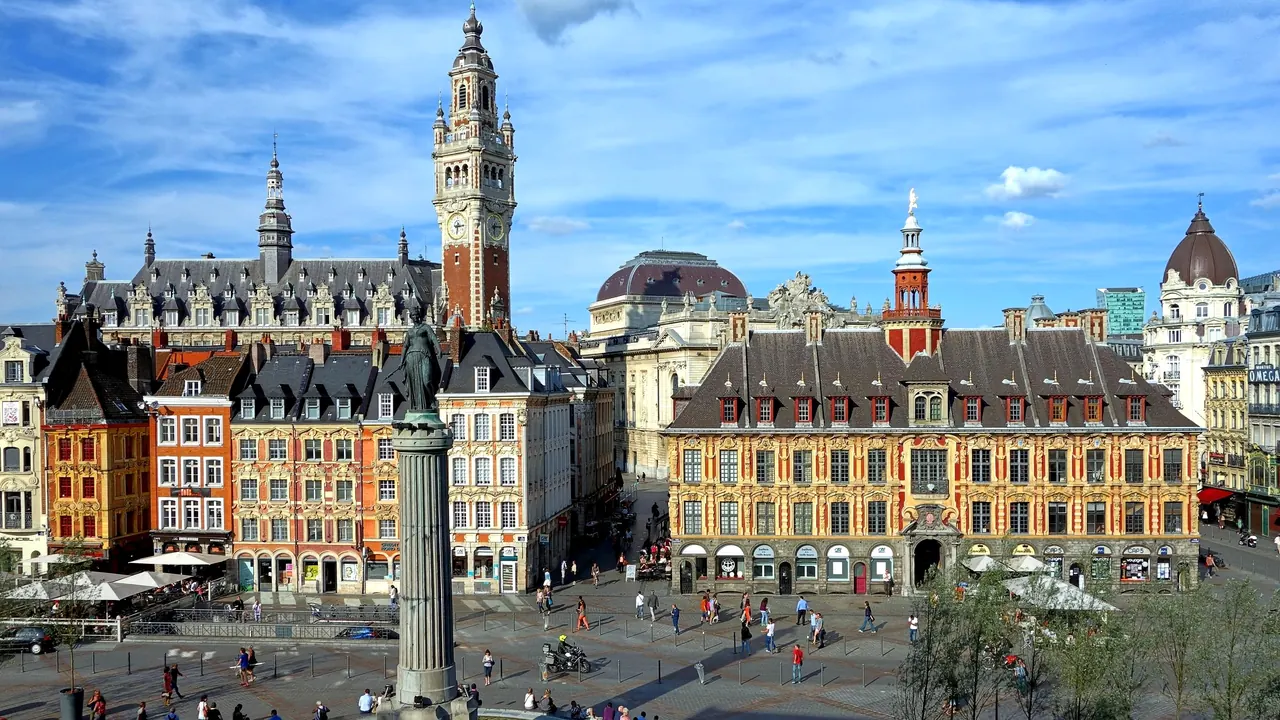
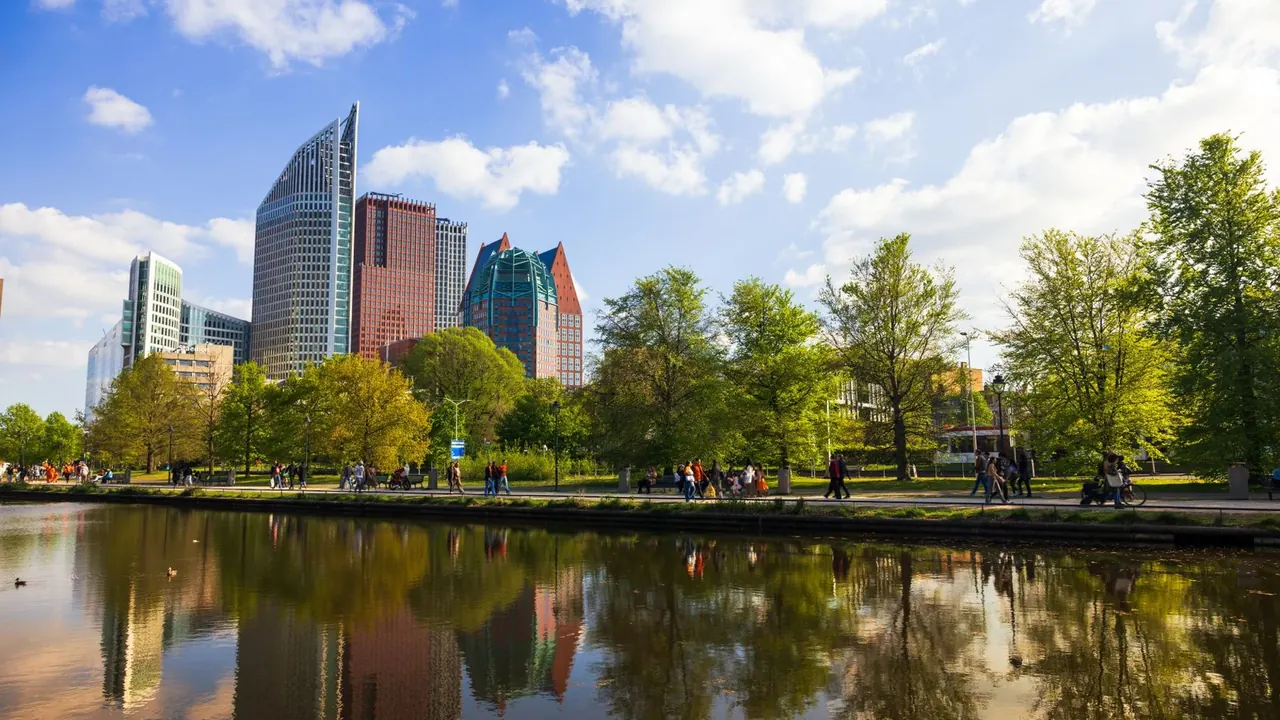
Photos: Lille by Velvet, CC BY-SA 3.0, cropped; The Hague by Bráulio jardim, Pexels License.
Lille or The Hague?
Our verdict in twelve categories, each scored against the same fixed benchmark cities, and the climate month by month, so you can choose for your trip.
Choose Lille for
- nightlife
- food and drink
- prices
Lille is for travellers who want to eat and drink in the Flemish manner, with slow-cooked carbonnade in wood-panelled estaminets, Belgian and northern French ales, and student bars that stay loud well into the night. It also makes the cheaper base, and its two stations put Brussels, Bruges, Paris and the First World War battlefields within easy reach. Adults on a moderate budget who care more about their evenings than about the sea will get more from it.
Choose The Hague for
- families
- beaches
- nature and the outdoors
Families, and anyone who wants the sea close by, will find The Hague the gentler and more rounded choice. Madurodam, the sand at Scheveningen and the dune paths of Meijendel keep children and walkers busy, and the big Dutch sauna complexes and quiet embassy streets make it easy to slow down. Expect higher prices and earlier nights, with Delft, Leiden and Amsterdam all a short train ride away.
Scoreboard
Twelve categories on one fixed scale from 0 to 100. The shaded stretch is the gap between the two.
Your match
Pick a travel style or drag the sliders, and both match scores follow your weighting.
Wins on nightlife and food and drink with your weighting.
Wins on families and beaches with your weighting.
What matters to you?
Category by category
What the scores mean for a trip.
Beaches & swimming
Neither city is a swimming destination, but The Hague at least has a beach of its own. Scheveningen's wide sand, pier and summer pavilions are a short tram ride from the centre, so an evening on the beach is easy, and Kijkduin gives a quieter alternative backed by dunes.
From Lille, the sea is a day out: about an hour by train to the windy beach at Malo-les-Bains in Dunkirk, or further to the dune beaches of the Opal Coast. It is the same cold North Sea in both places, but only The Hague lets you work it casually into an ordinary day.
Food & drink
Lille has the stronger and more rooted food culture. Its estaminets in Vieux-Lille serve carbonnade, potjevleesch, waterzooi and the cheese-laden welsh, Maroilles finds its way into everything, and beer is taken as seriously as wine is elsewhere in France. Old pastry shops and the Wazemmes Sunday market round it off.
The Hague's best eating comes from somewhere else entirely: Indonesian cooking, from a full rijsttafel to quick plates of rendang and sate, is a real reason to eat there. Outside that, and the herring carts and fish stalls at Scheveningen, meals are pleasant but plain.
Culture & sights
The two are about level for culture, but the strengths differ. Lille's centrepiece is the Palais des Beaux-Arts, a large museum covering Flemish masters through to Goya and Delacroix, set in a Flemish baroque old town whose Vieille Bourse and belfry are sights in their own right. La Piscine in Roubaix and the LaM add to it on the metro.
The Hague works on a smaller, more concentrated scale. The Mauritshuis holds a few world-famous Vermeers and Rembrandts in intimate rooms, and the Binnenhof and Peace Palace give the city its stately, governmental character. Mondrian, Escher and Panorama Mesdag fill out a stay that is about masterpieces and institutions more than streetscape.
Nightlife
Lille goes out harder. Its huge student population fills the cheap bars of Rue Masséna and Rue Solférino on Thursday nights, Vieux-Lille's brick cellars offer beer and cocktails for an older crowd, and the Belgian clubs over the border are close.
The Hague winds down earlier. Its evenings centre on after-work terraces on the Plein and the bars around the Grote Markt, with summer sundowners at the Scheveningen beach pavilions as the liveliest it gets. Anyone after a real late night heads to Rotterdam or Amsterdam.
Nature & outdoors
The Hague has much more open country on its doorstep. The protected dunes of Meijendel, the Westduinpark and the old Haagse Bos forest all begin within the city, and the coast adds beach walks, the dune cycle path towards the bulb fields, and kitesurfing on windy days.
Lille's surroundings are flat farmland, so outdoor time there means the Citadel park, level towpaths along the Deûle and short walks on the low Monts de Flandre. The chalk cliffs of Cap Blanc-Nez are the real scenery, but they are a long day away.
Day trips
Both are excellent bases, and the difference is in where they send you. Lille crosses borders: Brussels, Ghent and Bruges in Belgium, Paris by TGV, even London by Eurostar, plus the cathedrals of Amiens and Tournai and the First World War sites around Ypres, Vimy and the Somme.
The Hague keeps you in the Netherlands, but almost everything is remarkably close. Delft and Leiden are a quarter of an hour away, Rotterdam and Gouda not much further, and Amsterdam, Kinderdijk's windmills and the Keukenhof bulb fields are all an easy day out.
Good for families
The Hague is much better set up for children. Madurodam is a ready-made family day, Scheveningen adds sand, a pier and a sea aquarium, Museon suits school-age children, and Duinrell's rides and water park lie just outside town. Trams take pushchairs easily, and the city is calm throughout.
Lille copes well but offers less: the Citadel park with its small zoo and playgrounds, the natural history museum and the Forum des Sciences. Its best family outings, Pairi Daiza and Nausicaá, need a trip out of town, and the cobbles of Vieux-Lille make pushchairs hard work.
Getting around
Lille is a city for walking. The Grand Place, Vieux-Lille, the Palais des Beaux-Arts and both main stations, Lille Flandres and Lille Europe, are all a short stroll apart, so even a day trip by train starts on foot. The driverless VAL metro and the tram to Roubaix and Tourcoing cover anything further out.
The Hague means more moving about, because the beach, Madurodam and the Peace Palace are some way from the Binnenhof. Frequent trams link them, and a bicycle does the rest, on separate lanes and dune paths along the coast. In practice neither city is harder to manage than the other, and in both a car only gets in the way.
Shopping & style
Lille has one weekend that brings in shoppers from well beyond the city. In early September the Braderie turns its streets into a vast flea market of antiques and junk. The rest of the year there are chains on Rue Neuve, the Euralille mall by the stations, and independent fashion, design shops and delicatessens in Vieux-Lille.
In The Hague the stop with the most character is the Haagse Markt, piled with fabrics, spices and produce from the city's many communities. Beyond the market, the antique dealers and galleries of the Denneweg and Noordeinde and the 1880s Passage arcade are better for browsing than for big buying. For an ordinary shopping trip the two are close, and The Hague is the quieter and more polished of the pair.
Affordability
Lille is the easier city on a budget. Hotels are reasonable for most of the year, except during the Braderie and big trade fairs, and estaminet meals, beer, the metro and the museums all cost what you would expect in an ordinary French city.
The Hague charges full Northern European prices, with a summer premium on seafront hotels. Weekend stays in the centre, cheap Indonesian and Surinamese eateries, market picnics and a hired bike all help to bring the cost down.
Live music & performing arts
The Hague has the slight edge, mainly because Nederlands Dans Theater, one of the world's leading contemporary dance companies, is based there. The Residentie Orkest and the Royal Conservatory add to that, although most of the theatre is in Dutch and there is no opera company of its own.
Lille fills that gap with the Opéra de Lille, whose grand house stages opera and dance, along with the Orchestre National de Lille and the Théâtre du Nord. It is a dependable programme, if less of a draw for visitors.
Wellness & relaxation
The Hague is the better place to unwind. The large Dutch sauna complexes on its edges are built for a whole day of saunas, cold plunges, gardens and massage, as long as you are comfortable with the usual rule of nudity. The city's quiet embassy streets and empty winter beaches help just as much.
Lille has no bathing tradition, so relaxing there mostly means hotel spas and long afternoons in Vieux-Lille's tea rooms. The thermal baths at Saint-Amand-les-Eaux, a short train ride away, are the nearest proper spa.
When should you go?
Pick your month. The climate figures are measured averages, not a forecast.
Lille in July
The Hague in July
Daytime high, °C
Rainfall in the month, mm
Where the figures come from
The Hague has no rain gauge within 25 km of the centre, so its rainfall comes from a gridded climate dataset read at the city rather than from a gauge further away.
The Hague's sunshine is measured 60 km from the centre, at De Bilt.
Temperature and rainfall are climate normals, averaged over the years shown. Lille: 1991-2020 normals, Lille (7.8 km from centre). The Hague: 1991-2020 normals, Valkenburg (13.6 km from centre).
Both cities are best from late May to early September, and neither ever gets too hot for walking. Lille is the warmer of the two in high summer, reaching about 24°C in July and August against about 21°C on the Dutch coast, so it suits long afternoons on café terraces. The Hague is the place for the beach, but even there the sea peaks at around 19°C in August, which is enough for a quick dip and no more. The Hague also gets a little more spring sunshine, so April and May are pleasant there for cycling the dunes.
The two part ways in autumn. Lille's rain is spread fairly evenly through the year and is heaviest in November and December, at about 76mm a month. The Hague turns wet much earlier, with rain building through September and peaking at around 104mm in October, so early autumn is drier and more reliable in Lille. Both are cold and grey from November to February, when museums and indoor visits fill most of the day.
Which traveller are you?
On a family trip with children, The Hague is the clear pick. Madurodam's miniature Netherlands, the beach and sea aquarium at Scheveningen and Duinrell just outside town give far more to do than Lille's Citadel zoo and science centre.
For a food and nightlife trip, choose Lille. Estaminets serve hearty Flemish dishes cooked in beer, the ale culture runs deep, and Rue Masséna and the cellar bars of Vieux-Lille go on much later than The Hague's early, civil terraces.
On a relaxing and wellness trip, The Hague is better. Its large sauna complexes are built for a whole day of steam rooms, plunge pools and quiet gardens, and beach walks add to that, while Lille offers little beyond hotel spas.
Before you go
| Measure | Lille | The Hague |
|---|---|---|
| Official language | French | Dutch |
| Currency | Euro (EUR) | Euro (EUR) |
| Sockets | CE230 V, 50 Hz | CF230 V, 50 Hz |
| Driving side | Right | Right |
| Time zone | UTC+1, UTC+2 in summer | UTC+1, UTC+2 in summer |
| Emergency number | 112 | 112 |
| Elevation | 17 m | 1 m |
| Main airport | Lille Airport (LIL)8 km from centre61 non-stop destinations | Rotterdam The Hague Airport (RTM)16 km from centre53 non-stop destinations |
| Public holidays this year | 11 days | 11 days |
By the numbers
| Measure | Lille | The Hague |
|---|---|---|
| City population | 238,246 | 548,320 |
| People per km² | 6,846 | 5,589 |
| Museums within 10 km | 23 | 54 |
| UNESCO World Heritage sites within 50 km | 6 | 4 |
| Swim season, months above 21 °C | - | None |
Where else could you go?
Every comparison below shares a destination with this one, so you can follow Lille or The Hague somewhere new.
- Rotterdamvs The Hague
- Haarlemvs The Hague
- Amsterdamvs The Hague
- Utrechtvs The Hague
- Brugesvs Lille
- Ghentvs Lille