Lithuania
Kaunas
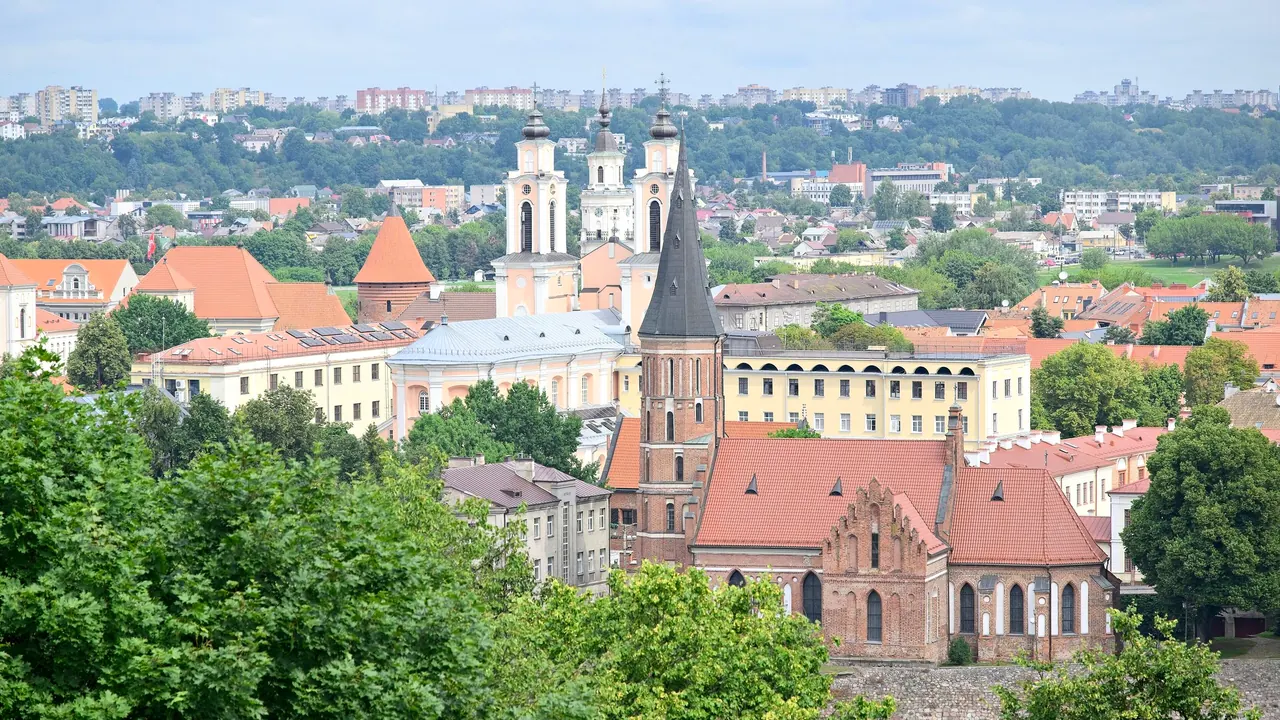
The roofs and churches of the old town from above
- Affordable cities68
- Day trips62
- Getting around62
Photo: dave massie, CC BY 2.0, cropped
Match
46
Every category weighted equally
- Beach & sun43
- Culture & arts50
- Food & nightlife45
- Family trip47
- Outdoors48
- Relax & unwind44
- Shopping & style45
- On a budget48
Kaunas in twelve categories
Our verdict on each, scored 0 to 100 against the same fixed benchmark cities, so a score means the same thing on every page.
Beaches & swimming. Scores 22 out of 100.
Food & drink. Scores 44 out of 100.
Culture & sights. Scores 56 out of 100.
Nightlife. Scores 30 out of 100.
Nature & outdoors. Scores 44 out of 100.
Day trips. Scores 62 out of 100.
Good for families. Scores 42 out of 100.
Getting around. Scores 62 out of 100.
Shopping & style. Scores 32 out of 100.
Affordability. Scores 68 out of 100.
Live music & performing arts. Scores 45 out of 100.
Wellness & relaxation. Scores 40 out of 100.
Kaunas category by category
Beaches & swimming
22Kaunas is an inland city, and the Baltic coast at Palanga and Klaipeda is a long day's return trip of around two and a half hours each way. Swimming here means fresh water: sandy bathing spots along the Kaunas Reservoir, the Nemunas at Panemune and small lakes on the city's edge such as Lampedziai. In July and August the water can reach 20°C to 22°C and locals spend warm weekends on the grass and sand, but the season is short and the setting is a park lido rather than a coast. Treat a swim as a summer bonus, not a reason to come.
Food & drink
44Eating in Kaunas means Lithuanian home cooking first: cepelinai, the large potato dumplings filled with meat or curd, bright pink cold beetroot soup in summer, dark rye bread, smoked meats and pastries filled with mushroom or meat. It is filling, northern food built around potatoes, dairy and forest produce, and good versions are easy to find in the Old Town and along Laisves aleja.
Beyond that the scene is modest but pleasant. There are coffee shops serving a large student population, local beer and craft brewing, mead and herbal bitters, and a small number of kitchens doing modern Baltic cooking with seasonal produce. Variety in international food is limited, and a visitor looking for a food city will be through the best of it in a few days.
Culture & sights
56Kaunas has two layers worth seeing. The Old Town, where the Nemunas and Neris rivers meet, holds a partly rebuilt brick castle, the white Town Hall on its square, the Gothic Perkunas House and Vytautas Church. Uphill and to the east is what sets the city apart: the interwar modernist centre built when Kaunas was the provisional capital, a UNESCO World Heritage Site of functionalist and Art Deco offices, villas and the Central Post Office. Above it on Zaliakalnis stands Christ's Resurrection Church, a white functionalist basilica with a tall tower and a rooftop terrace looking over the city.
Museums add depth. The Ciurlionis National Art Museum holds the work of Lithuania's great painter and composer, the Devils' Museum is a quirky folk collection, and the Ninth Fort is a sober memorial to the Holocaust and Soviet repression. The baroque Pazaislis Monastery sits by the reservoir on the outskirts. Two or three days covers it well.
Nightlife
30Several universities give Kaunas a younger crowd than its size suggests. On Friday and Saturday nights the Old Town and the streets off Laisves aleja fill with people moving between pubs, craft beer bars and cocktail bars in vaulted brick cellars, and a handful of clubs keep going into the early hours. Midweek the city goes quiet early, and in the summer break, when the students leave, the weekend crowd thins noticeably.
A night out here is relaxed and unpretentious: a long dinner, a few local beers or a glass of mead in a cellar bar, and perhaps a late finish on a Saturday. It suits a couple of easy evenings rather than a trip planned around going out.
Nature & outdoors
44The landscape around Kaunas is gentle and flat, shaped by the confluence of the Nemunas and Neris and by the long Kaunas Reservoir to the east, protected as a regional park with pine woods, sailing and lakeside cycle paths. Inside the city, the Azuolynas oak grove is one of the largest urban oak woods in Europe, and the riverbanks make easy walking and cycling routes. Further out, the wooded meanders of the Nemunas Loops are a good day of hiking or canoeing. There are no hills of note, and the dramatic dunes of the coast are too far for an easy outing.
Day trips
62The best day out is Vilnius, about an hour by train, with one of the largest baroque old towns in this part of Europe. Trakai, with its red-brick island castle on a lake and its Karaim village, is about an hour by road, and Kernave, the hill-fort site of Lithuania's first capital, is a little further.
Closer in, the Rumsiskes open-air museum gathers rural farmsteads from every region of the country, a short drive away. The road west along the Nemunas passes a string of manor houses and castles, among them Raudondvaris and Raudone, and the old spa town of Birstonas lies south down the river. The Hill of Crosses near Siauliai, thousands of crosses on a mound, is a long but memorable outing of around two hours.
Good for families
42Kaunas is a calm, safe and uncrowded city, which makes it easy going with children even though little is built for them. The Lithuanian Zoo sits in the oak grove park and makes a pleasant few hours, though it is small. The two interwar funiculars up to Aleksotas and Zaliakalnis are a short ride children enjoy, with views over the rivers at the top, and the thousands of carved devils at the Devils' Museum tend to delight younger visitors. The zoological museum in the centre and the aviation museum by the old airfield fill a rainy morning. There is no theme park, aquarium or major science centre, and winters are cold and dark, so a family stay is best kept short and planned for summer.
Getting around
62The heart of Kaunas is easy on foot: the long pedestrian Laisves aleja runs straight from the modernist centre into the Old Town, and most sights lie along or near it. Trolleybuses and buses cover the rest of the city, with no metro or tram to learn, and taxis and ride-hailing are inexpensive. The Ninth Fort, Pazaislis Monastery and the reservoir lie on the outskirts and need a bus ride or a short drive. Cobbles in the Old Town and the hills on either side are the main obstacles for walkers.
Shopping & style
32Shopping in Kaunas is practical rather than a pastime. Laisves aleja has high-street chains and a few local designers, and large malls on the edges of the centre carry most international brands. For something to take home, look for Baltic amber jewellery, Lithuanian linen, woven sashes, wooden crafts and honey or rye bread from the market stalls. There is no luxury street and little in the way of independent boutiques or striking markets.
Affordability
68Kaunas is an inexpensive city by Western European standards. Central hotels and apartments cost well below what a capital charges, and noticeably less than in Vilnius. A hearty Lithuanian lunch, coffee and a local beer are all modestly priced, public transport and taxis are cheap, and museum entry is low. Modern restaurants and imported drinks cost more, but a comfortable stay here rarely feels expensive.
Live music & performing arts
45For a city its size Kaunas has a steady performing arts season. The State Musical Theatre on Laisves aleja stages operetta, opera and musicals, the State Drama Theatre has a strong reputation in Lithuanian theatre, and the philharmonic hall hosts the city's symphony orchestra and chamber concerts. Choral singing runs deep in Lithuanian culture. The calendar livens up with a long-established spring jazz festival and the summer music festival held in the courtyard and church of Pazaislis Monastery. Most theatre is in Lithuanian, and the live-music club circuit is small.
Wellness & relaxation
40Kaunas is a calm city with an unhurried pace, and wellness here draws on the Lithuanian pirtis, a wood-fired sauna with birch whisks and a cold plunge, offered at saunas around the city and its lakes. Hotel spas are reasonably priced. There is no historic bath house in the city itself, and those wanting a proper spa stay head to Birstonas, an old mineral-spring resort on a bend of the Nemunas about 40 minutes away, with sanatoriums and spa hotels. Quiet walks in the oak grove and along the rivers round out a slow few days.
When should you go?
Pick a month to see what it is like. The climate figures are measured averages, not a forecast.
Kaunas in July
Daytime high, °C
Rainfall in the month, mm
The whole year
Shaded against this city’s own year: the deepest cell is its best month for that figure and the palest its weakest.
Temperature and rainfall are climate normals, averaged over the years shown. Kaunas: 1991-2020 normals, Kaunas (6.7 km from centre).
Before you go
| Measure | Kaunas |
|---|---|
| Official language | Lithuanian |
| Currency | Euro (EUR) |
| Sockets | CF220 V, 50 Hz |
| Driving side | Right |
| Time zone | UTC+2, UTC+3 in summer |
| Emergency number | 112 |
| Elevation | 48 m |
| Main airport | Kaunas International Airport (KUN)12 km from centre30 non-stop destinations |
| Public holidays this year | 14 days |
By the numbers
| Measure | Kaunas |
|---|---|
| City population | 305,120 |
| People per km² | 1,943 |
| Museums within 10 km | 19 |
| UNESCO World Heritage sites within 50 km | 1 |
Compare Kaunas with
Every comparison with a written verdict behind it.