Lithuania
Vilnius
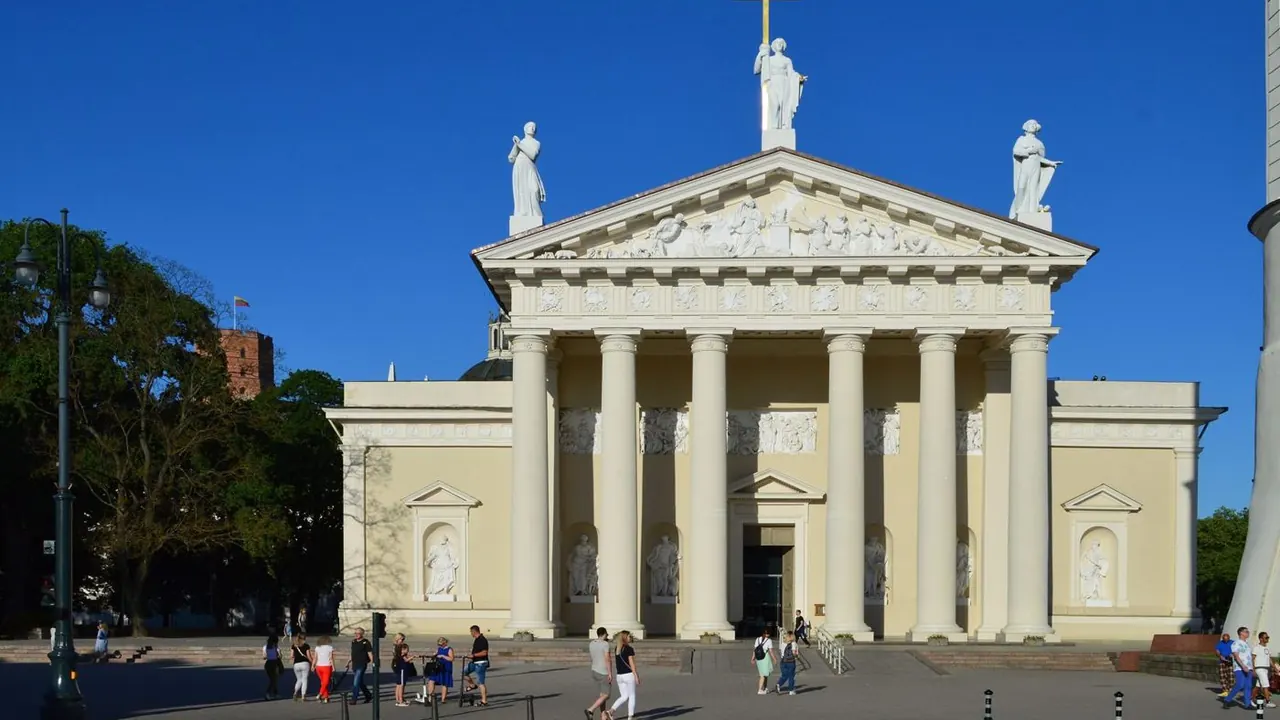
Vilnius Cathedral
- Getting around68
- Culture & sights66
- Affordable cities64
Photo: Scotch Mist, CC BY-SA 4.0, cropped
Match
49
Every category weighted equally
- Beach & sun45
- Culture & arts55
- Food & nightlife51
- Family trip49
- Outdoors50
- Relax & unwind46
- Shopping & style50
- On a budget51
Vilnius in twelve categories
Our verdict on each, scored 0 to 100 against the same fixed benchmark cities, so a score means the same thing on every page.
Beaches & swimming. Scores 17 out of 100.
Food & drink. Scores 50 out of 100.
Culture & sights. Scores 66 out of 100.
Nightlife. Scores 46 out of 100.
Nature & outdoors. Scores 52 out of 100.
Day trips. Scores 60 out of 100.
Good for families. Scores 44 out of 100.
Getting around. Scores 68 out of 100.
Shopping & style. Scores 38 out of 100.
Affordability. Scores 64 out of 100.
Live music & performing arts. Scores 54 out of 100.
Wellness & relaxation. Scores 34 out of 100.
Vilnius category by category
Beaches & swimming
17Vilnius is an inland city, and the Baltic coast at Palanga and the Curonian Spit is three to four hours away, too far for a day at the sea. Swimming here means lakes. On warm summer days locals head for the Green Lakes on the northern edge of the city, Balžis and the other lakes in the pine woods, or the shores around Trakai, about half an hour away. The water in July can reach about 20°C, and small sandy patches along the Neris fill up on hot afternoons. The season runs from mid-June to late August, and swimming is a pleasant extra on a summer trip, never the reason to come.
Food & drink
50Lithuanian cooking is built on potatoes, rye, dairy, mushrooms and pork, and Vilnius is the best place to try it. Look for cepelinai, the big potato dumplings with meat and sour cream, cold pink šaltibarščiai beetroot soup in summer, dark rye bread, fried bread with garlic to go with beer, and kibinai, the Karaim meat pastries that are best of all in nearby Trakai. Halės market, in its old iron hall, sells smoked meats, cheese, honey and forest berries.
Beyond the traditional taverns, the Old Town and the streets around Gediminas Avenue hold some solid modern Nordic and Baltic restaurants, plus third-wave coffee and a strong craft beer scene. It is good eating at fair prices, but the range is narrow, and few people would plan a trip around it.
Culture & sights
66The Old Town is one of the largest surviving medieval and baroque centres in this part of Europe, and it is UNESCO-listed. Wandering it is the main attraction: church towers above crooked streets, the Gate of Dawn with its revered icon, the brick Gothic St Anne's Church, and the white neoclassical Cathedral below Gediminas Tower on its hill. Next to the Cathedral, the rebuilt Palace of the Grand Dukes tells the story of the medieval Lithuanian state, and the university courtyards are worth a slow look.
The twentieth century is told with real force at the Museum of Occupations and Freedom Fights, housed in the former KGB building with its prison cells. The city's Jewish past as the "Jerusalem of the North" is traced through the old ghetto streets and the Jewish museum. The National Gallery and the MO Museum cover Lithuanian art. Two or three days are enough to see it well.
Nightlife
46Going out in Vilnius centres on the Old Town and the streets just west of it. Cocktail bars, craft beer pubs and student cellars spread out from Vokiečių and Pylimo streets, and in summer the terraces stay full late into the light evenings. A small but serious electronic music scene runs in converted industrial spaces and courtyards on the edge of the centre, and the bigger clubs keep going until dawn at weekends.
It is a capital with a large student population, so Friday and Saturday nights have real energy. Midweek and through the long winter, though, things are quieter, and the scene is compact. It makes for a good night or two out, not a destination for nightlife.
Nature & outdoors
52Vilnius is unusually green for a capital. It sits in a bowl of wooded hills where the Vilnia meets the Neris, and the pine forests reach almost into the centre. Pavilniai and Verkiai regional parks offer steep trails, river valleys and viewpoints within a short bus ride, and cycle paths follow the Neris through the city. In summer, hot-air balloons drift over the Old Town at dawn and dusk, one of the few capitals where this is allowed.
Further out, the lake country around Trakai suits kayaking and sailing, and Aukštaitija National Park, about two hours north, has chains of lakes, canoe routes and old wooden villages. The landscape is gentle: forest, water and low hills, with no mountains or coast.
Day trips
60The classic outing is Trakai, about half an hour away. Its red-brick island castle stands in a lake, and the town has the wooden houses and the pastries of the Karaim community. Kaunas, the second city, is about an hour by train and offers a medieval old town and an unusually complete district of interwar modernist architecture. Kernavė, the hill-fort site of the early Lithuanian capital, is UNESCO-listed and under an hour away.
Other easy outings include the open-air folk museum at Rumšiškės, the sculpture parks in the forests north of the city, and the Soviet statue park and spa town of Druskininkai in the far south. The Hill of Crosses and Riga are worth seeing but lie beyond an easy day.
Good for families
44Vilnius is safe, calm and small enough to manage with children, and its parks, riverside paths and playgrounds make the pace easy. Children tend to enjoy the funicular up to Gediminas Tower, the island castle at Trakai with boats for hire on the lake, the Energy and Technology Museum, and the city's large indoor water parks on cold days. Little is made specifically for children, though: there is no major zoo or aquarium in the city, and the main sights are churches and history museums. Cobbled Old Town streets are hard going with a pushchair, and winters are dark and cold.
Getting around
68Most of what a visitor wants is within a compact, walkable area: the Old Town, Užupis, the Cathedral and Gediminas Avenue are all a few minutes apart on foot. The streets are hilly in places and many are cobbled, so comfortable shoes matter. Beyond the centre, the city runs on buses and trolleybuses rather than a metro or tram. They are cheap and reasonably simple to use, and ride-hailing is widely used. The airport is close to the centre, linked by a short train or bus ride. Trains reach Trakai and Kaunas easily, so most visitors never need a car.
Shopping & style
38Shopping in Vilnius is modest. Gediminas Avenue has the international high-street names, and the large malls lie outside the centre. Visitors mostly come away with local things: Baltic amber, Lithuanian linen, ceramics, woven sashes and wooden crafts from the workshops and galleries of the Old Town and Užupis, along with smoked meats and honey from Halės market. Every March, the Kaziukas fair fills the Old Town streets with folk craftspeople and the traditional dried-flower palms. Amber shops on Pilies Street vary a lot in quality, so it pays to be choosy. There is little luxury or designer shopping.
Affordability
64For a European capital, Vilnius is easy on the budget. Mid-range hotels in and around the Old Town cost well below Western European levels, a traditional lunch or a local beer is cheap, and public transport and most museums cost little. Prices are higher in the smarter modern restaurants and at Old Town hotels during summer weekends, and imported goods cost about what they do elsewhere in the EU. Overall, a comfortable stay costs noticeably less than in Western or Nordic capitals.
Live music & performing arts
54Vilnius takes classical music and theatre seriously. The Lithuanian National Opera and Ballet Theatre stages a full repertoire through the season at modest prices, and the National Philharmonic, in its grand hall near the Old Town, hosts orchestral and chamber concerts. The country has a celebrated school of avant-garde theatre directors, and the National Drama Theatre and smaller stages put on strong productions, though in Lithuanian, with surtitles only for some.
The long-running Vilnius Jazz festival is held each autumn, there are summer concerts in Old Town courtyards and churches, and a handful of small clubs host live bands. The scene is solid and affordable, but limited in size.
Wellness & relaxation
34Vilnius has no bathing culture of its own in the city. Wellness here means hotel spas, a few sauna complexes and large indoor water parks with sauna zones. The traditional Lithuanian pirtis, a wood-fired sauna with birch whisks and a cold plunge, is mostly a countryside custom, and a visitor usually meets it at lakeside guesthouses outside the city. For a proper spa stay, Lithuanians head to the mineral-water resort of Druskininkai, under two hours south.
The city itself is unhurried. Quiet courtyards, riverside walks and slow mornings in the cafés of Užupis make it an easy place to slow down, even if it is not a place to come for treatments.
When should you go?
Pick a month to see what it is like. The climate figures are measured averages, not a forecast.
Vilnius in July
Daytime high, °C
Rainfall in the month, mm
The whole year
Shaded against this city’s own year: the deepest cell is its best month for that figure and the palest its weakest.
Temperature and rainfall are climate normals, averaged over the years shown. Vilnius: 1991-2020 normals, Vilnius (13 km from centre).
Before you go
| Measure | Vilnius |
|---|---|
| Official language | Lithuanian |
| Currency | Euro (EUR) |
| Sockets | CF220 V, 50 Hz |
| Driving side | Right |
| Time zone | UTC+2, UTC+3 in summer |
| Emergency number | 112 |
| Elevation | 98 m |
| Main airport | Vilnius International Airport (VNO)6 km from centre82 non-stop destinations |
| Public holidays this year | 14 days |
By the numbers
| Measure | Vilnius |
|---|---|
| City population | 619,405 |
| People per km² | 1,545 |
| Museums within 10 km | 31 |
| UNESCO World Heritage sites within 50 km | 3 |
Compare Vilnius with
Every comparison with a written verdict behind it.