Loire Valley or Provence?
Our verdict in twelve categories, each scored against the same fixed benchmark cities, and the climate month by month, so you can choose for your trip.
Choose Loire Valley for
- families
- getting around
- prices
The Loire Valley suits travellers who want an unhurried trip through châteaux and wine country. Its Renaissance houses, abbeys and riverside towns lie close together along one railway and one flat cycle route. That makes it easier with children, workable without a car and kinder to the budget. In return you get quiet evenings and no beach.
Choose Provence for
- beaches
- shopping
- nature and the outdoors
Choose Provence for a sunnier, more varied trip that mixes sightseeing with sea and wild landscape. Roman and papal towns, big markets, the Verdon gorges and the calanques give it more range, and Marseille and the summer festivals add evenings the Loire cannot match. It costs more in high summer, and you need a car to see it properly.
Scoreboard
Twelve categories on one fixed scale from 0 to 100. The shaded stretch is the gap between the two.
Your match
Pick a travel style or drag the sliders, and both match scores follow your weighting.
Wins on families and getting around with your weighting.
Wins on beaches and shopping with your weighting.
What matters to you?
Category by category
What the scores mean for a trip.
Beaches & swimming
On beaches the two are as far apart as they can be. The Loire is inland, and its river is unsafe for swimming. A swim means a supervised lake such as the Lac de Maine near Angers or, more often, the pool at your gîte. The Atlantic beaches lie west of Nantes, a long drive from the château country around Tours.
Provence has a real coast. There is fine sand at Pampelonne, pale shallow water at Hyères and Porquerolles, and rocky turquoise inlets in the calanques between Marseille and Cassis. Inland bases in the Luberon or the Alpilles are far from the sea, though, so beach lovers should stay on the coast.
Food & drink
Both are places to eat well and drink local wine, but Provence gives a food lover more. Its weekly markets in Aix, Apt and Saint-Rémy are a reason to visit in themselves, Marseille adds bouillabaisse and North African cooking, and the wines run from Bandol reds to Châteauneuf-du-Pape.
The Loire is the quieter choice, and its wine leads. You taste Vouvray, Chinon and sparkling Saumur in tufa cellars and eat rillettes, river fish in beurre blanc and goat cheese with them. Restaurant choice thins out quickly outside Tours and Angers.
Culture & sights
Both regions are among France's richest for sights, but they belong to different eras. The Loire is the Renaissance: Chambord, Chenonceau, Blois and Amboise, with Fontevraud Abbey and the Apocalypse Tapestry in Angers. They are clustered so closely that a base near Tours reaches most of them.
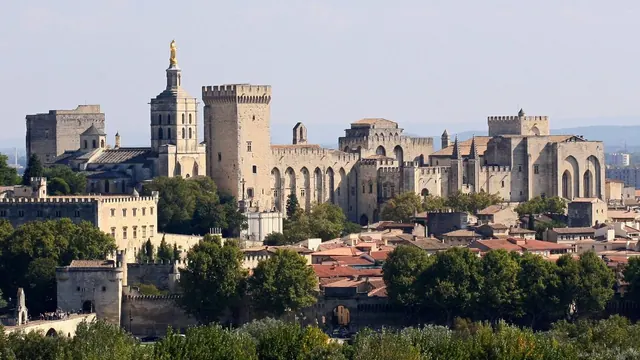
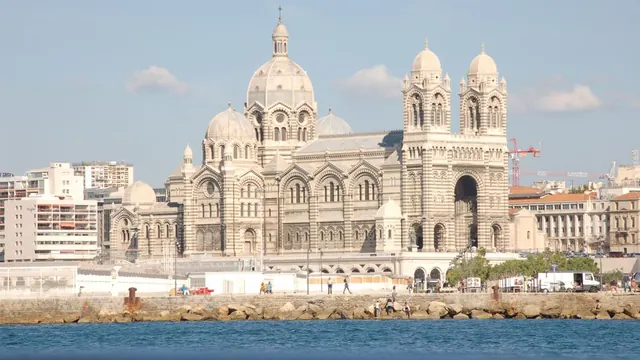
Provence goes further back and is more spread out. It has the Roman theatres of Orange and Arles, the papal palace in Avignon, Cézanne's Aix and the MuCEM in Marseille. Expect to move between several towns to see it all.
Nightlife
Neither region is built for partying, but Provence offers real nights out. Marseille's Cours Julien and La Plaine have bars and clubs that stay open late, and Saint-Tropez has a glossy beach-club scene in summer. In the Loire, going out mostly means the student terraces around Place Plumereau in Tours or the bar quarter of Angers, and the countryside is silent after dinner.
Nature & outdoors
Provence wins clearly on landscape. The Gorges du Verdon, the white cliffs of the Calanques, the bare summit of Mont Ventoux and the flamingo lagoons of the Camargue give walkers, climbers, kayakers and cyclists real terrain. Summer heat and closures on days of high fire risk limit it.
The Loire is gentle lowland by comparison, with a willow-lined river, troglodyte cliffs, vineyards and the ponds of the Sologne. Its strengths are the flat Loire à Vélo route and canoeing among the river islands, which are pleasant rather than dramatic.
Day trips
Both are made for touring from a base, and the difference lies in what you go out to see. From Tours the outings are towns and châteaux strung along one river: Amboise, Chinon, Loches and the cave villages around Saumur, with Paris about an hour away by fast train.
Provence's outings vary more in scenery. You can visit perched villages such as Gordes and Roussillon, Roman Nîmes and the Pont du Gard, or take a ferry to Porquerolles, but nearly all of these trips need a car.
Good for families
The Loire is easier with children. The ZooParc de Beauval fills a whole day, while the Leonardo machines at Clos Lucé and the Maison de la Magie at Blois make château visits fun. The flat cycle route and quiet roads suit young riders.
Provence works best as a pool-and-beach vacation. The shallow sand around Hyères suits little ones, and canoeing or riding Camargue horses appeals to older children. July heat, long drives and steep villages are hard going with a pushchair.
Getting around
Without a car, the Loire is the easier of the two. A single rail line follows the river through Orléans, Blois, Amboise, Tours, Saumur and Angers, and Chenonceau and Chinon have stations of their own. The riverside bike route, with luggage sent ahead, is a real way to travel.
In Provence, trains link the big towns, but the villages, abbeys and gorges need a car. Hill lanes and parking in perched villages test your patience, and the road into Saint-Tropez jams in summer.
Shopping & style
Provence gives shoppers far more to bring home. Its markets sell printed fabrics and olive-wood bowls, and you can also find Marseille soap, Moustiers faience, the antiques dealers of L'Isle-sur-la-Sorgue and summer luxury boutiques in Saint-Tropez. In the Loire most souvenirs are edible: cellar-door wine, goat cheese and Orléans quince paste, with Gien faience the one well-known craft.
Affordability
The Loire is easier on the budget. Town hotels and gîtes in Tours, Blois or Saumur are fairly priced and cellar-door wine costs little for its quality, though entrance fees add up when you see several châteaux a day.
Provence is costly in summer, when Luberon villas and the Var coast are among France's most expensive places to stay. Marseille, Arles and the less famous villages are more reasonable. In both regions, spring and autumn cost less than July and August.
Live music & performing arts
In July Provence is one of Europe's great stages. The Avignon theatre festival and its huge fringe run alongside opera in the courtyard of the Archbishop's Palace at Aix and in Orange's Roman theatre. Beside that, the Loire's summer is modest: sound-and-light shows at Blois and Amboise, chamber music at the Grange de Meslay, and the Angers street-arts festival in September. Outside the festival season, both rely on regional opera houses and theatres.
Wellness & relaxation
Provence has the edge for a restful stay. It has real spa towns at Gréoux-les-Bains and Digne-les-Bains, a thermal spa in Aix, and farmhouse hotels offering lavender and olive-oil treatments. The Loire's spas are mostly in château hotels with grape-based treatments, so it relies instead on its slow pace: riverside cycling, the gardens of Villandry and quiet nights in Touraine guesthouses.
When should you go?
Pick your month. The climate figures are measured averages, not a forecast.
Loire Valley in July
Provence in July
Daytime high, °C
Rainfall in the month, mm
Where the figures come from
Provence has no rain gauge within 25 km of the centre, so its rainfall comes from a gridded climate dataset read at the destination rather than from a gauge further away.
Provence's sunshine is measured 53 km from the centre, at Nimes / Courbessac.
Temperature and rainfall are climate normals, averaged over the years shown. Loire Valley: 1991-2020 normals, Tours (20.4 km from centre). Provence: 2005-2020 (sunshine 1981-2010, rainfall 1991-2020) normals, Avignon / Morières-lès-Avignon (11.9 km from centre).
The Loire is mild and fairly even through the year. In July and August daytime highs reach about 26°C, comfortable for cycling and château visits. Rain falls in every month and is heaviest from October to December. Winters are grey and cool, so the season runs from May to September, and late spring and early autumn are the best months for being outdoors.
Provence is hotter and much sunnier. July climbs to around 32°C. That is warm enough for the beach from June to September, but it makes midday sightseeing in the towns tiring, so walkers do better in spring and early autumn. Summers are dry, then heavy autumn rain arrives, with October the wettest month at about 102mm. Winter days stay milder, near 11°C, and get far more sunshine than in the Loire.
Which traveller are you?
On a beach and sun trip, choose Provence without hesitation. It has a real Mediterranean coast, a sea you can swim in from June to early October and long, dry summers. The Loire is inland, and its river is not for bathing.
For an outdoors trip, Provence is the better pick because its country is genuinely wild, with real terrain for hiking, climbing, kayaking and hard cycling. Come in spring or autumn, when the heat eases. The Loire's soft lowland offers gentle rides rather than adventure.
On a family trip with young children, the Loire is the easier choice. Sights are close together, towns are safe and quiet, and several châteaux are set up to entertain children. Milder summers make long days outdoors easier on small ones.
Before you go
| Measure | Loire Valley | Provence |
|---|---|---|
| Official language | French | French |
| Currency | Euro (EUR) | Euro (EUR) |
| Sockets | CE230 V, 50 Hz | CE230 V, 50 Hz |
| Driving side | Right | Right |
| Time zone | UTC+1, UTC+2 in summer | UTC+1, UTC+2 in summer |
| Emergency number | 112 | 112 |
| Main airport | Tours Val de Loire Airport (TUF)5 non-stop destinations | Marseille Provence Airport (MRS)126 non-stop destinations |
| Public holidays this year | 11 days | 11 days |
Where else could you go?
Every comparison below shares a destination with this one, so you can follow Loire Valley or Provence somewhere new.
- French Rivieravs Provence
- Normandyvs Loire Valley
- French Alpsvs Provence
- Dordognevs Loire Valley
- Brittanyvs Loire Valley
- Costa Bravavs Provence