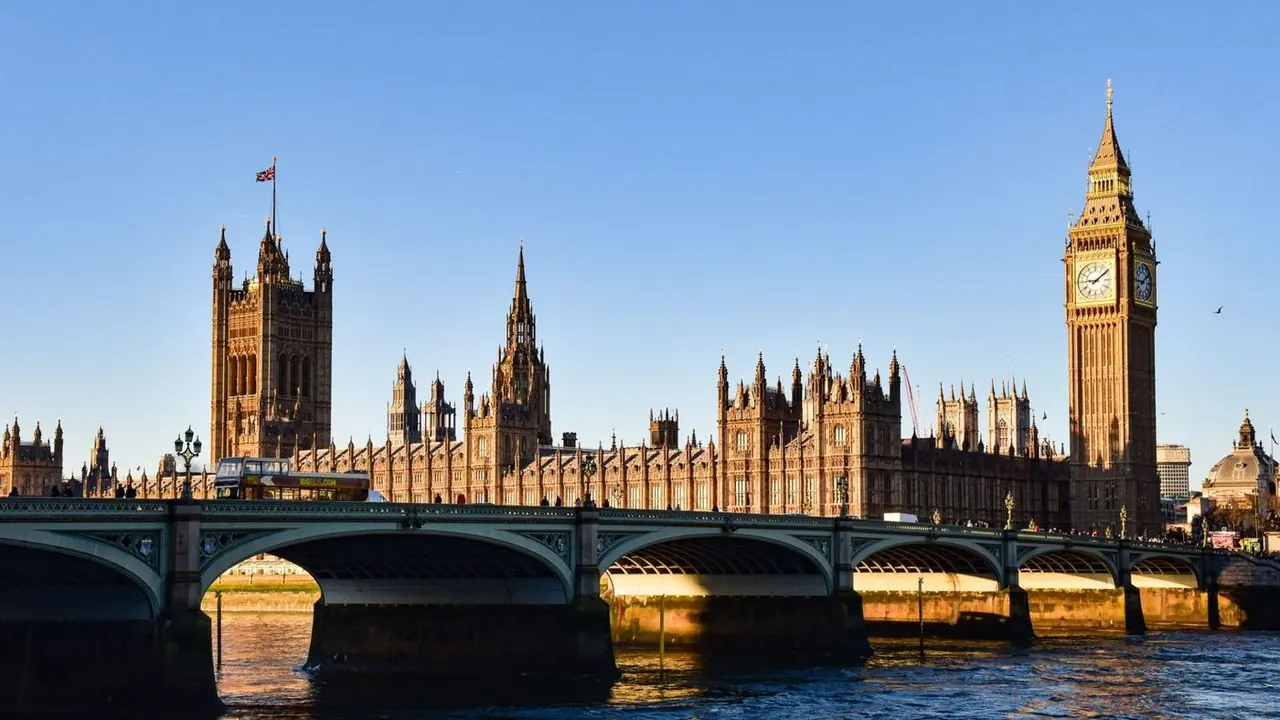
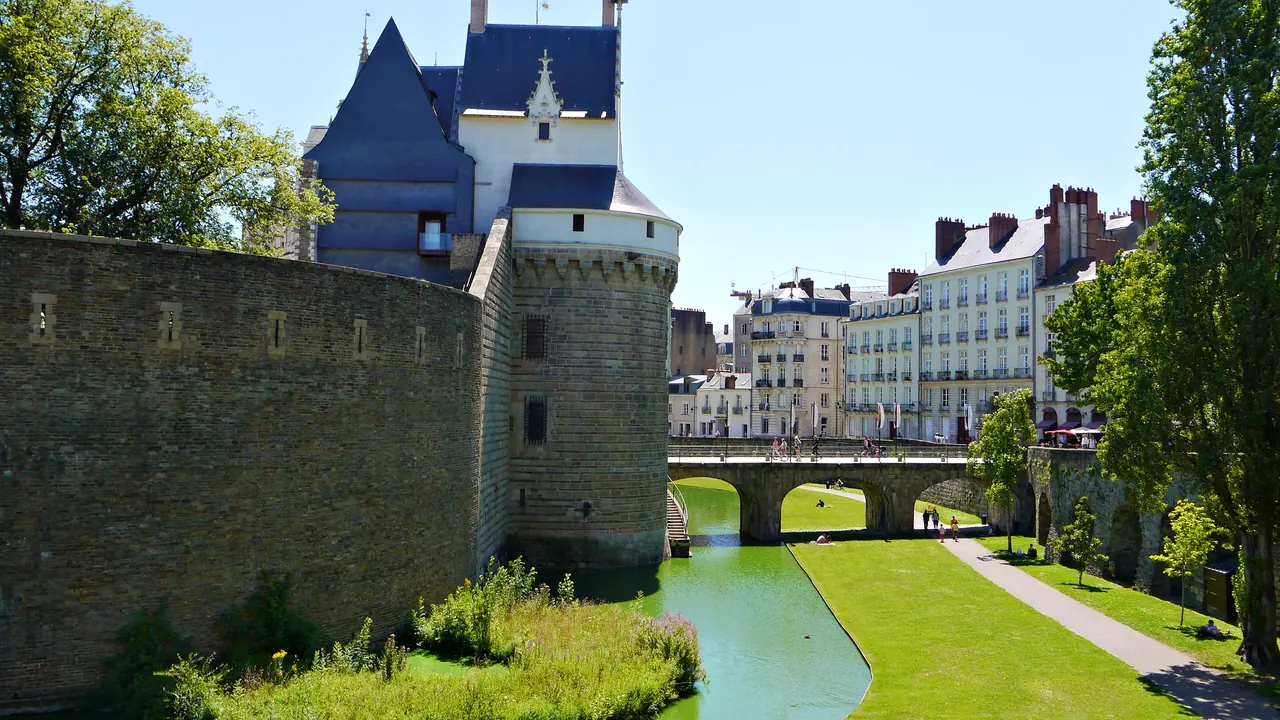
Photos: London by AXP Photography, Pexels License; Nantes by Carole44, CC BY-SA 3.0, cropped.
London or Nantes?
Our verdict in twelve categories, each scored against the same fixed benchmark cities, and the climate month by month, so you can choose for your trip.
Choose London for
- shopping
- live music and the arts
- nightlife
London suits the traveller who wants depth and range from one base: free national museums, the West End and the concert halls, serious shopping from Savile Row to Portobello Road, and a rail network that makes Oxford, Bath or Canterbury easy outings. It is the better choice for a week that never repeats itself, as long as you accept that it is costly and very large.
Choose Nantes for
- prices
- beaches
Pick Nantes for a slower, cheaper stay in western France. The centre is walkable in half an hour and the Atlantic beaches at La Baule and Pornic are about an hour away. Its sights fill two or three days, so it works best as a base for Guérande, Angers and the Muscadet vineyards, with beurre blanc and oysters on the table at fair French prices.
Scoreboard
Twelve categories on one fixed scale from 0 to 100. The shaded stretch is the gap between the two.
Your match
Pick a travel style or drag the sliders, and both match scores follow your weighting.
Wins on shopping and live music and the arts with your weighting.
Wins on prices and beaches with your weighting.
What matters to you?
Category by category
What the scores mean for a trip.
Beaches & swimming
London's nearest seaside is Brighton, about an hour by train, and its beach is pebble. The sandier Kent shores at Margate and Whitstable are further out. Swimming in the city itself means the outdoor lidos and the Hampstead Heath ponds.
Nantes does better, though it is also inland. Trains reach the long sandy bay at La Baule and the coves of Pornic in about an hour. The beaches are wide and clean and suit children on calm days, and the Atlantic is slightly warmer in late summer than the Channel off Brighton. Neither city is one to plan a beach vacation around.
Food & drink
London's strength is range. There is Bangladeshi cooking on Brick Lane, Punjabi food in Southall, Turkish grills in Green Lanes and Caribbean and West African kitchens south of the river, along with Borough Market and a deep fine-dining scene. You could eat a different cuisine every night for a week and still eat well.
Nantes does one region properly. It has beurre blanc, which was invented there, oysters from the nearby coast, buckwheat galettes, and Muscadet from vineyards just outside town, with the Talensac market as the showcase. The bill is fairer but the choice is narrower, so it is a good place to eat rather than a reason to make the trip.
Culture & sights
London has a weight of collections that Nantes cannot approach. The British Museum, the National Gallery, the V&A and both Tates are mostly free, and the landmarks run from the Tower and Westminster Abbey to St Paul's and Greenwich. A week there barely gets started.
Nantes is a two- or three-day city built around the moated Château des Ducs de Bretagne, the cathedral with the tomb of Francis II, and the Musée d'Arts. What sets it apart is how openly it deals with its part in the Atlantic slave trade, in the castle museum and at the abolition memorial on the riverbank. The leaning merchant houses of the Ile Feydeau make the backdrop.
Nightlife
In London a night out starts with choosing a district. Soho has late bars and a long-established gay scene, Hackney and Dalston have warehouse parties, and Brixton and Peckham have big venues, with thousands of pubs everywhere else. At weekends the large clubs run until morning.
Nantes has a friendly, student-driven night that is easy to join. It starts in the lanes of Bouffay and moves later to the riverside bars and clubs on the tip of the Ile de Nantes. That is one quarter and one dockside strip rather than a city of separate scenes, and it goes quiet midweek outside term.
Nature & outdoors
Both cities sit in gentle country with mild, damp weather, so the difference is in kind. London's green space is mostly parkland inside the city: the deer and ancient oaks of Richmond Park, the skyline views from Hampstead Heath, and Kew. The chalk Downs and Chiltern beechwoods are about an hour out for walkers.
Nantes is about water. You can take a boat or canoe on the Erdre, cycle the Loire à Vélo route through vineyards to the estuary, watch birds in the Brière marshes and walk the cliff paths of the Côte Sauvage. London suits walkers best, and Nantes suits cyclists and anyone heading for the coast.
Day trips
London sits at the centre of a rail network that gives it the longer list. Oxford and Cambridge are about an hour away, and Windsor, Bath's Roman baths, Stonehenge with Salisbury, Canterbury and Brighton are all within easy reach. That is enough for several outings in a week without repeating a theme.
Nantes looks to western France instead. Walled Guérande above its salt marshes is about an hour away, Angers and its Apocalypse Tapestry are under an hour by train, and Saumur and the Loire châteaux are within two hours. Some of its best outings, such as the Muscadet estates and Noirmoutier, are easier by car.
Good for families
London has more to fill children's days, and much of it is free. There are the dinosaurs at the Natural History Museum, the hands-on galleries of the Science Museum, the pirate ship in the Diana Memorial Playground and the zoo in Regent's Park, with Legoland and the Harry Potter studio tour outside the city. The downsides are long distances, crowds when schools are out and Tube stairs that are hard with a buggy.
Nantes is smaller and gentler. Its highlight is the mechanical elephant at the Machines de l'Ile, and the trams take a pushchair without fuss. Puy du Fou and calm sandy beaches are within driving distance. It fills fewer days than London, but each one is easier.
Getting around
London's network is the more complete. The Tube, the Elizabeth line, buses that go everywhere and Thames riverboats are all paid with one contactless card, so you never need a car. The cost is the city's size, which means long transfers, stairs and packed trains at rush hour.
In Nantes you barely need a network at all. The castle, Bouffay, Graslin and the Ile de Nantes are all within half an hour of each other on flat streets, and three tram lines cover the rest. For the vineyards and marshes, though, you will want a car.
Shopping & style
London is a shopping destination in its own right. There are luxury houses on Bond Street and bespoke tailoring on Savile Row, Liberty and Fortnum & Mason are worth visiting as sights, and Portobello Road, Columbia Road and Spitalfields are good for weekend browsing.
Nantes is good for a pleasant hour or two, not a reason to travel. The three-level Passage Pommeraye is the place to remember, independent shops cluster around Bouffay and Decré, and the best things to bring home are edible: salted-butter biscuits, Guérande salt and Muscadet.
Affordability
London is costly at almost every turn, from small central hotel rooms to theatre seats and rounds in the pub. What helps is that the great museums, parks and markets are free, so a careful visitor can build days around them.
Nantes is much easier on the wallet. Hotels cost far less than in London and are easy to find, the walkable centre keeps transport cheap, and set lunch menus are good value. Dinners and drinks cost what they do anywhere in France, and the coast gets more expensive in high summer.
Live music & performing arts
London's stage is in a different league. It has the West End, the National Theatre and the Globe, the Royal Opera House, five major orchestras, the Wigmore Hall and the Proms, plus jazz in Soho and rock in Camden. There is something serious to see every night of the year.
Nantes has more on stage than most cities its size, without trying to compete. Its highlight is La Folle Journée, a winter classical festival of many short concerts, alongside opera at the Théâtre Graslin and contemporary work at the Lieu Unique. Its own speciality is giant street-theatre puppetry, which happens out in the open rather than in a hall.
Wellness & relaxation
Neither city is made for rest, so the difference is in where you find it. London still has Victorian Turkish baths in Bayswater and at Ironmonger Row, as well as grand-hotel spas and cold dips in the Hampstead ponds. Bath's thermal waters are about an hour and a half away by train.
Nantes has no baths of its own, but its pace is slower than London's, and the banks of the Erdre and the Jardin des Plantes are calm. Its real asset is the seawater thalassotherapy centres at La Baule and Pornic, about an hour away on the coast.
When should you go?
Pick your month. The climate figures are measured averages, not a forecast.
London in July
Nantes in July
Daytime high, °C
Rainfall in the month, mm
Temperature and rainfall are climate normals, averaged over the years shown. London: 1992-2020 (sunshine 1991-2020, rainfall 1991-2020) normals, London Weather Centre (1.3 km from centre). Nantes: 1991-2020 normals, Nantes (6.6 km from centre).
Both cities are at their best in summer, and Nantes is the warmer and sunnier of the two. In July and August London reaches about 23°C and Nantes about 25°C, and Nantes gets noticeably more sunshine. That is comfortable weather for walking the streets in both, and for coastal days from Nantes, where the Atlantic warms to about 19°C in August, which feels fresh rather than warm. Spring and early autumn are mild and pleasant for sightseeing in both.
Winter is where they differ. London is cold, grey and short of sun, but drier. Nantes is a degree or two milder but much wetter, with rain building from October to a peak of about 101mm in December. Nantes is best from May to September. London's museums and theatres make its damp winter easier to fill.
Which traveller are you?
For a culture and arts trip, London is the clear choice. Free national collections, a thousand years of landmarks and an evening stage running from the West End to the Proms give you more than a week can hold. Nantes is covered in a few days.
On a tight budget, Nantes makes money go much further. Its hotels cost far less, the flat centre is walkable and set lunch menus feed you well. London's free museums help, but rooms, fares and evenings out add up quickly.
For a beach and sun trip, Nantes has the edge. Its summers are sunnier, and a train reaches the sandy bay at La Baule in about an hour. London's nearest sea is Brighton's pebble beach, and its real swimming is in lidos and ponds.
Before you go
| Measure | London | Nantes |
|---|---|---|
| Official language | English | French |
| Currency | Pound Sterling (GBP) | Euro (EUR) |
| Sockets | G230 V, 50 Hz | CE230 V, 50 Hz |
| Driving side | Left | Right |
| Time zone | UTC, UTC+1 in summer | UTC+1, UTC+2 in summer |
| Emergency number | 112 or 999 | 112 |
| Elevation | 4 m | 2 m |
| Main airport | London Heathrow Airport (LHR)23 km from centre224 non-stop destinations | Nantes Atlantique Airport (NTE)8 km from centre97 non-stop destinations |
| Public holidays this year | 8 days | 11 days |
By the numbers
| Measure | London | Nantes |
|---|---|---|
| City population | 8,799,728 | 327,734 |
| People per km² | 5,598 | 5,027 |
| Museums within 10 km | 216 | 11 |
| UNESCO World Heritage sites within 50 km | 4 | 0 |
| Swim season, months above 21 °C | - | None |
Where else could you go?
Every comparison below shares a destination with this one, so you can follow London or Nantes somewhere new.