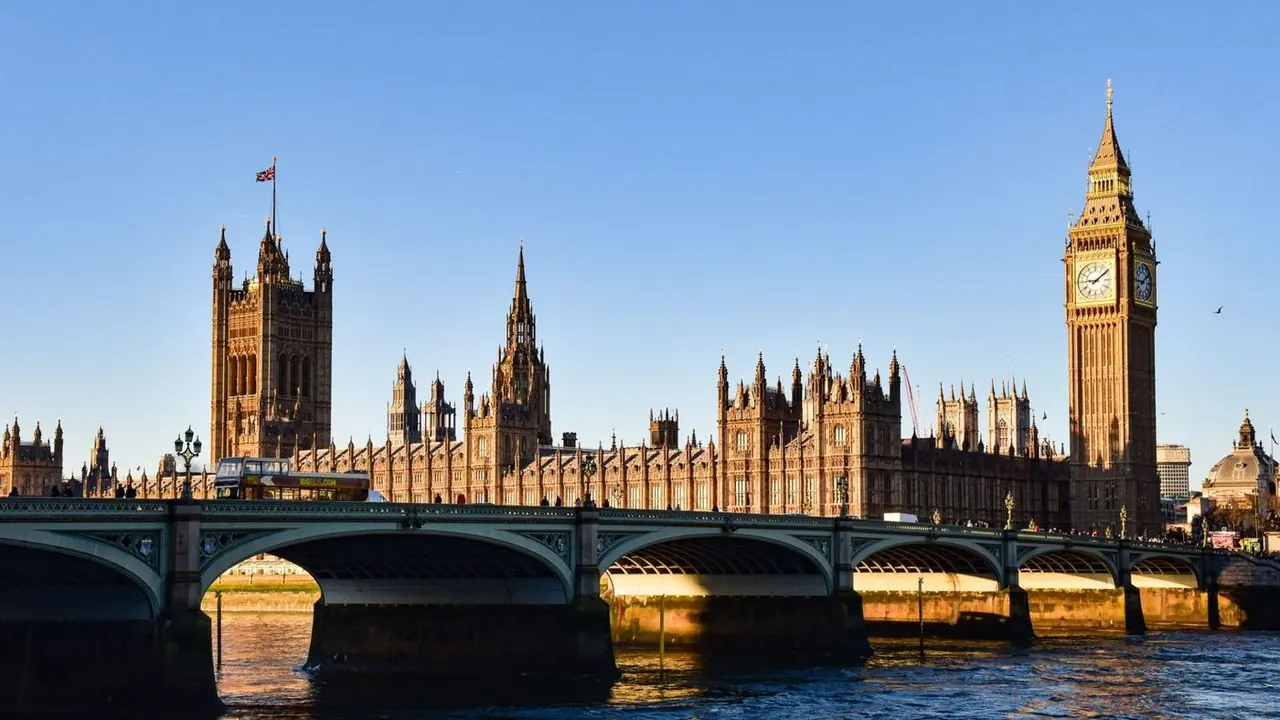
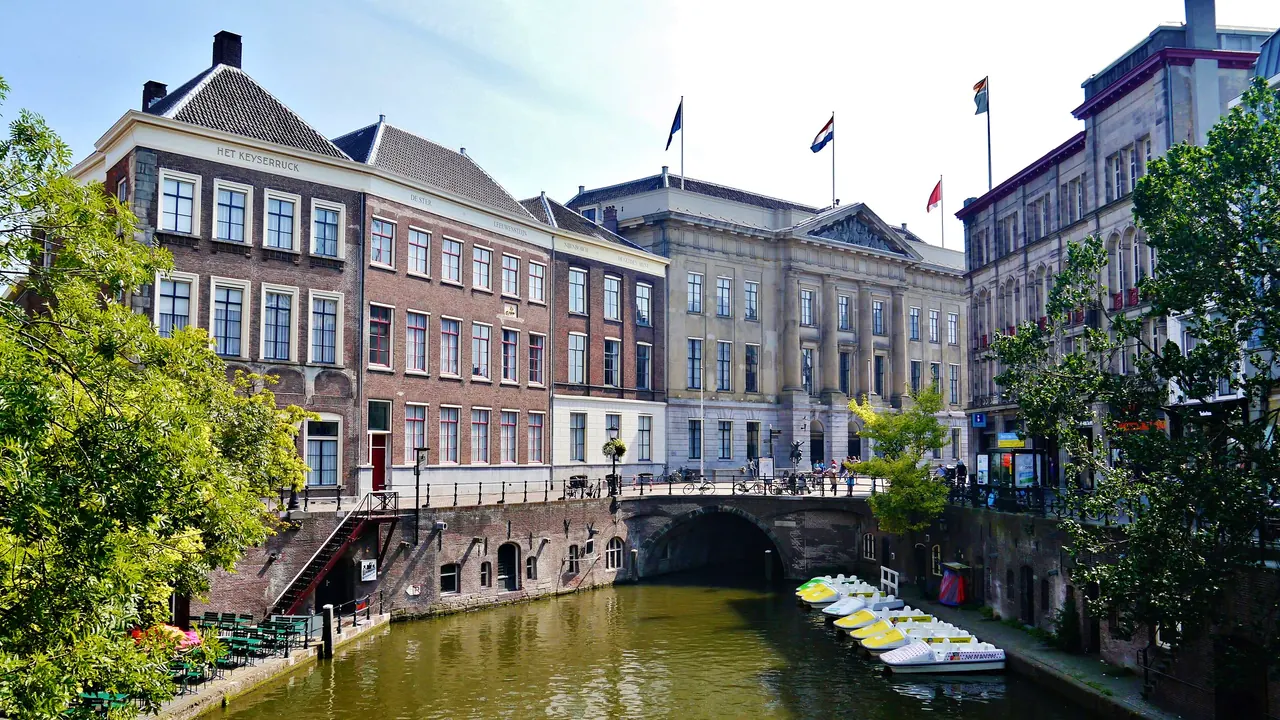
Photos: London by AXP Photography, Pexels License; Utrecht by Zairon, CC BY-SA 4.0, cropped.
London or Utrecht?
Our verdict in twelve categories, each scored against the same fixed benchmark cities, and the climate month by month, so you can choose for your trip.
Choose London for
- nightlife
- food and drink
- shopping
London is the choice for a trip built around the city itself: great museums, theatre on almost any evening, food from every one of its communities and shopping from Savile Row to Portobello Road. It suits travellers who want depth and variety and are ready to pay for them. Even a week there leaves plenty unseen.
Choose Utrecht for
- prices
Travellers after a calmer, shorter stay, or a base for seeing the Netherlands, will be happier in Utrecht. Its medieval centre around the Dom Tower and the two-level Oudegracht is easy to cover on foot in a couple of days. Amsterdam, Rotterdam and The Hague are a short train ride away. It is no bargain, but it costs noticeably less than London.
Scoreboard
Twelve categories on one fixed scale from 0 to 100. The shaded stretch is the gap between the two.
Your match
Pick a travel style or drag the sliders, and both match scores follow your weighting.
Wins on nightlife and food and drink with your weighting.
Wins on prices with your weighting.
What matters to you?
Category by category
What the scores mean for a trip.
Beaches & swimming
Neither city suits a beach vacation, but London has a little more to offer on the water. Brighton's pebble beach and pier are about an hour away by train, and Margate and Whitstable have sandier shores. In the city, the lidos and the Hampstead Heath ponds give London a real swimming culture of its own.
Utrecht's nearest seaside, at Zandvoort or Scheveningen, is an hour or more away. Local people swim in recreation lakes such as the Maarsseveense Plassen, which are pleasant on a hot afternoon but not much more.
Food & drink
Food is one of the widest gaps between the two. London's cooking comes from its communities: Bangladeshi food on Brick Lane, Turkish grills in Green Lanes and Punjabi cooking in Southall. On top of that come Borough Market and a serious fine-dining and modern British scene, so food alone can be the reason for the trip.
Utrecht feeds you well enough, with Indonesian and Surinamese kitchens and casual bistros around the Twijnstraat and Lombok. The pleasure, though, lies mostly in the setting: a terrace on an Oudegracht wharf, right at the water's edge. Few visitors would travel for the menus alone.
Culture & sights
London works on another scale. The British Museum, the National Gallery, the V&A and both Tates are mostly free to enter, and its landmarks span a thousand years, from the Tower to St Paul's. A week there barely makes a start.
Utrecht's appeal is concentrated rather than vast. The Dom Tower has stood apart from its choir since the storm of 1674, the sunken wharves of the Oudegracht are unlike any other canal, and the Rietveld Schröder House makes three highlights for a rewarding two or three days. The Centraal Museum and Catharijneconvent fill in the rest.
Nightlife
London offers a full night out in almost any style. There are Soho's late cocktail bars and long-established gay scene, warehouse parties in Hackney and Dalston, and big venues in Brixton, with clubs running until morning at weekends. It is at its strongest on Friday and Saturday rather than every night.
Utrecht's evenings belong to its students, in the brown cafés and beer bars around the Neude and Janskerkhof and at the canal edge in summer. The centre is lively on weeknights too, but the club scene is small, and anyone wanting a bigger night takes the train to Amsterdam.
Nature & outdoors
London has more green to offer, and much of it lies inside the city. Richmond Park has its deer and ancient oaks, Hampstead Heath its open heights, and there are Kew Gardens and the Thames Path besides. The Chilterns and the South Downs, with good marked walking, are about an hour away.
Utrecht's countryside is flat and best seen by bike: along the Vecht past country estates and windmills, through the polders, or on the sandy trails of the Utrechtse Heuvelrug. It is gentle and easy, with less variety than you find around London.
Day trips
Both cities make excellent bases, and the difference lies in what you see. From London the outings are English classics: the colleges of Oxford and Cambridge, Windsor Castle, the Georgian crescents of Bath and Stonehenge, many of them an hour or more each way.
Utrecht's trips are shorter. Amsterdam is under half an hour away, with Rotterdam, The Hague, Delft and Gouda close behind, so a whole country of towns fits into a week with less time spent on trains.
Good for families
London gives children far more to do. The dinosaur halls of the Natural History Museum, the Science Museum and the Young V&A are all free, and Legoland and the Harry Potter studio tour are within reach. The cost is effort: long distances, crowds during school breaks, and Tube stairs that are awkward with a buggy.
Utrecht has fewer big attractions but much less strain. The Railway Museum and the Miffy museum sit close to a compact, calm centre, and Kasteel de Haar makes a storybook outing. The steady stream of bikes is the main thing to watch with small children.
Getting around
London is a city you cross by network. The Underground, the Elizabeth line, red buses with a top-deck view and riverboats down to Greenwich all take one contactless card or phone. The stretch from Westminster to the South Bank is a pleasant walk, but the city's size means long journeys between neighbourhoods, stairs and corridors at many stations, and packed trains at rush hour.
Utrecht is a city you cross on foot or by bike. Utrecht Centraal sits on the edge of the old town, so the Dom and the canals are a short, flat walk away. Rental bikes are easy to find, and there is a vast cycle park beneath the station. In both cities a car is more nuisance than help.
Shopping & style
London is a shopping destination in its own right. Bond Street has the luxury houses, Savile Row its bespoke tailoring, and there are historic department stores such as Liberty and Fortnum & Mason. Weekend markets run from Portobello Road to Columbia Road.
Utrecht is better for browsing than for serious shopping. Independent fashion, design and book shops line the Oudegracht wharves and the Twijnstraat, Hoog Catharijne holds the chains, and the flower market on the Janskerkhof adds colour. For luxury labels you have to go to Amsterdam.
Affordability
Neither city is cheap, but Utrecht is easier on the wallet. Its hotel rooms cost what they do in any large Western European city. Eating, drinking and getting about cost less than in London, and with such a compact centre you spend almost nothing on transport.
London is one of the costliest places to stay in Europe, with small, expensive hotel rooms and high fares. What offsets this is that the national museums and the parks are free, and they take a careful budget a long way.
Live music & performing arts
London is a world capital of theatre, from the West End and the National Theatre to the Globe and the fringe stages above pubs. The Royal Opera House, five major orchestras and the Proms add a serious choice every night.
Utrecht does well for its size. TivoliVredenburg puts classical music, pop and jazz under one roof, and the Festival Oude Muziek draws early-music lovers from across Europe. But there is no opera house, and the theatre is mostly in Dutch.
Wellness & relaxation
London's bathing has a history behind it. Victorian and Edwardian Turkish baths survive in Bayswater and at Ironmonger Row, with steam rooms and plunge pools under tiled vaults, and the grand hotels of Mayfair and Knightsbridge add full spas. The city's fast pace works against calm, though, and for taking the waters properly Bath is about an hour and a half away by train.
In Utrecht the spa life lies outside the centre, in large Dutch sauna complexes in the green belt, a short bus ride or drive away. The old town makes up for this with its quiet. Once the day-trippers leave, an evening on the canal wharves or in the Pandhof cloister garden does much of the work.
When should you go?
Pick your month. The climate figures are measured averages, not a forecast.
London in July
Utrecht in July
Daytime high, °C
Rainfall in the month, mm
Temperature and rainfall are climate normals, averaged over the years shown. London: 1992-2020 (sunshine 1991-2020, rainfall 1991-2020) normals, London Weather Centre (1.3 km from centre). Utrecht: 1991-2020 normals, De Bilt (4.3 km from centre).
Through the year the two cities have almost the same temperatures. Both reach about 23°C in July and August, which is pleasant for walking rather than hot, and spring and early autumn are mild enough for long days on foot. The real difference is rain. London stays fairly dry through summer, with around 46mm in July. Utrecht has its wettest stretch from July onwards, near 85mm, so a canal-side evening there is more likely to meet a shower. In return, Utrecht gets slightly more sunshine in late spring and summer.
Winter is grey in both and a little colder in Utrecht, where January highs sit near 6°C. Neither is a beach destination, although the North Sea within reach of Utrecht warms to about 19°C at its August peak, enough for a brisk swim. May, June and September are the most comfortable months in both cities.
Which traveller are you?
For a food and nightlife trip, London is the clear pick. Brick Lane, Chinatown, Green Lanes and Borough Market give real range at the table, and Soho, Shoreditch and Brixton keep weekends going until morning. Utrecht offers pleasant canal terraces and student bars.
On a tight budget, Utrecht is the easier choice, though neither city is cheap. Daily spending runs lower, cheap student cafés are plentiful and you can walk or cycle everywhere. London's hotel rooms and fares stretch any budget hard.
For a short city break, Utrecht fits neatly into two or three days. You step off the train beside the old town, climb the Dom Tower and eat on the Oudegracht wharves. London rewards longer stays, and a weekend there only scratches the surface.
Before you go
| Measure | London | Utrecht |
|---|---|---|
| Official language | English | Dutch |
| Currency | Pound Sterling (GBP) | Euro (EUR) |
| Sockets | G230 V, 50 Hz | CF230 V, 50 Hz |
| Driving side | Left | Right |
| Time zone | UTC, UTC+1 in summer | UTC+1, UTC+2 in summer |
| Emergency number | 112 or 999 | 112 |
| Elevation | 4 m | 5 m |
| Main airport | London Heathrow Airport (LHR)23 km from centre224 non-stop destinations | Amsterdam Airport Schiphol (AMS)34 km from centre287 non-stop destinations |
| Public holidays this year | 8 days | 11 days |
By the numbers
| Measure | London | Utrecht |
|---|---|---|
| City population | 8,799,728 | 359,370 |
| People per km² | 5,598 | 3,619 |
| Museums within 10 km | 216 | 28 |
| UNESCO World Heritage sites within 50 km | 4 | 5 |
| Swim season, months above 21 °C | - | None |
Where else could you go?
Every comparison below shares a destination with this one, so you can follow London or Utrecht somewhere new.