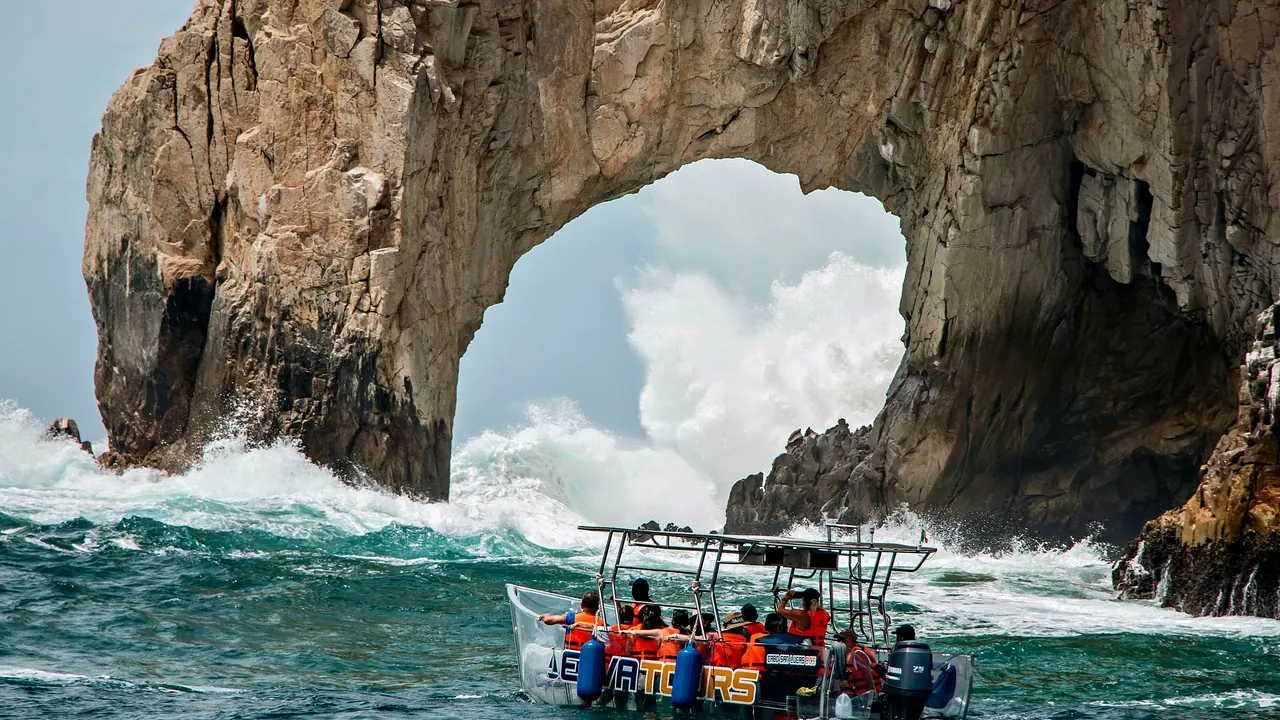
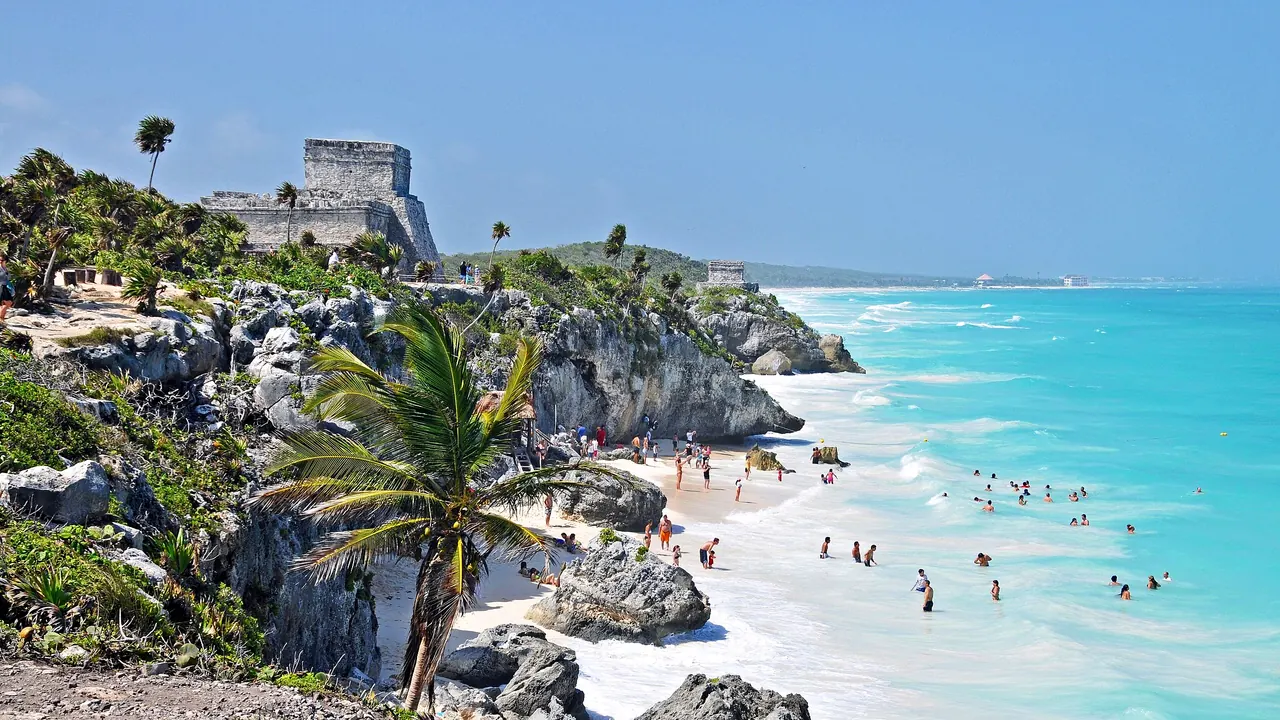
Photos: Los Cabos by Jules Clark, Pexels License; Riviera Maya by Dennis G. Jarvis, CC BY-SA 2.0, cropped.
Los Cabos or Riviera Maya?
Our verdict in twelve categories, each scored against the same fixed benchmark cities, and the climate month by month, so you can choose for your trip.
Choose Los Cabos for
Los Cabos does not lead in any category we score.
Los Cabos is for travellers who want the sea as something to watch and chase as well as swim in. Whales pass the cape in winter, marlin boats head out from the marina, and the desert and the Sierra de la Laguna give it a stark, mountainous backdrop the Caribbean side cannot match. It suits couples and groups happy to base themselves in a resort and use a car or taxis, and it has the drier climate. Expect to pay more for less in the way of sights.
Choose Riviera Maya for
- families
- getting around
- wellness
The Riviera Maya is the stronger all-round choice for most beach trips. The sand is longer, the water warmer and calmer, and there are cenotes and Maya ruins to break up the days. Families have far more laid on for them, wellness has real roots around Tulum, and buses and colectivos make it easier to move along the coast without a car. It gives up the cape's whales, its mountain backdrop and its drier weather, and it gets much more rain in the second half of the year.
Scoreboard
Twelve categories on one fixed scale from 0 to 100. The shaded stretch is the gap between the two.
Your match
Pick a travel style or drag the sliders, and both match scores follow your weighting.
Has no clear advantage with the weighting you have chosen.
Wins on families and getting around with your weighting.
What matters to you?
Category by category
What the scores mean for a trip.
Beaches & swimming
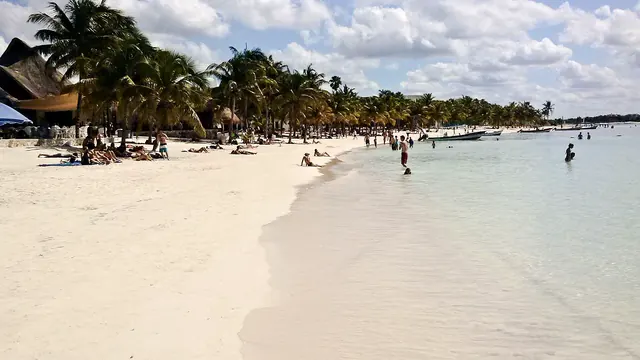
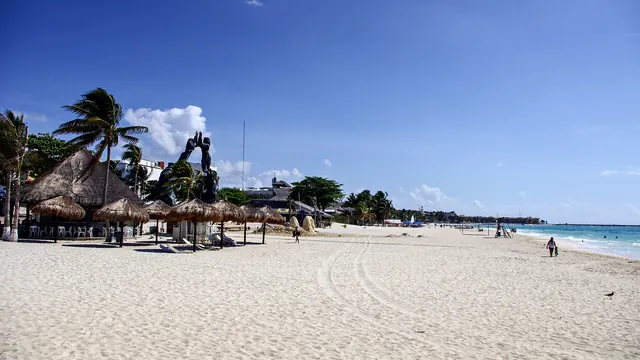
Both coasts are built around the beach, but the Riviera Maya gives more of it and asks fewer questions. More than 100km of white sand faces a warm, mostly calm Caribbean, from the town beach at Playa del Carmen to the turtle bays of Akumal and the long empty stretches near Sian Ka'an. The catch is sargassum seaweed, which washes up in some years.
Los Cabos is a coast of two halves. The Sea of Cortez side has Medano Beach and snorkelling coves like Chileno and Santa Maria, while the Pacific beaches have strong surf and undertow, so swimming there is out. The water is also noticeably cooler in winter.
Food & drink
The two eat about as well as each other, and in both the good food is a short way from the resorts. Los Cabos cooks from the Sea of Cortez and the sportfishing catch, with aguachile, ceviche and grilled fish at their best in San José del Cabo, plus farm restaurants in the hills and Baja wines.
The Riviera Maya's distinctive food is Yucatecan, such as cochinita pibil and sopa de lima, found in the back streets of Playa del Carmen and Tulum town, and Tulum's beach road adds wood-fired cooking for a more polished dinner.
Culture & sights
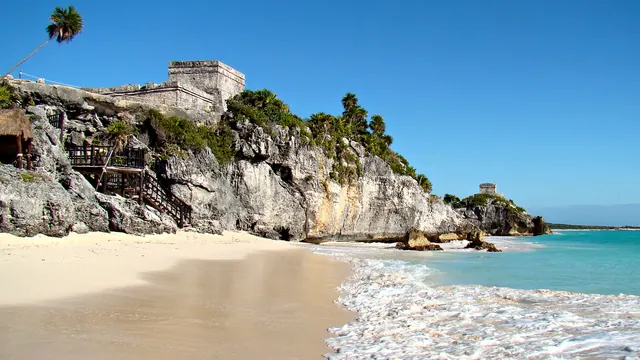
Neither coast is a culture trip, but the Riviera Maya has the Maya past to visit. Tulum's walled city above the sea and the jungle pyramids at Coba are both easy half-days from the beach, with Muyil and San Gervasio for the curious.
Los Cabos has nothing of that age or scale. San José del Cabo's mission church, plaza and gallery district, with its seasonal art walk, are pleasant for an evening, and the famous arch at Land's End is scenery rather than history.
Nightlife
Both offer loud, late nights made for visitors, with little subtlety. In Cabo San Lucas it all happens in one place: big bars and dance clubs behind the marina and day drinking on Medano, wildest around spring break.
The Riviera Maya splits its nights between two towns with different moods. Playa del Carmen does rooftop bars and clubs around Calle 12, and Tulum does electronic music, with DJ nights in jungle clearings and at beach clubs for a more fashionable crowd.
Nature & outdoors
Los Cabos is a landscape of height and open water. Desert of cactus and granite climbs into the oak and pine forests of the Sierra de la Laguna for serious hikes, surfers have the Pacific breaks, and the deep sea off the tip brings passing whales, while the living coral reef at Cabo Pulmo lies about two hours up the East Cape. Summer heat limits what can be done on land.
The Riviera Maya is flat jungle on limestone, and its wonders lie below the surface. Cenotes and flooded caves such as Dos Ojos and Gran Cenote, the Mesoamerican Reef and the drift dives off Cozumel make it a diver's coast, and boats cross Sian Ka'an's lagoons and mangroves for dolphins, birds and crocodiles. The wildlife is just as rich, but there is no high ground for a view or a mountain walk.
Day trips
The Riviera Maya has the bigger day out. Chichen Itza with colonial Valladolid, or the quieter Ek Balam, is a long but rewarding day inland, and the ferry to Cozumel and the boat to Isla Mujeres add easy island trips.
From Los Cabos the best choice is Todos Santos, an adobe town with galleries about an hour away. La Paz makes a long day, and the old mining villages of El Triunfo and Miraflores fill a drive, but nothing compares to a great Maya city.
Good for families
With children, the Riviera Maya is clearly ahead. The calm bays at Akumal, Xpu-Ha and Puerto Morelos are made for first snorkels, the eco-parks are designed around children, and cenotes thrill older ones. Mosquitoes and humid heat are the price.
Los Cabos works for families who stay inside a resort with a kids' club, with Chileno Bay and a whale-watching boat as outings. There are no attractions built for children, and the Pacific surf needs watching.
Getting around
The Riviera Maya is simpler to travel along, because everything lines up on one highway served by buses and colectivo vans that stop at beach and cenote turnoffs. Tulum is easy by bicycle, and a hire car opens up Coba.
Los Cabos spreads its hotels along the corridor between the two towns, and the local buses are little used by visitors. That leaves costly taxis, shuttles or a hire car, and in practice the car is needed for Todos Santos and the East Cape.
Shopping & style
In Los Cabos the choice is between the duty-free malls and silver and tequila stalls at the Cabo San Lucas marina and the galleries, design shops and Mexican folk art of San José del Cabo's small centre, which is the more rewarding of the two.
The Riviera Maya has more to browse. Playa del Carmen's Quinta Avenida is a long pedestrian street of silver, Talavera pottery and beachwear, and Tulum's boutiques add linen, woven baskets, hammocks and design pieces. Its best crafts, such as embroidered huipiles, are found inland in Valladolid.
Affordability
Both are expensive by Mexican standards, but Los Cabos is the harder on a budget. Luxury pricing along the corridor, United States-level restaurant bills at the marina and expensive taxis are hard to avoid, and San José del Cabo is the main way to save.
On the Riviera Maya, Tulum can be just as expensive, but Playa del Carmen and Puerto Morelos give budget travellers a cheaper base. Taquerias and cheap colectivos make a careful trip quite possible.
Live music & performing arts
An evening out in Los Cabos means cover bands and rock in the Cabo San Lucas bars, mariachi over dinner and the resorts' own dinner shows. The Riviera Maya stages more, with large evening spectacles of Maya ball games and folk dance at the eco-parks, and live Latin, reggae and rock bands in the bars of Playa del Carmen and Tulum. Neither coast has theatre, opera or a concert season.
Wellness & relaxation
The Riviera Maya treats wellness as a reason to come. Tulum's jungle shalas, retreats and sound-healing sessions, a temazcal tradition rooted in Maya practice and the large spa circuits of the coastal resorts make whole trips of it, with Akumal and Puerto Morelos as slow places to stay.
In Los Cabos, relaxation depends on the hotel. The corridor resorts' sea-facing spas and beach yoga are excellent but self-contained, and anyone staying in Cabo San Lucas will struggle to find quiet.
When should you go?
Pick your month. The climate figures are measured averages, not a forecast.
Los Cabos in July
Riviera Maya in July
Daytime high, °C
Rainfall in the month, mm
Where the figures come from
Los Cabos has no weather station within reach, so its figures come from a gridded climate model rather than a measured record, and read a broad area rather than one spot.
Riviera Maya has no weather station within reach, so its figures come from a gridded climate model rather than a measured record, and read a broad area rather than one spot.
Temperature and rainfall are climate normals, averaged over the years shown. Los Cabos: 2001-2020 normals, NASA POWER reanalysis grid, no weather station within 90 km. Riviera Maya: 2001-2020 normals, NASA POWER reanalysis grid, no weather station within 90 km.
Los Cabos is a desert cape and stays dry for most of the year. From December to April the days are pleasant for walking at around 24°C, but the sea is cool for swimming then and dips to about 22°C in spring. The water is warmest from August to October, which is also when the days are hottest and the little rain the cape gets arrives, peaking at about 99mm in September. Late autumn, when the sea is still warm and the rain has passed, is a good compromise.
On the Riviera Maya the sea stays at 27°C or more all year, so any month works for swimming, and the heat varies far less than at the cape. Rain decides the timing here. December to April is the drier, more comfortable stretch, while the wet season runs from May to November and peaks in October at around 224mm. For reliable sunshine, go to the Caribbean coast in winter and to the cape in late autumn or spring.
Which traveller are you?
On a family trip with children, the Riviera Maya is much easier. Reef-sheltered bays let children snorkel with turtles, the eco-parks offer underground rivers and zip lines, and the ruins are short visits. Los Cabos has resort kids' clubs and little else.
For a relaxing and wellness trip, the Riviera Maya goes deeper. Tulum's jungle yoga shalas, retreats and temazcal ceremonies come with cenote swims and huge resort spas. In Los Cabos, wellness means the corridor hotels' sea-facing spas and not much more.
For anglers and whale watchers, Los Cabos is the place. The deep water off the cape is famous for marlin, and humpback and grey whales pass close enough in winter to be seen from shore. The Caribbean coast has nothing similar.
Before you go
| Measure | Los Cabos | Riviera Maya |
|---|---|---|
| Official language | Spanish, Nahuatl, Yucatec Maya | Spanish, Nahuatl, Yucatec Maya |
| Currency | Mexican Peso (MXN) | Mexican Peso (MXN) |
| Sockets | AB127 V, 60 Hz | AB127 V, 60 Hz |
| Driving side | Right | Right |
| Time zone | UTC-7 | UTC-5 |
| Emergency number | 911 | 911 |
| Elevation | 11 m | - |
| Main airport | Los Cabos International Airport (SJD)35 km from centre54 non-stop destinations | Cancún International Airport (CUN)136 non-stop destinations |
| Public holidays this year | 9 days | 9 days |
By the numbers
| Measure | Los Cabos | Riviera Maya |
|---|---|---|
| Population | 202,694 | - |
| Museums within 10 km | 1 | - |
| UNESCO World Heritage sites within 50 km | 0 | - |
| Swim season, months above 21 °C | 12 months | 12 months |
Where else could you go?
Every comparison below shares a destination with this one, so you can follow Los Cabos or Riviera Maya somewhere new.
- Cozumelvs Riviera Maya
- Cancunvs Riviera Maya
- Isla Mujeresvs Riviera Maya
- Holboxvs Riviera Maya
- Yucatanvs Riviera Maya
- Ambergris Cayevs Riviera Maya