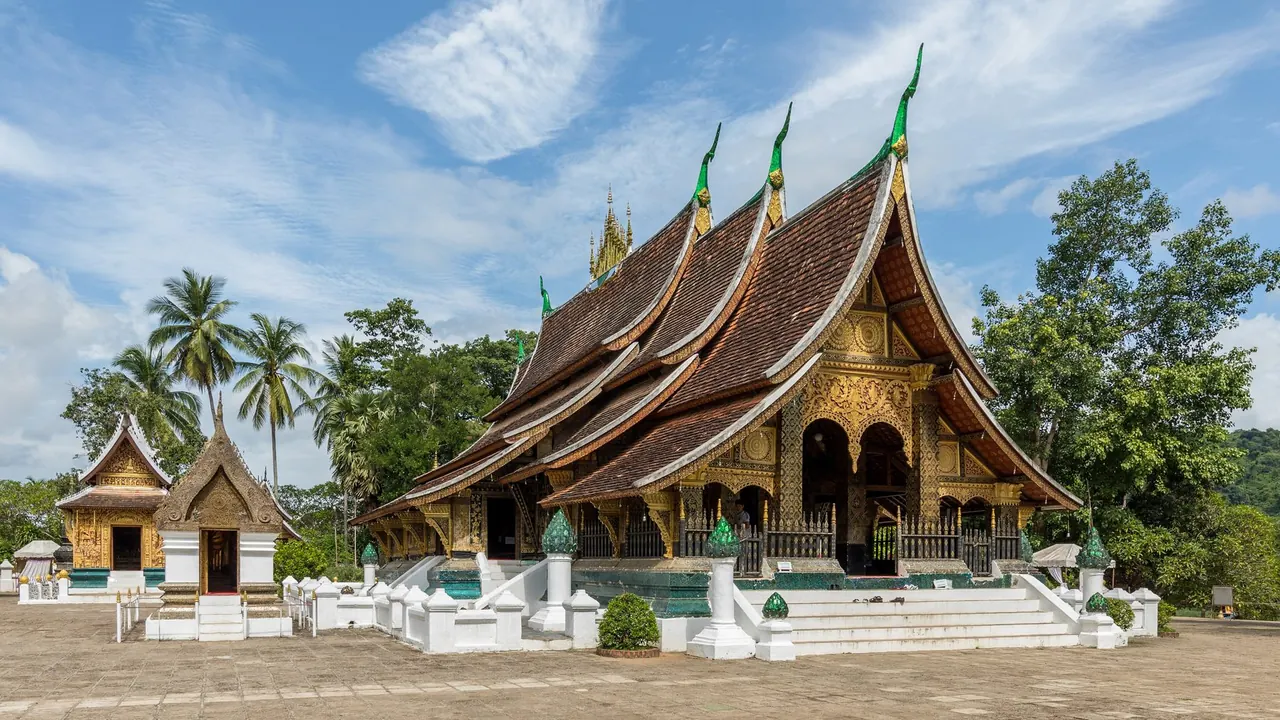
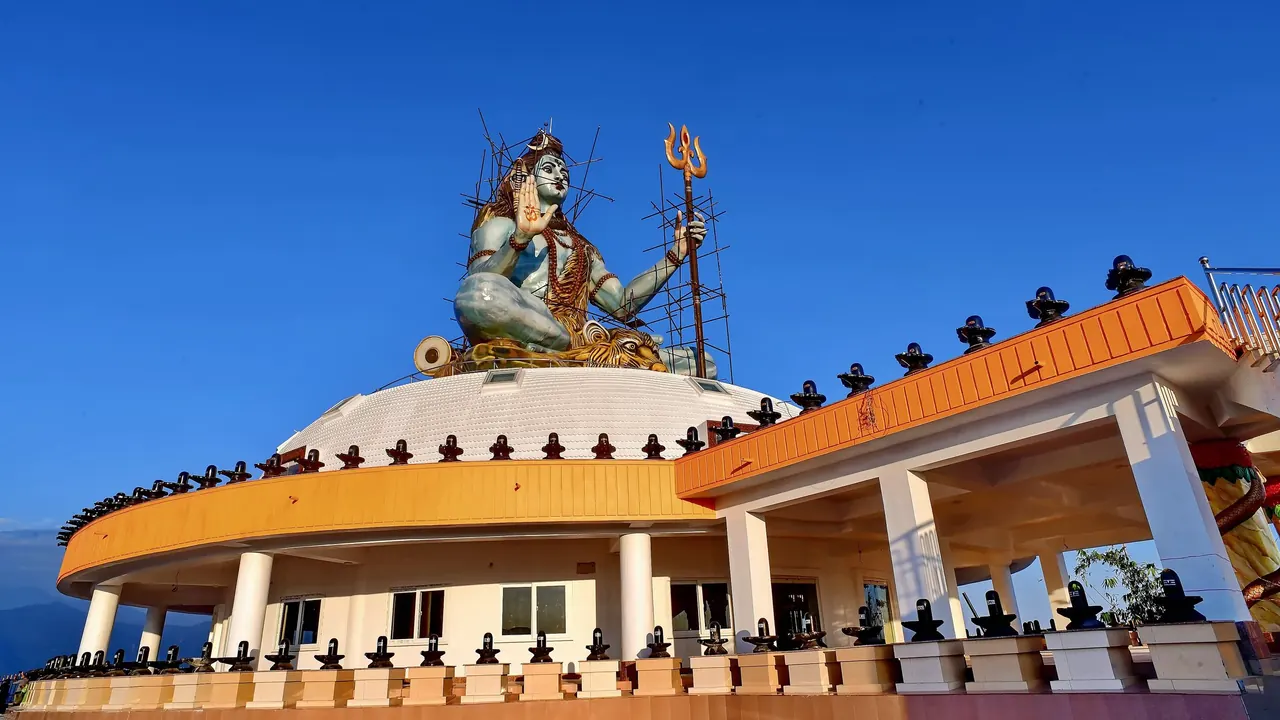
Photos: Luang Prabang by Basile Morin, CC BY-SA 4.0, cropped; Pokhara by Rajesh Dhungana, CC BY-SA 4.0, cropped.
Luang Prabang or Pokhara?
Our verdict in twelve categories, each scored against the same fixed benchmark cities, and the climate month by month, so you can choose for your trip.
Choose Luang Prabang for
- culture and sights
- day trips
- getting around
Luang Prabang is the better pick for travellers who want a place to look at and live in slowly. Its whole old town is a World Heritage peninsula of monasteries, colonial shophouses and the dawn alms round, and you can walk or cycle all of it. The food has more local character too. Evenings end early and quietly, and that suits the kind of visitor this town draws.
Choose Pokhara for
- nature and the outdoors
- nightlife
- prices
Pokhara is for people who came for the mountains. The Annapurna range stands over Phewa Lake, Sarangkot sends paragliders out over the water, and some of the Himalaya's best-known treks start a short drive away. It is also the cheaper of the two and the more sociable after dark, with bars full of trekkers back from the trail. The town has little to see, though, so treat it as a base rather than a sight in itself.
Scoreboard
Twelve categories on one fixed scale from 0 to 100. The shaded stretch is the gap between the two.
Your match
Pick a travel style or drag the sliders, and both match scores follow your weighting.
Too close to call, 2 points apart
Wins on culture and sights and day trips with your weighting.
Wins on nature and the outdoors and nightlife with your weighting.
What matters to you?
Category by category
What the scores mean for a trip.
Beaches & swimming
Neither city has a beach, but Luang Prabang has the better place to swim. The turquoise pools below Kuang Si, and Tad Sae later in the year, make a proper half-day dip in the forest.
In Pokhara, Phewa Lake is for boating, not swimming, and the water by Lakeside is not inviting. A swim there usually means a trip out to Begnas Lake or a hotel pool.
Food & drink
Luang Prabang has more cooking of its own to discover. Peppery or lam, smoky jeow bong, kaipen river weed and a morning market of herbs and river fish, plus the French-era baguettes, give it a distinct table, even if the menus start to repeat after a few days.
Pokhara's Lakeside is built around trekkers' appetites, with pizza, curries and apple pie. The better meals are Thakali dal bhat, momos and buffalo sekuwa in simpler places away from the lake, and there is no market worth planning a morning around.
Culture & sights
This is where the two differ most. Luang Prabang's entire peninsula is the attraction: monasteries among wooden houses and colonial shophouses, the Royal Palace museum, the stupa on Mount Phousi, and novices in saffron robes as part of everyday street life.
Pokhara has a handful of separate sights in a mostly modern town. There is the island temple of Tal Barahi, the Peace Pagoda on its ridge, and museums of mountaineering and the Gurkhas. They are worth a look but none of them is a reason to come.
Nightlife
Pokhara is the livelier of the two, but only by a gentle standard. Rooftop and lakefront bars fill with trekkers celebrating, cover bands play rock standards, and there are a couple of small dance bars before things wind down around midnight.
In Luang Prabang, a few garden bars and riverside terraces close at the curfew, and after that the streets are silent.
Nature & outdoors
Luang Prabang's green hills and the Mekong are lovely. Kuang Si, slow boats past limestone cliffs and treks to Hmong villages make for easy, gentle outings.
Pokhara plays in a different league. It has white peaks above 7,000m over the lake, paragliding thermals that pilots travel to fly, and the Annapurna trailheads within an hour or two by road. Here the outdoors is the whole reason for the trip.
Day trips
Luang Prabang has more to offer for a single day out. A boat goes up the Mekong to the Buddha-filled Pak Ou caves, the weaving villages are close by, and the railway puts Vang Vieng about an hour away and Vientiane about two.
Pokhara is held back by slow mountain roads. Bandipur's car-free brick bazaar is the one easy outing, and places such as Gorkha and Tansen work better as overnight stops.
Good for families
The two are about level, and both suit older children better than toddlers. Luang Prabang's big draw is Kuang Si, with its rescued bears and swimming pools, plus boat rides and quiet streets for cycling together.
Pokhara is better for adventurous teenagers. They can row on the lake, explore the caves and try tandem paragliding if they meet the limits. Neither town has zoos or play attractions.
Getting around
Luang Prabang is easier to get around. The old town is a compact, flat peninsula with light traffic, so walking and cycling cover almost everything. Tuk-tuks, minivans and boats handle the waterfalls, the caves and the train station.
Pokhara's Lakeside strip is walkable, but anything beyond it, such as Sarangkot, the old bazaar or the trailheads, means a taxi, a scooter or a hired driver. Pavements are patchy and the roads out of town are rough.
Shopping & style
Luang Prabang edges ahead for crafts. Its nightly market of hand-woven silk, Hmong embroidery and mulberry-paper lanterns is backed by weaving studios where you can watch natural dyeing and buy textiles of real quality.
Pokhara's shopping is more practical: trekking gear to buy or rent, pashmina, singing bowls and thangkas. The Tibetan settlements on the edge of town, with their carpet workshops, give it a character of its own.
Affordability
Both are cheap, but Pokhara costs less. Lakeside rooms with mountain views and Western-style meals are inexpensive even by the standards of the region, and the real costs are paragliding, guided treks and Annapurna permits.
Luang Prabang is the costliest stop in Laos. Market meals and guesthouses are cheap, but restored colonial hotels and riverside wine lists raise the bill quickly.
Live music & performing arts
Neither town has much of a stage life, though Luang Prabang has the one performance worth planning an evening around. The masked Phralak Phralam is danced at the theatre in the Royal Palace grounds.
Pokhara's offer is cover bands in the bars and Gurung and Magar dances at dinner shows put on for visitors.
Wellness & relaxation
Both towns are restful, in different ways. Luang Prabang's calm is part of daily life: the alms round at dawn, sunset over the Mekong, gentle Lao massage and herbal saunas scented with lemongrass.
Pokhara is the place for more structured rest. Yoga and meditation retreats line the hillsides and the far shore of the lake, and massages are tailored to trekkers' tired legs. There are no hot springs in town, though.
When should you go?
Pick your month. The climate figures are measured averages, not a forecast.
Luang Prabang in July
Pokhara in July
Daytime high, °C
Rainfall in the month, mm
Where the figures come from
Pokhara has no weather station within reach, so its figures come from a gridded climate model rather than a measured record, and read a broad area rather than the city itself.
Temperature and rainfall are climate normals, averaged over the years shown. Luang Prabang: 1991-2020 normals, Luang-Prabang (0.8 km from centre). Pokhara: 1991-2020 normals, TerraClimate 4 km grid at the town, no weather station within 90 km.
Both cities are at their best in the dry months at the end of the year, but they feel very different. Luang Prabang is clear and pleasant from November to February, with highs around 28°C in January and plenty of sun. From March the heat builds to about 36°C in April, which makes the middle of the day hard going for temple walks. The rains then run from May to September and peak in August at around 311mm, though there is still a fair amount of sunshine between the downpours.
Pokhara is cooler all year. Winter highs of about 19°C make December and January good walking weather, and October and November give the clearest mountain views. Its monsoon is much heavier than Luang Prabang's, at about 674mm in July, and from June to September the peaks are often hidden by cloud for days at a time.
Which traveller are you?
On a culture and arts trip, Luang Prabang wins easily. More than thirty monasteries, Wat Xieng Thong's mosaics, the former Royal Palace and the Phralak Phralam dance are all within walking distance. Pokhara's temples and museums fill no more than two days.
For an outdoors trip, Pokhara is the clear choice. You get sunrise at Sarangkot, paragliding over Phewa Lake, and treks to Poon Hill or Annapurna Base Camp starting an hour or two away. Luang Prabang offers gentler kayaking, cycling and village walks in green hills.
On a tight budget, Pokhara goes further. Lakeside guesthouses with mountain views and dal bhat with refills cost very little. Luang Prabang is cheap too, but it is the most expensive stop in Laos, and its boutique hotels push costs up.
Before you go
| Measure | Luang Prabang | Pokhara |
|---|---|---|
| Official language | Lao | Nepali |
| Currency | Lao Kip (LAK) | Nepalese Rupee (NPR) |
| Sockets | ABCEF230 V, 50 Hz | CM230 V, 50 Hz |
| Driving side | Right | Left |
| Time zone | UTC+7 | UTC+5:45 |
| Emergency number | Police 191, ambulance 195, fire 190 | Police 100, ambulance 102, fire 101 |
| Elevation | 305 m | 900 m |
| Main airport | Luang Phabang International Airport (LPQ)4 km from centre7 non-stop destinations | Pokhara International Airport (PHH)4 km from centre9 non-stop destinations |
By the numbers
| Measure | Luang Prabang | Pokhara |
|---|---|---|
| City population | 53,792 | 353,841 |
| People per km² | - | 762 |
| Museums within 10 km | 0 | 2 |
| UNESCO World Heritage sites within 50 km | 1 | 0 |
Where else could you go?
Every comparison below shares a destination with this one, so you can follow Luang Prabang or Pokhara somewhere new.
- Kathmanduvs Pokhara
- Chiang Raivs Luang Prabang
- Varanasivs Pokhara
- Chiang Maivs Luang Prabang
- Hanoivs Luang Prabang
- Huevs Luang Prabang