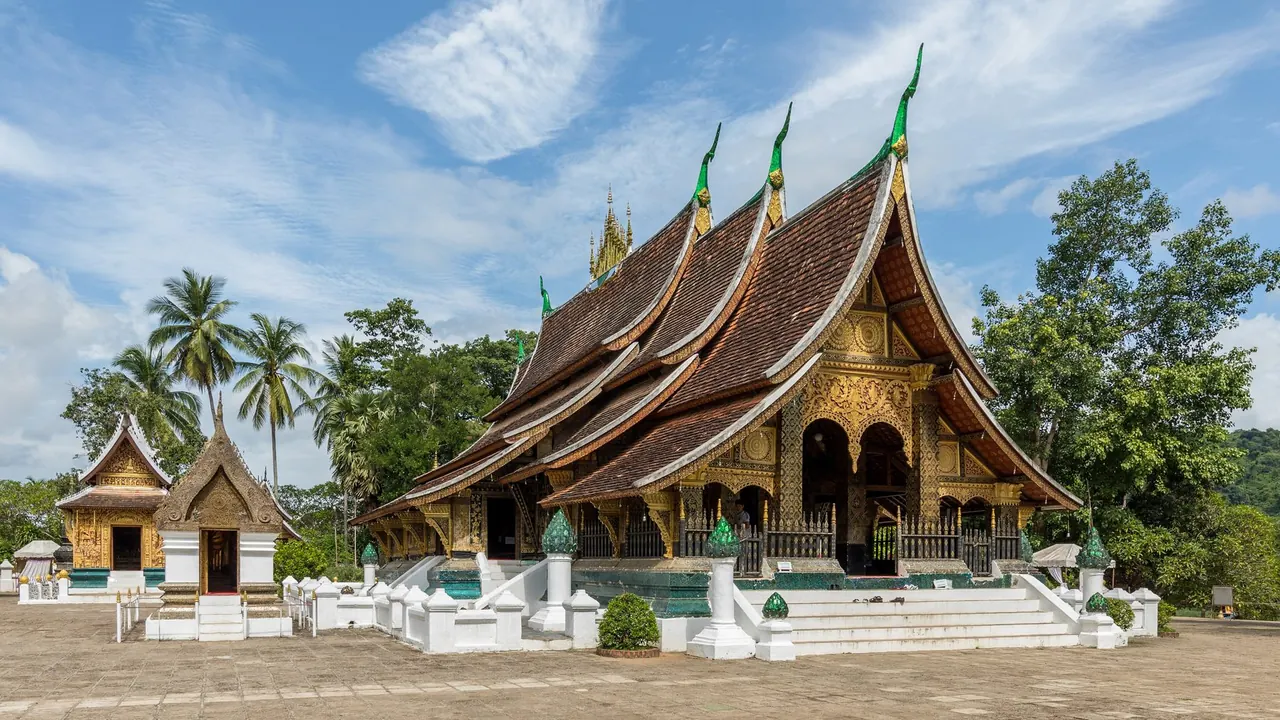
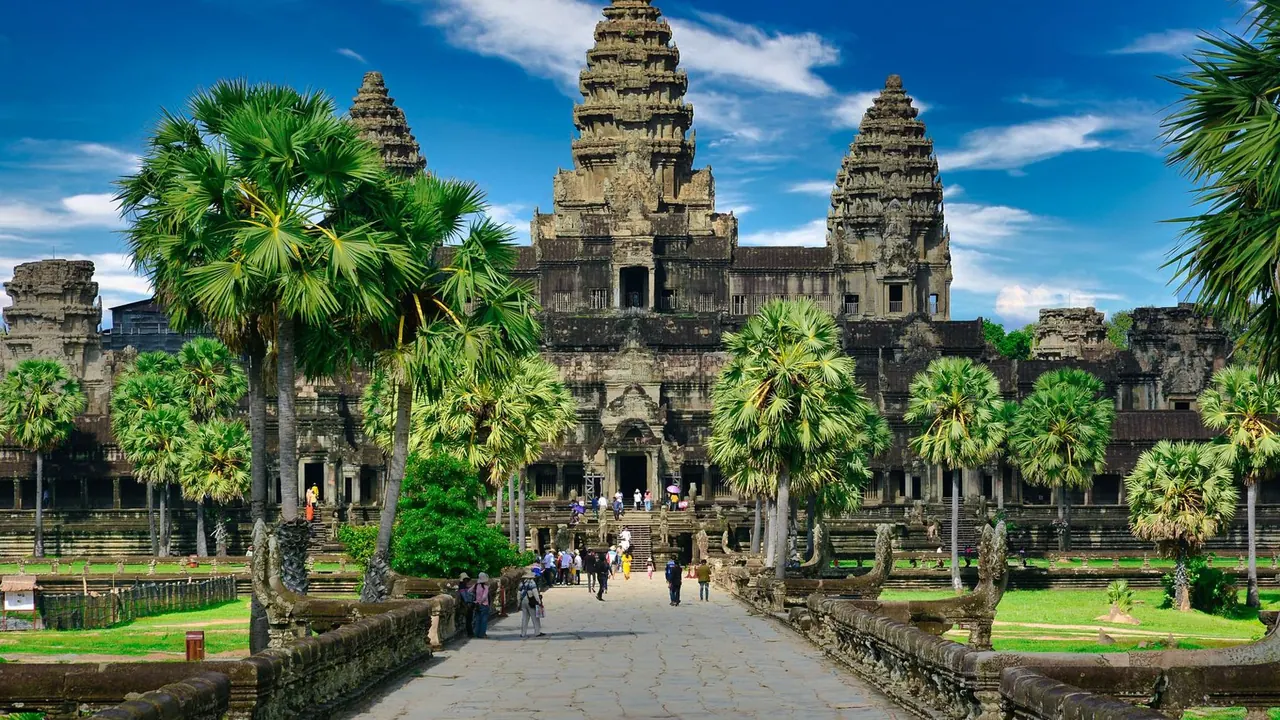
Photos: Luang Prabang by Basile Morin, CC BY-SA 4.0, cropped; Siem Reap by allPhoto Bangkok, Pexels License.
Luang Prabang or Siem Reap?
Our verdict in twelve categories, each scored against the same fixed benchmark cities, and the climate month by month, so you can choose for your trip.
Choose Luang Prabang for
- nature and the outdoors
- getting around
- beaches
Luang Prabang suits a slower trip where the setting matters more than any single sight. It is a small heritage town of monasteries and colonial shophouses on a peninsula you can walk or cycle. Steep green hills, waterfalls, river boats and village treks start at its edge. It is the better choice for travellers who want quiet streets, early nights and time outdoors rather than a list of famous monuments.
Choose Siem Reap for
- nightlife
- culture and sights
- day trips
If Angkor is the reason for the journey, go to Siem Reap. The temples are a far bigger draw than anything in Luang Prabang, and the outlying sites fill several more days. In the evenings there is apsara dance, a Khmer circus and a late-opening bar street. It is also slightly cheaper. In return, the land around it is flat and hot, so expect more time in tuk-tuks and by the hotel pool.
Scoreboard
Twelve categories on one fixed scale from 0 to 100. The shaded stretch is the gap between the two.
Your match
Pick a travel style or drag the sliders, and both match scores follow your weighting.
Wins on nature and the outdoors and getting around with your weighting.
Wins on nightlife and culture and sights with your weighting.
What matters to you?
Category by category
What the scores mean for a trip.
Beaches & swimming
Neither city has a beach, but Luang Prabang at least has somewhere memorable to swim. The turquoise pools below Kuang Si and the smaller Tad Sae falls make a half-day outing into the forest. In Siem Reap the Tonle Sap is muddy and the coast is most of a day away, so swimming means the hotel pool, which becomes the afternoon routine after dawn at the temples.
Food & drink
The two eat at a similar level, so the difference lies in the cooking and the range. Luang Prabang has dishes of its own, such as or lam stew, jeow bong and crisp kaipen river weed, along with French-style bakeries and highland coffee. The menus start to repeat after a few days, though.
Siem Reap's Khmer food has a little more depth: fish amok, num banh chok at morning stalls, roadside grills, a handful of tasting-menu kitchens and social-enterprise restaurants. The catch is that the centre around Pub Street is full of pizza and backpacker menus, so the better meals are a short tuk-tuk ride away.
Culture & sights
Siem Reap is far ahead because of Angkor. Angkor Wat, the stone faces of the Bayon, Ta Prohm and dozens of temples in the forest need three days or more, and the Angkor National Museum sets them in context. Expect heat and crowds at the sunrise points.
Luang Prabang works on a smaller scale. The pleasure is the whole UNESCO-listed peninsula: more than thirty monasteries led by Wat Xieng Thong, the former Royal Palace and the dawn alms round, all within a short walk. It is a living religious town rather than the ruins of an empire, and a calm day or two covers it.
Nightlife
Of the two, only Siem Reap has a real night out. Pub Street and the lanes around it fill every night with cheap beer, cocktail buckets and loud music until late, and quieter wine bars line the river. In Luang Prabang a few garden bars and riverside terraces close around midnight under the town curfew, and then the streets go dark and silent.
Nature & outdoors
Luang Prabang has the finer landscape and far more to do in it. Steep green hills rise at the edge of town, Kuang Si has its bear sanctuary, and kayaking on the Nam Khan, mountain biking and treks to hill villages are easy to arrange.
Siem Reap is flat paddy country, pleasant for early-morning cycling between villages. Its natural highlights are boat trips to the flooded forest and the bird colonies of Prek Toal on the Tonle Sap. Phnom Kulen, about an hour and a half north, has a waterfall and forest walks, and a jungle trail leads to the riverbed carvings at Kbal Spean.
Day trips
Siem Reap has more worth leaving town for, and most of it is more temples. There is the carved pink sandstone of Banteay Srei, the collapsed and overgrown Beng Mealea, the early Roluos group and, for a long day, Koh Ker. In the wet season the stilt villages of Kampong Phluk and Kampong Khleang make a different kind of outing.
Luang Prabang's classic outing is the boat up the Mekong to the Pak Ou caves and their thousands of Buddha images, with weaving villages close to town. The railway gives it something Siem Reap lacks: towns within easy reach, with Vang Vieng about an hour away and Vientiane about two.
Good for families
Both suit older children better than toddlers, and neither has much built for kids. What differs is the kind of adventure. In Luang Prabang it is the bears and swimming pools at Kuang Si, the boat rides and quiet streets to cycle along together.
In Siem Reap children can scramble through root-tangled ruins and take boats to the stilt villages, but long temple days and chaotic traffic tire young legs. Cheap family rooms with pools help there, while Luang Prabang's limited medical care is worth weighing.
Getting around
Luang Prabang is easier to get around. The old town sits on a flat peninsula with light traffic, so walking and cycling cover nearly everything, and you only need a tuk-tuk or minivan for the waterfalls, the villages and the train station.
Siem Reap's centre is walkable too, but the temples are spread across a large park, pavements are broken and traffic is chaotic. Most days therefore mean a hired tuk-tuk driver, a car or an e-bike, though ride-hailing apps make tuk-tuks easy to call.
Shopping & style
The two are evenly matched, and in both shopping means crafts rather than fashion. Luang Prabang's long night market of red-roofed stalls sells Hmong embroidery, mulberry-paper lanterns and silk. The better textiles are in the weaving studios and villages, where you can watch natural dyeing.
Siem Reap adds stone and wood carving and lacquerware from social-enterprise workshops, kramas and spices at the Old Market, and a few boutiques selling homewares made in Cambodia. Expect to bargain at the stalls.
Affordability
Both are very cheap, and Siem Reap is a little cheaper still. Pool hotels, Khmer meals, massages and a tuk-tuk for a whole day cost little there, although the Angkor pass takes a real bite out of a short stay. Luang Prabang is the most expensive stop in Laos. Simple guesthouses on the peninsula stay inexpensive, but restored colonial hotels and riverside wine lists can raise the bill quickly.
Live music & performing arts
Siem Reap offers more evenings worth booking. The Khmer circus under its big top, run by a school for young performers, is widely admired, and the smaller, more serious apsara dance performances are better than the buffet shows. Luang Prabang has essentially one performance, the masked Phralak Phralam at the Royal Palace theatre, plus a few folk evenings and temple drums at dusk.
Wellness & relaxation
Both are easy places to unwind, with massage on every street and spas in the hotels, but the calm comes in different forms. Luang Prabang is quiet day and night. Its gentle Lao massage and lemongrass-scented herbal saunas are a local tradition, and the town suits reading on a terrace and sleeping early.
In Siem Reap the rest comes between the early temple starts: long afternoons by a garden-hotel pool, Khmer massage with herbal compresses and yoga classes that are easy to find. If you want quiet nights, stay away from Pub Street.
When should you go?
Pick your month. The climate figures are measured averages, not a forecast.
Luang Prabang in July
Siem Reap in July
Daytime high, °C
Rainfall in the month, mm
Where the figures come from
Siem Reap has no weather station within reach, so its figures come from a gridded climate model rather than a measured record, and read a broad area rather than the city itself.
Temperature and rainfall are climate normals, averaged over the years shown. Luang Prabang: 1991-2020 normals, Luang-Prabang (0.8 km from centre). Siem Reap: 2001-2020 normals, NASA POWER reanalysis grid, no weather station within 90 km.
Luang Prabang is at its best from November to February. The days are dry and clear, and January highs of about 28°C are comfortable for walking the old town and climbing Mount Phousi. March and April turn hot and hazy from field burning. The rain arrives in May and peaks in August at around 311mm. The hills turn green and Tad Sae is full, but the trails are muddy and sunshine drops noticeably through the wettest months.
In the dry season Siem Reap is the hotter of the two, at around 33°C even in January. From February to April it reaches 36°C, which is too hot for long midday temple walks. December and January are its driest and most pleasant months. The rain builds from May and peaks later than in Luang Prabang, at 231mm in September. Through the wet months Siem Reap's days are a little cooler than Luang Prabang's, and the swollen lake makes the best time to visit the stilt villages.
Which traveller are you?
On a culture and arts trip, Siem Reap is the clear choice. Angkor Wat, the Bayon and Ta Prohm are among the world's great monuments, and evenings bring apsara dance and the Khmer circus. Luang Prabang is a lovely temple town, but its museums are small.
For an outdoors trip, choose Luang Prabang. Forested hills, the Kuang Si falls, kayaking on the Nam Khan and treks to Hmong and Khmu villages all start close to town. Around Siem Reap the paddies are flat and suit only gentle cycling, and the heat limits much else.
On a food and nightlife trip, Siem Reap gives you more to do. Khmer cooking runs from morning noodle stalls to tasting menus, and Pub Street stays open late. In Luang Prabang the terraces close around midnight under the town curfew.
Before you go
| Measure | Luang Prabang | Siem Reap |
|---|---|---|
| Official language | Lao | Khmer |
| Currency | Lao Kip (LAK) | Riel (KHR) |
| Sockets | ABCEF230 V, 50 Hz | ACG230 V, 50 Hz |
| Driving side | Right | Right |
| Time zone | UTC+7 | UTC+7 |
| Emergency number | Police 191, ambulance 195, fire 190 | Police 117, ambulance 119, fire 118 |
| Elevation | 305 m | 18 m |
| Main airport | Luang Phabang International Airport (LPQ)4 km from centre7 non-stop destinations | Siem Reap-Angkor International Airport (SAI)39 km from centre14 non-stop destinations |
| Public holidays this year | - | 21 days |
By the numbers
| Measure | Luang Prabang | Siem Reap |
|---|---|---|
| City population | 53,792 | 147,866 |
| Museums within 10 km | 0 | 6 |
| UNESCO World Heritage sites within 50 km | 1 | 1 |
Where else could you go?
Every comparison below shares a destination with this one, so you can follow Luang Prabang or Siem Reap somewhere new.