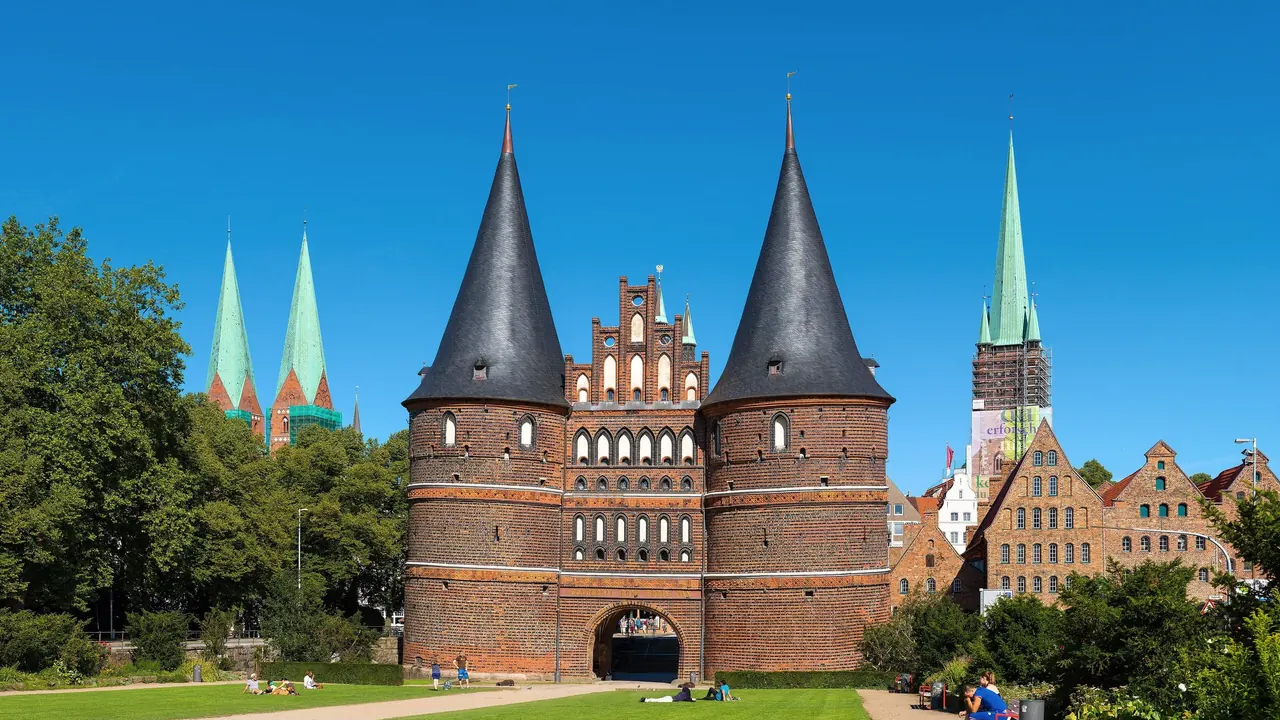
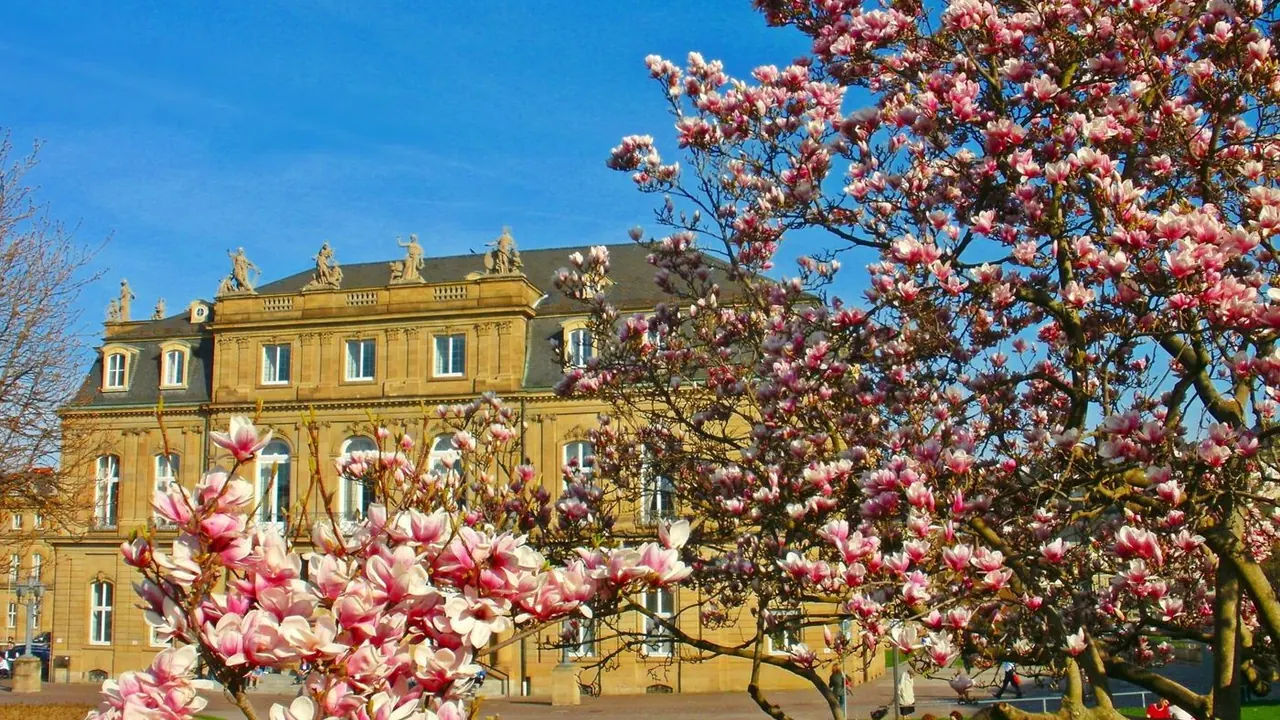
Photos: Lubeck by Christian Wolf (www.c-w-design.de), CC BY-SA 3.0 DE, cropped; Stuttgart by Baden de, CC BY 3.0, cropped.
Lubeck or Stuttgart?
Our verdict in twelve categories, each scored against the same fixed benchmark cities, and the climate month by month, so you can choose for your trip.
Choose Lubeck for
- beaches
- prices
- culture and sights
Lübeck suits a slower, more traditional vacation: a few days among the brick churches and gabled merchants' houses of an intact Hanseatic old town, then afternoons on the sand at Travemünde. It is the better pick if you want a city and a seaside in one stay, a gentle pace in the evenings and a budget that goes a bit further.
Choose Stuttgart for
- live music and the arts
- wellness
- shopping
Stuttgart is the stronger base for a busy, varied trip. Its opera and ballet, mineral baths, Swabian wine taverns and wooded hills give each day more to fill, and Heidelberg, Tübingen and the Swabian Jura are all within easy reach. Choose it if you would rather do a lot than lie on a beach, and don't mind paying a little more for it.
Scoreboard
Twelve categories on one fixed scale from 0 to 100. The shaded stretch is the gap between the two.
Your match
Pick a travel style or drag the sliders, and both match scores follow your weighting.
Wins on beaches and prices with your weighting.
Wins on live music and the arts and wellness with your weighting.
What matters to you?
Category by category
What the scores mean for a trip.
Beaches & swimming
Lübeck has a real seaside. Travemünde is part of the city and has a long sandy beach with hooded wicker beach chairs, and Timmendorfer Strand and Scharbeutz are further along the bay. The Baltic is calm and tide-free but cool, so these are pleasant summer afternoons rather than a reason to book.
Stuttgart has nothing like this. The Neckar is a working river and Max-Eyth-See is not for swimming, so summer bathing means the outdoor pools. Lake Constance is more than two hours away.
Food & drink
Stuttgart eats better. Swabian cooking is distinctive, with Maultaschen, Käsespätzle and Zwiebelrostbraten served in wine taverns, wine from vineyards inside the city limits, and seasonal Besen taverns in growers' homes. It also has a deeper fine-dining tier than you would expect for its size.
Lübeck's strengths are narrower: marzipan from old confectioners, smoked herring, fish sandwiches from harbour kiosks and cellar-aged Rotspon, best enjoyed at the long tables of the Schiffergesellschaft. Beyond those, the choice is mostly ordinary taverns.
Culture & sights
Lübeck has the edge for historic atmosphere. Its island old town has survived largely whole, a UNESCO-listed Hanseatic townscape of brick Gothic churches, the Holstentor and stepped gables, and the Hansemuseum and Buddenbrookhaus fill out a well-rounded two days.
Stuttgart's appeal is modern rather than medieval. The Mercedes-Benz and Porsche museums, the Staatsgalerie and the Le Corbusier houses of the Weissenhof Estate are the draws, while the bombed centre keeps its heritage in pockets around Schlossplatz.
Nightlife
Stuttgart has more to offer after dark. Theodor-Heuss-Strasse fills with bars at weekends, clubs operate in basements and old industrial spaces, and the Cannstatter Volksfest beer tents bring the city's biggest crowds each autumn.
Lübeck winds down early. A wine bar in the old town or a drink on the Obertrave is the usual evening, and anyone wanting clubs takes the train to Hamburg.
Nature & outdoors
Stuttgart has more varied country on its doorstep. Wine trails and the deer forests of the Rotwildpark start at the edge of town, and within about an hour lie the cliff paths and caves of the Swabian Jura and the fir-covered ridges of the northern Black Forest.
Lübeck's landscape is flatter and gentler. Its best outings are canoeing on the reed-lined Wakenitz, walking the clay cliff of the Brodtener Steilufer and long, easy bike rides along the coast.
Day trips
Stuttgart has the deeper choice of day trips. Ludwigsburg Palace and Esslingen are a short S-Bahn ride away, Tübingen and Heidelberg are each under an hour, and Hohenzollern Castle, Maulbronn and Ulm Minster are all within reach. Strasbourg works as a long day out.
From Lübeck, the essential trip is Hamburg, with Wismar, Schwerin's island castle and lakeside Ratzeburg as good extras. After those, the list runs short quickly.
Good for families
Stuttgart works for families all year. Wilhelma, a zoo and botanical garden among Moorish-style pavilions, can fill a whole day, and the Killesberg railway, the rack railway and the car museums keep children busy in any weather.
Lübeck is best for families in summer, when the shallow beach at Travemünde and Hansa-Park up the coast come into their own. Out of season it has far less made for children.
Getting around
Both are easy without a car, but in different ways. In Lübeck almost everything sits on one small, flat island you can cross on foot, and the regional train takes about twenty minutes to the beach.
Stuttgart's centre is also walkable, but the city climbs the sides of its basin. Once you leave the flat core, you rely on the Stadtbahn, the rack railway, the funicular or the steep Stäffele stairways.
Shopping & style
Stuttgart is the better place to shop. Königstrasse runs right through the centre, Breuninger has the designer floors, and the Metzingen outlets are half an hour away, so brand shoppers are well served.
Lübeck has a short high street on Breite Strasse and some craft shops and galleries tucked into the courtyard passages. Most people leave with marzipan and go to Hamburg for fashion.
Affordability
Lübeck is the cheaper stay. Old-town rooms are moderately priced, fish kiosks and taverns are good value, and the train to the coast costs little. The exception is Travemünde in July and August, when seaside rooms cost more and book up early.
Stuttgart's prices follow its business visitors. Hotels are expensive during trade fairs and better value at weekends, and smart restaurants push costs up quickly.
Live music & performing arts
Stuttgart is far ahead here. The Stuttgart Ballet, famous since John Cranko's time, shares the state theatre with an adventurous opera company, the Liederhalle keeps up a strong Bach tradition, and big musicals run all year at Möhringen.
Lübeck's highlights are quieter: organ concerts in the Marienkirche, where Buxtehude once played, productions at the Art Nouveau Theater Lübeck, and the Schleswig-Holstein Music Festival in summer.
Wellness & relaxation
Stuttgart has a genuine bathing culture. Its mineral springs are among the most productive in Europe and feed the Cannstatt and Leuze baths, where you can soak indoors and out in naturally carbonated warm water.
Lübeck relaxes you more through its slow pace. Benches by the river, quiet courtyards and Travemünde's long spa-resort tradition, with saunas and the seawater pool at Scharbeutz, make for calm days but not a dedicated spa trip.
When should you go?
Pick your month. The climate figures are measured averages, not a forecast.
Lubeck in July
Stuttgart in July
Daytime high, °C
Rainfall in the month, mm
Temperature and rainfall are climate normals, averaged over the years shown. Lubeck: 1991-2020 normals, Luebeck-Blankensee (6 km from centre). Stuttgart: 1991-2020 normals, Stuttgart / Neckartal (2.8 km from centre).
Lübeck has a short northern summer. July and August reach about 24°C and are the only months when the Baltic is really swimmable, at around 19°C, so beach days fall between late June and early September. May and June bring the longest sunny spells and are lovely for walking the old town. August is the wettest month, though, and from November to February the days are grey, chilly and very short of sun.
Stuttgart sits inland and runs a little warmer all year, with summer highs around 26°C. The basin can feel close on the hottest days, and summer is also its rainy season, peaking at about 79mm in July, mostly as showers. Spring and September are the most comfortable times for exploring on foot and for the vineyard slopes. Winters are cold but drier and noticeably sunnier than on the Baltic.
Which traveller are you?
For a beach and sun trip, Lübeck is the only real option of the two. Travemünde and the resorts of the Bay of Lübeck have sandy beaches and calm, shallow water within a short ride of the old town, while Stuttgart has outdoor pools and nothing more.
On a relaxing and wellness trip, Stuttgart wins with its mineral springs. You can soak in warm, naturally carbonated water at the Cannstatt and Leuze baths and finish with a sauna. Lübeck offers calm courtyards and seaside saunas, but has no bathing culture of its own.
For a shopping trip, Stuttgart gives you far more. Königstrasse is one of Germany's longest shopping streets, Breuninger covers designer fashion, and the Metzingen outlet town is half an hour away. In Lübeck the shopping is mostly chain stores, small courtyard shops and boxes of marzipan.
Before you go
| Measure | Lubeck | Stuttgart |
|---|---|---|
| Official language | German | German |
| Currency | Euro (EUR) | Euro (EUR) |
| Sockets | CF230 V, 50 Hz | CF230 V, 50 Hz |
| Driving side | Right | Right |
| Time zone | UTC+1, UTC+2 in summer | UTC+1, UTC+2 in summer |
| Emergency number | 112 | 112 |
| Elevation | 13 m | 245 m |
| Main airport | Hamburg Helmut Schmidt Airport (HAM)53 km from centre120 non-stop destinations | Stuttgart Airport (STR)10 km from centre124 non-stop destinations |
| Public holidays this year | 10 days | 12 days |
By the numbers
| Measure | Lubeck | Stuttgart |
|---|---|---|
| City population | 217,061 | 609,365 |
| People per km² | 1,013 | 2,938 |
| Museums within 10 km | 23 | 42 |
| UNESCO World Heritage sites within 50 km | 1 | 3 |
| Swim season, months above 21 °C | None | - |
Where else could you go?
Every comparison below shares a destination with this one, so you can follow Lubeck or Stuttgart somewhere new.
- Hamburgvs Lubeck
- Baden-Badenvs Stuttgart
- Heidelbergvs Stuttgart
- Strasbourgvs Stuttgart
- Freiburgvs Stuttgart
- Frankfurtvs Stuttgart