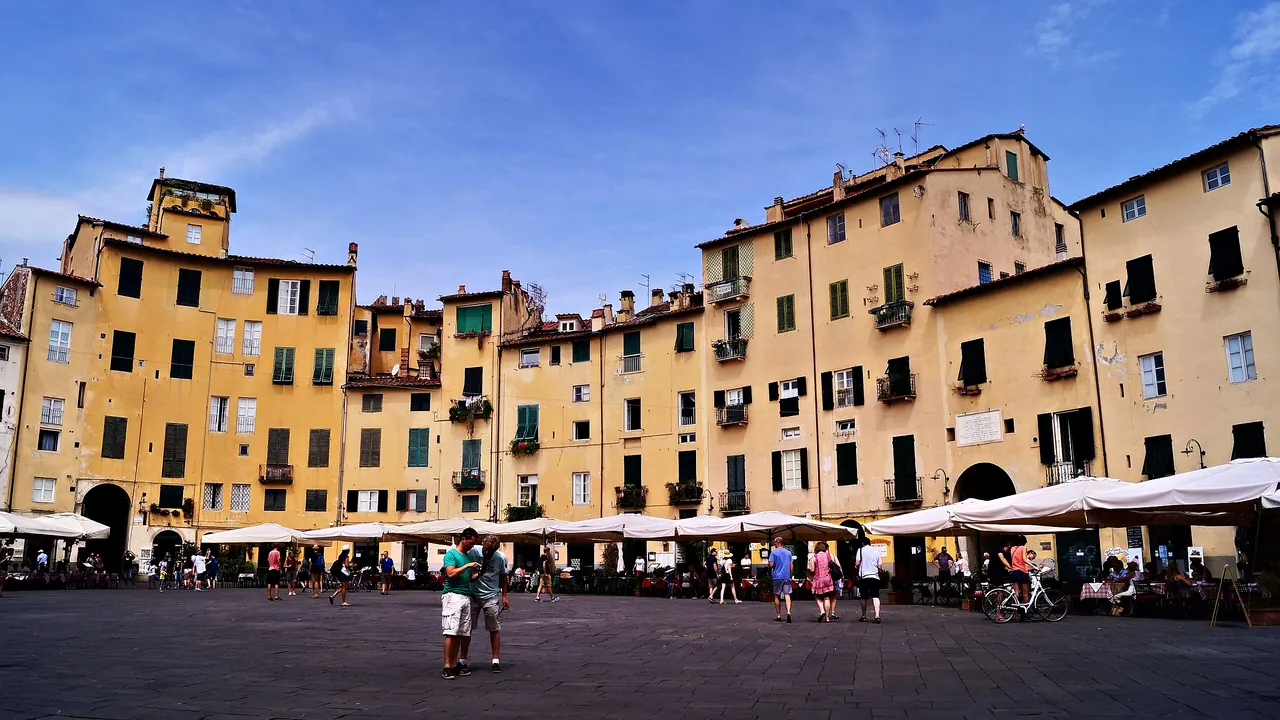
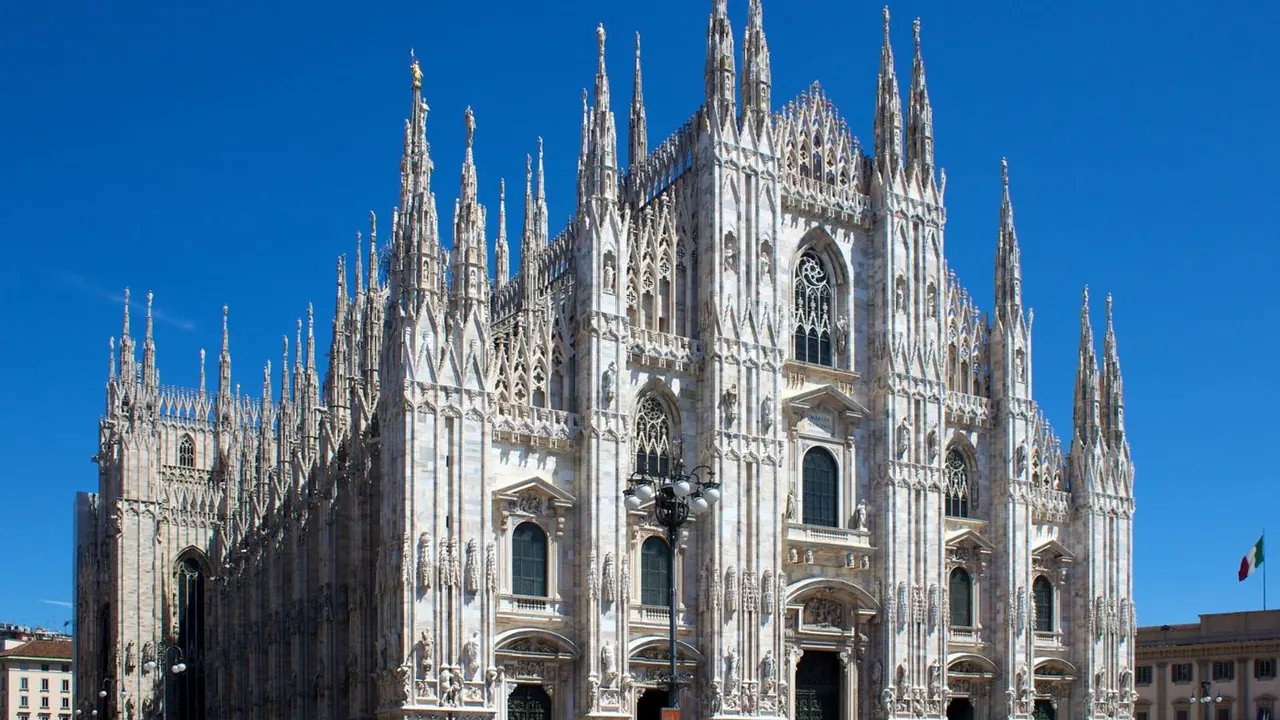
Photos: Lucca by Stefano Sansavini, CC BY-SA 4.0, cropped; Milan by Jiuguang Wang, CC BY-SA 3.0, cropped.
Lucca or Milan?
Our verdict in twelve categories, each scored against the same fixed benchmark cities, and the climate month by month, so you can choose for your trip.
Choose Lucca for
- beaches
- prices
- wellness
Lucca suits a slower trip on foot and by bike. It is a complete walled town you can cycle round, with the Versilia sands within half an hour and Pisa, Florence and the Apuan Alps close enough for days out. It is also easier on the wallet, and the better pick if you want quiet evenings rather than late nights.
Choose Milan for
- shopping
- nightlife
- live music and the arts
Pick Milan if you want a city to keep you busy after dark and in the shops. Fashion flagships in the Quadrilatero, La Scala, the Last Supper, the Brera collection, aperitivo along the Navigli and a much wider choice of food put it well ahead for a lively urban stay. In return you pay higher hotel bills, and lakes take the place of beaches.
Scoreboard
Twelve categories on one fixed scale from 0 to 100. The shaded stretch is the gap between the two.
Your match
Pick a travel style or drag the sliders, and both match scores follow your weighting.
Wins on beaches and prices with your weighting.
Wins on shopping and nightlife with your weighting.
What matters to you?
Category by category
What the scores mean for a trip.
Beaches & swimming
Neither city is on the water, but Lucca is far closer to it. Viareggio is about 25 minutes by train. From there, wide sandy beaches with gently shelving water run up the Versilia coast to Forte dei Marmi, with wilder dunes backed by pine woods at the Lecciona. Sightseeing in the morning and a swim in the afternoon is an easy day.
Milan has nothing like it. Locals make do with the Idroscalo basin and open-air pools. A realistic swim means a pebbly lido on Lake Como or Lake Maggiore about an hour away, where the water is a little cooler, and the Ligurian coast is too far for an afternoon.
Food & drink
Lucca cooks plainly and well: spelt soup, tordelli in ragù, chestnut dishes in the colder months, slices of cecina from bakery counters and buccellato, all served in family trattorias at fair prices. The limit is range. Modern and international cooking is scarce, and after a few days the menus start to repeat.
Milan offers much more choice. Beyond its own butter-rich saffron risotto, ossobuco and cotoletta, it gathers cooking from every Italian region and has a serious fine-dining tier. The aperitivo spreads around the Navigli, Brera and Isola make the early evening an occasion of its own.
Culture & sights
The two offer different kinds of sightseeing. In Lucca the whole town is the attraction: intact Renaissance walls, a medieval street grid, the carved Romanesque façades of San Michele and San Frediano, and the oval Piazza dell'Anfiteatro. Two unhurried days are enough to see it.
Milan has less old townscape, but its single treasures are greater. There is the marble Duomo with its rooftop terraces, Leonardo's Last Supper, the Pinacoteca di Brera and Michelangelo's Rondanini Pietà at the Castello. Lucca's national museums are modest by comparison, which gives Milan the edge for anyone who travels for art.
Nightlife
Lucca winds down early. The usual evening is an aperitivo in Piazza San Michele, a long dinner and a stroll on the walls, and the centre is calm by midnight. Dancing in summer means the Versilia beach clubs and a late taxi back.
Milan keeps going far longer. Its nights run from the canal-side bars of the Navigli to the easy-going streets of Isola and Porta Venezia, the heart of the gay scene, and on to dressy clubs around Corso Como or warehouse nights on the edge of town. The style is polished rather than wild, and the city empties in August.
Nature & outdoors
Both cities sit on flat ground with mountains about an hour to the north, so the outdoors are broadly matched. Lucca's green space at home is the tree-lined ring of the walls and the Serchio cycle paths. Beyond them lie olive hills, the marble peaks of the Apuan Alps, the Garfagnana chestnut woods and the reed beds of Lake Massaciuccoli.
Milan's backdrop is water and higher mountains. It has steep slopes around Como and Maggiore with ferries, sailing and lakeside paths, the via ferrata of the Grigne above Lecco, and ski resorts that make a long winter day out. In the city itself there are only parks and canal towpaths across a hazy plain.
Day trips
Both make excellent bases. What differs is how far the trains take you. From Lucca, short regional rides reach Pisa, Pistoia and Florence. The garden villas at Marlia and Collodi, the marble towns of Pietrasanta and Carrara, and the Garfagnana villages fill quieter days, though some of these are easier by car.
Milan has high-speed rail, which puts Verona, Turin and Bologna about an hour away. Bergamo, the villages of Lake Como, the Certosa di Pavia, Mantua and even Lugano across the Swiss border are within reach too. Lucca opens onto Tuscany, while Milan covers much of northern Italy.
Good for families
For families, the choice is between a small town that is easy to manage and a big city with more to visit, and the two end up about even. Lucca's centre is small, flat and mostly car-free, and riding a family quadricycle round the walls is the classic outing. Pinocchio Park at Collodi and the beach are both close.
Milan has more to visit: the hands-on science and technology museum, the aquarium by Parco Sempione, and theme parks such as Leolandia and Gardaland for older children. Heavy summer heat and sights aimed at adults count against it on a longer stay.
Getting around
Lucca is a town for feet and bicycles, while Milan runs on metro and tram, and each works well on its own terms. Inside Lucca's walls you walk or cycle everywhere, with bike rental at every gate and the station just outside the southern walls. The weak point is the countryside, where sparse buses make a car worth having.
Milan has five metro lines, a dense tram network that includes the old orange cars, and direct trains to the lakes, so you never need a car. The drawbacks are hot platforms in summer and the long ride in from Malpensa.
Shopping & style
This is where Milan leads most clearly. The Quadrilatero della Moda holds the flagships of fashion houses founded in the city, and the Galleria and La Rinascente stand beside the Duomo. Brera, Porta Ticinese, Corso Buenos Aires and the design showrooms cover everything from vintage clothes to lighting.
Lucca is pleasant for browsing but not a reason to travel. It has Via Fillungo's Liberty shopfronts and delicatessens selling oil, wine and buccellato. The exception is its antiques market, one of Italy's oldest, which collectors may want to time a visit around.
Affordability
Neither city is cheap, but Lucca is noticeably kinder to a budget. Trattoria meals and regional trains are fairly priced, the walls and many churches are free, and accommodation is the main cost, with better value just outside the walls.
Milan is Italy's most expensive city. Hotel rates rise further during trade fairs and fashion weeks, and dinner in Brera or drinks in a stylish bar add up quickly. Lunchtime set menus for office workers, a filling aperitivo and a room near an outer metro stop take some of the edge off.
Live music & performing arts
Both cities have deep ties to opera, but on very different scales. Lucca is Puccini's birthplace. It offers recitals of his arias in a central church for most of the year, a season at the Teatro del Giglio, big summer concerts in Piazza Napoleone and the open-air Puccini Festival by the lake at Torre del Lago.
Milan has La Scala, one of the world's great opera houses, along with the Piccolo Teatro, a fine symphony orchestra, musicals, jazz rooms and stadium concerts at San Siro. You can find a serious performance in almost any week, although opera and classical music slow down in summer.
Wellness & relaxation
Lucca is the easier place to unwind, even though it is Milan that has a thermal spa inside the city. Lucca has no baths of its own, but its quiet, traffic-free streets, long lunches and evening walks on the walls set a gentle pace. Montecatini, the cave pools at Monsummano and the steam grottoes of Bagni di Lucca make easy spa days out.
Milan offers a well-known thermal spa complex with outdoor pools and saunas, some good hotel spas and the summer pools of the Bagni Misteriosi. Around them, though, it is a busy working city, and for real rest most visitors head to the lakes.
When should you go?
Pick your month. The climate figures are measured averages, not a forecast.
Lucca in July
Milan in July
Daytime high, °C
Rainfall in the month, mm
Where the figures come from
Milan's sunshine is measured 41 km from the centre, at Novara / Cameri.
Temperature and rainfall are climate normals, averaged over the years shown. Lucca: 1991-2020 normals, Pisa / S. Giusto (21.4 km from centre). Milan: 1991-2020 (rainfall 1971-2000) normals, Milano / Linate (8 km from centre).
Lucca is at its best in May and June, when days are warm without being heavy and the Versilia sea becomes pleasant for swimming from June. July and August are the driest and sunniest months, with the sea at 25°C, but the town climbs to 30°C, so the streets are best walked early or late. September stays warm and the sea is still mild for swimming, but the heavy autumn rain starts to arrive and builds to 132mm in November. Winters are mild enough for sightseeing.
Milan is just as hot as Lucca in high summer but wetter from late spring through August, while Lucca is drying out, so a June city break there is more likely to meet showers. In autumn the two are about equally wet, with Milan slightly the drier. Its winters are clearly colder and greyer, with highs around 7°C in December and January and much less sunshine. April and September are the most comfortable months for exploring on foot: warm, without the summer heat, though an umbrella is worth packing in both.
Which traveller are you?
On a beach and sun trip, Lucca is the clear choice. Wide, sandy Versilia beaches with gently shelving water are about half an hour away by train. Milan's nearest proper swim is a pebbly lake lido an hour out, or a city pool.
For a food and nightlife trip, Milan wins comfortably. It serves cooking from every Italian region as well as fine dining, and its evenings run from aperitivo on the Navigli to clubs around Corso Como. Lucca's trattorias are reliable but repetitive, and its centre is quiet by midnight.
On a shopping trip, Milan is in another league. The Quadrilatero della Moda, the Galleria, Brera's boutiques and the design showrooms fill several days of browsing. Lucca offers Via Fillungo, delicatessens and its antiques market, which runs one weekend a month.
Before you go
| Measure | Lucca | Milan |
|---|---|---|
| Official language | Italian | Italian |
| Currency | Euro (EUR) | Euro (EUR) |
| Sockets | CFL230 V, 50 Hz | CFL230 V, 50 Hz |
| Driving side | Right | Right |
| Time zone | UTC+1, UTC+2 in summer | UTC+1, UTC+2 in summer |
| Emergency number | 112 | 112 |
| Elevation | 19 m | 138 m |
| Main airport | Pisa International Airport (PSA)21 km from centre82 non-stop destinations | Milan Malpensa International Airport (MXP)40 km from centre208 non-stop destinations |
| Public holidays this year | 13 days | 13 days |
By the numbers
| Measure | Lucca | Milan |
|---|---|---|
| City population | 88,798 | 1,354,196 |
| People per km² | 478 | 7,453 |
| Museums within 10 km | 20 | 88 |
| UNESCO World Heritage sites within 50 km | 4 | 4 |
| Swim season, months above 21 °C | 4 months | - |
Where else could you go?
Every comparison below shares a destination with this one, so you can follow Lucca or Milan somewhere new.