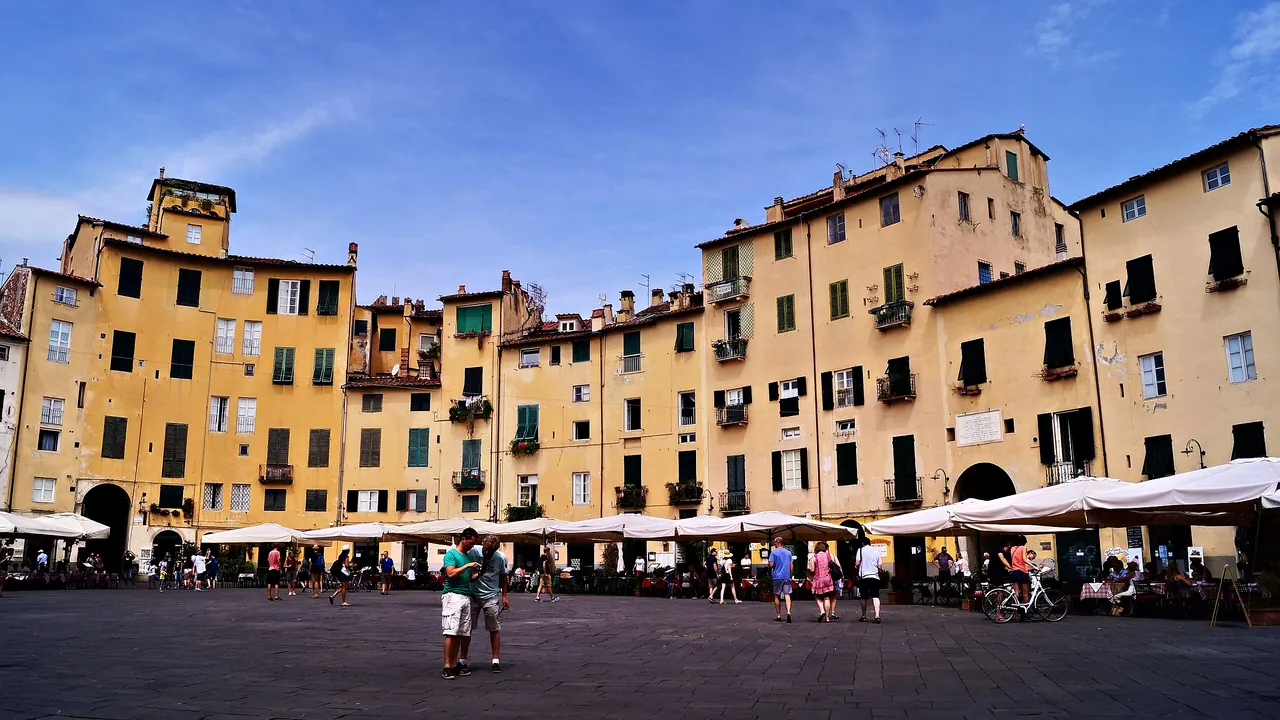
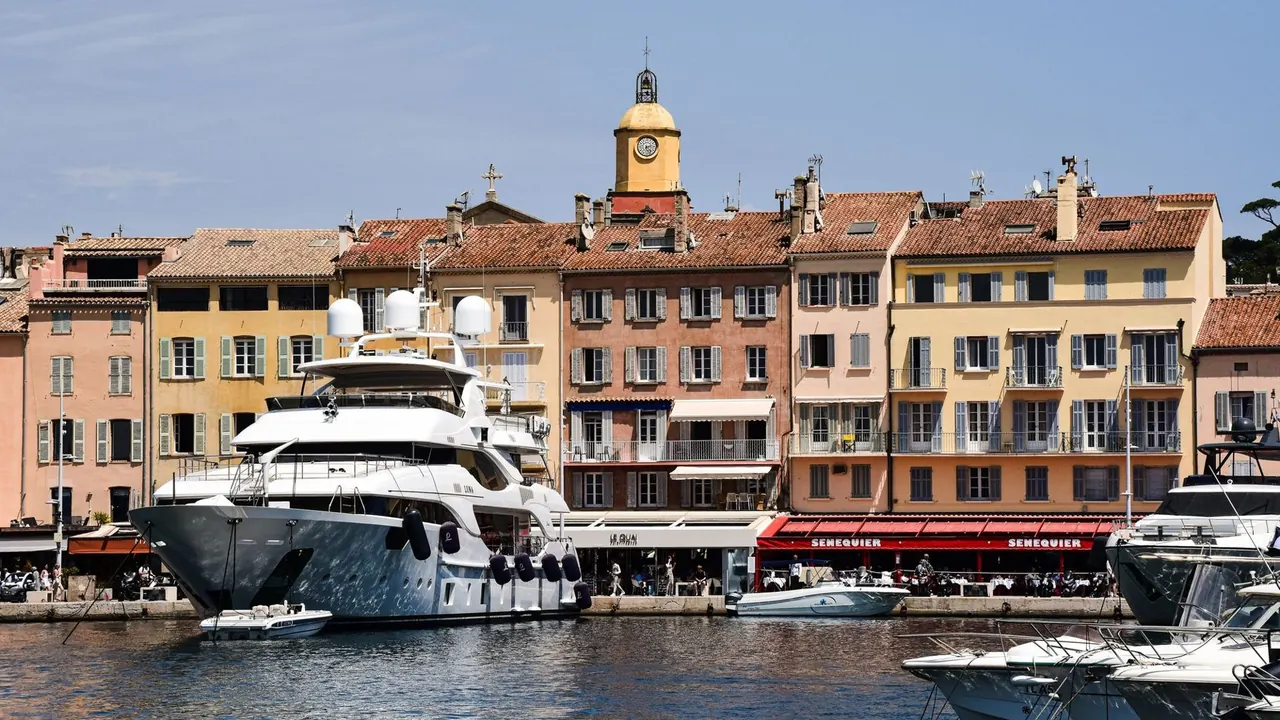
Photos: Lucca by Stefano Sansavini, CC BY-SA 4.0, cropped; Saint-Tropez by AXP Photography, Pexels License.
Lucca or Saint-Tropez?
Our verdict in twelve categories, each scored against the same fixed benchmark cities, and the climate month by month, so you can choose for your trip.
Choose Lucca for
- getting around
- prices
- live music and the arts
Lucca suits travellers who want old streets, Romanesque churches and an easy base for touring Tuscany without a car. Trains run to Pisa and Florence, the centre inside the walls is flat and made for walking or cycling, and costs stay fair for central Italy. Puccini recitals fill the evenings, and the Versilia sand is close enough for an afternoon swim.
Choose Saint-Tropez for
- nightlife
- beaches
- shopping
Choose Saint-Tropez for a summer built around the sea: the long sand of Pampelonne, clear coves along the coast path, and a glamorous evening scene that moves from the harbour terraces to clubs that close at dawn. It rewards a generous budget and patience with traffic. Beyond the beach it offers little culture, and most of its sights can be seen in a day.
Scoreboard
Twelve categories on one fixed scale from 0 to 100. The shaded stretch is the gap between the two.
Your match
Pick a travel style or drag the sliders, and both match scores follow your weighting.
Wins on getting around and prices with your weighting.
Wins on nightlife and beaches with your weighting.
What matters to you?
Category by category
What the scores mean for a trip.
Beaches & swimming
Lucca has no sea of its own, so a swim means a half day on the Versilia coast, about 25 minutes away by train. The sand there is broad and shelves gently. Most of it is in neat rows of beach-club umbrellas, but the Lecciona dunes have wilder sand backed by pine woods.
Saint-Tropez is the stronger choice, and in summer a stay there revolves around the sand. Pampelonne lies several kilometres out on the Ramatuelle side, with about 5km of pale sand, clear water and public stretches between the clubs. The quieter coves at Escalet, Cap Taillat and Gigaro are further south, reached by car or along the coast path, and Les Graniers below the citadel is there for a quick swim without leaving town.
Food & drink
Lucca eats better day to day. Look for spelt soup, tordelli in ragù, chestnut dishes in the colder months and cecina from bakery counters, served in family osterie at fair prices. The range is narrow, though, and the menus start to look alike after a few days.
Saint-Tropez cooks Provençal food, such as grilled fish, bouillabaisse and aïoli, and its hotel dining rooms do the top end well. Good everyday meals are harder to find, quayside tables trade on the view, and much of the town shuts in winter. The Place des Lices market and the tarte tropézienne are the simpler pleasures.
Culture & sights
Lucca has far more to explore. Its intact Renaissance walls, the tiers of arcades on San Michele in Foro, San Frediano's golden mosaic, Ilaria del Carretto's tomb in the cathedral and the oval Piazza dell'Anfiteatro fill two unhurried days.
Saint-Tropez's heritage takes about a day. The main sights are the pointillist and Fauvist paintings at the Musée de l'Annonciade, the maritime museum in the citadel and the ochre lanes of La Ponche. People come for the setting more than the sights.
Nightlife
Lucca's evenings are quiet all year. There is aperitivo in Piazza San Michele, a long dinner and a stroll on the walls, and the centre is calm by midnight. Anyone who wants to dance heads to the Versilia clubs and gets a lift back late.
Saint-Tropez is far livelier after dark, at least in summer. Afternoon beach-club parties at Pampelonne lead to champagne on the harbour terraces and then to a few famous clubs that stay open until dawn. It is a dressy scene with table service, not a town for bar-hopping, and it fades by October.
Nature & outdoors
The two are fairly level here, but the landscapes are very different. Lucca looks to the mountains. The marble peaks of the Apuan Alps, about an hour away, offer serious hiking, and the Garfagnana's chestnut and beech woods have gentler trails. Closer in, the 4km ring of the walls gives you a daily run or bike ride without leaving town.
Saint-Tropez's outdoors is coastal. The Sentier du Littoral passes coves on its way to Cap Camarat, the gulf is classic sailing water, and the rocky points are good for snorkelling and diving. The protected islands of Port-Cros and Porquerolles are within reach for a day.
Day trips
Lucca is much the stronger base. Pisa is about half an hour away by train and Florence a little over an hour. Pistoia, the gardens at Villa Reale di Marlia, Collodi and the sculptors' town of Pietrasanta are all close, and with an early start even the Cinque Terre is possible.
Saint-Tropez's outings are pleasant but smaller in scale. You can visit the hill villages of Ramatuelle, Gassin and Grimaud and the wine estates, take the boat to Port Grimaud, or spend a longer day on Porquerolles. The gulf road jams in summer, so most trips take patience.
Good for families
Lucca is easier with children. Riding the walls on a family quadricycle, climbing the Torre Guinigi to the trees on top and a trip to the Pinocchio Park at Collodi fill the days, and sandy beaches are under half an hour away. Most of the sights are still churches and palaces, though.
Saint-Tropez works for families mainly on the sand, where Pampelonne and Gigaro shelve gently. The harbour scene and the clubs are aimed at adults, and the cost and summer traffic wear families down. That is why many stay in Sainte-Maxime and come over by boat.
Getting around
Both centres are easy on foot, but the difference shows as soon as you leave. Lucca's station sits just outside the walls, with regular trains to Pisa, Viareggio and Florence. Inside the walls you can cycle everywhere, and you only need a car for the villas and the Garfagnana.
Saint-Tropez has no railway, its buses are slow and its main beaches are several kilometres out. Most visitors rely on cars, scooters or taxis, and the single gulf road jams for hours in July and August. The passenger boats from Sainte-Maxime and Port Grimaud are the pleasant way around the traffic.
Shopping & style
Lucca's Via Fillungo has fashion and jewellery shops behind old Liberty-style shopfronts, and the side lanes have delicatessens selling olive oil and buccellato. It is pleasant but small-town shopping. The monthly antiques market around the cathedral is the real draw.
Saint-Tropez offers much more for its size. The big fashion houses, resort-wear labels and jewellers fill the lanes behind the port, and the leather Tropézienne sandals are still made by hand in old-town workshops. Much of it closes for the winter.
Affordability
Lucca is the cheaper stay by a wide margin. Trattoria meals and regional trains are fairly priced and the walls and many churches are free. Rooms are the main expense, especially in summer and during festivals, and staying just outside the walls helps.
Saint-Tropez is among the most expensive places on the Mediterranean. Rooms, beach loungers and even a coffee on the port cost far more than elsewhere in Provence, and taxis or parking come on top. Budget travellers stay inland or across the gulf and picnic from the market.
Live music & performing arts
Lucca, Puccini's birthplace, holds recitals of his arias in a central church for most of the year. The Teatro del Giglio has an opera season, and the summer adds big concerts in Piazza Napoleone and open-air opera beside the lake at Torre del Lago.
Saint-Tropez has open-air concerts on the citadel in summer and the costumed Bravade procession in May, but almost nothing for the rest of the year. For serious opera or theatre you have to drive to Toulon or Nice.
Wellness & relaxation
Neither town has a bathing tradition of its own, but Lucca has spa towns within easy reach. There are Montecatini's belle époque baths by train, the warm cave pools at Monsummano and the steam grottoes of Bagni di Lucca. Back in town, the traffic-free streets and shaded walls keep the pace slow.
Saint-Tropez relies on luxury hotel spas that are mostly meant for their own guests. How restful it feels depends on the season: loud and crowded in high summer, but genuinely calm in May, June and September.
When should you go?
Pick your month. The climate figures are measured averages, not a forecast.
Lucca in July
Saint-Tropez in July
Daytime high, °C
Rainfall in the month, mm
Where the figures come from
Saint-Tropez has no rain gauge within 25 km of the centre, so its rainfall comes from a gridded climate dataset read at the city rather than from a gauge further away.
Saint-Tropez's sunshine is measured 62 km from the centre, at Nice.
Temperature and rainfall are climate normals, averaged over the years shown. Lucca: 1991-2020 normals, Pisa / S. Giusto (21.4 km from centre). Saint-Tropez: 1999-2020 (sunshine 1991-2020, rainfall 1991-2020) normals, Le Luc (24.2 km from centre).
Both are at their hottest in July and August, with highs of about 30°C in Lucca and a little more in Saint-Tropez. That is good for the beach but makes midday walking on Lucca's plain tiring. The Versilia sea near Lucca reaches about 25°C, slightly warmer than the water off Saint-Tropez, and both coasts are good for swimming from June to September. Saint-Tropez has the drier summer, with July almost rainless, and gets clearly more sunshine all year round, including winter.
From September the autumn rains set in on both coasts and peak in November, when Saint-Tropez gets about 155mm. For sightseeing in Lucca and hiking in the Apuan Alps, April to June is the most comfortable time. September is still warm but wetter. Saint-Tropez's coast path is at its best in May and June, before the summer heat and fire risk close some trails.
Which traveller are you?
On a culture and arts trip, Lucca is the clear choice. Its complete Renaissance walls, carved church façades and Puccini evenings fill the days, and Florence and Pisa are a short train ride away. Saint-Tropez's museums and old quarter take about a day.
For a beach and sun trip, Saint-Tropez is better. Pampelonne's long, fine sand and the quieter southern coves are within easy reach, and its summers are drier and sunnier. From Lucca, every swim means a train ride to the Versilia coast.
On a trip on a tight budget, Lucca makes much more sense. It also lets you see Florence and Pisa without paying Florence's room rates. In Saint-Tropez, the public stretches of sand are about the only thing not priced for the yachting crowd.
Before you go
| Measure | Lucca | Saint-Tropez |
|---|---|---|
| Official language | Italian | French |
| Currency | Euro (EUR) | Euro (EUR) |
| Sockets | CFL230 V, 50 Hz | CE230 V, 50 Hz |
| Driving side | Right | Right |
| Time zone | UTC+1, UTC+2 in summer | UTC+1, UTC+2 in summer |
| Emergency number | 112 | 112 |
| Elevation | 19 m | 0 m |
| Main airport | Pisa International Airport (PSA)21 km from centre82 non-stop destinations | Nice-Côte d'Azur Airport (NCE)64 km from centre130 non-stop destinations |
| Public holidays this year | 13 days | 11 days |
By the numbers
| Measure | Lucca | Saint-Tropez |
|---|---|---|
| City population | 88,798 | 3,582 |
| People per km² | 478 | 320 |
| Museums within 10 km | 20 | 4 |
| UNESCO World Heritage sites within 50 km | 4 | 0 |
| Swim season, months above 21 °C | 4 months | 3 months |
Where else could you go?
Every comparison below shares a destination with this one, so you can follow Lucca or Saint-Tropez somewhere new.
- Pisavs Lucca
- Cannesvs Saint-Tropez
- Antibesvs Saint-Tropez
- Florencevs Lucca
- La Speziavs Lucca
- Nicevs Saint-Tropez