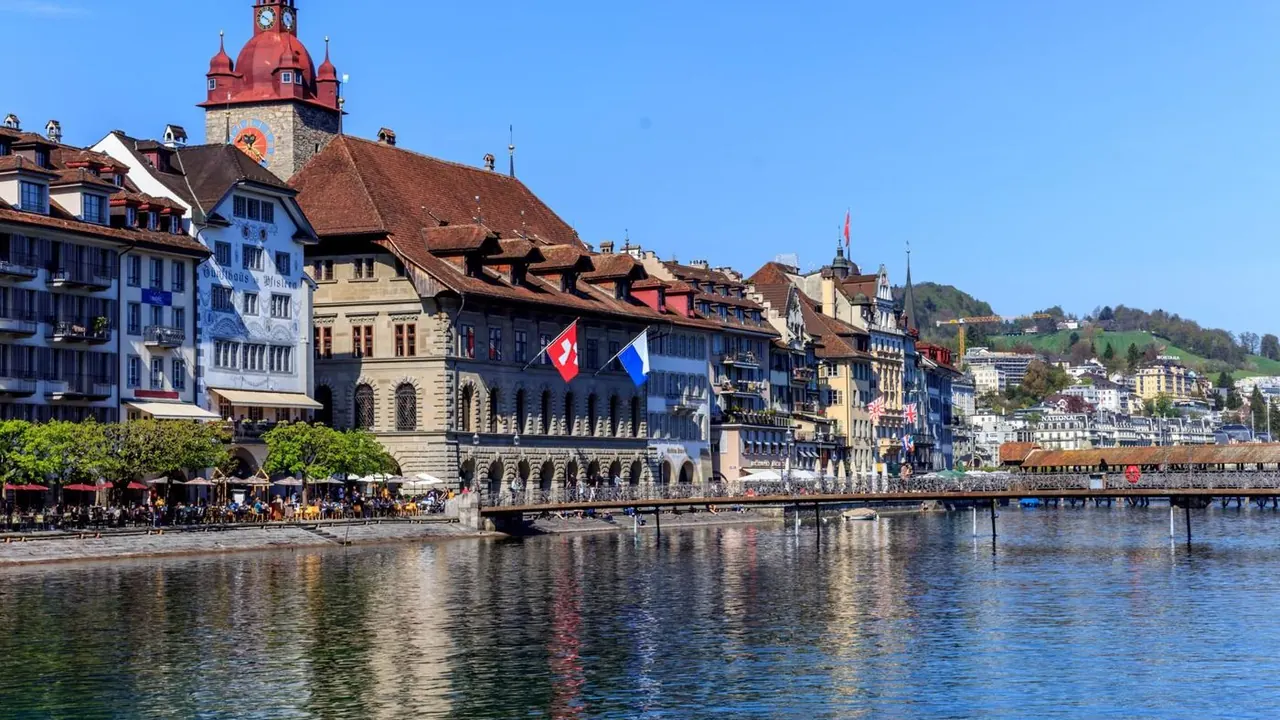
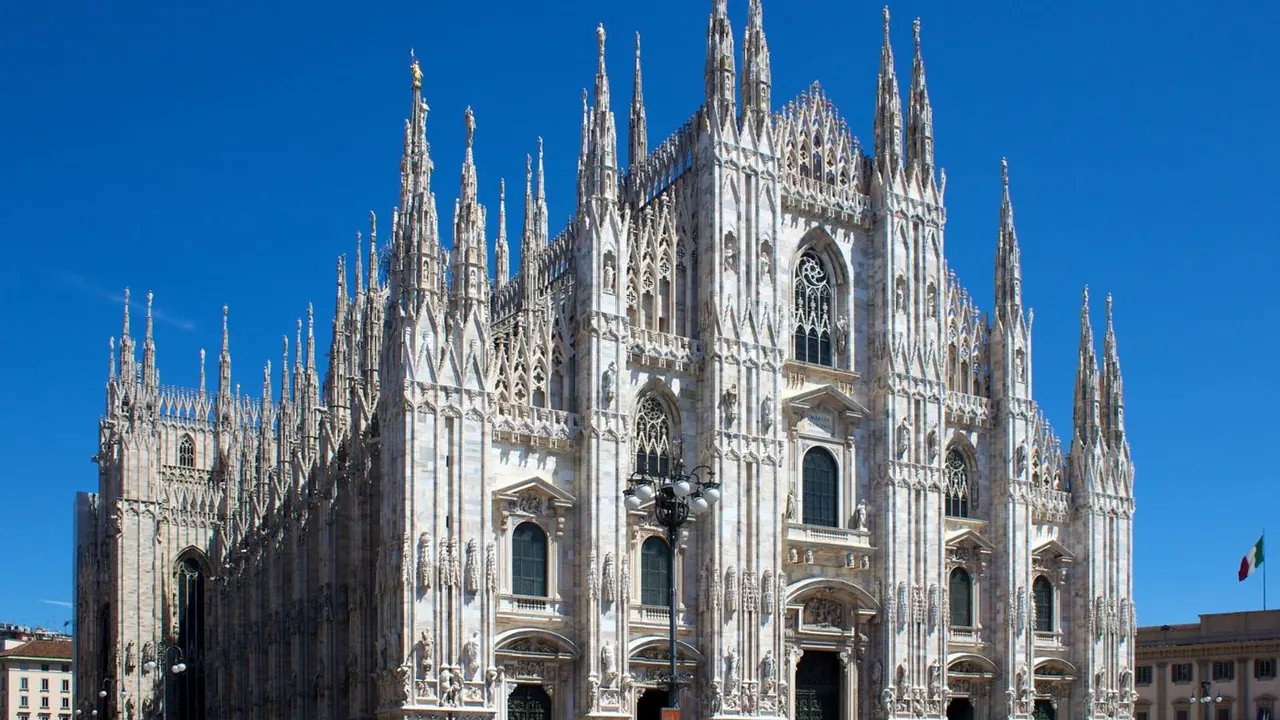
Photos: Lucerne by ILOVESwitzerland, Pexels License; Milan by Jiuguang Wang, CC BY-SA 3.0, cropped.
Lucerne or Milan?
Our verdict in twelve categories, each scored against the same fixed benchmark cities, and the climate month by month, so you can choose for your trip.
Choose Lucerne for
- nature and the outdoors
- beaches
- families
Lucerne is the better pick for travellers who want the scenery to be the trip. Mountains rise straight from the lake, and steamers, cogwheel trains and cable cars set off from the station front, so a walker or a family can spend each day on a different peak or lakeside village without a car. Evenings are quiet and the bill is steep, so it works best for people who care more about the views than about restaurants or late nights.
Choose Milan for
- shopping
- food and drink
- nightlife
Milan suits a traveller who wants a city that is busy after dark. Fashion and design shopping draw people from around the world, the food goes well beyond the tourist menus, aperitivo turns into a proper night out, and La Scala gives the evenings real weight. With fast trains to Verona, Bergamo, Turin and the lakes, it also makes a better base for seeing several places on one vacation, as long as you can live with a flat, hazy, workaday setting.
Scoreboard
Twelve categories on one fixed scale from 0 to 100. The shaded stretch is the gap between the two.
Your match
Pick a travel style or drag the sliders, and both match scores follow your weighting.
Wins on nature and the outdoors and beaches with your weighting.
Wins on shopping and food and drink with your weighting.
What matters to you?
Category by category
What the scores mean for a trip.
Beaches & swimming
Neither city has a coast. Lucerne still has the better bathing for a city visit, because the lake is right in town. You can swim from the Lido, the old wooden lake baths or the lawns at Ufschötti on a summer afternoon, in clean water backed by mountains.
Milan's own options are the Idroscalo basin out by Linate and public pools. Swimming there usually means a train to the pebbly lidos of Como or Maggiore, where the water is a little warmer but the swim takes up a whole day.
Food & drink
Milan is much the better place to eat. Saffron risotto, cotoletta and winter cassoeula are only the start, and the city's mix of people from all over Italy brings good Neapolitan pizza, Sicilian pastry and serious fine dining, with historic pasticcerie and the aperitivo ritual adding to it.
Lucerne serves fondue, rösti, lake perch and its own Chügelipastete well, but the range is narrow and the tables near the Chapel Bridge are geared to coach parties. A riverside terrace and the Saturday market are its high points.
Culture & sights
Milan has the heavier collection. The Last Supper, the marble Duomo with its walkable roof, the Brera's Italian painting and Michelangelo's Rondanini Pietà at the Castello could fill several days, though they sit in clusters within a largely modern city.
Lucerne gives you less to see, but it is more pleasant to walk through. The Chapel Bridge, the frescoed squares and the towers of the Musegg Wall form a complete medieval core, and the Lion Monument and the Rosengart's Picasso and Klee round it out in a day or two.
Nightlife
After dark Milan is far ahead. Bars spill onto the Navigli towpaths, Porta Venezia has a mixed crowd and is the centre of the gay scene, and the clubs range from dressy rooms around Corso Como, with strict doors, to warehouse nights on the edge of town.
Lucerne usually means a glass of wine by the Reuss and an early night, with a few cocktail bars near the station. The exception is Fasnacht, when the whole town stays out in costume until morning.
Nature & outdoors
Lucerne wins here, and it is the main reason to go. The lake branches between mountains, Pilatus has its steep cogwheel line, Rigi has long ridge walks, and Titlis has snow all year. All of it is reachable by steamer and train from the town centre.
Milan's own surroundings are flat rice-growing plain, with Parco Sempione and the canal towpaths for cycling. The good scenery begins about an hour north, at Como, Maggiore and the Grigne ridges, so outdoor days start with a train journey.
Day trips
Both are good bases, but Milan's high-speed lines give it the wider choice. Verona, Turin, Bergamo and Bologna are all within easy reach, along with Mantua, Cremona, Parma, the Certosa di Pavia and the Borromean Islands. You could fill a fortnight without repeating a style of place.
Lucerne offers fewer and more similar outings. Bern, Basel and Zurich are each under an hour away, and boats on the lake run to the Rütli meadow and the William Tell country around Altdorf.
Good for families
Lucerne is the easier place for children. The Transport Museum on the lakeshore fills a whole day, and the boat rides, cogwheel trains and the Pilatus toboggan run make the journeys part of the fun. The town is small, safe and has lawns by the water. Rainy days are its weak spot.
Milan has a science museum with a submarine, a small aquarium and playgrounds in Parco Sempione, and Leolandia and Gardaland are within reach for older children. But summer humidity and sights aimed at adults make it harder going.
Getting around
In Lucerne the station, the boat piers and the start of the Old Town share one stretch of lakefront. Most sights are a short, flat walk along the Reuss, and the same integrated tickets take you on by steamer, cogwheel railway and cable car into the mountains, so Lucerne is the simpler of the two.
Milan relies more on its public transport. The five colour-coded metro lines and the old orange trams through the centre are easy to use, and the stretch from the Duomo to Brera is walkable. The drawbacks are hot metro platforms in summer and the long transfer from Malpensa.
Shopping & style
Milan is one of the great shopping cities. Via Montenapoleone and Via della Spiga hold the flagships of Italian fashion houses born in the city, and Corso Buenos Aires, the vintage shops of Porta Ticinese, the design showrooms and the Navigli antique markets cover every budget and taste.
Lucerne is really for buying a Swiss watch on Schwanenplatz or picking up chocolate and souvenirs. It has few fashion labels and no department store worth seeking out.
Affordability
Neither is cheap, but Milan is easier on the budget. Aperitivo snacks can stand in for supper, weekday lunch menus are good value, and staying near a metro stop outside the centre cuts the hotel bill, though trade fair and fashion weeks push rooms up sharply.
Lucerne is expensive at every level, from a plain meal to the mountain railways that are the point of going. A Swiss travel pass and picnics by the lake help a little, but they cannot turn it into a budget trip.
Live music & performing arts
Lucerne's music comes mostly in festival weeks, when leading orchestras play Jean Nouvel's lakefront hall, which is famous for its acoustics. In late summer, when opera in Milan is quiet, the festival is the bigger draw. The rest of the year the symphony orchestra and the city theatre offer a good but small programme, with little live music on an ordinary night.
Milan has more to see all year. La Scala's opera and ballet season opens each December, and gallery seats make it possible to get in. The Piccolo Teatro remains a leading stage, and jazz rooms and summer concerts at San Siro add plenty beyond classical music.
Wellness & relaxation
Lucerne relaxes you through its pace, while Milan does it through its facilities. Evenings by the lake are quiet, the promenades suit an unhurried walk and a steamer afternoon asks nothing of you, though the Old Town fills with tour groups at midday. For a proper soak there are only hotel spas and Botta's mineral bath high on the Rigi.
Milan has a large thermal spa complex with outdoor pools in town, and in summer there are the 1930s open-air pools of the Bagni Misteriosi. The city around them keeps a working pace, though, and real calm means a train to the lakes.
When should you go?
Pick your month. The climate figures are measured averages, not a forecast.
Lucerne in July
Milan in July
Daytime high, °C
Rainfall in the month, mm
Where the figures come from
Lucerne has no rain gauge within 25 km of the centre, so its rainfall comes from a gridded climate dataset read at the city rather than from a gauge further away.
Lucerne's sunshine is measured 42 km from the centre, at Zurich Town / Ville..
Milan has no rain gauge within 25 km of the centre, so its rainfall comes from a gridded climate dataset read at the city rather than from a gauge further away.
Milan's sunshine is measured 41 km from the centre, at Novara / Cameri.
Temperature and rainfall are climate normals, averaged over the years shown. Lucerne: 2005-2025 (sunshine 1991-2020, rainfall 1991-2020) normals, Emmen (4.2 km from centre). Milan: 1991-2020 normals, Milano / Linate (8 km from centre).
Lucerne's best months are June to September. Days are warm without being hot, at around 24°C in July and August, the lake is warm enough to swim in, and the long sunny days are right for mountain walks. That is also the wettest part of the year, with May to July bringing about 141mm a month, often as showers and low cloud that can hide the peaks. Winter is cold, around 4°C and grey in the city, and at its best up in the snow.
Milan runs warmer all year. Spring and early autumn are the best times for walking the streets. By July it reaches about 30°C, sunnier than Lucerne but humid, so sightseeing on foot gets tiring, and a day at Como or Maggiore helps. Here the rain comes in autumn rather than summer, peaking near 128mm in November. Winters are cool but milder than Lucerne's and fine for museums and opera.
Which traveller are you?
On an outdoors trip, Lucerne is the clear choice. Pilatus, Rigi, the Stanserhorn and the glacier on Titlis are all reachable by boat, rail and cable car, while from Milan the Prealps and the ski valleys mean a long train ride first.
For a food and nightlife trip, Milan wins easily. Risotto, ossobuco and the cooking of every Italian region are on offer, aperitivo fills the Navigli and Isola, and the clubs keep going long after Lucerne's lakefront has gone quiet and empty.
On a shopping trip, Milan is in a different league. The Quadrilatero della Moda, the Galleria and La Rinascente sit beside design showrooms and Brera boutiques, while Lucerne offers watches, army knives and chocolate, and very little fashion beyond that.
Before you go
| Measure | Lucerne | Milan |
|---|---|---|
| Official language | French, German, Italian, Romansh | Italian |
| Currency | Swiss Franc (CHF) | Euro (EUR) |
| Sockets | CJ230 V, 50 Hz | CFL230 V, 50 Hz |
| Driving side | Right | Right |
| Time zone | UTC+1, UTC+2 in summer | UTC+1, UTC+2 in summer |
| Emergency number | 112 | 112 |
| Elevation | 436 m | 138 m |
| Main airport | Zürich Airport (ZRH)49 km from centre226 non-stop destinations | Milan Malpensa International Airport (MXP)40 km from centre208 non-stop destinations |
| Public holidays this year | 12 days | 13 days |
By the numbers
| Measure | Lucerne | Milan |
|---|---|---|
| City population | 86,234 | 1,354,196 |
| People per km² | 2,963 | 7,453 |
| Museums within 10 km | 14 | 88 |
| UNESCO World Heritage sites within 50 km | 1 | 4 |
Where else could you go?
Every comparison below shares a destination with this one, so you can follow Lucerne or Milan somewhere new.