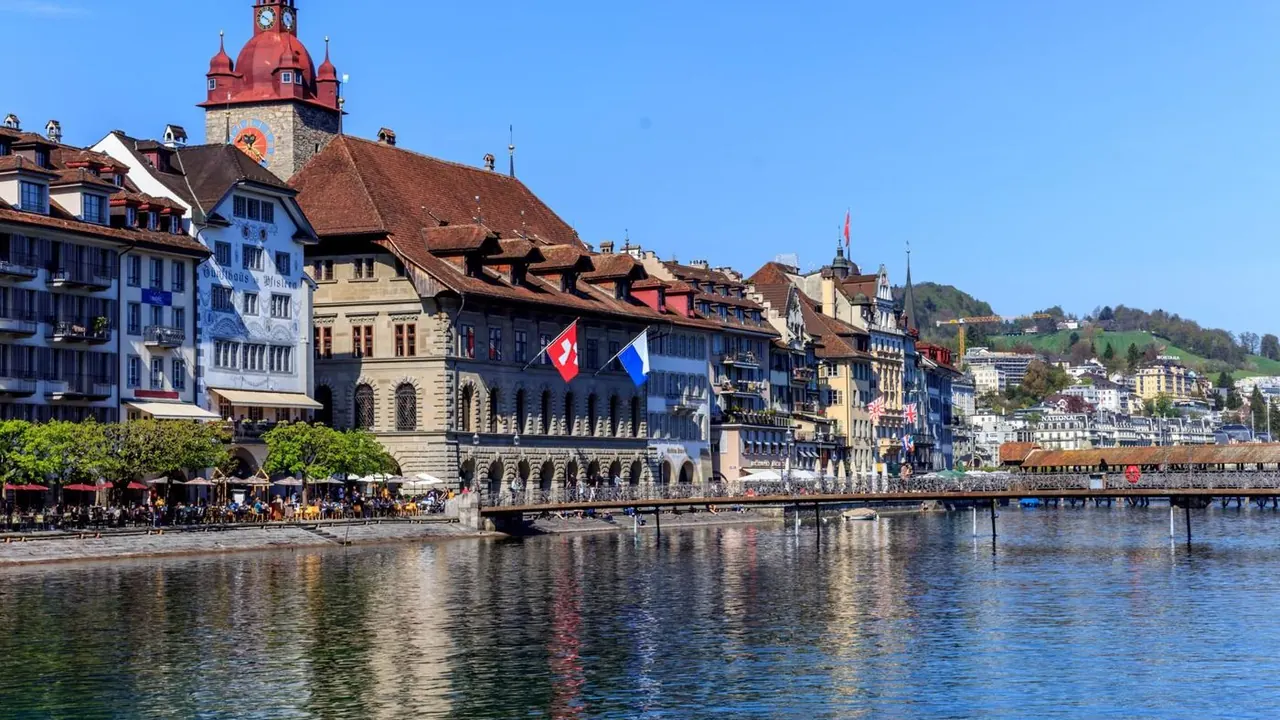
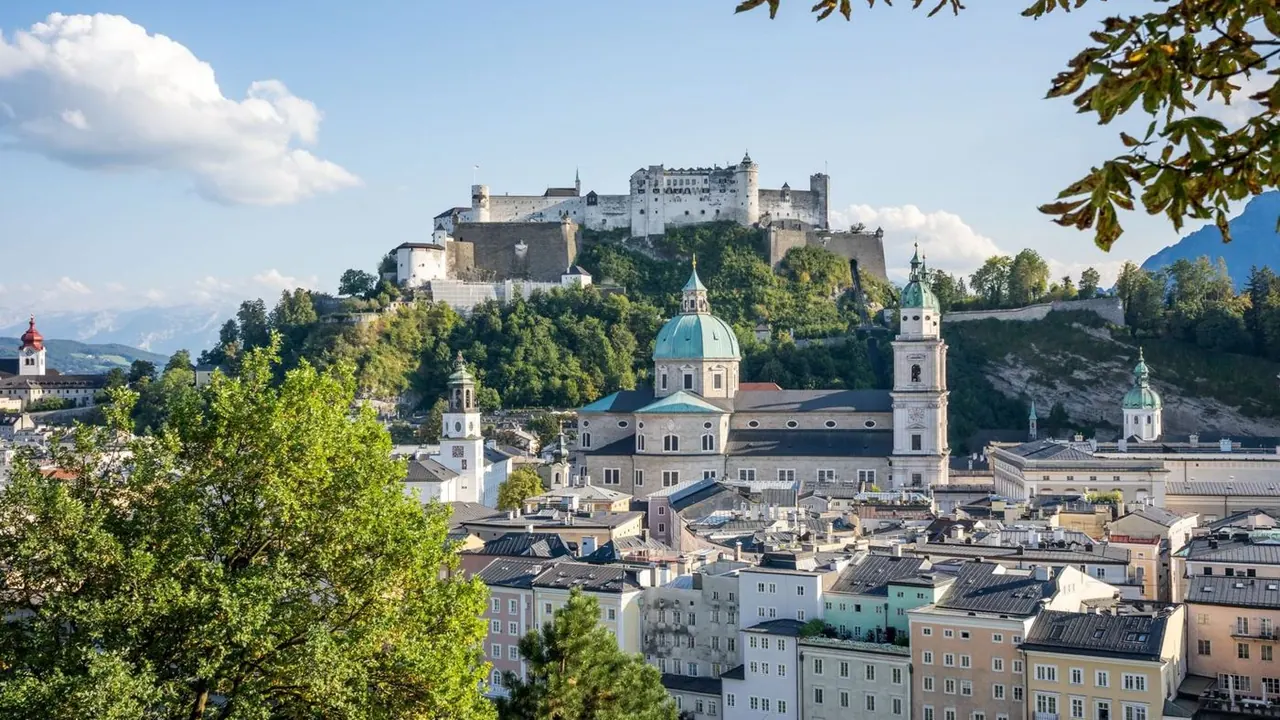
Photos: Lucerne by ILOVESwitzerland, Pexels License; Salzburg by Leonhard Niederwimmer, Pexels License.
Lucerne or Salzburg?
Our verdict in twelve categories, each scored against the same fixed benchmark cities, and the climate month by month, so you can choose for your trip.
Choose Lucerne for
- getting around
- nature and the outdoors
- nightlife
Lucerne is the one to pick if the mountains are the point of the trip. Pilatus, Rigi and the Stanserhorn rise straight from the lake, and steamers, cogwheel trains and cable cars all leave from the same lakefront by the station, so you can do a summit, a boat ride and a ridge walk in one day without a car. The town itself is small and easy, and that works for a slow, scenic stay, as long as you can live with some of the highest prices in Europe.
Choose Salzburg for
- prices
- culture and sights
- live music and the arts
Salzburg suits travellers who come for the music and the Baroque. The UNESCO old town, the fortress above it and a festival calendar built around Mozart give it more to see and hear in town, and the coffee houses and beer halls give it more character at the table. Lakes and Alpine scenery are still close by, it costs noticeably less than Lucerne, and it has the better spa towns within reach.
Scoreboard
Twelve categories on one fixed scale from 0 to 100. The shaded stretch is the gap between the two.
Your match
Pick a travel style or drag the sliders, and both match scores follow your weighting.
Wins on getting around and nature and the outdoors with your weighting.
Wins on prices and culture and sights with your weighting.
What matters to you?
Category by category
What the scores mean for a trip.
Beaches & swimming
Neither city has a beach, and lake swimming is a summer extra in both. The difference is distance. In Lucerne you can swim in the centre, from the Lido, the wooden lake baths or the lawns at Ufschötti. Salzburg's river is too fast and cold to swim in, so a proper swim means half an hour or more out to Fuschlsee, Wolfgangsee or Mondsee, where the shores are pebbly and the lakes slightly warmer.
Food & drink
Salzburg is the better place to eat, mainly for the setting. Long afternoons in Viennese-style coffee houses, the monastery beer hall in Mülln with its chestnut garden, and the soufflé shaped like three peaks give a meal more sense of place. The best cooking is in the inns on the edge of town.
In Lucerne, cooking is reliable but narrower: Chügelipastete, fondue, rösti and lake perch in the guild houses. Riverside terraces are good for a glass of wine. In both old towns, many menus are aimed at tour groups.
Culture & sights
Salzburg has the deeper sightseeing. A whole UNESCO-listed old town built by the prince-archbishops, the cathedral and Residenz, the fortress of Hohensalzburg, the Mirabell gardens, the catacombs of St Peter and Hellbrunn fill two or three full days.
Lucerne has a handful of famous images rather than a full programme. The Chapel Bridge and Water Tower, the Musegg towers and the Lion Monument are memorable, and the Rosengart Collection is strong on Picasso and Klee, but a day or two is enough.
Nightlife
Both cities are quiet by midnight, so don't choose either for clubbing. The difference is in style. Salzburg's evenings centre on beer halls with long tables, plus student pubs on Rudolfskai, and Munich is the real night out. Lucerne is more about a wine bar by the water and a few cocktail bars in the Neustadt, except during Fasnacht, when the whole town parties in costume until dawn.
Nature & outdoors
Lucerne has the more dramatic setting, with peaks rising straight out of a long, branching lake. Pilatus is climbed by the steepest cogwheel railway in the world, Rigi has wide ridge walks across the water, and Titlis keeps glacier snow all year about an hour away. Steamers and mountain railways tie it all together, though low cloud can hide the views for days.
Salzburg has mountains on its doorstep too, and here they start inside the city, with the wooded Mönchsberg and Kapuzinerberg ridges, a riverside bike path out to Hellbrunn and the Untersberg cable car on the southern edge. Further out, paragliders use the Gaisberg, and the Salzkammergut lakes and the Königssee fjord across the German border add sailing, paddling and lakeside trails.
Day trips
Both are excellent bases, with different themes. Lucerne's excursions are Swiss cities and national history: Bern, Basel and Zurich are each under an hour by train, and the lake boat runs to the Rütli meadow and William Tell country. From Salzburg, the trips are about salt and lake villages: Hallstatt, the mines at Hallein and Berchtesgaden, and the clifftop fortress at Werfen, with Munich across the border. Lucerne's trips are easier by public transport, while some of Salzburg's lake villages really need a car.
Good for families
Both are small, safe and easy with children. Lucerne has one big attraction, the Swiss Museum of Transport, plus cogwheel trains and a summer toboggan run that depend on the weather. Salzburg spreads its appeal more widely: Hellbrunn's trick fountains, a zoo, the hands-on Haus der Natur and miners' slides in the salt mines. On a rainy day it has more to fall back on, but its cobbled lanes are harder with a pushchair than Lucerne's flat riverside.
Getting around
Lucerne is easier to get around. The station, the boat piers and the Old Town are side by side, and one integrated ticket system takes you from the city bus onto lake steamers and up mountain railways, so a car is never needed.
Salzburg's centre is just as walkable, and trolleybuses cover the rest of town. The difference shows on excursions: regional buses to the lakes are slow, and many visitors hire a car for that part of the trip.
Shopping & style
Neither is a strong shopping city, but each has its own speciality. Lucerne means Swiss watches, sold in big watch and jewellery houses on Schwanenplatz, along with army knives and chocolate. In Salzburg, look for Tracht: dirndls and loden jackets, often made to measure, sold around Getreidegasse, plus a long-established Advent market on Domplatz. Fashion and design shopping is thin in both.
Affordability
Lucerne is in another price bracket. Central hotels, even simple restaurant meals and the mountain railways that make the stay worthwhile all cost a great deal. A Swiss travel pass and supermarket picnics by the lake soften the bill, but only a little.
Salzburg is expensive for its size, but it leaves you more room to save. The inns and beer halls of the outer districts are fairly priced, and a city card bundles transport with the fortress and most museums. Prices climb sharply during the summer festival and the Advent markets, when rooms and tables run short.
Live music & performing arts
Salzburg goes deeper for anyone planning a trip around opera and concerts. Lucerne's strength is a single world-class venue, Jean Nouvel's lakefront hall, famous for its acoustics, where the Lucerne Festival brings leading orchestras in late summer and the Lucerne Symphony Orchestra plays through the year. Add the city theatre and the brass Guggenmusik bands of Fasnacht, and you have a good programme, but a modest one.
In Salzburg the summer festival fills the Grosses Festspielhaus, the Haus für Mozart and the Felsenreitschule, a riding school cut into the cliff, and Jedermann is played outdoors in front of the cathedral. Mozart Week and the Easter Festival come on top of that, and between festivals the Mozarteum, the Landestheater and the Marionette Theatre keep the stages busy.
Wellness & relaxation
Salzburg has much more real bathing within easy reach. In Lucerne, rest comes mostly from the scenery: an afternoon on a steamer watching the shore, quiet evening walks along the lake promenades and the old wooden lake baths in summer. For a proper soak, you go up to Mario Botta's mineral bath high on the Rigi, about an hour away by boat and cogwheel train.
Salzburg has no hot springs of its own either, but the spa towns next door make up for it. Bad Reichenhall's brine baths are about twenty minutes away across the German border, and the radon springs of the Gastein valley are about an hour and a half south. In town, the Paracelsus Bad has saunas and a pool that looks out on the Kapuzinerberg.
When should you go?
Pick your month. The climate figures are measured averages, not a forecast.
Lucerne in July
Salzburg in July
Daytime high, °C
Rainfall in the month, mm
Where the figures come from
Lucerne has no rain gauge within 25 km of the centre, so its rainfall comes from a gridded climate dataset read at the city rather than from a gauge further away.
Lucerne's sunshine is measured 42 km from the centre, at Zurich Town / Ville..
Temperature and rainfall are climate normals, averaged over the years shown. Lucerne: 2005-2025 (sunshine 1991-2020, rainfall 1991-2020) normals, Emmen (4.2 km from centre). Salzburg: 1991-2020 normals, Salzburg (3.4 km from centre).
The two cities share almost the same climate. Both are cold and grey from December to February, become pleasant for walking in April, and are warmest in July and August, with highs of about 24°C in Lucerne and 24°C in Salzburg. Those two months are the only reliable time for a lake swim. Both are wettest in summer, when afternoon showers are common, but Salzburg gets clearly more rain, close to 170mm in June and August against about 140mm in Lucerne.
Lucerne gets a little more sun in high summer, which helps on clear-view mountain days. Salzburg is the brighter of the two from October to February, with about 70 hours of sunshine in December against 43 in Lucerne, where low winter cloud often hides the peaks. In both cities, September and early October are mild and drier, which makes them good for hiking and walking around town.
Which traveller are you?
For a culture and arts trip, Salzburg is the stronger choice. It has a complete Baroque old town, one of Europe's largest medieval fortresses, Mozart's two houses and three festival seasons, plus concerts almost every evening. Lucerne's sights and music fill a shorter stay.
On an outdoors trip, Lucerne has the edge. Three summits rise straight from the lake, and Titlis has snow all year. Boats, cogwheel railways and cable cars connect without a car. Salzburg has fine walking too, but its lakes and Berchtesgaden are slower to reach by bus.
On a tight budget, choose Salzburg. Neither city is cheap, but Lucerne's hotels, meals and mountain railways make savings almost impossible. In Salzburg, beer gardens where you bring your own food, a city card and rooms across the river help a budget go further.
Before you go
| Measure | Lucerne | Salzburg |
|---|---|---|
| Official language | French, German, Italian, Romansh | German, Austrian Sign Language |
| Currency | Swiss Franc (CHF) | Euro (EUR) |
| Sockets | CJ230 V, 50 Hz | CF230 V, 50 Hz |
| Driving side | Right | Right |
| Time zone | UTC+1, UTC+2 in summer | UTC+1, UTC+2 in summer |
| Emergency number | 112 | 112 |
| Elevation | 436 m | 424 m |
| Main airport | Zürich Airport (ZRH)49 km from centre226 non-stop destinations | Salzburg Airport (SZG)3 km from centre64 non-stop destinations |
| Public holidays this year | 12 days | 16 days |
By the numbers
| Measure | Lucerne | Salzburg |
|---|---|---|
| City population | 86,234 | 155,021 |
| People per km² | 2,963 | 2,360 |
| Museums within 10 km | 14 | 38 |
| UNESCO World Heritage sites within 50 km | 1 | 3 |
Where else could you go?
Every comparison below shares a destination with this one, so you can follow Lucerne or Salzburg somewhere new.