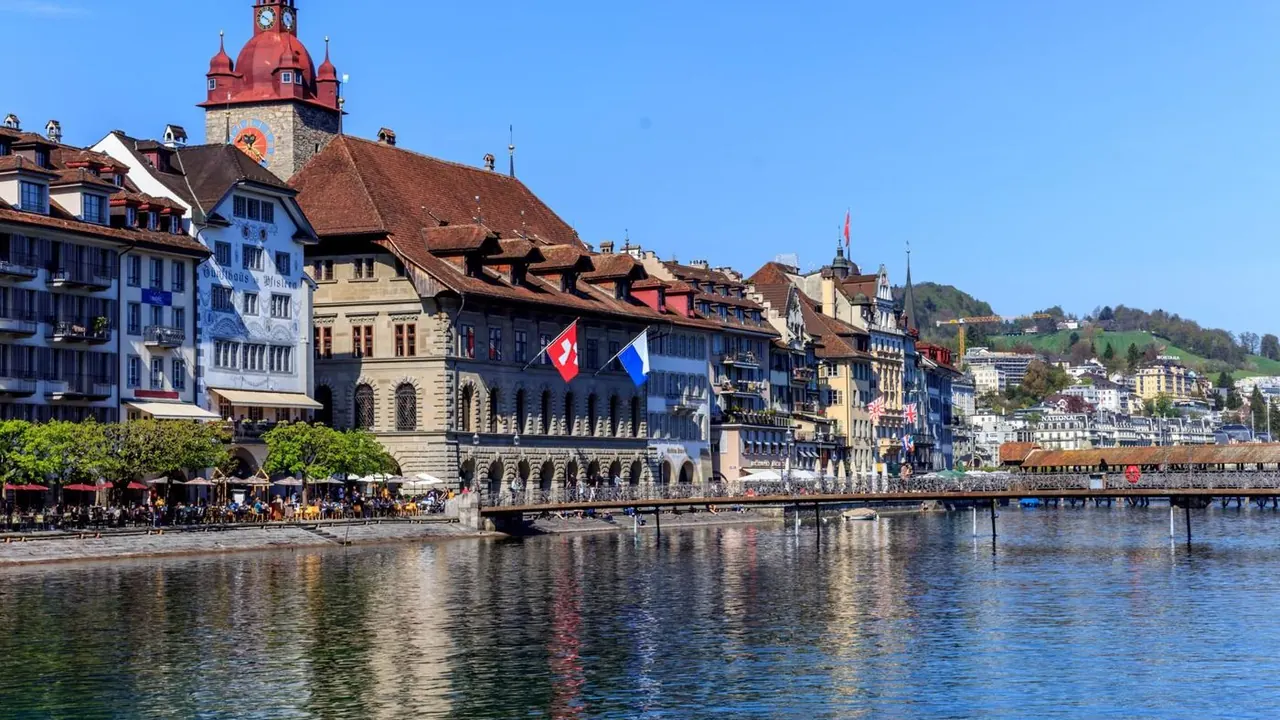
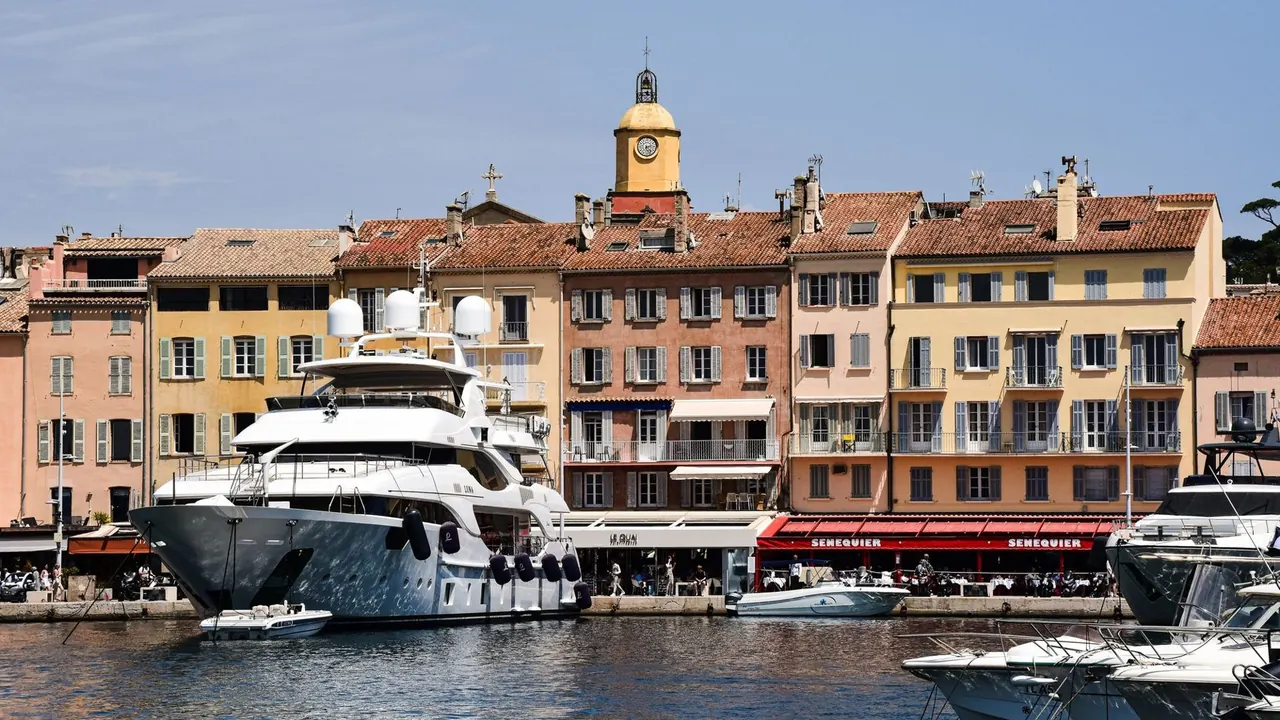
Photos: Lucerne by ILOVESwitzerland, Pexels License; Saint-Tropez by AXP Photography, Pexels License.
Lucerne or Saint-Tropez?
Our verdict in twelve categories, each scored against the same fixed benchmark cities, and the climate month by month, so you can choose for your trip.
Choose Lucerne for
- getting around
- live music and the arts
- families
Lucerne is the better pick for travellers who want mountains, railways and a bit of history in one easy package. Pilatus, Rigi and the lake steamers start a short walk from the station, the medieval Old Town and the concert hall fill the evenings, and Bern, Basel and Zurich are close enough for day trips. It suits walkers, music lovers and families who want a calm, orderly base where they never need a car.
Choose Saint-Tropez for
- beaches
- nightlife
- shopping
Saint-Tropez makes more sense for a summer of sand, sea and long lunches. The fine beach at Pampelonne, the coves along the coast path and a party scene running from beach club to harbour to late club give it what Lucerne cannot. Come for warmth and glamour rather than sights, and plan on a car or the gulf boats to get anywhere beyond the old port.
Scoreboard
Twelve categories on one fixed scale from 0 to 100. The shaded stretch is the gap between the two.
Your match
Pick a travel style or drag the sliders, and both match scores follow your weighting.
Wins on getting around and live music and the arts with your weighting.
Wins on beaches and nightlife with your weighting.
What matters to you?
Category by category
What the scores mean for a trip.
Beaches & swimming
Saint-Tropez is the true beach destination of the two. Pampelonne gives about 5km of fine sand and clear Mediterranean water, with beach clubs and public stretches side by side, and the wilder coves at Escalet and Cap Taillat lie further down the coast. The swimming season runs from June to September.
Lucerne has no sand to speak of. Bathing here means jumping in from the Lido, the old wooden lake baths or the lawns at Ufschötti, in calm, clean water with mountains behind it. It is a lovely summer break, but only for a few warm weeks.
Food & drink
Neither town is a food destination in its own right, but Saint-Tropez gives more pleasure at the table. Its Provençal cooking, with grilled fish, bouillabaisse, aïoli and rosé from the nearby vineyards, plus the Place des Lices market, has more character than Lucerne's menu.
In Lucerne, meals are hearty and reliable, with Chügelipastete, fondue, rösti and lake perch served in guild houses and riverside terraces, but the range is narrow. In both towns, the restaurants with the best views tend to cater to tourists.
Culture & sights
Lucerne has more to see. The covered Chapel Bridge, the frescoed Old Town squares, the climbable towers of the Musegg Wall and the Lion Monument make a well-preserved medieval core, and the Rosengart Collection and Bourbaki Panorama add depth.
Saint-Tropez's high point is the Musée de l'Annonciade, with its pointillist and Fauvist paintings from Signac's time on the harbour, plus the citadel's maritime museum. Beyond that, the lanes of La Ponche are for wandering, and the setting matters more than the heritage.
Nightlife
Saint-Tropez is clearly the place for a night out, but only in summer. Afternoon parties at Pampelonne lead to champagne on the harbour and a few famous clubs open until dawn, with table service and a dress code rather than bar-hopping.
Lucerne's evenings are calmer: a glass of wine by the river, some cocktail bars in the Neustadt and a small student club scene. Fasnacht is the one time the whole town stays up all night.
Nature & outdoors
Both have beautiful settings, but Lucerne's is in a different league. Pilatus, Rigi and the Stanserhorn rise straight from the lake, cogwheel trains and cable cars take you to the ridges, and Titlis keeps its glacier snow all year. Paddle steamers let you combine a boat ride, a train and a hike in one day, and in winter the same peaks offer skiing.
Saint-Tropez's outdoors are coastal and Mediterranean. The Sentier du Littoral winds past pine-backed coves to the capes, the Massif des Maures offers forest walks, and the gulf is suited to sailing and snorkelling. Summer heat and fire risk limit the walking to spring and autumn.
Day trips
Lucerne offers bigger day trips that are easier to reach. Zurich, Bern's UNESCO-listed arcades and Basel's art museums are all under an hour by train, and the lake boats go to Rütli and Altdorf, the heart of the William Tell story.
From Saint-Tropez the outings are smaller and more local: the hilltop villages of Ramatuelle and Gassin, the canals of Port Grimaud, wine tastings, and a longer day on Porquerolles. They are charming but modest, and in high summer the roads can turn a short drive into a long one.
Good for families
Lucerne is the easier choice with children. The Swiss Museum of Transport can fill a whole day, the cogwheel trains, steamers and Pilatus toboggan run make the journeys part of the fun, and the flat, safe centre and lakeside lawns make the days simple.
Saint-Tropez works for a beach-only family vacation, as Pampelonne and Gigaro shelve gently enough for small children. Otherwise, the town is built around adult pleasures, and summer traffic and hot afternoons add to the effort.
Getting around
This is one of the sharpest differences between the two towns. In Lucerne the station, boat piers and Old Town are side by side, and trains, steamers and cable cars all use one ticket system, so a car is never needed, even for mountain excursions.
Saint-Tropez itself is tiny and walkable, but it has no railway, and the beaches are several kilometres out. Visitors rely on cars, scooters or taxis on a single gulf road that jams in July and August, and the passenger boat from Sainte-Maxime is often the quickest way in.
Shopping & style
Saint-Tropez is the better place to shop for style. The big fashion houses keep summer boutiques behind the port, there are resort-wear and swimwear labels, and the hand-stitched Tropézienne sandal is a local craft worth taking home.
Lucerne's shopping revolves around Swiss watches on Schwanenplatz, along with army knives, chocolate and cuckoo clocks. It is the place to go for a fine timepiece, but there is little in the way of fashion or design.
Affordability
Both are among the costliest places you could choose, so the difference is in where the money goes. In Lucerne, the mountain railways and cable cars eat up much of the budget, though a Swiss travel pass and picnics from the supermarket by the lake soften it a little.
In Saint-Tropez, the summer costs are beach loungers, harbourside meals and taxis. Thrifty visitors stay across the gulf or come in late spring or autumn, swimming from the public beaches.
Live music & performing arts
Lucerne is far ahead for music. The Lucerne Festival brings leading orchestras and soloists to Jean Nouvel's lakefront hall, which is famed for its acoustics, and the local symphony orchestra and the city theatre keep a programme going all year.
Saint-Tropez offers summer concerts in gardens and on the citadel, plus live sets at the beach clubs. Its most memorable event is the Bravade procession in May, and serious opera or theatre means driving to Toulon or Nice.
Wellness & relaxation
Neither town has a bathing tradition, so spa time means hotel spas in both. Lucerne has the edge thanks to the Mario Botta-designed mineral bath high on the Rigi, quiet evenings and slow steamer afternoons on the lake.
Saint-Tropez can be restful too, but only outside high summer. In May, June and September it settles into long lunches and pétanque under the plane trees, while July and August are crowded and loud.
When should you go?
Pick your month. The climate figures are measured averages, not a forecast.
Lucerne in July
Saint-Tropez in July
Daytime high, °C
Rainfall in the month, mm
Where the figures come from
Lucerne has no rain gauge within 25 km of the centre, so its rainfall comes from a gridded climate dataset read at the city rather than from a gauge further away.
Lucerne's sunshine is measured 42 km from the centre, at Zurich Town / Ville..
Saint-Tropez has no rain gauge within 25 km of the centre, so its rainfall comes from a gridded climate dataset read at the city rather than from a gauge further away.
Saint-Tropez's sunshine is measured 62 km from the centre, at Nice.
Temperature and rainfall are climate normals, averaged over the years shown. Lucerne: 2005-2025 (sunshine 1991-2020, rainfall 1991-2020) normals, Emmen (4.2 km from centre). Saint-Tropez: 1999-2020 (sunshine 1991-2020, rainfall 1991-2020) normals, Le Luc (24.2 km from centre).
Lucerne is at its best from June to early September, when days reach about 24°C, hiking trails are clear and the lake is warm enough for a swim. Those are also its wettest months, with up to 141mm of rain, so mountain views come and go. Spring and autumn are cool but fine for walking the Old Town. Winter is cold and grey, with only a few hours of sun a day, though it brings skiing and sledging in the mountains.
Saint-Tropez is far sunnier all year and much warmer. July and August are dry and hot, around 32°C, which is ideal for the beach but tiring for walking in the middle of the day. The sea is at its warmest in August at 24°C and stays pleasant into September. May, June and September are the most comfortable months overall. The rain arrives in autumn and peaks at around 155mm in November, while the mild winters suit coastal walks rather than swimming.
Which traveller are you?
On a beach and sun trip, Saint-Tropez wins outright. Pampelonne's long stretch of pale sand, warm clear water and quieter coves to the south make a proper seaside stay, while Lucerne offers only lakeside lawns and a short swimming season.
For a culture and arts trip, Lucerne is the stronger choice. The Chapel Bridge, Old Town and Lion Monument cover the sights, the Rosengart Collection adds Picasso and Klee, and the lakefront concert hall brings world-class orchestras, which Saint-Tropez cannot match.
On a food and nightlife trip, Saint-Tropez gives more. Provençal fish, rosé and market produce beat Lucerne's narrow Swiss menu, and summer nights run from beach-club parties to dawn clubs, while Lucerne goes quiet around midnight.
Before you go
| Measure | Lucerne | Saint-Tropez |
|---|---|---|
| Official language | French, German, Italian, Romansh | French |
| Currency | Swiss Franc (CHF) | Euro (EUR) |
| Sockets | CJ230 V, 50 Hz | CE230 V, 50 Hz |
| Driving side | Right | Right |
| Time zone | UTC+1, UTC+2 in summer | UTC+1, UTC+2 in summer |
| Emergency number | 112 | 112 |
| Elevation | 436 m | 0 m |
| Main airport | Zürich Airport (ZRH)49 km from centre226 non-stop destinations | Nice-Côte d'Azur Airport (NCE)64 km from centre130 non-stop destinations |
| Public holidays this year | 12 days | 11 days |
By the numbers
| Measure | Lucerne | Saint-Tropez |
|---|---|---|
| City population | 86,234 | 3,582 |
| People per km² | 2,963 | 320 |
| Museums within 10 km | 14 | 4 |
| UNESCO World Heritage sites within 50 km | 1 | 0 |
| Swim season, months above 21 °C | - | 3 months |
Where else could you go?
Every comparison below shares a destination with this one, so you can follow Lucerne or Saint-Tropez somewhere new.