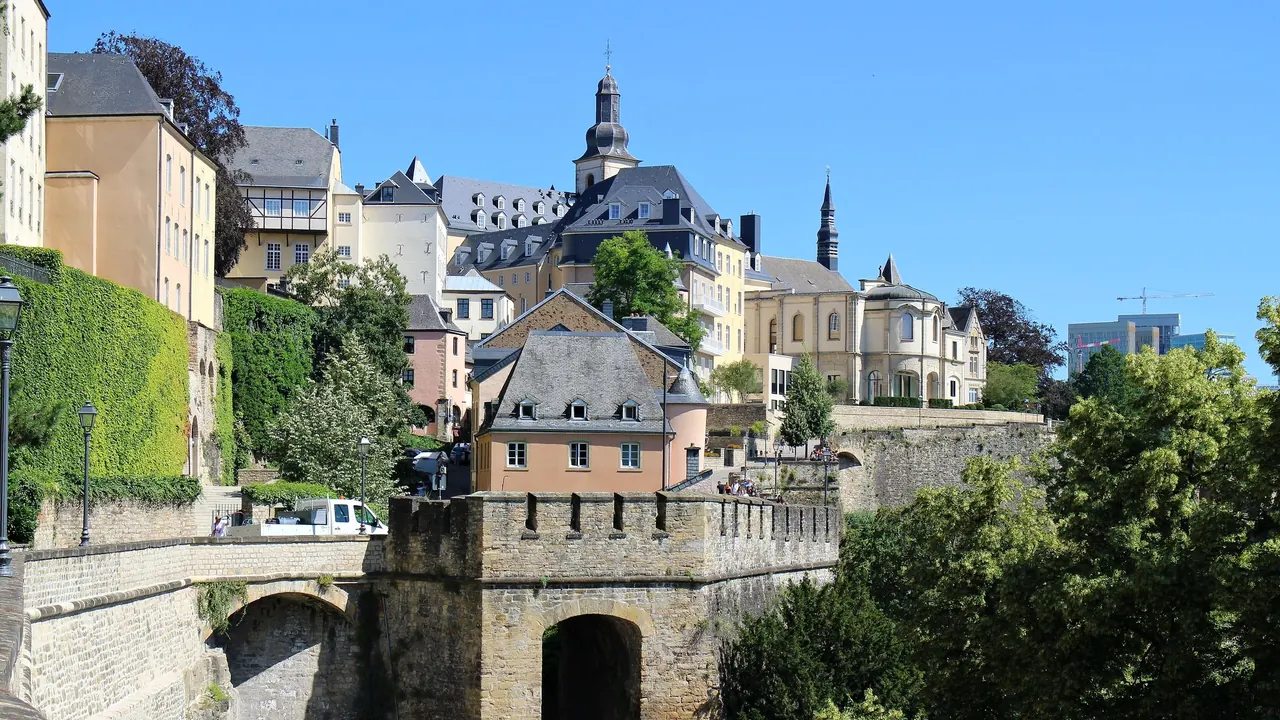
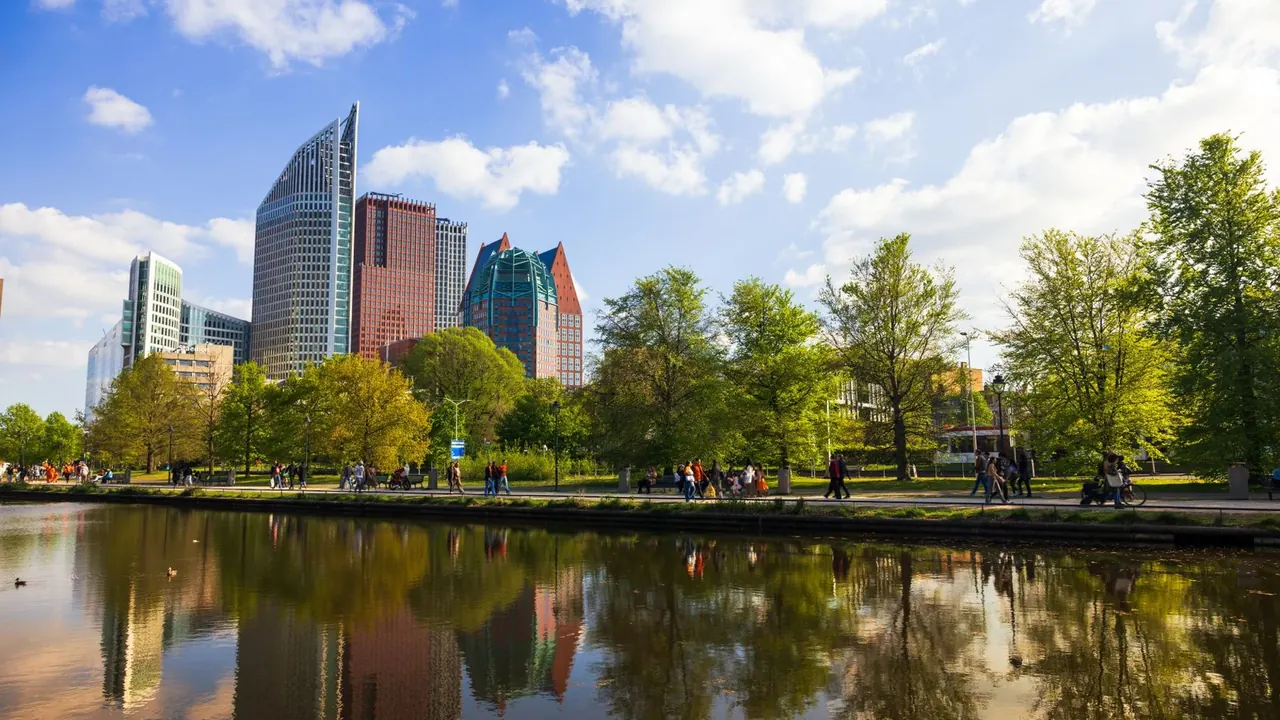
Photos: Luxembourg by Suicasmo, CC BY-SA 4.0, cropped; The Hague by Bráulio jardim, Pexels License.
Luxembourg or The Hague?
Our verdict in twelve categories, each scored against the same fixed benchmark cities, and the climate month by month, so you can choose for your trip.
Choose Luxembourg for
- nature and the outdoors
- wellness
- getting around
Luxembourg suits a quiet, well-heeled trip built around scenery and good wine. The old town sits on a rock above wooded gorges, the fortress tunnels and the Grund are the main sights, and the Müllerthal and Ardennes give you real walking country close by. Add serious French-led restaurants, Moselle crémant and free public transport, and it rewards a couple of slow days, as long as you can absorb the cost.
Choose The Hague for
- beaches
- families
- prices
The Hague gives more variety for less money. It has a sandy beach at the end of a tram line, the Mauritshuis and Mondrian in the city, and Madurodam and an aquarium for children. Delft, Leiden, Rotterdam and Amsterdam are all easy to reach by train. Families, art lovers and anyone who wants to use one base to see a whole country will get more from it.
Scoreboard
Twelve categories on one fixed scale from 0 to 100. The shaded stretch is the gap between the two.
Your match
Pick a travel style or drag the sliders, and both match scores follow your weighting.
Wins on nature and the outdoors and wellness with your weighting.
Wins on beaches and families with your weighting.
What matters to you?
Category by category
What the scores mean for a trip.
Beaches & swimming
Luxembourg is landlocked, so a hot day there means a trip to the reservoir of the Upper Sûre, about an hour north, or to the gravel-pit lakes at Remerschen. The lake water is actually warmer than the sea at The Hague, but these are short outings, not a beach vacation.
The Hague has a long sandy beach inside the city limits. Scheveningen, with its pier and summer pavilions, is a short tram ride away, and Kijkduin is calmer, with dunes behind it. The cold North Sea limits it to sunbathing and quick swims, but you can still fit a beach afternoon into a city break.
Food & drink
The food is equally good in both cities, but in different ways. Luxembourg is the place for a special dinner. Its fine dining is French-led and unusually strong, and crisp Moselle Rieslings and crémant are poured by the glass everywhere. Cheap casual eating is harder to find, and the local dishes are few and hearty.
The Hague's strength is Indonesian food, from a full rijsttafel to quick plates of rendang and sate, and it's better here than almost anywhere outside Indonesia. Add raw herring from street carts and seafood by Scheveningen harbour. Choose Luxembourg for wine and white tablecloths, and The Hague for spice and everyday eating.
Culture & sights
The Hague has more to see inside its buildings. The Mauritshuis holds Vermeer's Girl with a Pearl Earring and Rembrandt's Anatomy Lesson, the Kunstmuseum has the largest Mondrian collection in the world, and the Binnenhof, the Peace Palace, Escher in a former palace and the Panorama Mesdag fill two or three days.
Luxembourg's highlight is its setting more than its collections. The UNESCO-listed fortress wraps around a sandstone plateau. You can walk through the Bock casemates and look down on the Grund from the Chemin de la Corniche. The museums, MUDAM included, are good but few, and two days covers them.
Nightlife
Both cities have small, early-to-bed scenes. Luxembourg's busiest nights are Thursday and Friday, because many residents leave at weekends. Going out there centres on the bars and clubs of the Rives de Clausen and the riverside pubs in the Grund.
The Hague's weekends stay livelier. The bars on the Grote Markt fill up, and in summer the beach pavilions at Scheveningen turn sundowners into dancing. For a proper night out, though, people take the train to Rotterdam or Amsterdam.
Nature & outdoors
Luxembourg has the better landscape. Deep wooded gorges run through the city itself, and within half an hour you reach the Müllerthal's mossy sandstone gorges and beech forest. Beyond that are the hills and river loops of the Ardennes and cycle paths through the Moselle vineyards.
The Hague's outdoors is flat and coastal. You get the dunes and ponds of Meijendel, the old Haagse Bos forest, beach walks in every season and kitesurfing when the wind is up. It's pleasant, but there's no relief in the land, and the weather is windy for much of the year.
Day trips
The Hague has far more within an hour, but Luxembourg's outings have a variety of their own because three countries meet on its doorstep. Roman Trier and Metz's golden-stone cathedral are each under an hour by train, and Nancy's grand squares are a little further. Closer to home, Vianden's hilltop castle, Echternach and the Moselle wine villages make slower, more rural days.
From The Hague the list barely ends. Delft and Leiden are about a quarter of an hour away, Rotterdam and Gouda not much further, and Amsterdam, Haarlem and Utrecht are all under an hour. That means one hotel covers the heart of the country, with Kinderdijk's windmills and the spring bulb fields to round it out.
Good for families
The Hague is much better set up for children. Madurodam's miniature Netherlands is the classic outing, and Scheveningen adds sand, a pier and a large sea aquarium. Museon and the Duinrell water park can fill the rest of a school vacation, though rain sends everyone indoors.
Luxembourg is calm and safe, and the fortress tunnels and ramparts feel like an adventure to children. Beyond those, the natural history museum and the small Parc Merveilleux at Bettembourg are about it. There's no zoo, aquarium or theme park, so plan a short stay.
Getting around
Both cities are easy to get around without a car. Luxembourg's trams, buses and trains are free across the whole country, so you never buy a ticket. The city is built on several levels, and public lifts and a funicular link the upper town with the river quarters.
The Hague is flat. The centre around the Binnenhof is quick to walk, trams run to the beach and Madurodam, and cycle lanes run almost everywhere, including along the dune paths. Two main stations put the rest of the Randstad within commuting distance.
Shopping & style
The Hague is the more rewarding place to browse. Antique dealers, galleries and small boutiques line the Denneweg and Noordeinde, the 1880s Passage is a covered stroll, and the huge Haagse Markt is full of fabrics and spices from the city's many communities.
Luxembourg is better for luxury labels, which are concentrated on the Grand-Rue, but it has little independent design. The most worthwhile things to buy are Villeroy & Boch porcelain from the factory outlet and bottles of Moselle crémant.
Affordability
Luxembourg is the harder place on the wallet. Its rooms are pitched at expense accounts from the banks and EU institutions, and a restaurant dinner costs more than almost anywhere else in Western Europe. The savings come from elsewhere: you never need a tram or train ticket, several museums are free, and a set lunch is the cheapest way to eat well. Some visitors get round the hotel bill by staying across the border and riding the train in each morning.
The Hague is expensive too, but over a few days the difference adds up. A plate from one of its Indonesian or Surinamese places fills you up for a fraction of a Dutch restaurant bill, the Haagse Markt and supermarkets cover a picnic, and a hired bicycle gets you around cheaply. Central rooms also tend to get cheaper at weekends, once the government and business travellers have gone home.
Live music & performing arts
The Hague has the edge thanks to Nederlands Dans Theater, a world-class contemporary dance company you can see in its home city. The Residentie Orkest and the Royal Conservatory's concerts add depth, but most theatre is in Dutch and there's no resident opera.
Luxembourg's highlight is the Philharmonie on Kirchberg, a superb hall for touring orchestras as well as its own. The Grand Théâtre hosts visiting opera and dance, often in English, French or German, which helps visitors, and Neimënster has summer concerts in the Grund. Almost all of it, though, is brought in from elsewhere.
Wellness & relaxation
The two cities offer about the same, in different forms. Luxembourg has a real spa town: Mondorf-les-Bains, half an hour away, where a warm mineral spring has fed pools and saunas in a landscaped park since the nineteenth century.
The Hague's version is the Dutch sauna complex, built for a whole day of steam rooms, cold plunges and quiet gardens, where nudity is usually the rule. The Kurhaus recalls Scheveningen's bathing-resort past, but none of its old baths are still in use. Both cities are calm and quiet in the evenings.
When should you go?
Pick your month. The climate figures are measured averages, not a forecast.
Luxembourg in July
The Hague in July
Daytime high, °C
Rainfall in the month, mm
Where the figures come from
The Hague has no rain gauge within 25 km of the centre, so its rainfall comes from a gridded climate dataset read at the city rather than from a gauge further away.
The Hague's sunshine is measured 60 km from the centre, at De Bilt.
Temperature and rainfall are climate normals, averaged over the years shown. Luxembourg: 1991-2020 normals, Luxembourg / Luxembourg (6.3 km from centre). The Hague: 1991-2020 normals, Valkenburg (13.6 km from centre).
Both cities have their best months from June to August, but the summers feel different. Luxembourg gets warmer and sunnier, with daytime highs around 24°C in July and August and long bright days. That's the season for the lakes and for walks in the gorges. The Hague tops out nearer 21°C, and the wind off the coast makes it feel cooler. The North Sea warms slowly and peaks at about 19°C in August, so it's really only for a brisk dip in July and August. Neither city ever gets too hot for walking the streets.
The rest of the year diverges. Luxembourg's rain is spread fairly evenly across the months, but its winters are colder and darker, so December and January are grey months for a city that's best seen outdoors. The Hague is a little milder in winter, but its autumn is wet, with rain peaking around 104mm in October. Late spring is the drier and brighter time to go there. For autumn walking, Luxembourg's September and early October are the better choice.
Which traveller are you?
On a family trip with children, The Hague is the easy choice. Madurodam, the sea aquarium, the Scheveningen beach and the Duinrell water park can fill a week. Luxembourg's fortress tunnels and its single small park are enough for only two or three days.
For a trip on a tight budget, The Hague is kinder, though neither city is cheap. Indonesian and Surinamese eateries and the Haagse Markt keep costs down. Luxembourg's hotel and restaurant prices are among the steepest in Western Europe, even with free transport.
For an outdoors trip, Luxembourg wins. Wooded gorges run through the city, the Müllerthal's rock passages and beech forest are half an hour away, and the Ardennes and Moselle vineyards are close. The Hague offers flat dunes, forest and windy beach walks.
Before you go
| Measure | Luxembourg | The Hague |
|---|---|---|
| Official language | French, German, Luxembourgish | Dutch |
| Currency | Euro (EUR) | Euro (EUR) |
| Sockets | CF230 V, 50 Hz | CF230 V, 50 Hz |
| Driving side | Right | Right |
| Time zone | UTC+1, UTC+2 in summer | UTC+1, UTC+2 in summer |
| Emergency number | 112 | 112 |
| Elevation | 300 m | 1 m |
| Main airport | Luxembourg-Findel International Airport (LUX)6 km from centre115 non-stop destinations | Rotterdam The Hague Airport (RTM)16 km from centre53 non-stop destinations |
| Public holidays this year | 12 days | 11 days |
By the numbers
| Measure | Luxembourg | The Hague |
|---|---|---|
| City population | 137,678 | 548,320 |
| People per km² | 2,663 | 5,589 |
| Museums within 10 km | 19 | 54 |
| UNESCO World Heritage sites within 50 km | 4 | 4 |
| Swim season, months above 21 °C | - | None |
Where else could you go?
Every comparison below shares a destination with this one, so you can follow Luxembourg or The Hague somewhere new.
- Rotterdamvs The Hague
- Haarlemvs The Hague
- Amsterdamvs The Hague
- Utrechtvs The Hague
- Antwerpvs The Hague
- Ghentvs The Hague