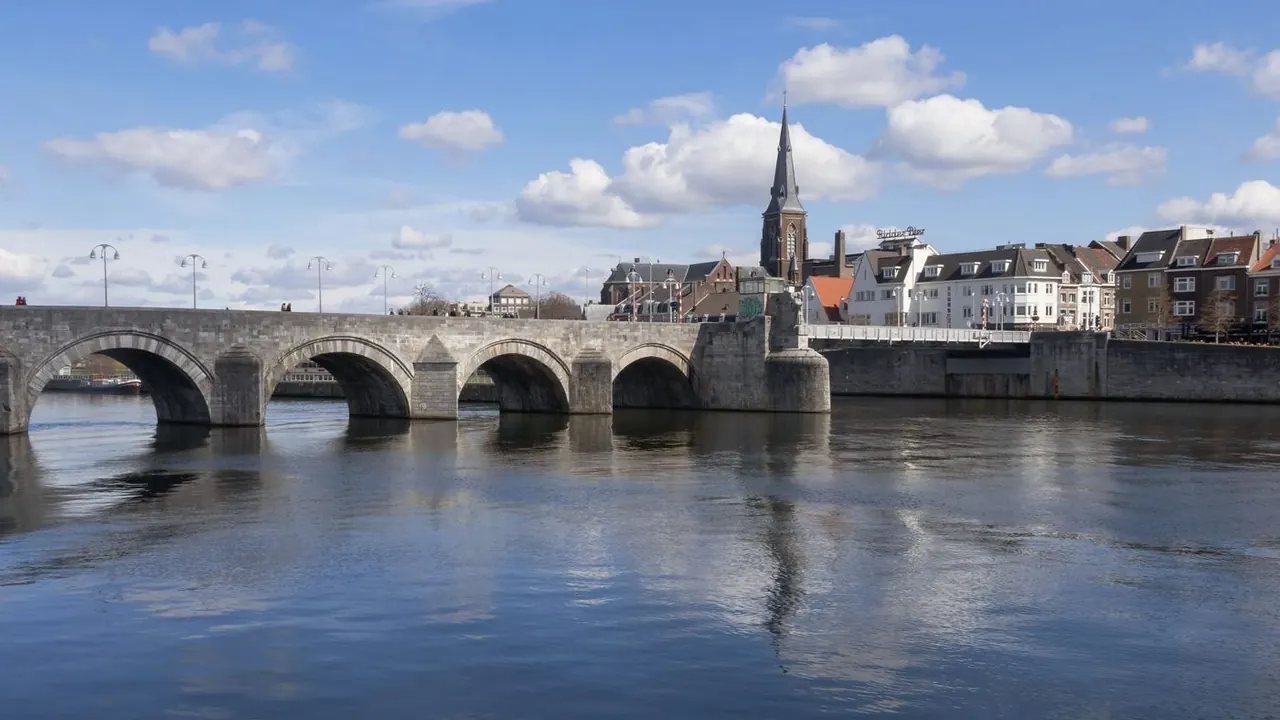
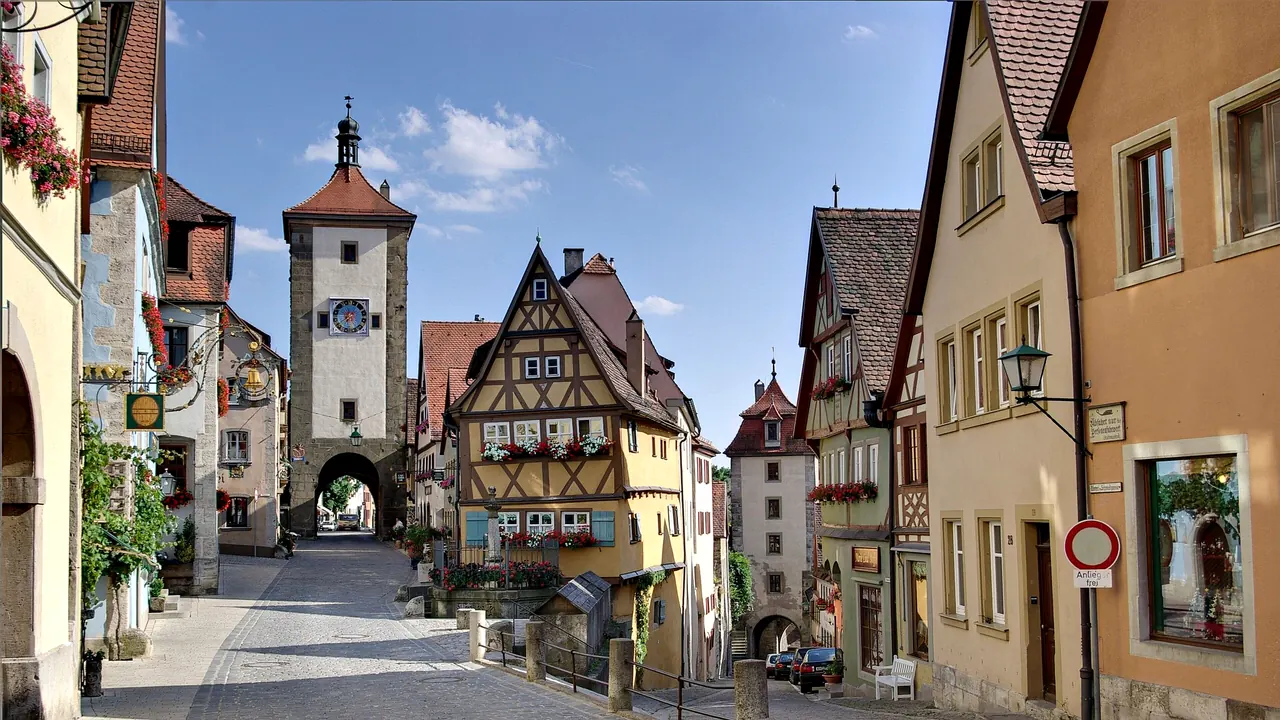
Photos: Maastricht by Michielverbeek, CC BY-SA 4.0, cropped; Rothenburg ob der Tauber by Berthold Werner, Public domain.
Maastricht or Rothenburg ob der Tauber?
Our verdict in twelve categories, each scored against the same fixed benchmark cities, and the climate month by month, so you can choose for your trip.
Choose Maastricht for
- nightlife
- shopping
- food and drink
Maastricht suits travellers who want a small city with real everyday life: long lunches on terraces, boutiques in old merchant streets, student cafés that stay busy at weekends, and trains that reach Aachen, Liège and Brussels without a car. It is the better base for a mixed long weekend of eating, shopping, gentle hill country and hops across two borders.
Choose Rothenburg ob der Tauber for
- prices
- culture and sights
Rothenburg ob der Tauber is for people who want to step inside a medieval walled town that has hardly changed, walk its ramparts at dusk and then drive on along the Romantic Road. Food, nights out and shopping are thin there, so it works best as one stop on a touring trip with a car, or for a Christmas market visit.
Scoreboard
Twelve categories on one fixed scale from 0 to 100. The shaded stretch is the gap between the two.
Your match
Pick a travel style or drag the sliders, and both match scores follow your weighting.
Wins on nightlife and shopping with your weighting.
Wins on prices and culture and sights with your weighting.
What matters to you?
Category by category
What the scores mean for a trip.
Beaches & swimming
Neither town is a place to swim, and they are about equal. Maastricht has the easier option: the old gravel-pit lakes along the Maas, on both sides of the border, have small sandy shores and lifeguards, and they are close enough for an afternoon. In Rothenburg it is the town's outdoor pool, or an hour's drive to grassy lakeside bathing at the Altmühlsee.
Food & drink
Eating is one of the main reasons to go to Maastricht. There is zuurvlees with fries, vlaai in every bakery, seasonal asparagus and game, Belgian beer and local white wine. The kitchens in the old centre and Wyck range from lunchrooms to cooking that is ambitious for a town of this size, and the terraces on the Vrijthof are a pleasure of their own.
Rothenburg offers solid Franconian fare such as Schäufele, bratwurst and dumplings, with Silvaner in its round bottles. But many places on the Marktplatz cook for the day crowds, and you have to look for the family guesthouses and wine taverns to eat well. Expect hearty meals rather than memorable ones.
Culture & sights
These two are about equal for sightseeing, but in very different ways. In Rothenburg the town itself is the sight. You can walk the covered wall walk, stand at the Plönlein and climb the Rathaus tower, and the one great treasure is Riemenschneider's carved altar in St Jakob's.
Maastricht spreads its interest across many periods: two Romanesque basilicas, the Helpoort and the old walls along the Jeker, the guided tunnels under the Sint-Pietersberg and modern art at the Bonnefanten. It feels more like a living city than a preserved set piece, though nothing in it matches the complete medieval picture inside Rothenburg's walls.
Nightlife
Maastricht has a real if modest night out. Students and locals fill the cafés around the Markt and the Platielstraat late into weekend nights during term, and carnival turns the whole city into a street party for days.
Rothenburg's evening is a glass of Tauber wine and the night watchman's lantern tour, and then the lanes are silent. Anyone hoping for a bar crawl will need Würzburg or Nuremberg.
Nature & outdoors
Both have gentle countryside, but Maastricht has more of it and more variety. The marl cliffs and reserves of the Sint-Pietersberg start at the edge of town, the Heuvelland offers sunken lanes and climbs that road cyclists seek out, and the Hoge Kempen heaths and the Ardennes are within reach.
Rothenburg's outdoors means dropping from the walls into the Tauber valley, past mills and meadows, or riding the flat Tauber valley cycle path through vineyards. It is lovely in blossom season and autumn, but it runs out quickly.
Day trips
Both are good bases, but Maastricht has the edge because of its border position and its trains. Aachen and Liège are each about half an hour away and give you a different country and language, and Cologne, Brussels and Leuven are within a long day.
From Rothenburg, the Romantic Road offers Dinkelsbühl and the crater town of Nördlingen, with Würzburg's Residenz and Nuremberg about an hour off. These are wonderful towns, but many repeat the medieval theme, and almost all of them need a car.
Good for families
Maastricht is the easier choice with children. It is flat and buggy-friendly, there are the torchlit tunnels of the Sint-Pietersberg, and Valkenburg's show caves, cable car and fairy-tale park are twenty minutes away, with a zoo at Kerkrade.
Rothenburg excites children for a day or two with its ramparts, tower climb, night watchman and the grisly Crime Museum. After that there is little made for them, and the cobbles and steep valley paths make pushchairs hard work.
Getting around
Getting about favours Maastricht, inside town and beyond. Its centre spreads over both banks of the Maas, but almost everything is within a fifteen-minute walk on flat, largely pedestrianised streets. Bikes on the riverside paths make longer trips easy. The station in Wyck is just over the bridge, with trains to the rest of the Netherlands, Liège and Aachen.
Rothenburg's walled centre is just as quick to cross on foot. It is largely traffic-calmed, with parking outside the gates, so the lanes are pleasant to walk apart from the cobbles and the steep climb back up from the Tauber. Beyond the walls, the branch line means changing trains at Steinach and the buses are sparse, so a car is close to essential.
Shopping & style
Maastricht is a real shopping destination. There are designer boutiques in the restored houses of the Stokstraat quarter, the main chains around the Grote Staat, interiors and vintage shops in Wyck, and the weekly market on the Markt.
Rothenburg sells one thing very well: Christmas, all year round, along with cuckoo clocks, pewter and teddy bears. Its December market on the Marktplatz is among Germany's most atmospheric, but fashion and everyday shopping hardly exist.
Affordability
Maastricht is the dearer of the two. Meals and rooms cost what they do elsewhere in the Netherlands, and the city is so popular for short breaks that weekend hotel rates climb. Staying from Sunday to Thursday helps most, and bakery lunches, café beer and a centre you can walk keep daily costs down.
Rothenburg works out a little cheaper, mainly because you can sleep in a village outside the walls and save a good deal. Inside the walls there is a tourist premium on rooms and on meals near the Marktplatz, highest in December and on summer weekends. Still, inn wine and beer are fairly priced and the sights charge modest fees.
Live music & performing arts
Maastricht has a proper stage. The theatre on the Vrijthof hosts the regional orchestra and opera, along with drama and dance, and there are conservatory recitals, jazz cafés and large summer concerts in the square.
Rothenburg's performances are mostly history in costume, above all the Meistertrunk play about the Thirty Years' War, plus summer open-air theatre and concerts in St Jakob's. On most evenings there is no show to go to.
Wellness & relaxation
Spa days are much closer from Maastricht, and there is more choice. The thermal baths on the hill above Valkenburg are about twenty minutes away, and Aachen's springs, used since Roman times, are about half an hour. Spa, the Belgian town that gave its name to all the others, is within an hour. Long lunches and walks by the river give the city itself an unhurried pace.
From Rothenburg, the nearest thermal water is about an hour's drive away, at the floating salt pool in Bad Windsheim or in the old spa town of Bad Mergentheim. A few of the larger hotels have small spas. What the town offers in their place is silence, on the walls and in the lanes at dawn or after the day visitors have gone.
When should you go?
Pick your month. The climate figures are measured averages, not a forecast.
Maastricht in July
Rothenburg ob der Tauber in July
Daytime high, °C
Rainfall in the month, mm
Where the figures come from
Rothenburg ob der Tauber's sunshine is measured 27 km from the centre, at Feuchtwangen-heilbronn.
Temperature and rainfall are climate normals, averaged over the years shown. Maastricht: 1991-2020 normals, Maastricht Airport Zuid Limburg (10 km from centre). Rothenburg ob der Tauber: 1991-2020 normals, Rothenburg ob der Tauber (0.9 km from centre).
The two follow much the same year, with mild springs, warm but rarely hot summers and grey, chilly winters. July and August are the warmest months in both, around 24°C in Maastricht and 25°C in Rothenburg, comfortable for walking all day but never really beach weather. Rothenburg's summers are clearly sunnier, with about 246 hours of sunshine in July, which suits its walls and valley paths. Maastricht is often wettest in late summer, with around 84mm in August, so a terrace afternoon can turn into a café one.
Winter is the bigger difference. Rothenburg sits higher and further inland, with daytime highs near 3°C in January and very short, dull days, which is cold for long walks but fits a December visit for the Christmas market. Maastricht stays a few degrees milder. For walking and countryside, April to June and September are the best months in both towns.
Which traveller are you?
For a food and nightlife trip, Maastricht wins easily. It has Limburg cooking, Belgian beer, a good fine-dining tier and brown cafés full of students, while Rothenburg's inns cater largely to coach parties and its lanes go quiet by eleven.
On a shopping trip, choose Maastricht. The Stokstraat boutiques, the high-street brands on the Grote Staat and the independents in Wyck draw weekend shoppers from three countries. Rothenburg mostly sells Christmas ornaments, nutcrackers and souvenirs.
On a tight budget, Rothenburg is a little easier on the wallet. Inn wine and beer cost little, the sights charge modest fees, and rooms in nearby villages cost much less. Maastricht keeps Dutch prices, and weekend rooms there are in demand.
Before you go
| Measure | Maastricht | Rothenburg ob der Tauber |
|---|---|---|
| Official language | Dutch | German |
| Currency | Euro (EUR) | Euro (EUR) |
| Sockets | CF230 V, 50 Hz | CF230 V, 50 Hz |
| Driving side | Right | Right |
| Time zone | UTC+1, UTC+2 in summer | UTC+1, UTC+2 in summer |
| Emergency number | 112 | 112 |
| Elevation | 49 m | 430 m |
| Main airport | Maastricht Aachen Airport (MST)9 km from centre5 non-stop destinations | Nuremberg Airport (NUE)66 km from centre56 non-stop destinations |
| Public holidays this year | 11 days | 12 days |
By the numbers
| Measure | Maastricht | Rothenburg ob der Tauber |
|---|---|---|
| City population | 120,227 | 11,331 |
| People per km² | 2,000 | 272 |
| Museums within 10 km | 21 | 6 |
| UNESCO World Heritage sites within 50 km | 6 | 2 |
Where else could you go?
Every comparison below shares a destination with this one, so you can follow Maastricht or Rothenburg ob der Tauber somewhere new.
- Nurembergvs Rothenburg ob der Tauber
- Bambergvs Rothenburg ob der Tauber
- Dusseldorfvs Maastricht
- Colognevs Maastricht
- Brusselsvs Maastricht
- Stuttgartvs Rothenburg ob der Tauber