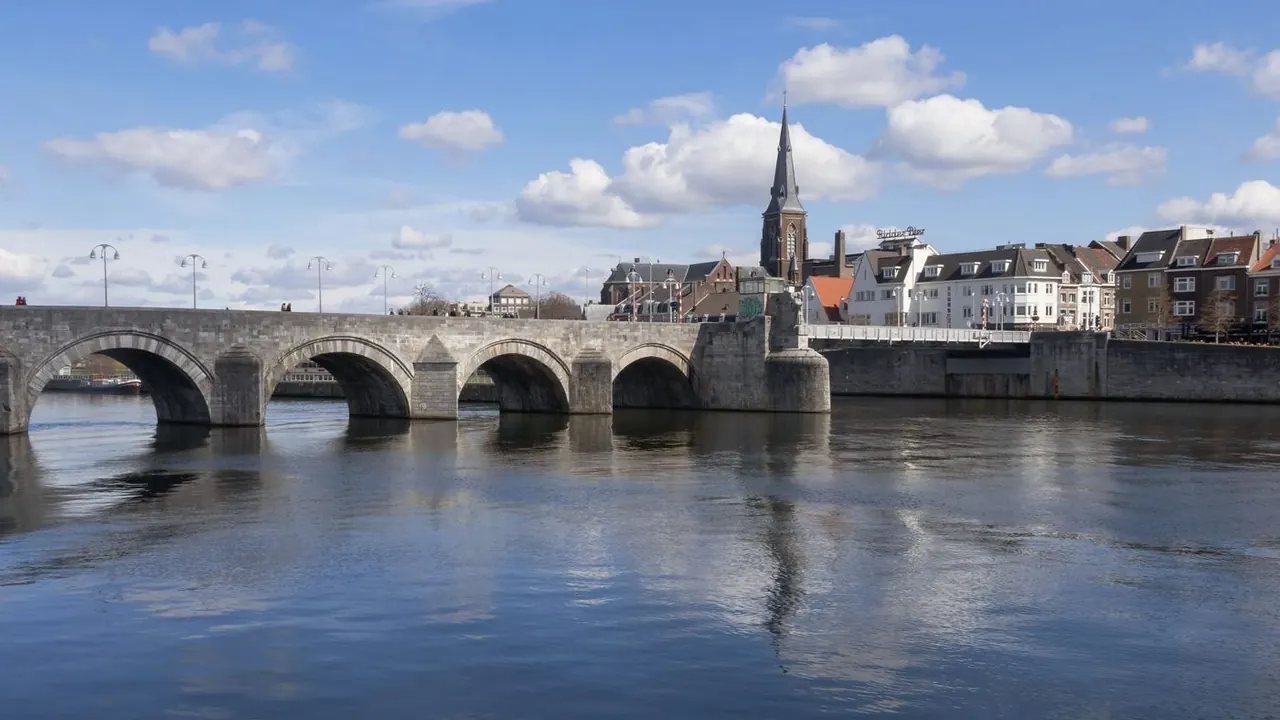
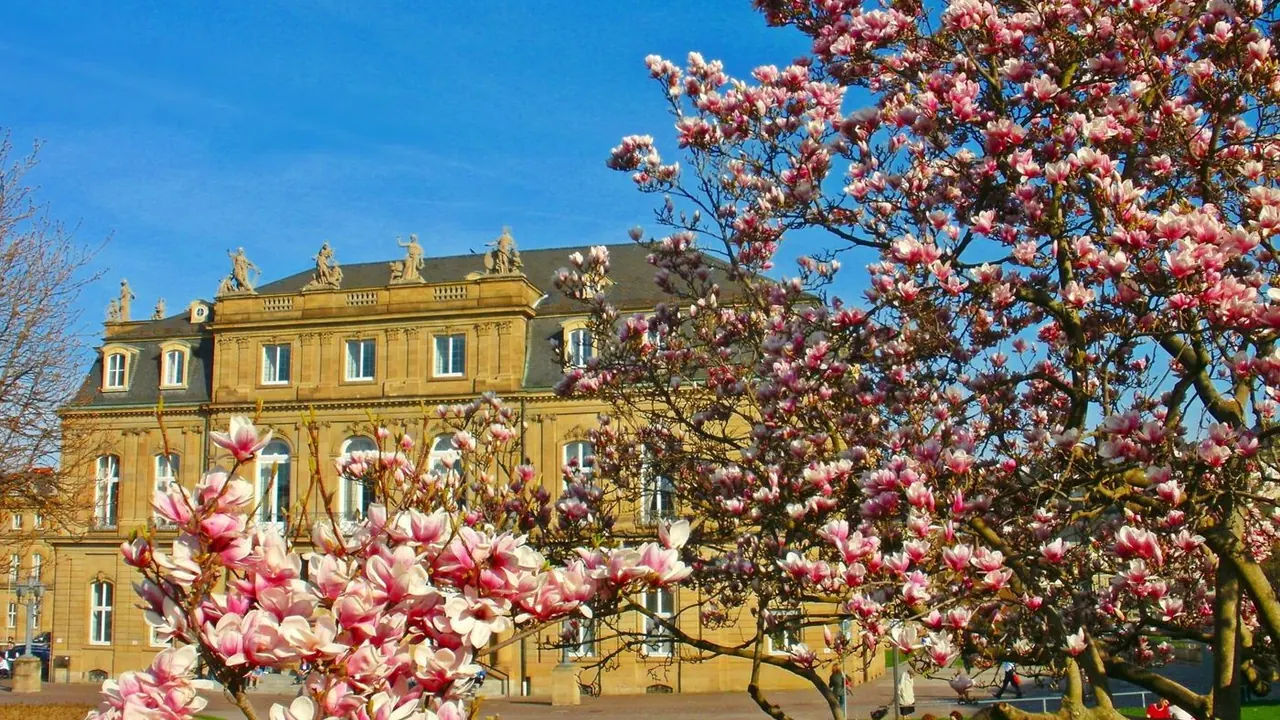
Photos: Maastricht by Michielverbeek, CC BY-SA 4.0, cropped; Stuttgart by Baden de, CC BY 3.0, cropped.
Maastricht or Stuttgart?
Our verdict in twelve categories, each scored against the same fixed benchmark cities, and the climate month by month, so you can choose for your trip.
Choose Maastricht for
- getting around
- shopping
Maastricht suits travellers after an unhurried short break in an old, walkable city: Romanesque basilicas, medieval walls along the Jeker, long lunches on the Vrijthof and a train or bike ride into Belgium or Germany. It works best for couples and friends who like to stroll, browse boutiques in old merchant houses and sit over Belgian beer, and for anyone who likes the idea of three countries within easy reach.
Choose Stuttgart for
- live music and the arts
- wellness
- families
Stuttgart is the stronger pick when the evenings and the downtime matter as much as the sightseeing. Its opera and its renowned ballet give it a stage life Maastricht can't match, its mineral baths sit right in the city, and Wilhelma, the car museums and the rack railway make it easier with children. Expect modern design and industry rather than a medieval core.
Scoreboard
Twelve categories on one fixed scale from 0 to 100. The shaded stretch is the gap between the two.
Your match
Pick a travel style or drag the sliders, and both match scores follow your weighting.
Wins on getting around and shopping with your weighting.
Wins on live music and the arts and wellness with your weighting.
What matters to you?
Category by category
What the scores mean for a trip.
Beaches & swimming
Neither city is a place for a beach trip, and both are a long way from the sea. Where they differ is the kind of summer swim on offer.
Maastricht's locals head to the old gravel-pit lakes along the Maas, which have small sandy shores and lifeguards. Stuttgart has no natural swimming water nearby, but it has outdoor pools, some of them fed by its mineral springs.
Food & drink
Both cities eat well and in a strongly regional way, but the regions are very different. Maastricht's table is Limburg and half-Belgian: sweet-sour zuurvlees with fries, vlaai from the bakery and Belgian beer on the terraces of the Vrijthof and the Markt.
Stuttgart is Swabian. Expect Maultaschen, Käsespätzle and onion-topped roast beef in wine taverns, with Trollinger and Riesling from vineyards inside the city limits. In season, growers open Besen taverns in their own homes. Neither city offers much street food.
Culture & sights
These two are about equally rewarding, but they show you very different centuries. Maastricht is about age: the two Romanesque basilicas, the Helpoort and its medieval walls, the 13th-century bridge and the tunnels under the Sint-Pietersberg.
Stuttgart lost much of its old core to bombing, so its best sights are modern. The Mercedes-Benz and Porsche museums, the postmodern Staatsgalerie and Le Corbusier's houses at the Weissenhof Estate are the highlights, with baroque Schlossplatz as the main historic set piece.
Nightlife
A night out in Maastricht means Belgian beer in the brown cafés around the Markt and off the Vrijthof, with a large student crowd, and anyone who wants a club usually heads over the border. In Stuttgart the evening runs along the bar strip of Theodor-Heuss-Strasse, with clubs in basements and old industrial spaces, and on weekdays the city goes quiet early.
Each has one big blowout of the year. In Maastricht it is the street carnival before Lent, and in Stuttgart it is the beer tents of the Cannstatter Volksfest in autumn.
Nature & outdoors
Both cities have walking country on their doorstep. Maastricht's is soft and pastoral: the marl cliffs of the Sint-Pietersberg, the Jeker valley and the orchards and sunken lanes of the Heuvelland, where cyclists will know the short steep climbs.
Stuttgart's surroundings are more wooded and a little wilder. Vineyard trails climb straight out of its basin, deer roam the Rotwildpark, and the cliffs of the Swabian Jura and the fir ridges of the Black Forest are each about an hour away.
Day trips
Both are excellent bases, and the difference is in the variety. From Maastricht, the trips cross borders: Aachen's cathedral and Liège's stairways are each about half an hour away, with Tongeren and Valkenburg closer still. Over a few days you can easily switch between three countries and their languages.
From Stuttgart, most trips stay within Germany but are just as rich. Ludwigsburg's palace, Tübingen, Heidelberg, Hohenzollern Castle and the monastery at Maulbronn are all within reach, and Strasbourg is possible for a long day by train.
Good for families
Stuttgart is clearly the easier city with children, because the main outings are in the city itself. Wilhelma's zoo and gardens can fill a day, Killesberg park has a narrow-gauge railway and animal enclosures, and older children enjoy the car museums. The hills mean some pushing with a buggy.
Maastricht is flat and calm, so it is easy with a buggy, but its pleasures are mostly for adults. Apart from the tunnel tour, the family attractions are out of town in Valkenburg and at the zoo in Kerkrade.
Getting around
Both are easy to get around, in different ways. In Maastricht you walk or cycle. Everything sits on flat ground on the two banks of the Maas, and the cobbles are the only obstacle.
Stuttgart's flat core is just as walkable, but the city climbs steep hillsides around it. There, the Stadtbahn, the S-Bahn, a rack railway and the stepped Stäffele lanes take over, all on one integrated ticket.
Shopping & style
Maastricht is the place to browse. There are designer boutiques in the restored 17th- and 18th-century houses of the Stokstraat quarter, interiors and vintage shops in Wyck, and the weekly market on the Markt.
Stuttgart is built for brand shopping. Königstrasse is a long pedestrian run of familiar chain stores, Breuninger is the department store for designer fashion, and the outlet town of Metzingen is about half an hour away.
Affordability
Both cities cost about as much as you would expect in prosperous Northern Europe, and neither is a bargain. Where they differ is in when rooms get cheaper. Maastricht is a weekend favourite, so a Sunday-to-Thursday stay saves the most, and you will hardly spend anything on transport.
Stuttgart works the other way. Business travellers and trade fairs push up prices on weekdays, so weekends and the quieter months are cheaper there. Its taverns serve generous portions for the money.
Live music & performing arts
This is where the two cities differ most. Stuttgart's state theatre is home to an opera company known for bold productions and a ballet company famous since John Cranko's time. Add serious drama, orchestras and a Bach tradition at the Liederhalle, long-running musicals and a well-known jazz club, and it is worth planning a trip around.
Maastricht's theatre on the Vrijthof, its organ recitals and its jazz cafés make for a pleasant evening out. The big summer concerts on the square are the exception, but the city's stage life is not a reason to choose it.
Wellness & relaxation
Stuttgart has the stronger bathing culture, and it is right in the city. The springs of Bad Cannstatt and Berg feed public mineral baths with warm, naturally fizzy water and saunas, just a tram ride from the centre.
Maastricht has no baths of its own, so a spa day means a trip out to the thermal pools above Valkenburg, to Aachen or to the Belgian town of Spa. What it does have is a slower, more southern pace than businesslike Stuttgart, which makes it the more restful city simply to wander.
When should you go?
Pick your month. The climate figures are measured averages, not a forecast.
Maastricht in July
Stuttgart in July
Daytime high, °C
Rainfall in the month, mm
Temperature and rainfall are climate normals, averaged over the years shown. Maastricht: 1991-2020 normals, Maastricht Airport Zuid Limburg (10 km from centre). Stuttgart: 1991-2020 normals, Stuttgart / Neckartal (2.8 km from centre).
The two climates run on much the same calendar. Both are cold and grey from November to February, pleasant for walking from April, and at their warmest in July and August. Neither gets too hot to explore. Stuttgart is a couple of degrees warmer in summer, reaching about 26°C against 24°C in Maastricht. It is also noticeably sunnier, with around 240 hours of sun in July. Late spring and early autumn are the best times for long walks in either place.
Rain falls differently. Maastricht stays damp all year, and August is its wettest month at around 84mm. Stuttgart has drier winters and early springs, but showers and summer storms pick up from May to July. For a winter city break that means fewer wet days in Stuttgart. In high summer the two are much alike.
Which traveller are you?
For a culture and arts trip, Maastricht offers Romanesque basilicas and medieval walls, but its stage life is modest. Stuttgart adds the Staatsgalerie and the Weissenhof Estate, then evenings at the Staatsoper or watching one of Europe's most respected ballet companies.
On a family trip with children, Maastricht's flat streets suit a buggy, but most of its children's attractions are out in Valkenburg. Stuttgart keeps them in town. Wilhelma can fill a whole day, and Killesberg park has a miniature railway and animals.
For a short city break, Maastricht has the edge. Almost everything on both banks of the Maas is within a fifteen-minute walk, so basilicas, café terraces and Stokstraat boutiques fit into two unhurried days. Stuttgart's sights spread up its hillsides and out to the car museums.
Before you go
| Measure | Maastricht | Stuttgart |
|---|---|---|
| Official language | Dutch | German |
| Currency | Euro (EUR) | Euro (EUR) |
| Sockets | CF230 V, 50 Hz | CF230 V, 50 Hz |
| Driving side | Right | Right |
| Time zone | UTC+1, UTC+2 in summer | UTC+1, UTC+2 in summer |
| Emergency number | 112 | 112 |
| Elevation | 49 m | 245 m |
| Main airport | Maastricht Aachen Airport (MST)9 km from centre5 non-stop destinations | Stuttgart Airport (STR)10 km from centre124 non-stop destinations |
| Public holidays this year | 11 days | 12 days |
By the numbers
| Measure | Maastricht | Stuttgart |
|---|---|---|
| City population | 120,227 | 609,365 |
| People per km² | 2,000 | 2,938 |
| Museums within 10 km | 21 | 42 |
| UNESCO World Heritage sites within 50 km | 5 | 3 |
Where else could you go?
Every comparison below shares a destination with this one, so you can follow Maastricht or Stuttgart somewhere new.