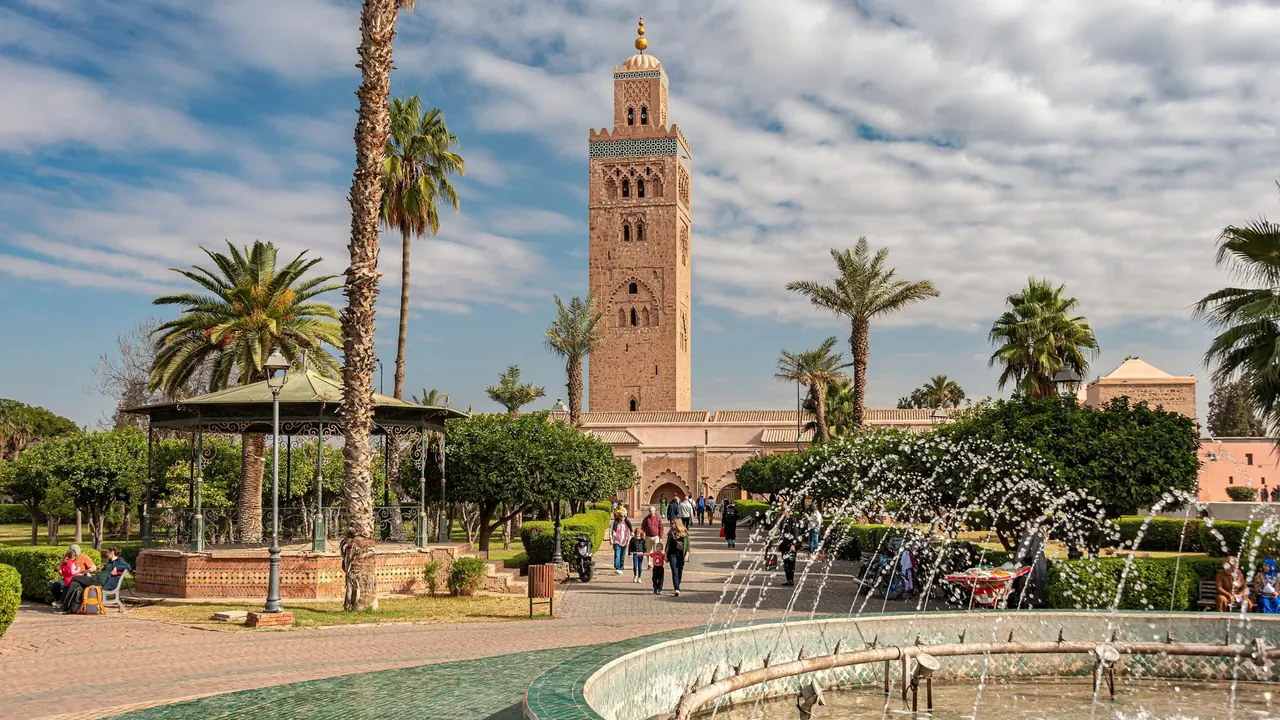
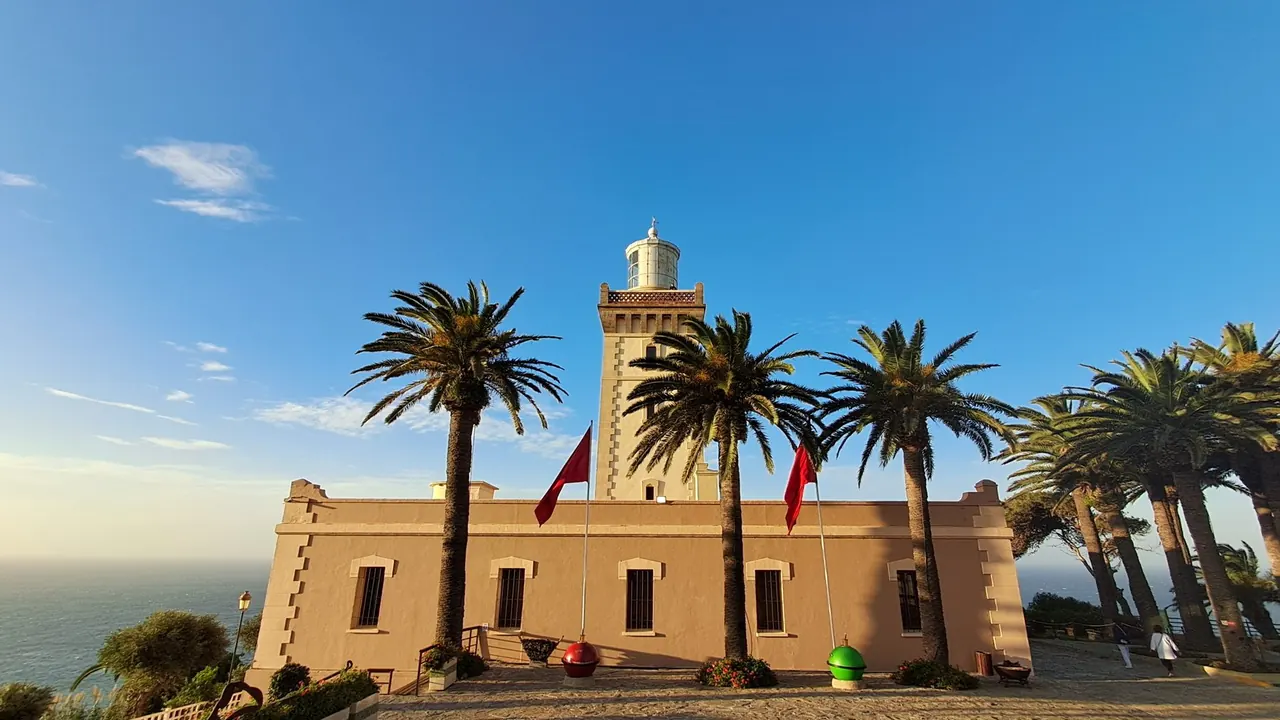
Photos: Marrakech by Jorge Franganillo, CC BY 2.0, cropped; Tangier by Ideophagous, CC BY-SA 4.0, cropped.
Marrakech or Tangier?
Our verdict in twelve categories, each scored against the same fixed benchmark cities, and the climate month by month, so you can choose for your trip.
Choose Marrakech for
- shopping
- wellness
- culture and sights
Marrakech is the stronger choice for a traveller who wants Morocco at its most concentrated. It has a UNESCO medina full of palaces, madrasas and tombs, souks laid out by trade, a hammam in every quarter and a riad courtyard to retreat to. The High Atlas and the Agafay desert are close by, so it suits a first visit built around sights, shopping and slow afternoons. You need to be ready for crowds, heat and hard selling.
Choose Tangier for
- day trips
- beaches
- families
Tangier rewards someone who prefers atmosphere to a list of sights and wants to move around. It is calmer and cooler in summer, and there are Atlantic beaches at Cap Spartel and Achakar. It also works well as a base: Asilah, Tetouan, Chefchaouen, Rabat by fast train and Spain by ferry are all within reach. Families and anyone planning a wider tour of the north will find it easier going.
Scoreboard
Twelve categories on one fixed scale from 0 to 100. The shaded stretch is the gap between the two.
Your match
Pick a travel style or drag the sliders, and both match scores follow your weighting.
Too close to call, level with your weighting
Wins on shopping and wellness with your weighting.
Wins on day trips and beaches with your weighting.
What matters to you?
Category by category
What the scores mean for a trip.
Beaches & swimming
Tangier is far ahead here. It has a city beach on its bay and, more usefully, wide Atlantic beaches to the west towards Cap Spartel, with surf and summer water that is cool but fine for swimming. Asilah's beaches are under an hour away.
Marrakech has nothing to match this. Swimming means a riad plunge pool or a hotel pool, and the nearest proper coast is Essaouira, a long drive away. Even so, Tangier is a city with beaches rather than a beach resort, and people dress modestly on the sand.
Food & drink
Both cities cook the same Moroccan staples, tagines, Friday couscous and harira, so the difference is in emphasis. Marrakech has the edge for eating out as an experience, with the grill stalls of Jemaa el-Fna at dusk, lamb pulled from underground ovens and tanjia, the city's own meat dish slow-cooked in a clay urn.
Tangier's cooking leans towards the sea. There are sardines and fish grilled near the port, bissara soup for breakfast, and a café life built around mint tea facing the Strait. Neither city offers much beyond Moroccan food, and in both, wine and beer are served only in licensed places.
Culture & sights
Marrakech has far more to see. Its walled medina holds the Koutoubia, the Ben Youssef Madrasa, the Saadian Tombs and the Bahia and El Badi palaces. Outside the walls are the Jardin Majorelle and the Yves Saint Laurent museum, enough to fill two or three busy days.
Tangier's appeal is quieter and more literary. It has the kasbah museum above the Strait, the American Legation, St Andrew's church and the Art Deco streets of the Ville Nouvelle, along with memories of Paul Bowles and the Beat writers. It is a city to soak up rather than tour.
Nightlife
Neither city is built for a big night out, and in both, alcohol stays inside licensed hotels and restaurants. The difference is in how the evening is spent. Marrakech has the spectacle of Jemaa el-Fna after dark, and in Hivernage and Gueliz there are lounge bars and a few large clubs with DJs that stay open late.
Tangier's evenings are gentler. People sit on café terraces, walk the seafront, drink in a handful of old bars from the international era or go to beach clubs on the bay in summer. The medina goes quiet early.
Nature & outdoors
Marrakech has the bigger outdoors. The High Atlas fills its horizon, and the Ourika valley and Imlil are within about an hour and a half. Imlil is the starting point for walks between Berber villages and for the climb of Jebel Toubkal, North Africa's highest peak. The Agafay desert and dawn balloon flights add a second kind of landscape.
Tangier's nature is coastal and smaller in scale. There are clifftop paths and pine woods at Cap Spartel, the Perdicaris park, storks and birds of prey migrating over the Strait, and boat trips to watch dolphins. Its mountains, the Rif, need an overnight stay.
Day trips
Within a short trip of Tangier you can reach other medinas, the Atlantic coast and even another continent. Asilah and Tetouan, whose medina is on the UNESCO list, are each about an hour away, and Chefchaouen makes a long but rewarding day. The fast train reaches Rabat in under two hours, and the ferry crosses to Tarifa in Spain in about an hour.
Marrakech's outings go mostly into mountains and desert rather than to other towns. Essaouira is a long day on the road, and Ait Benhaddou needs a night away. Closer in, there are only village markets and the old mosque at Tinmel.
Good for families
Neither city is built for children, so what matters is how much a family has to cope with. Marrakech's medina is at least flat, but its lanes are a free-for-all of scooters, carts and traders, and the inland heat drives everyone indoors well before lunch in summer. Days end up arranged around the riad pool, with a camel ride in the palm grove or the acrobats on Jemaa el-Fna as the treat. Children old enough to enjoy the commotion and the haggling get the most out of it.
Tangier asks less of a family, even though its medina is the harder ground, all steps and slopes. Outside the old town it is easier going: the sea breeze softens July, there is sand and a long seafront for running about, and woods and the sea caves are a short taxi ride away. The ferry across to Spain gives the whole family a day out.
Getting around
Getting around takes much the same effort in both. Neither has a metro or tram, both old centres can be walked, and cheap petit taxis fill the gaps, beige in Marrakech and blue in Tangier. Marrakech's medina is flat but a maze shared with carts and motorbikes, while Tangier's is smaller but steep and full of stairs.
Tangier's real advantage is travel beyond the city, with a train station and a ferry port right in the centre. In Marrakech, trips to the mountains or the desert need a driver or a tour.
Shopping & style
Marrakech is one of Morocco's great souk cities, and Tangier is not. North of Jemaa el-Fna, whole lanes belong to leatherworkers, dyers, metalworkers and carpet sellers. Gueliz and Sidi Ghanem add designers who rework Moroccan crafts.
Tangier's medina sells similar slippers, rugs and lanterns on a smaller scale. Its own speciality is the red-and-white striped cloth worn by Rif women. You meet the hard sell in both cities, but in Marrakech it is more intense.
Affordability
Both are cheap for everyday spending. Street food, mint tea, taxis and museum entry cost little, and in each city alcohol is the one expensive thing. The difference is at the top end. Marrakech has a large luxury tier of palace hotels and smart restaurants at international prices, and first prices in its souks are pitched high. In Tangier, costs rise mainly with sea-view hotels and places that serve alcohol.
Live music & performing arts
Neither city has much of a formal stage: no opera, no orchestra season and little theatre for visitors. In Marrakech the music is street performance, with gnawa musicians, drummers and storytellers on Jemaa el-Fna every evening and a long-running festival of popular arts.
Tangier's music is mostly a matter of festivals and history. There is its yearly jazz festival, occasional Andalusian and gnawa concerts, the fame of the Jajouka musicians from the nearby hills and the historic cinema on the Grand Socco.
Wellness & relaxation
Marrakech is the better place to be pampered. Besides its neighbourhood hammams, it has a wide range of spa hammams in riads and hotels, from simple to lavish marble ones, offering argan oil massages and clay wraps. Its gardens give quiet hours away from the medina.
Tangier's hammams are mostly plain local bathhouses, with a few spas in riads and hotels. The city itself, though, is easier to slow down in, with long hours over tea on terraces above the Strait.
When should you go?
Pick your month. The climate figures are measured averages, not a forecast.
Marrakech in July
Tangier in July
Daytime high, °C
Rainfall in the month, mm
Temperature and rainfall are climate normals, averaged over the years shown. Marrakech: 1991-2020 normals, Marrakech (5.1 km from centre). Tangier: 1991-2020 normals, Tanger Aerodrome (9.5 km from centre).
Marrakech is at its best in spring and autumn, from March to May and in October and November. Days are warm without being harsh, and the sun shines for most of each day. March and November bring some light showers, but rarely enough to spoil a day in the medina. Winter afternoons stay mild and bright, around 20°C. From June to September the heat climbs towards 38°C, so sightseeing shrinks to early mornings and evenings and the middle of the day belongs to the riad pool.
Tangier's year runs the other way. Its summers are warm rather than fierce, around 30°C, and the sea reaches 22°C in July and August, so June to September is the time for its beaches. From October the rain sets in, and November to January is properly wet, with up to 117mm in December and much less sunshine than Marrakech. May and September are the most comfortable months for walking Tangier's steep streets. For winter sun, Marrakech is far more reliable.
Which traveller are you?
On a shopping trip, Marrakech is the clear pick. Its souks run lane by lane through leather, metalwork, carpets and lanterns, and Gueliz and Sidi Ghanem add design shops. Tangier's medina stalls offer a smaller, plainer version of the same crafts.
For a beach and sun trip, Tangier wins easily, because Marrakech has no coast and only pools. Tangier's Atlantic beaches at Achakar and Cap Spartel, plus Asilah further down the coast, give real sand and summer swimming, though the water is cool.
On a relaxing and wellness trip, Marrakech offers more. It has spa hammams with argan oil and rhassoul clay alongside neighbourhood baths, and riad courtyards built for quiet. Tangier's hammams are simpler local places, and its calm comes from tea terraces over the Strait.
Before you go
| Measure | Marrakech | Tangier |
|---|---|---|
| Official language | Arabic, Standard Moroccan Tamazight | Arabic, Standard Moroccan Tamazight |
| Currency | Moroccan Dirham (MAD) | Moroccan Dirham (MAD) |
| Sockets | CE50 Hz | CE50 Hz |
| Driving side | Right | Right |
| Time zone | UTC+1 | UTC+1 |
| Emergency number | Police 19/112, ambulance 15, fire 15 | Police 19/112, ambulance 15, fire 15 |
| Elevation | 465 m | 56 m |
| Main airport | Marrakesh Menara Airport (RAK)6 km from centre113 non-stop destinations | Tangier Ibn Battuta Airport (TNG)11 km from centre50 non-stop destinations |
| Public holidays this year | 11 days | 11 days |
By the numbers
| Measure | Marrakech | Tangier |
|---|---|---|
| City population | 1,002,697 | 1,275,428 |
| People per km² | 4,360 | 6,393 |
| Museums within 10 km | 14 | 6 |
| UNESCO World Heritage sites within 50 km | 1 | 1 |
| Swim season, months above 21 °C | - | 3 months |
Where else could you go?
Every comparison below shares a destination with this one, so you can follow Marrakech or Tangier somewhere new.