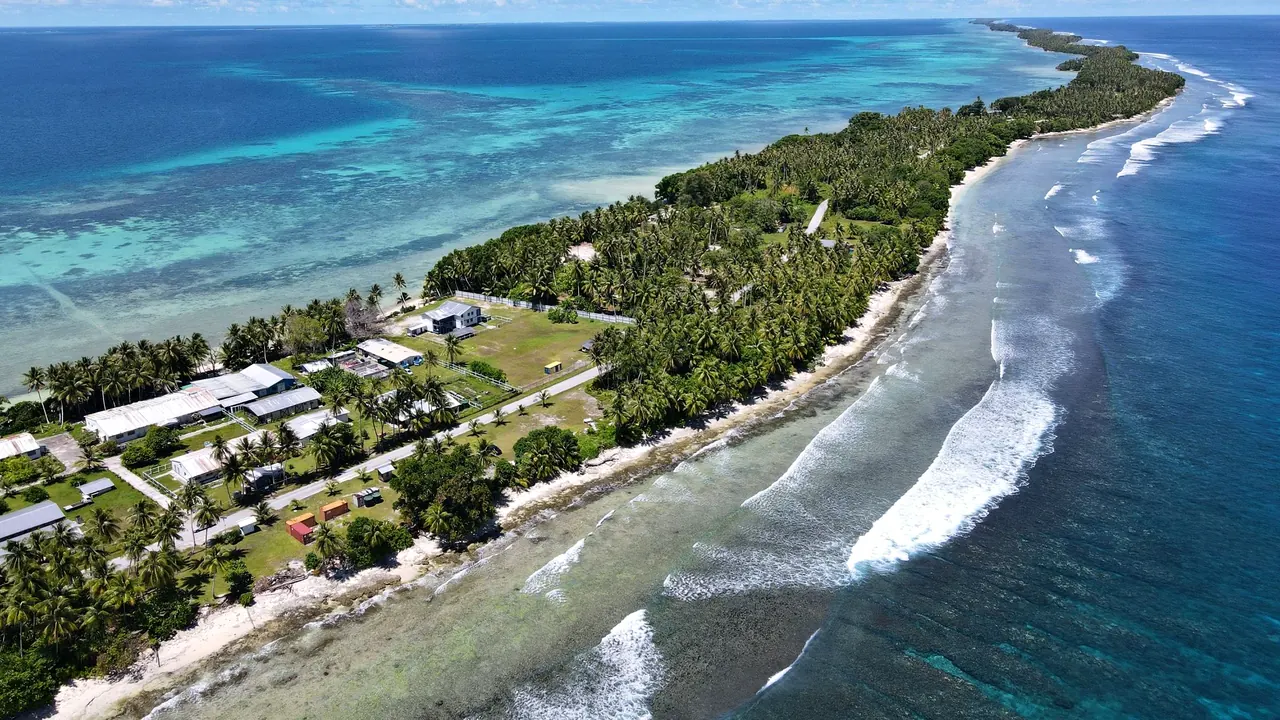
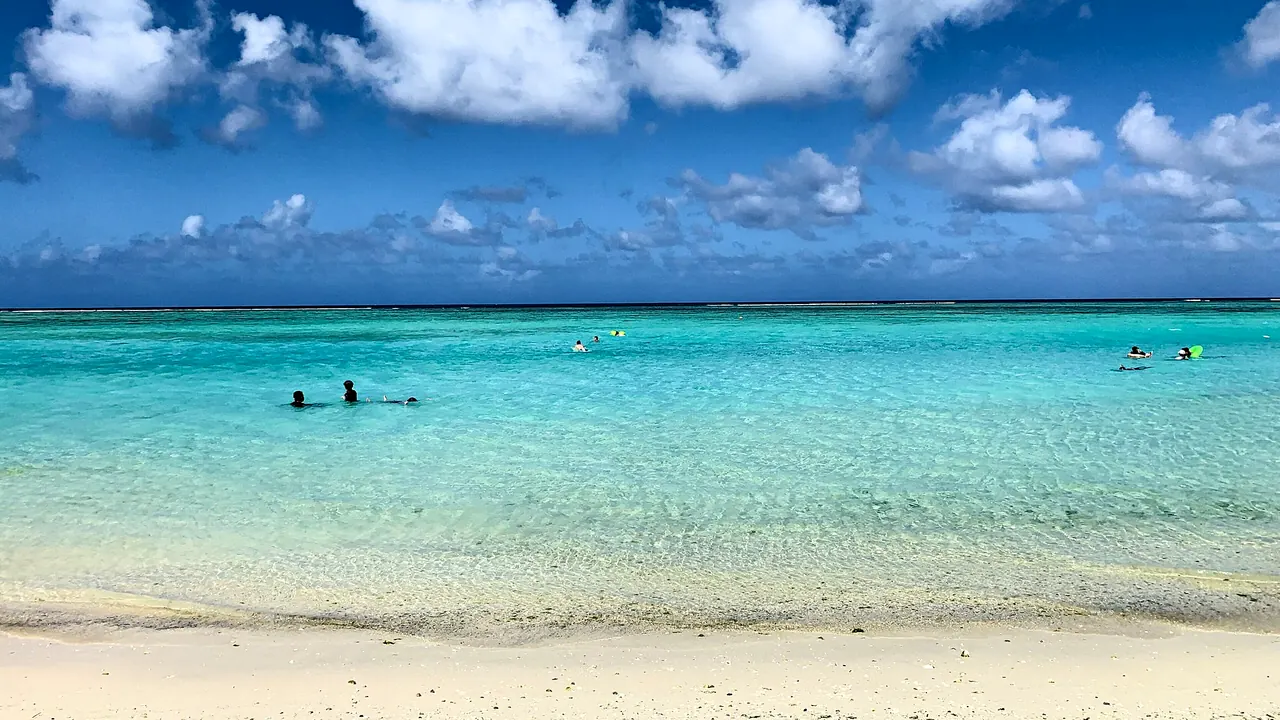
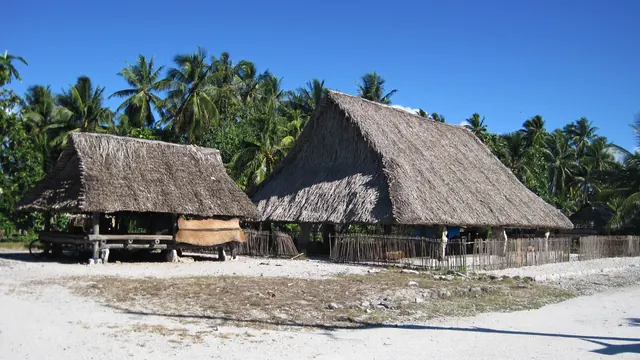
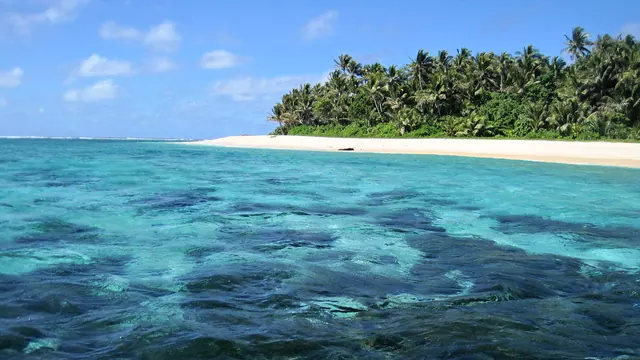
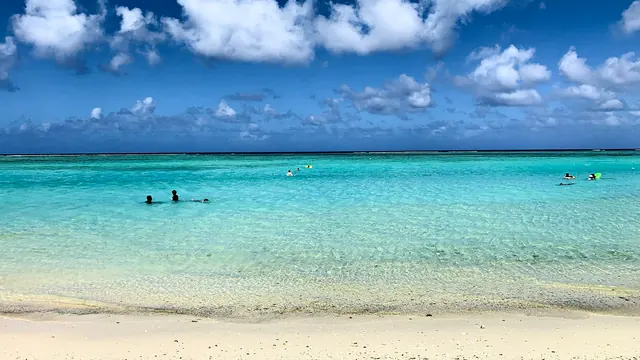
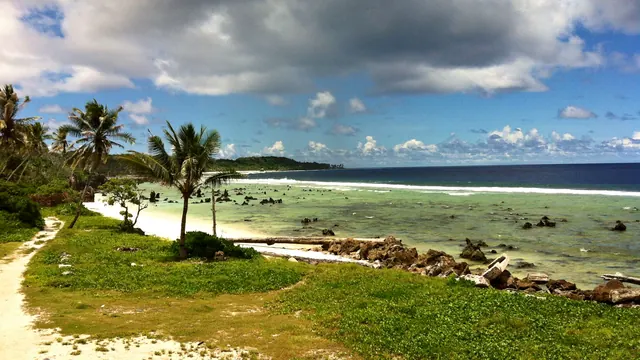
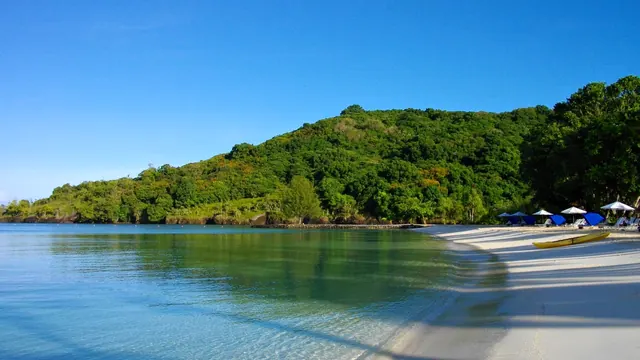
Photos: Marshall Islands by 志斌 陈, Pexels License; Guam by Daniel Ramirez from Honolulu, USA, CC BY 2.0, cropped.
Marshall Islands or Guam?
Our verdict in twelve categories, each scored against the same fixed benchmark cities, and the climate month by month, so you can choose for your trip.
Choose Marshall Islands for
- prices
The Marshall Islands suit travellers who want remoteness more than comfort. Majuro is the only real base, and the reward lies beyond it: empty white sand and lagoons on Arno and Mili, simple family guesthouses, navigational stick charts in the Alele Museum and Japanese wartime relics rusting among the palms. Come with spare days and patience, because flights are infrequent and nothing is built for visitors.
Choose Guam for
- families
- shopping
- getting around
Guam is the better pick for an easy beach vacation with everything to hand. Tumon Bay puts calm lagoon water, resort pools, duty-free shopping and a little nightlife along one stretch of road, and a hire car opens up Chamorro cooking, Spanish churches, war sites and jungle waterfalls within an hour. Families and first-time Pacific visitors will find it far simpler to manage.
Scoreboard
Twelve categories on one fixed scale from 0 to 100. The shaded stretch is the gap between the two.
Your match
Pick a travel style or drag the sliders, and both match scores follow your weighting.
Wins on prices with your weighting.
Wins on families and shopping with your weighting.
What matters to you?
Category by category
What the scores mean for a trip.
Beaches & swimming
Guam offers the easier and more rewarding beach. Tumon Bay is a reef-sheltered curve of pale coral sand right below the hotels. Ypao suits picnics and Gun Beach has the better snorkelling, and quieter swims wait at Agat, the Cocos Island lagoon and the rock pools at Inarajan.
The Marshall Islands have emptier sand but make you work for it. Majuro's town shore is no place to swim, so you go to Laura at the western end or take a boat to islets such as Eneko. The long white beaches of Arno and Mili come with infrequent flights, simple guesthouses and no sunbeds or beach bars at all.
Where in Marshall Islands: Majuro Atoll, Arno Atoll, Mili Atoll
Food & drink
Guam has a cuisine worth travelling for, and the Marshall Islands mostly do not. On Guam, Chamorro cooking brings achote-red rice, lemon-cured kelaguen, finadene sauce and smoky fiesta barbecue. The night market at Chamorro Village in Hagåtña is the easy way in, and around Tumon there is plenty of ramen and Korean barbecue.
In the Marshall Islands, the morning's catch, often served as sashimi-style tuna, is the best thing in Majuro's small set of restaurants. Breadfruit, pandanus and earth-oven fish turn up mainly at family celebrations, and on the outer atolls you eat what the guesthouse family cooks.
Where in Marshall Islands: Majuro
Culture & sights
Neither place fills a week, but Guam gives more to see in a day or two. Its layers run from Chamorro latte stones in Hagåtña through the Plaza de España, the cathedral basilica and Fort Soledad above Umatac to the landing beaches of the War in the Pacific park at Asan and Agat. The Guam Museum pulls these together.
The Marshall Islands' heritage is quieter and more scattered. The navigational stick charts in Majuro's Alele Museum are the highlight, while the Japanese bunkers and crashed aircraft on Mili and Jaluit need domestic flights. Bikini Atoll carries great historical weight, but a visit is rare and expensive.
Where in Marshall Islands: Majuro (Alele Museum), Jaluit Atoll, Mili Atoll, Bikini Atoll
Nightlife
Guam has a small night out, and the Marshall Islands barely have one. Pale San Vitores Road in Tumon offers sports bars, karaoke rooms and a couple of dance clubs that stay open late at weekends. Majuro offers a few bars and hotel lounges with beer and karaoke, and many outer atolls are dry by custom.
Where in Marshall Islands: Majuro
Nature & outdoors
The two are level outdoors but different in kind. The Marshall Islands are almost all water: low coral rings with no hills or trails, but healthy reefs with sharks, turtles and manta rays, strong sportfishing and lagoons for kayaking and kitesurfing. Wreck divers know the Bikini lagoon, if they can join one of its occasional expeditions.
Guam pairs its diving, at the Blue Hole and the twin wrecks of Apra Harbor, with real land to explore. The northern cliffs run to Two Lovers Point and the Ritidian Point refuge, and in the south there are red-earth ridges, Mount Lamlam and walks to Talofofo falls, though the forests are oddly quiet after introduced snakes took most of the birds.
Where in Marshall Islands: Bikini Atoll, Majuro Atoll, Arno Atoll, Jaluit Atoll
Day trips
Day trips are scarce in both, so plan to stay put. From Majuro, a boat to the lagoon islets or a calm-day hop to Arno for village life is about the limit. On Guam, the best outing is the drive through Umatac, Merizo and Inarajan, and Rota and Saipan work better as overnight stays.
Where in Marshall Islands: Arno Atoll, Majuro lagoon islets
Good for families
Guam is far better set up for children. Resort hotels in Tumon are built around pools, slides and kids' clubs, the calm lagoon is right outside, and the Piti observatory and dolphin boats fill a morning or two. It lacks a zoo or theme park, so longer stays are mostly sand and water.
The Marshall Islands offer warm, easy paddling at Laura and on the lagoon islets, and a culture where children are welcomed everywhere. Beyond that there is nothing for children, medical care is limited and the journey is long, so it only suits families already at home with rustic travel.
Where in Marshall Islands: Majuro Atoll
Getting around
Majuro is the easy part of the Marshall Islands. It runs along a single road about 50km long, and the shared taxis on it make the capital simple without a car. Beyond it, the outer atolls depend on small flights a few times a week that are often delayed or cancelled, or on slow supply ships, so any onward trip needs spare days.
Guam is much easier to explore as a whole. Shuttles link the Tumon hotels with Hagåtña, and a hire car on good, quiet roads reaches anywhere on the island in about an hour. Buses beyond the resort strip are sparse, though, so without a car you are left with tours.
Where in Marshall Islands: Majuro
Shopping & style
Guam is a real shopping destination, with no sales tax, a large duty-free gallery, luxury boutiques in Tumon and American malls and outlets in Tamuning and Dededo, though little with local character. The Marshall Islands turn that around: almost nothing to browse, but finely woven pandanus baskets, fans and mats sold by the weavers themselves, and stick-chart replicas that make a more meaningful souvenir.
Where in Marshall Islands: Majuro, Outer atolls
Affordability
Both are expensive for what they offer, and roughly level. Guam charges resort prices in Tumon and usually needs a hire car, with the night market, barbecue stands and lack of sales tax giving some relief. In the Marshall Islands, Majuro's simple hotels and imported food cost more than they look, and the cheap taxis and guesthouses are soon outweighed by domestic flights, boat charters and diving.
Where in Marshall Islands: Majuro, Outer atolls
Live music & performing arts
Neither has a stage or concert life to plan around. What you hear differs: in Majuro, harmonised church singing on Sundays and traditional dance at celebrations such as Manit Day. On Guam it is Chamorro dance at hotel dinner shows, parish fiestas and the occasional production by the small symphony or university theatre.
Where in Marshall Islands: Majuro Atoll
Wellness & relaxation
Guam makes resting easier. Most Tumon resorts have a spa, massage shops line the main road, and a few slow days need no planning. The Marshall Islands offer little beyond a hotel massage in Majuro. Their gift is the stillness of Arno and the lagoon islets, with no traffic and scarcely any signal, which some find restful and others simply isolating.
Where in Marshall Islands: Arno Atoll, Majuro lagoon islets
When should you go?
Pick your month, and for a country the place in it. The climate figures are measured averages, not a forecast.
Majuro (Marshall Islands) in July
Guam in July
Daytime high, °C
Rainfall in the month, mm
Temperature and rainfall are climate normals, averaged over the years shown. Majuro (Marshall Islands): 1991-2020 normals, Majuro Atoll, Marshall Islands Int. Airp. (11.1 km from centre). Guam: 1991-2020 normals, Agana, Guam International Airport (3.1 km from centre).
Majuro stays at about 30°C by day all year, with the lagoon near 28°C, so the water is warm enough to swim in every month. It has no real dry season: rainfall rarely drops below 200mm, and it is lightest from January to March and heaviest from September to November. It still gets more sunshine than Guam in every month, and the steadiest trade winds blow from December to April.
Guam has the same heat and the same warm sea, and in both places the midday sun makes long walks hard work all year. Guam's difference is a true dry season from February to May, with March down to about 70mm, which makes spring the clear choice for a dry trip. From July to October the wet season takes over, peaking near 445mm in August, and the later months bring the risk of typhoons.
Which traveller are you?
On a family trip with young children, Guam is much the safer bet. Everything a family needs is within a short walk of the hotel. The Marshall Islands ask a lot of small children, and of parents who want a doctor close by.
For a food and nightlife trip, Guam is the only real contender, though neither place is worth travelling to for evenings out. Its own island cooking gives meals a sense of place, and a few doors stay open late. Majuro eats simply and goes to bed early.
On a beach and sun trip, Guam suits anyone who wants calm water on the doorstep and comfort around it. Choose the Marshall Islands only if empty sand matters more than ease, and you will happily swap sunbeds for boats and basic guesthouses.
More comparisons
Each shares a side with Marshall Islands or Guam.
Where else could you go?
Set Marshall Islands or Guam against any other country.