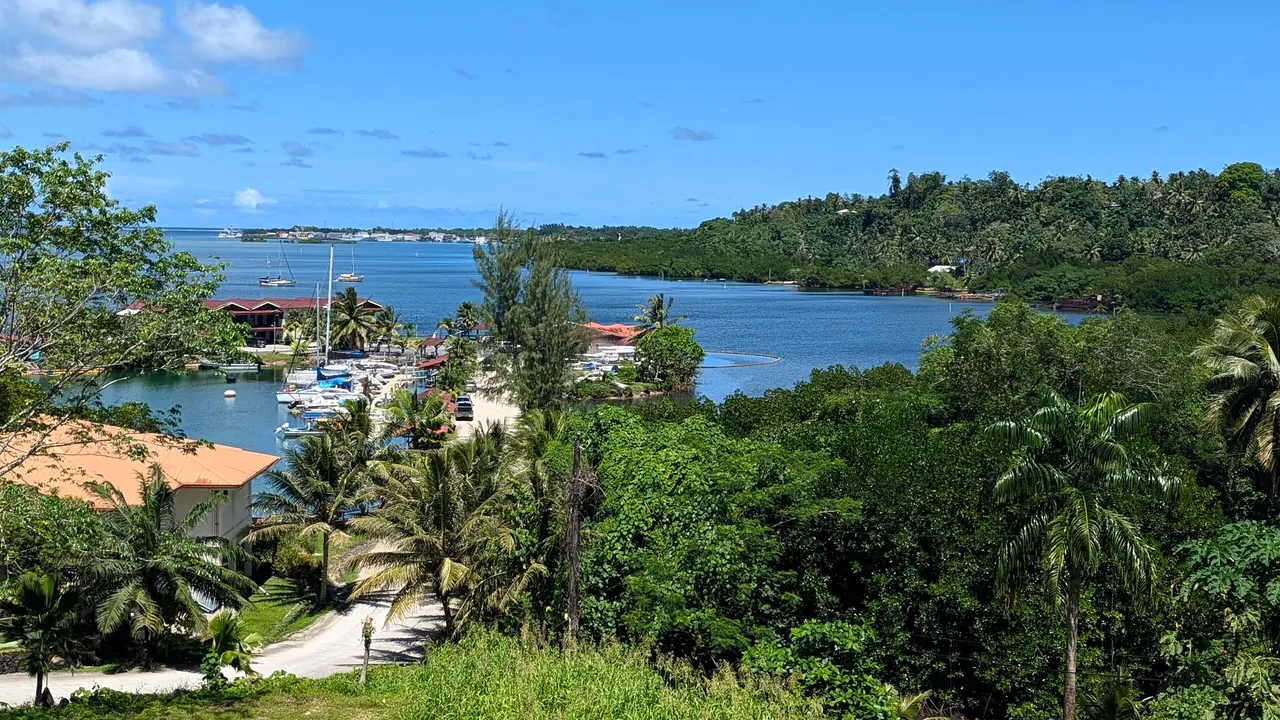
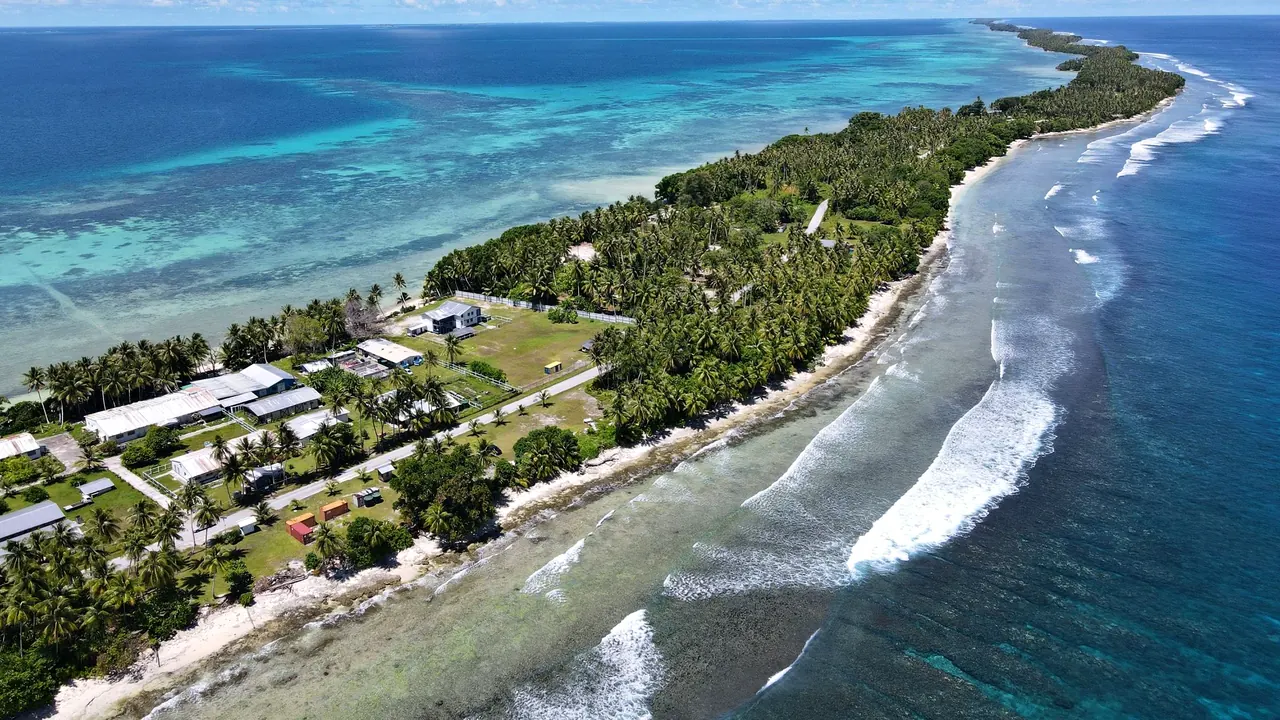
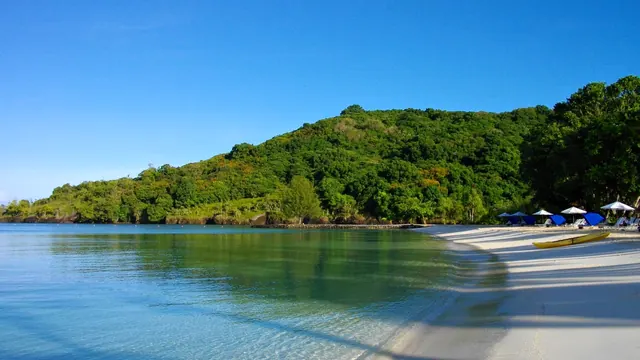
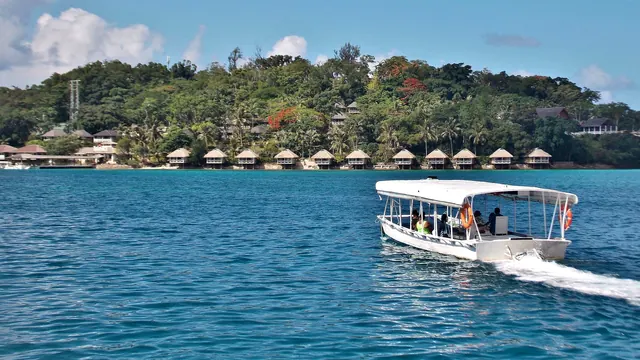
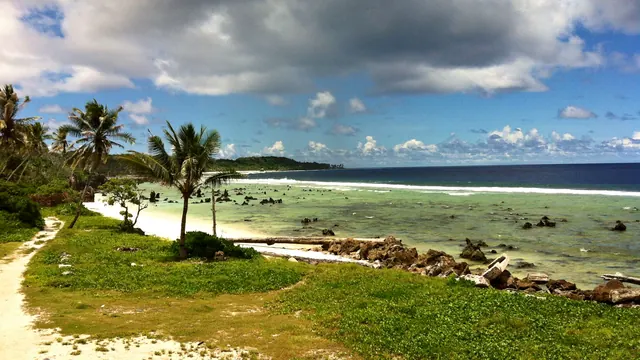
Photos: Micronesia by Zykasaa, CC BY-SA 4.0, cropped; Marshall Islands by 志斌 陈, Pexels License.
Micronesia or Marshall Islands?
Our verdict in twelve categories, each scored against the same fixed benchmark cities, and the climate month by month, so you can choose for your trip.
Choose Micronesia for
- nature and the outdoors
- culture and sights
- live music and the arts
Micronesia is for the traveller who will cross the Pacific for what lies underwater and for ruins found nowhere else. The wrecked fleet in Chuuk Lagoon, the mantas of Yap and the basalt city of Nan Madol on Pohnpei make it the stronger choice for divers and for anyone curious about Pacific history. The catch is that its states are separate trips joined by one island-hopping flight, so it rewards a long stay with a clear plan.
Choose Marshall Islands for
- beaches
- getting around
- day trips
The Marshall Islands suit someone who mostly wants warm, calm lagoon water and empty white sand. Majuro is easier to base yourself in, with shared taxis along its one road and islets such as Eneko a short boat ride away. Arno and Mili offer beaches with nobody on them. There is less to see and less to dive without an expedition, but for an unhurried atoll stay it is the simpler pick.
Scoreboard
Twelve categories on one fixed scale from 0 to 100. The shaded stretch is the gap between the two.
Your match
Pick a travel style or drag the sliders, and both match scores follow your weighting.
Too close to call, 1 point apart
Wins on nature and the outdoors and culture and sights with your weighting.
Wins on beaches and getting around with your weighting.
What matters to you?
Category by category
What the scores mean for a trip.
Beaches & swimming
Micronesia is mostly the wrong shape for beaches. Pohnpei, Kosrae and Yap are high islands edged with mangrove and shallow reef flat, so good sand means a boat to the islets of Chuuk Lagoon or to Ant and Pakin atolls off Pohnpei, often as a break between dives.
The Marshall Islands are built of coral sand, and it shows. Laura at the far end of Majuro is a proper swimming beach, Eneko and the other lagoon islets are an easy boat ride away, and Arno and Mili have long white stretches with nobody else on them. Neither country has beach bars or sunbeds.
Where in Micronesia: Chuuk Lagoon islets, Ant and Pakin atolls, Pohnpei, Kosrae
Where in Marshall Islands: Majuro Atoll, Arno Atoll, Mili Atoll
Food & drink
Both countries eat simply, built around fresh fish, sashimi-style tuna, rice and imported groceries. Micronesia has a bit more local character: Kolonia's restaurants serve breadfruit and taro, Pohnpei pepper is worth carrying home, and sakau on Pohnpei is a ritual of its own. Majuro has a slightly wider spread of Asian and American-influenced plates, but the earth-oven food is mostly kept for family gatherings.
Where in Micronesia: Kolonia, Pohnpei
Where in Marshall Islands: Majuro
Culture & sights
Micronesia has the more remarkable sights. Nan Madol, the city of stacked basalt islets off Pohnpei, has no equal in the Pacific, Kosrae's Lelu ruins sit in the middle of its main village, and Yap's stone money banks and men's houses are part of village life that custom still governs. Chuuk adds wartime relics on land.
The Marshall Islands offer heritage on a smaller scale. The Alele Museum in Majuro holds the navigators' stick charts, and Mili and Jaluit keep rusting Japanese bunkers and aircraft. Bikini Atoll carries enormous historical weight, but reaching it is rarely possible.
Where in Micronesia: Pohnpei, Yap, Kosrae, Chuuk
Where in Marshall Islands: Majuro (Alele Museum), Jaluit Atoll, Mili Atoll, Bikini Atoll
Nightlife
Neither country has much of a night out. In Micronesia, evenings on Pohnpei mean a quiet sakau bar or a hotel lounge in Kolonia, and Chuuk restricts alcohol. Majuro's bars lean more towards beer and karaoke with expatriate workers, while many of the outer atolls are dry.
Where in Marshall Islands: Majuro
Nature & outdoors
Micronesia has some of the Pacific's great diving. Chuuk Lagoon holds the Japanese fleet sunk in 1944, coral-grown and still loaded with trucks and munitions, Yap has mantas at cleaning stations, and Pohnpei adds reef passes and surf at Palikir. On land there are rainforest peaks, waterfalls and the climb up Sokehs Rock.
The Marshall Islands are almost all water, with no hills or trails beyond the reef flat. Snorkelling from Majuro's islets and the outer atolls is good, and the calm lagoons suit kayaking, sailing and, in the trade-wind months, kitesurfing. The famous Bikini wrecks are an occasional, costly expedition rather than something you can just book a dive for.
Where in Micronesia: Chuuk Lagoon, Yap, Pohnpei, Kosrae
Where in Marshall Islands: Bikini Atoll, Majuro Atoll, Arno Atoll, Jaluit Atoll
Day trips
Day trips barely exist in either country, since the islands lie far apart. Micronesia's outings are boats from your base to a reef, a wreck or Nan Madol, or a drive round the island's coast road. Majuro has a touch more to offer: the lagoon islets, and on a calm day a boat or short flight across to Arno Atoll for village life.
Where in Marshall Islands: Arno Atoll, Majuro lagoon islets
Good for families
Neither country is built for children, and both mean long flights and basic medical care. Micronesia offers more adventure for older children, such as wading through mangrove to Nan Madol from Pohnpei or paddling Kosrae's quiet channels. The Marshall Islands are gentler for younger ones, with calm, shallow lagoon water at Laura and on the islets across from Majuro.
Where in Micronesia: Pohnpei, Kosrae
Where in Marshall Islands: Majuro Atoll
Getting around
Micronesia takes more organising. Its four states are linked by a single island-hopping flight, so a missed connection can cost days. On the islands, Kolonia's shared taxis and Pohnpei's ring road are the easiest, Yap needs a hire car or a guide, and Chuuk's roads are rough.
In the Marshall Islands, Majuro is easy: shared taxis run constantly along its one long road, so you never need a car. It gets harder beyond the capital, where flights to the outer atolls are infrequent and often delayed, but a trip based in Majuro avoids most of that.
Where in Micronesia: Pohnpei, Kosrae, Yap
Where in Marshall Islands: Majuro
Shopping & style
Shopping in both countries comes down to handicrafts and general stores. Micronesia's finds are carved figures and baskets from Pohnpei, woven lava-lava and stone-money replicas from Yap, and Pohnpei pepper. The Marshalls are known for finely woven pandanus work and stick-chart replicas, which you can sometimes buy straight from the weavers on the outer atolls.
Where in Micronesia: Pohnpei, Yap
Where in Marshall Islands: Majuro, Outer atolls
Affordability
Both cost more than their modest surroundings suggest, and in both the expensive parts are flights, boat charters and diving. In Micronesia a dive-focused trip to Chuuk or Yap adds up fast, but Kosrae's small lodges are cheap to live in day to day. In the Marshall Islands, Majuro's simple hotels and imported food are what push the bill up, while outer-atoll guesthouses cost little.
Where in Micronesia: Pohnpei, Kosrae
Where in Marshall Islands: Majuro, Outer atolls
Live music & performing arts
Yapese traditional dance is the one performance in either country worth planning a trip around: standing and sitting dances in grass skirts and body paint at Yap Day in early March, and sometimes arranged in villages at other times. Kosrae's church choirs add powerful singing on a Sunday.
The Marshall Islands have no theatre or concert scene either. What you can hear there is harmonised church singing in Majuro, and dancing and song when the atolls show off their customs at celebrations such as Manit Day.
Where in Micronesia: Yap, Kosrae
Where in Marshall Islands: Majuro Atoll
Wellness & relaxation
Rest in Micronesia is the quiet of small island towns: little traffic and an early, peaceful Sunday on Kosrae, and on Pohnpei an evening over sakau as the local way to unwind. The Marshalls go further into real isolation. On outer atolls such as Arno the tide, the church bell and the fishing boats set the day, and you are barely connected. Some people find that restful and others just feel cut off. Treatments in both come down to a massage or a dive-resort spa at most.
Where in Micronesia: Kosrae, Pohnpei
Where in Marshall Islands: Arno Atoll, Majuro lagoon islets
When should you go?
Pick your month, and for a country the place in it. The climate figures are measured averages, not a forecast.
Where in Micronesia
Pohnpei (Micronesia) in July
Majuro (Marshall Islands) in July
Daytime high, °C
Rainfall in the month, mm
Temperature and rainfall are climate normals, averaged over the years shown. Pohnpei (Micronesia): 1991-2020 normals, Pohnpei Island, Pohnpei Int. Airp. (2.2 km from centre). Majuro (Marshall Islands): 1991-2020 normals, Majuro Atoll, Marshall Islands Int. Airp. (11.1 km from centre).
Both countries are hot and humid all year, with daytime highs of about 30°C and the sea around 29°C in every month, so warmth never rules out swimming or diving. The rain is what changes. Pohnpei is very wet in every season, wettest in late spring at about 479mm in May, and has its least sunshine around December. Chuuk Lagoon is a little drier than Pohnpei and gets most of its rain in late summer. Yap has a real drier spell from February to April, down to about 138mm a month, before heavy rain from June to October.
Majuro is drier and sunnier than both Pohnpei and Chuuk. January to March bring its least rain, around 203mm a month, with long sunny days and the steady trade winds of the drier season, while September to November is its wettest stretch and the sunshine drops off towards the end of the year. If your dates are fixed, Majuro or Yap early in the year gives the best chance of clear lagoon days. On Pohnpei you should expect showers whenever you go.
Which traveller are you?
For a beach and sun trip, the Marshall Islands win. Laura on Majuro, the lagoon islets such as Eneko, and the long empty sands of Arno and Mili give far more beach than Micronesia's mangrove-fringed volcanic shores, where sand means a boat out.
On an outdoors trip, Micronesia has the edge both underwater and on land. Chuuk Lagoon's wrecked fleet, Yap's mantas and Pohnpei's rainforest peaks and waterfalls offer far more than the flat atolls, where Bikini's wrecks need a costly expedition.
More comparisons
Each shares a side with Micronesia or Marshall Islands.
Where else could you go?
Set Micronesia or Marshall Islands against any other country.