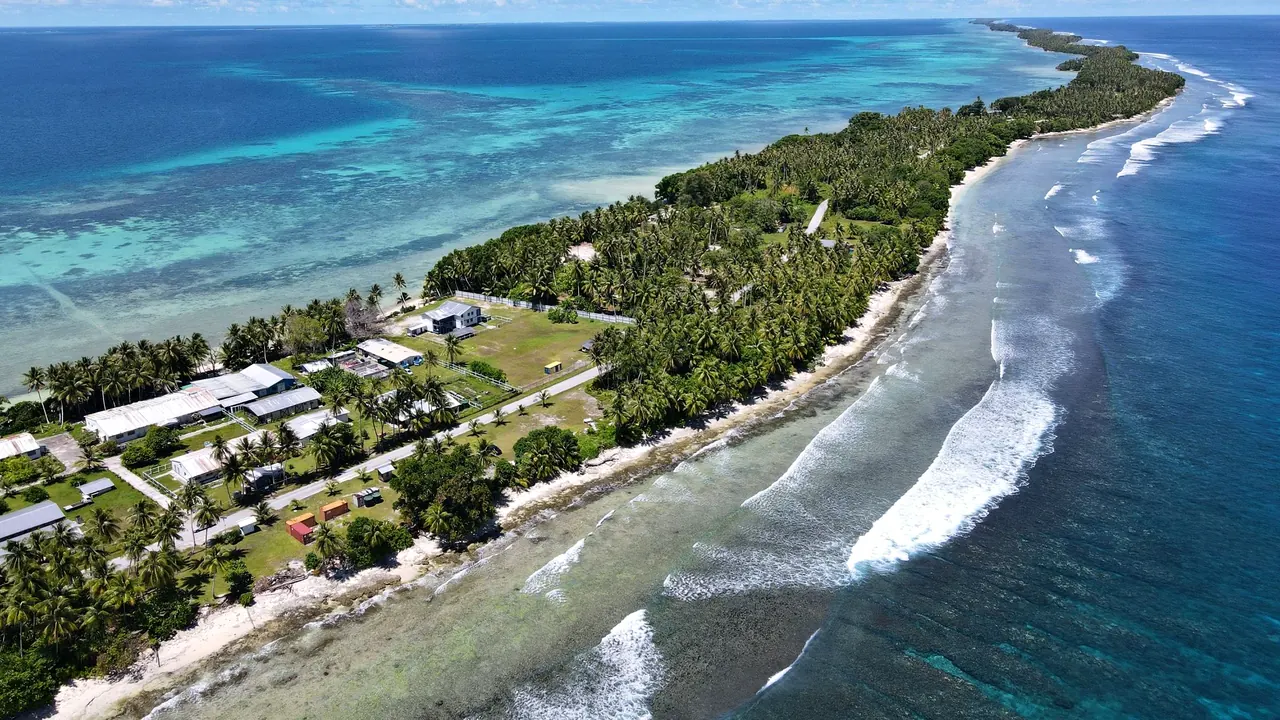
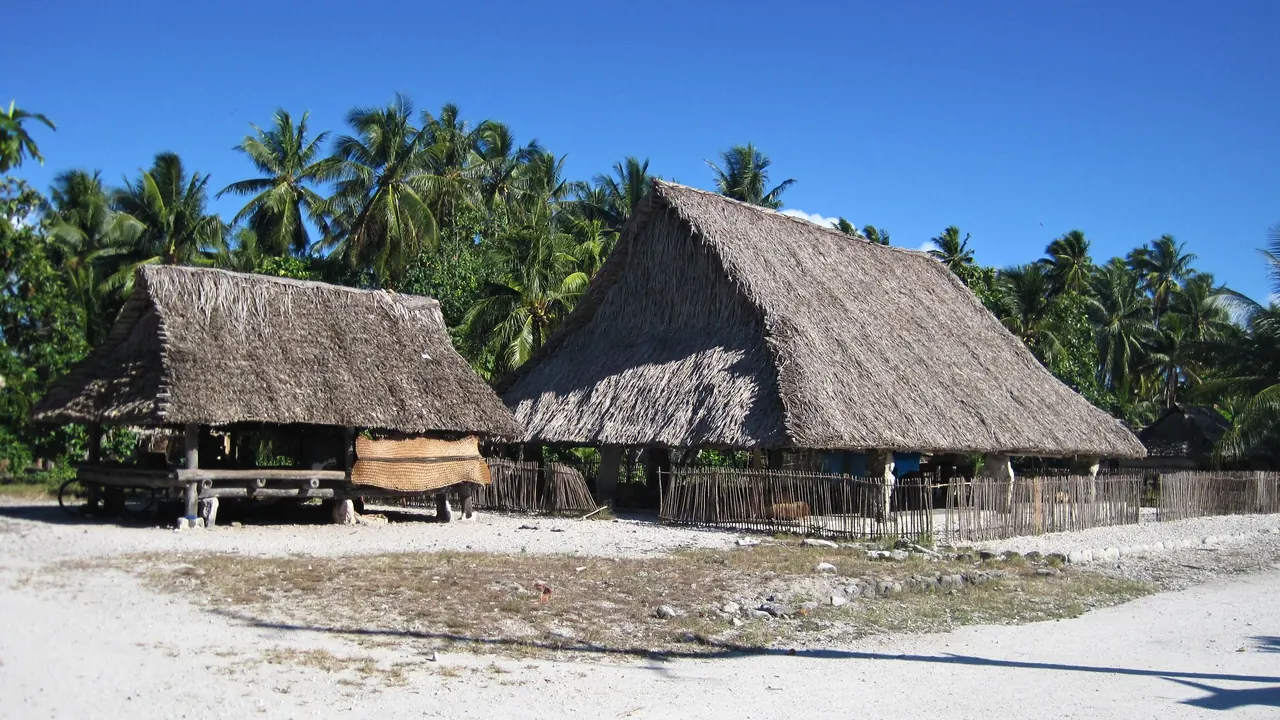
Photos: Marshall Islands by 志斌 陈, Pexels License; Kiribati by Rafael Ávila Coya, CC BY-SA 3.0, cropped.
Marshall Islands or Kiribati?
Our verdict in twelve categories, each scored against the same fixed benchmark cities, and the climate month by month, so you can choose for your trip.
Choose Marshall Islands for
- beaches
- shopping
- wellness
The Marshall Islands suit a traveller who wants one workable base and good water close by. From Majuro you can swim at Laura or take a boat to islets such as Eneko, with shared taxis running the length of the atoll in between. It is also the better pick if you dive, because of the wartime wrecks and the manta and shark reefs, and if you want woven crafts and stick-chart replicas to take home.
Choose Kiribati for
- live music and the arts
- nature and the outdoors
- prices
Kiribati is for travellers who come for one particular reason and plan the trip around it. Most of them come for the bonefish and giant trevally flats and the seabird colonies of Kiritimati. Others come for the 1943 battlefield on Betio, or for standing and seated dances performed in a village maneaba. Getting between islands is harder and the beaches near the capital are worse, but the people who choose Kiribati usually know exactly what they are there for.
Scoreboard
Twelve categories on one fixed scale from 0 to 100. The shaded stretch is the gap between the two.
Your match
Pick a travel style or drag the sliders, and both match scores follow your weighting.
Too close to call, 2 points apart
Wins on beaches and shopping with your weighting.
Wins on live music and the arts and nature and the outdoors with your weighting.
What matters to you?
Category by category
What the scores mean for a trip.
Beaches & swimming
The Marshall Islands put decent swimming closer to where you land. Majuro's own shore is built up, but Laura at the western end of the atoll is a proper swimming beach. A short boat ride takes you to islets such as Eneko for a day or a night on clean sand. Arno and Mili have long empty palm-lined lagoons if you are willing to stay in very basic guesthouses.
Kiribati asks more of you. Near South Tarawa the lagoon is crowded and not clean enough to swim in. The good water is on Abaiang, in North Tarawa, or on Kiritimati, which is a separate trip on its own international flights. The ocean sides of its atolls also have reef shelves and strong currents. Neither country has sunbeds or beach bars.
Where in Marshall Islands: Majuro Atoll, Arno Atoll, Mili Atoll
Where in Kiribati: Kiritimati, Abaiang, North Tarawa
Food & drink
The food is equally plain in both, and neither is a reason to go. In the Marshalls, Majuro's few restaurants lean towards fresh tuna served sashimi-style, with Asian and American influence, and traditional dishes such as earth-oven fish turn up mostly at family celebrations. Kiribati gives you a slightly better chance of eating the way islanders do. The guesthouses on Abaiang cook lagoon fish with pit-grown swamp taro and breadfruit, and coconut toddy is easy to find.
Where in Marshall Islands: Majuro
Where in Kiribati: South Tarawa, Abaiang, Kiritimati
Culture & sights
Both countries have only a small amount of heritage, but it is different in kind. The Marshalls have the one real museum between them: the Alele Museum in Majuro, home of the national collection of navigational stick charts. There are also Japanese bunkers and aircraft wrecks scattered across Mili and Jaluit, and Bikini Atoll carries grave historical weight, though visiting it is rarely possible.
In Kiribati, the main sight is the 1943 battlefield on Betio. Its guns, bunkers and rusting landing craft lie right on the edge of the capital. Beyond Betio, Kiribati's culture is something you see being lived rather than displayed, in the village maneaba on the outer islands.
Where in Marshall Islands: Majuro (Alele Museum), Jaluit Atoll, Mili Atoll, Bikini Atoll
Where in Kiribati: Betio, South Tarawa
Nightlife
Neither country has much of a night out. Majuro has a few more places to go, with bars and hotel lounges where expatriate workers and locals sing karaoke over beer. South Tarawa has a hotel bar or two and the odd dance night. Many outer atolls in the Marshalls are dry by custom.
Where in Marshall Islands: Majuro
Where in Kiribati: South Tarawa
Nature & outdoors
The two are close, and the difference is in where you look. The Marshalls are about what lies underwater: healthy reefs with reef sharks, turtles and manta rays, wartime fleets sunk in the Bikini lagoon for wreck divers, and trade winds in the drier months that suit kitesurfers.
Kiribati edges ahead because of Kiritimati. It is the largest coral atoll on earth, its flats are among the great places in the world to fly-fish for bonefish, and its islets hold vast colonies of terns, frigatebirds and boobies. Abaiang and North Tarawa add calm lagoons for kayaking and outrigger sailing.
Where in Marshall Islands: Bikini Atoll, Majuro Atoll, Arno Atoll, Jaluit Atoll
Where in Kiribati: Kiritimati, Abaiang, North Tarawa
Day trips
Day trips are equally limited in both countries, and they mean island villages rather than sights. From Majuro you can take a boat to the lagoon islets, or on a calm day to Arno. From South Tarawa there are slightly more outings to choose from. You can go along the causeway to Betio's battle sites, wade across at low tide to North Tarawa's villages, or go north to Abaiang and its old Catholic mission church.
Where in Marshall Islands: Arno Atoll, Majuro lagoon islets
Where in Kiribati: North Tarawa, Abaiang, Betio
Good for families
Neither country is easy with children, but the Marshall Islands are the more manageable of the two. Majuro gives you a single base, shared taxis to get about and calm lagoon water at Laura for paddling, and Marshallese culture makes families feel welcome.
Kiribati takes more effort. Medical care is basic and a long way from specialist help, and the swimming near the capital is poor, so families have to head out to Abaiang or North Tarawa. Those places work for older children who are happy with boats and snorkelling.
Where in Marshall Islands: Majuro Atoll
Where in Kiribati: Abaiang, North Tarawa
Getting around
Each capital is strung along one long road, with shared transport running constantly: taxis on Majuro's 50km road and minibuses over Tarawa's causeways. The Marshalls come out ahead once you leave the capital, since their domestic flights are unreliable but cover one compact group of atolls.
Kiribati's islands are spread far wider. The Gilberts and Kiritimati lie about 3,000km apart and are usually linked by flying through Fiji, so most visitors only see one island group per trip.
Where in Marshall Islands: Majuro
Where in Kiribati: South Tarawa, Kiritimati
Shopping & style
You can buy woven pandanus work in both countries, but the Marshall Islands have more of it. Majuro's craft outlets sell fine baskets, fans and shell jewellery, weavers on the outer atolls sell to you directly, and a stick-chart replica makes a souvenir that actually means something. Kiribati has a smaller range, sold at handicraft centres on South Tarawa and by village women, but its replicas of the old shark-tooth weapons are a craft particular to the country.
Where in Marshall Islands: Majuro, Outer atolls
Where in Kiribati: South Tarawa
Affordability
Neither country is cheap, and the costs come from similar places. In both, hotel rooms are expensive for what you get, imported food pushes up meal prices, and inter-island flights and boat hire add up quickly. Shared taxis in Majuro and minibuses on Tarawa cost little.
Where they differ is in the cheaper options. The Marshalls' outer-atoll guesthouses are inexpensive. Kiribati's guesthouses on Abaiang usually include meals, but Kiritimati's all-inclusive fishing lodges are a serious expense, and just getting to Kiribati is a large share of the cost.
Where in Marshall Islands: Majuro, Outer atolls
Where in Kiribati: South Tarawa, Abaiang
Live music & performing arts
Kiribati has more to offer here, because dance is a point of national pride. In the standing ruoia, dancers hold their arms out stiffly and make sudden bird-like movements, and in te bino they sit in rows and chant. The July Independence celebrations on South Tarawa bring island groups together to compete in dance.
In the Marshalls, what you can hear is mostly church singing on a Sunday in Majuro, plus traditional dance at national days such as Manit Day. Neither country has a theatre or a concert hall.
Where in Marshall Islands: Majuro Atoll
Where in Kiribati: South Tarawa, Abaiang
Wellness & relaxation
The Marshall Islands are a little better for simply switching off. Majuro hotels can at least arrange a massage, and the Majuro lagoon islets or Arno give you days with no traffic and little phone signal. Kiribati offers the same slow pace on Abaiang or Kiritimati once you are away from crowded South Tarawa, but there are no treatments of any kind.
Where in Marshall Islands: Arno Atoll, Majuro lagoon islets
Where in Kiribati: Abaiang, Kiritimati
When should you go?
Pick your month, and for a country the place in it. The climate figures are measured averages, not a forecast.
Where in Kiribati
Majuro (Marshall Islands) in July
Tarawa (Kiribati) in July
Daytime high, °C
Rainfall in the month, mm
Temperature and rainfall are climate normals, averaged over the years shown. Majuro (Marshall Islands): 1991-2020 normals, Majuro Atoll, Marshall Islands Int. Airp. (11.1 km from centre). Tarawa (Kiribati): 1991-2020 (sunshine 1981-2010) normals, Tarawa (7.2 km from centre).
Neither country has a cool season. Majuro stays at about 30°C all year, and Tarawa and Kiritimati are a degree or two warmer. The lagoons sit around 28°C in every month, so you can swim at any time of year. Walking about in the middle of the day is sticky in all three places, so the comfortable time to be out is the morning and evening.
The real difference is rain, and the two countries run on opposite calendars. Majuro is wet all year, but January to March is the drier stretch, with the steadiest trade winds, and March is the sunniest month of its year. After that the rain builds until it passes 330mm a month in October and November. Those are the driest months in Kiribati. Tarawa falls to about 88mm in November and gets plenty of sun, and Kiritimati stays below 40mm a month from July to November. For drier weather, go to the Marshalls early in the year and to Kiribati, especially Kiritimati, in the second half.
Which traveller are you?
On a relaxing and wellness trip, the Marshall Islands again come out ahead. Majuro's hotels at least offer a massage, and Arno or the lagoon islets give you quiet days that follow the tide. Kiribati offers that stillness on Abaiang, but nothing at all in the way of pampering.
On an outdoors trip, Kiribati has the edge if you fish or watch birds. Kiritimati's vast lagoon flats and huge seabird colonies are world-class. Divers, especially anyone keen on wartime wrecks, will be better served by the reefs and sunken fleets of the Marshalls.
More comparisons
Each shares a side with Marshall Islands or Kiribati.
Where else could you go?
Set Marshall Islands or Kiribati against any other country.