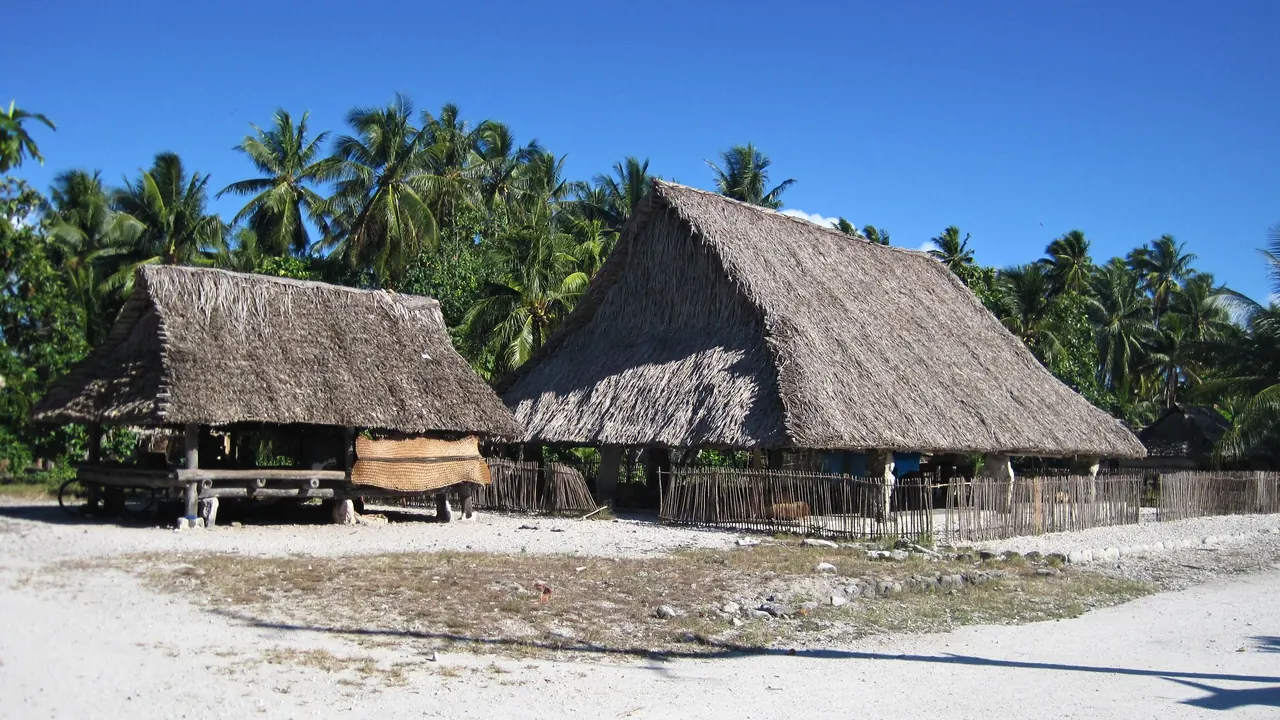
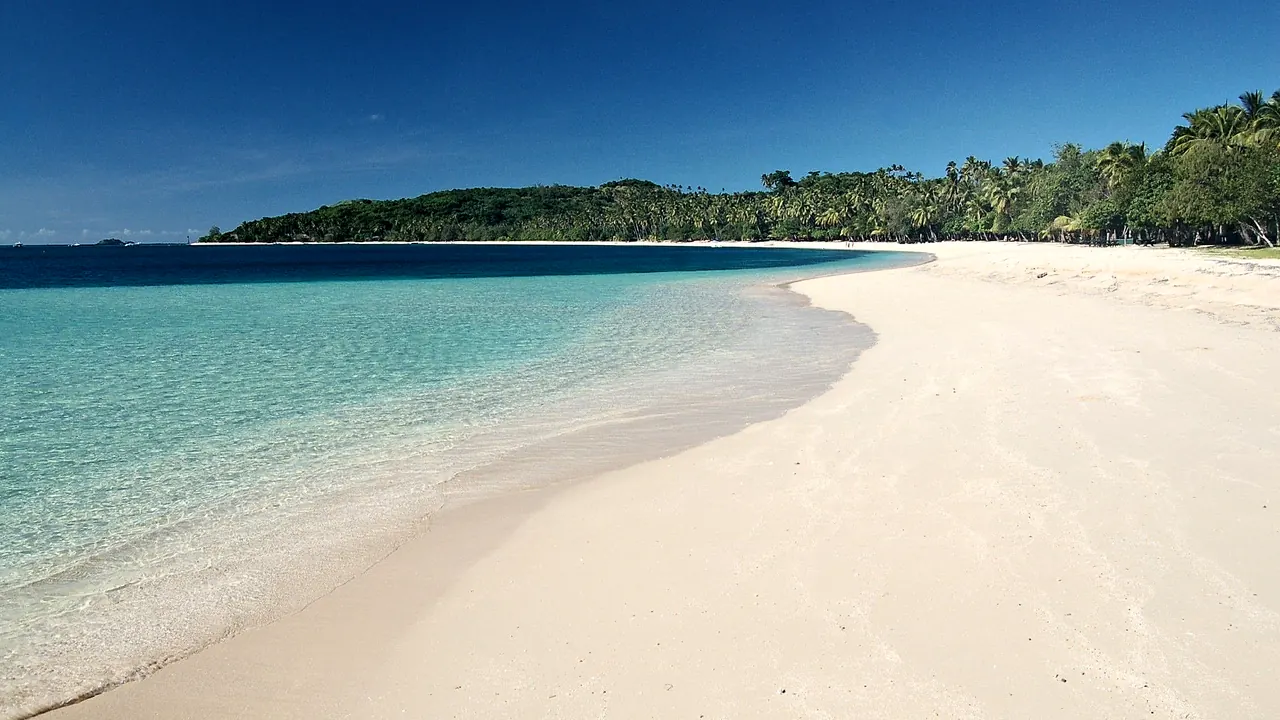
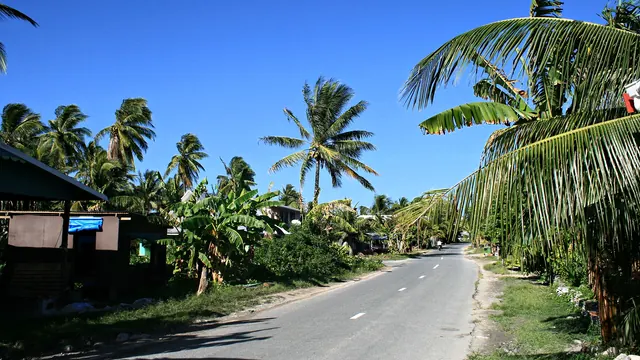
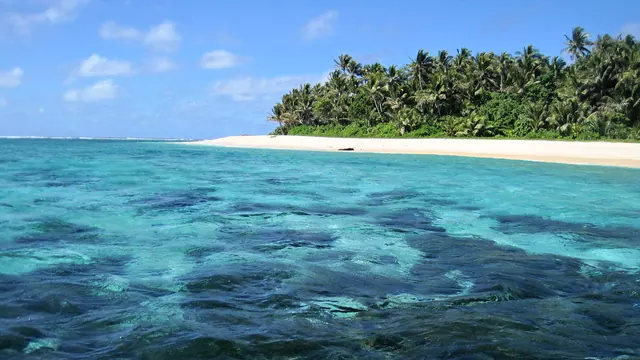
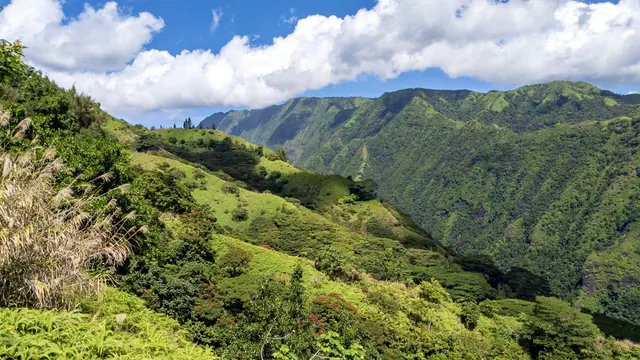
Photos: Kiribati by Rafael Ávila Coya, CC BY-SA 3.0, cropped; Fiji by Msdstefan at de.wikipedia, Public domain.
Kiribati or Fiji?
Our verdict in twelve categories, each scored against the same fixed benchmark cities, and the climate month by month, so you can choose for your trip.
Choose Kiribati for
- prices
Kiribati suits a traveller who comes with a clear purpose and can cope with hard travel. Anglers come for the bonefish and giant trevally on Kiritimati's lagoon flats, birders for its seabird colonies, and others to walk among the guns and bunkers of the Battle of Tarawa on Betio. In return you get empty lagoon beaches and village life barely touched by tourism. You also get basic rooms, plain food and flights that need slack built into the plan.
Choose Fiji for
- families
- wellness
- beaches
For almost any other island trip in the Pacific, Fiji is the easier and fuller choice. The lagoons of the Mamanucas and Yasawas are made for swimming straight off the sand, and the reefs off Taveuni and Kadavu draw divers from around the world. Resorts look after children and spa days with ease, and boats and domestic flights let you combine more than one island. It suits families, couples who want to unwind and anyone visiting the South Pacific for the first time.
Scoreboard
Twelve categories on one fixed scale from 0 to 100. The shaded stretch is the gap between the two.
Your match
Pick a travel style or drag the sliders, and both match scores follow your weighting.
Wins on prices with your weighting.
Wins on families and wellness with your weighting.
What matters to you?
Category by category
What the scores mean for a trip.
Beaches & swimming
Kiribati has the warm water and the white coral sand, but the swimming worth having is on outer atolls such as Abaiang and North Tarawa, or far off on Kiritimati. The lagoon by South Tarawa is too built up and not clean enough. Nothing is laid on: there are no sunbeds or lifeguards, and the ocean sides of the atolls have strong currents.
Fiji is the far easier beach trip. The Mamanucas are a short boat ride from Nadi, with calm lagoons and white sand, and the Yasawas add longer, quieter beaches below volcanic hills. Just avoid basing a beach stay on Denarau's murky shore or the tidal reef flats of the Coral Coast.
Where in Kiribati: Kiritimati, Abaiang, North Tarawa
Where in Fiji: Yasawa Islands, Mamanuca Islands, Coral Coast, Taveuni
Food & drink
Kiribati eats from the reef and the coconut palm: grilled and raw reef fish, breadfruit, swamp taro grown in pits and sweet coconut toddy, at their best at a village feast. Beyond a few small places on South Tarawa and the guesthouse cooking on Abaiang, meals are plain and rely heavily on imported tins.
Fiji gives you more to work with, as long as you leave the resort. iTaukei dishes such as kokoda and the lovo earth oven sit alongside Indo-Fijian curries, roti and dhal in the canteens of Nadi, Lautoka and Suva, and the municipal markets are worth a wander.
Where in Kiribati: South Tarawa, Abaiang, Kiritimati
Where in Fiji: Suva, Nadi, Lautoka
Culture & sights
Kiribati's draw is narrow but strong. The 1943 Battle of Tarawa left coastal guns, bunkers, the Japanese command post and landing craft on Betio, and people with a family or military link travel specifically to see them. Otherwise, heritage lives in the village maneaba rather than in buildings.
Fiji has a little more to see. Levuka on Ovalau, the UNESCO-listed first colonial capital, keeps its 19th-century waterfront, Suva has the Fiji Museum in Thurston Gardens and Nadi has its painted Hindu temple. Even so, neither country rewards a trip planned around sights.
Where in Kiribati: Betio, South Tarawa
Where in Fiji: Levuka, Suva, Nadi
Nightlife
Kiribati is quiet after dark: a hotel bar or two on South Tarawa and the occasional dance night, and on the outer islands nothing but the stars. Fiji is not a party country either, but Suva's bars and clubs fill at weekends, Nadi and Denarau have a few late spots, and some backpacker islands in the Mamanucas and Yasawas run beach parties.
Where in Kiribati: South Tarawa
Where in Fiji: Suva, Mamanuca Islands, Nadi
Nature & outdoors
Kiribati's outdoors is flat atoll and open water. Kiritimati is the big reason to come, with lagoon flats famous for bonefish and giant trevally and islets crowded with terns, frigatebirds and boobies. Abaiang and North Tarawa have calm snorkelling, kayaking and outrigger sailing.
Fiji has more range, both underwater and on land. Divers go to the soft corals of the Somosomo Strait off Taveuni or the Great Astrolabe Reef around Kadavu, Beqa Lagoon has shark dives, and manta rays gather in the Yasawas from about May to October. Unlike the atolls, Fiji also has land to explore: rafting in the Navua gorges, Taveuni's waterfalls and walks in the Koroyanitu hills.
Where in Kiribati: Kiritimati, Abaiang, North Tarawa
Where in Fiji: Taveuni, Kadavu, Beqa Lagoon, Yasawa Islands
Day trips
Both are countries to stay in rather than make outings from, though Fiji has a little more to fill a day. From South Tarawa the choice is Betio's battle sites along the causeway, the villages of North Tarawa across the water and the old mission church on Abaiang. From Nadi, a boat to a Mamanuca island is the classic day out, and the Sigatoka and Lautoka markets give an option on land.
Where in Kiribati: North Tarawa, Abaiang, Betio
Where in Fiji: Sigatoka, Lautoka, Suva
Good for families
Kiribati is hard going with children. Nothing is built for them, medical care is basic and far from specialist help, and the flights are long and infrequent. Abaiang and North Tarawa suit older, adaptable children who are happy with boats and snorkelling in shallow lagoons.
Fiji is set up for a family resort stay. Resorts on Denarau, the Coral Coast and the inner Mamanucas run kids' clubs with crafts and hermit-crab races, sheltered shallows suit small swimmers, and the staff are known for their warmth with children.
Where in Kiribati: Abaiang, North Tarawa
Where in Fiji: Denarau, Mamanuca Islands, Coral Coast
Getting around
In Kiribati, getting around is simple only on South Tarawa, where minibuses run constantly along the single road. Beyond it, small planes fly irregularly to the outer Gilberts, and Kiritimati lies some 3,000km away, usually reached via Fiji, so a trip normally covers just one island group.
Fiji needs planning too, but its links run regularly. Catamarans work their way through the Mamanucas and Yasawas, seaplanes cut the journey time, domestic flights reach Taveuni, Savusavu and Kadavu, and buses run the coastal road around Viti Levu.
Where in Kiribati: South Tarawa, Kiritimati
Where in Fiji: Mamanuca Islands, Viti Levu, Yasawa Islands
Shopping & style
Shopping is a minor part of a trip to either country. Kiribati has woven pandanus mats, fans, shell jewellery and replicas of shark-tooth weapons from handicraft centres, and very little else. Fiji's markets in Suva and Nadi add masi tapa cloth and carved kava bowls, and with Nadi's duty-free shops and Denarau's resort wear there is at least somewhere to browse.
Where in Kiribati: South Tarawa
Where in Fiji: Suva, Nadi, Denarau
Affordability
Neither country is cheap, and the costs fall in different places. In Kiribati the basics on South Tarawa are inexpensive, but rooms are dear for what they are. Abaiang's guesthouses include meals, while Kiritimati's all-inclusive fishing lodges are a serious outlay, and the long journey there is a large part of any trip's cost.
Fiji has a wider spread. Staying on Viti Levu and using Indo-Fijian canteens, local buses and day boats keeps a trip lean, and backpacker lodges in the Yasawas and Mamanucas include meals. The island resorts most visitors book are a different matter, with compulsory meal plans and costly transfers.
Where in Kiribati: South Tarawa, Abaiang
Where in Fiji: Nadi, Coral Coast, Yasawa Islands
Live music & performing arts
In both countries, performance means dance and church song rather than anything on a stage. Kiribati's is harder to catch but belongs more to the community itself. You can see the sharp, bird-like ruoia and the seated te bino at the July Independence celebrations on South Tarawa, or in a maneaba on Abaiang if you are invited.
Fiji brings it to you, with meke dances at resort lovo nights and Sawau firewalkers from Beqa performing at shows on the Coral Coast and around Pacific Harbour. In either country, a Sunday church service gives you the finest harmonies.
Where in Kiribati: South Tarawa, Abaiang
Where in Fiji: Pacific Harbour, Coral Coast, Suva
Wellness & relaxation
Kiribati offers quiet without comforts: no spas or massage, just the slow, tide-set pace of Abaiang or Kiritimati and a book in the shade. Fiji is built for unwinding, with spas in open-sided bures at most resorts, adults-only islands in the Mamanucas, quiet lodges on Taveuni and Vanua Levu, and the Sabeto mud pools and the hot springs along the shore at Savusavu for a change.
Where in Kiribati: Abaiang, Kiritimati
Where in Fiji: Mamanuca Islands, Savusavu, Taveuni, Sabeto Valley
When should you go?
Pick your month, and for a country the place in it. The climate figures are measured averages, not a forecast.
Where in Kiribati
Tarawa (Kiribati) in July
Mamanuca Islands (Fiji) in July
Daytime high, °C
Rainfall in the month, mm
Where the figures come from
Mamanuca Islands (Fiji)'s temperatures are measured 35 km from the centre, at Nandi.
Mamanuca Islands (Fiji) has no rain gauge within 25 km of the centre, so its rainfall comes from a gridded climate dataset read at the destination rather than from a gauge further away.
Temperature and rainfall are climate normals, averaged over the years shown. Tarawa (Kiribati): 1991-2020 (sunshine 1981-2010) normals, Tarawa (7.2 km from centre). Mamanuca Islands (Fiji): 1991-2020 normals, Nandi (35.3 km from centre).
Neither country has a cool season. Daytime highs sit around 31°C all year in both, and the sea is warm enough to swim in every month. In Kiribati the two island groups follow different calendars. Tarawa is damp most of the year, wettest around March and at its driest and sunniest from September to November. Kiritimati has a sharper split, with a wet spell from January to April and a properly dry run from June to November, when monthly rain drops to around 30mm. That is the best window for its fishing flats and bird islets.
Fiji's Mamanuca Islands follow the usual South Pacific pattern. Rain builds from December to April and peaks near 270mm in March, so the drier months from May to October are the most comfortable, with highs nearer 29°C. The sea cools a little then, to about 26°C, which is still easy swimming. In both countries the midday heat makes long walks hard at any time of year, so mornings and late afternoons are the time for getting about.
Which traveller are you?
On a beach and sun trip, Fiji is the clear pick. The Mamanucas and Yasawas have white sand and calm, clear lagoons right outside the door. Kiribati's good beaches lie on outer atolls or distant Kiritimati, with no facilities and strong currents on the ocean side.
On a family trip with children, Fiji wins easily. It has kids' clubs on Denarau, the Coral Coast and the inner Mamanucas, gentle lagoon shallows and staff known for their warmth with children. Kiribati has basic medical care, simple rooms and long, infrequent flights.
For fly-fishers, Kiribati has the edge. Kiritimati's huge, shallow lagoon flats are among the world's great places to fish for bonefish and giant trevally, and its lodges are built around the sport. Fiji's waters are known for diving and surfing rather than flats fishing.
More comparisons
Each shares a side with Kiribati or Fiji.
 Bora Bora vs Fiji
 Fiji vs Bali
 Fiji vs Cook Islands
 Fiji vs Rarotonga
 Fiji vs Samoa
 Fiji vs Tonga
 French Polynesia vs Fiji
 Hawaii vs Fiji
 Kiribati vs Tuvalu
 Kiribati vs Vanuatu
 Maldives vs Fiji
 Marshall Islands vs Kiribati
 Nauru vs Kiribati
 New Caledonia vs Fiji
 Palau vs Fiji
 Papua New Guinea vs Fiji
 Solomon Islands vs Fiji
 Tahiti vs Fiji
- Tuvalu vs Fiji
- Vanuatu vs Fiji
Where else could you go?
Set Kiribati or Fiji against any other country.