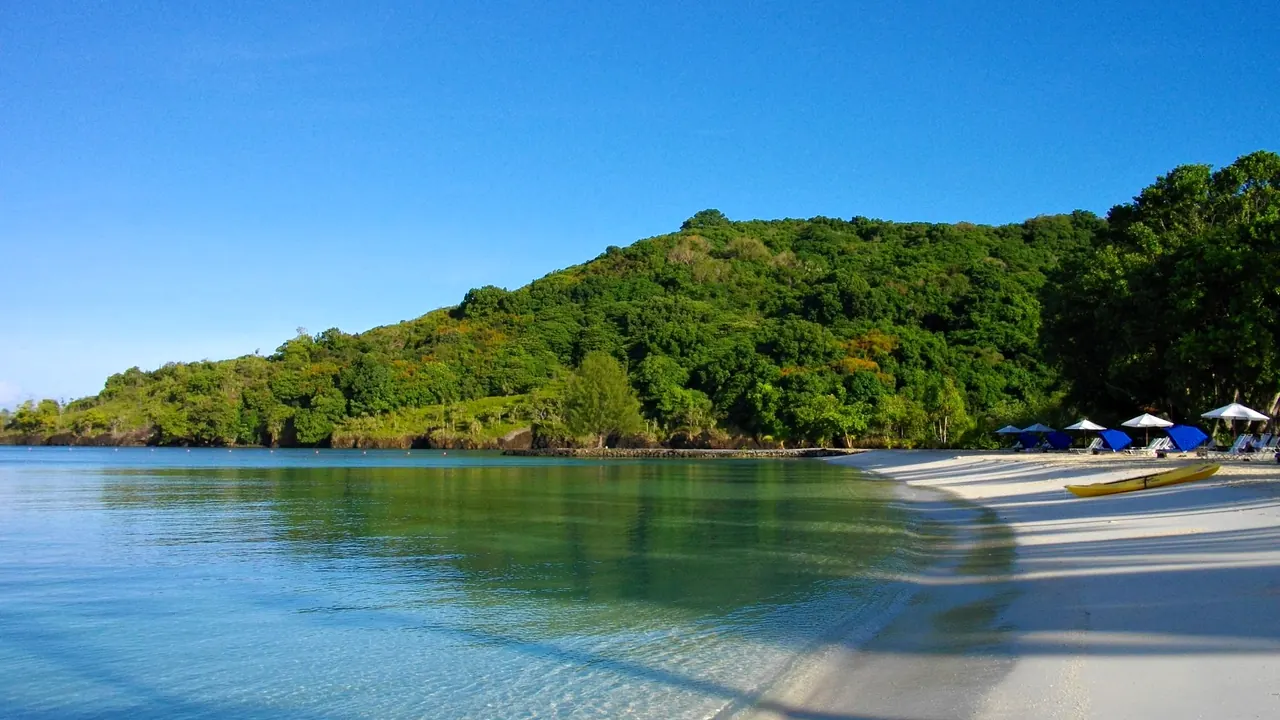
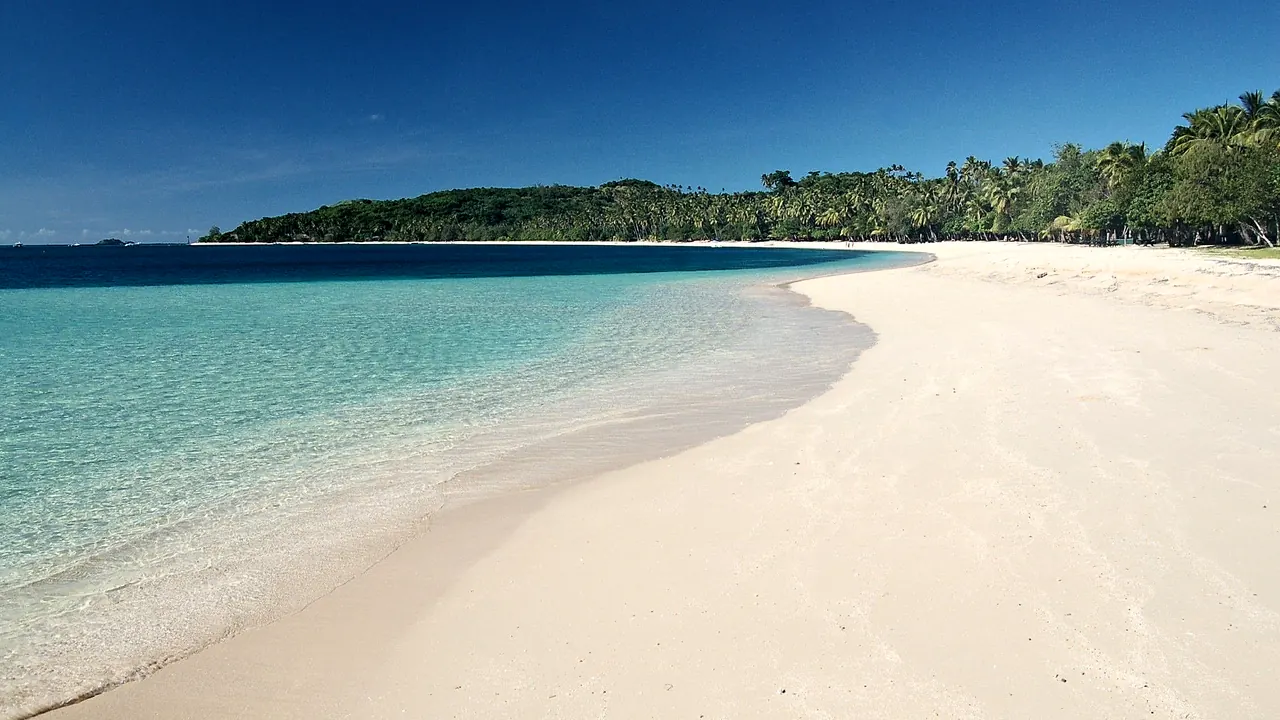
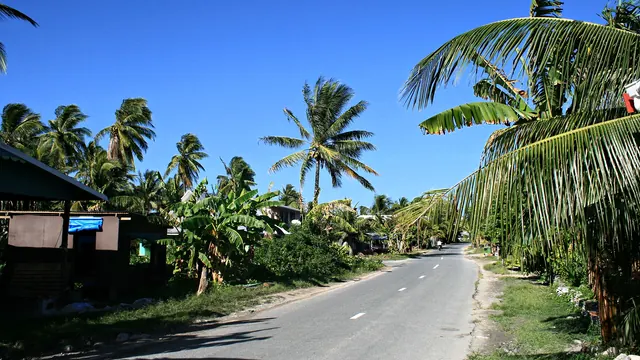
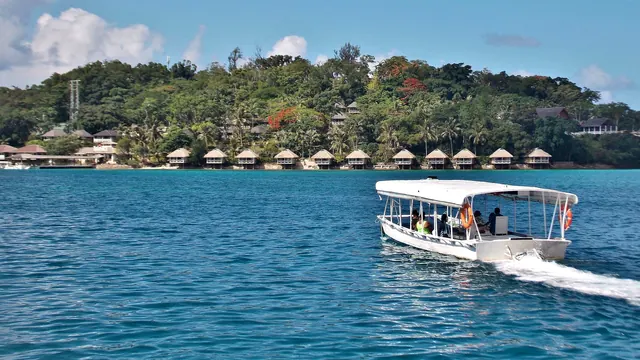
Photos: Palau by Abasaa, Public domain; Fiji by Msdstefan at de.wikipedia, Public domain.
Palau or Fiji?
Our verdict in twelve categories, each scored against the same fixed benchmark cities, and the climate month by month, so you can choose for your trip.
Choose Palau for
- nature and the outdoors
- day trips
- culture and sights
Palau is for travellers who put the reef first and everything else second. The Rock Islands and the walls, channels and wrecks around them make a trip of serious diving, snorkelling and kayaking, all run by day boat from one base in Koror. You give up beach-bar evenings, easy budgets and much to do ashore, so it suits people who are happy to spend almost every waking hour on or under the water.
Choose Fiji for
- families
- beaches
- wellness
Fiji suits a broader trip: a resort vacation built around white sand, calm lagoons and doing very little. The Mamanucas and Yasawas give swimming straight off the beach, the resorts cope well with children and with couples who want a spa and quiet, and the main island offers cheaper ways to stay. Its reefs are very good too, especially off Taveuni, but here the water goes with the beach rather than replacing it.
Scoreboard
Twelve categories on one fixed scale from 0 to 100. The shaded stretch is the gap between the two.
Your match
Pick a travel style or drag the sliders, and both match scores follow your weighting.
Wins on nature and the outdoors and day trips with your weighting.
Wins on families and beaches with your weighting.
What matters to you?
Category by category
What the scores mean for a trip.
Beaches & swimming
Fiji has far more and better beach time. In the Mamanucas and Yasawas the white sand and clear lagoons are right outside the resort, so you can swim and snorkel straight off the shore every day. The main island's shore is less reliable, with murky water at Denarau and tide-bound reef flats along the Coral Coast.
Palau's sand mostly comes as small coves under the limestone of the Rock Islands, which you reach on a boat day from Koror, and the town itself has little beach. Kayangel's long lagoon beaches are lovely but take an overnight trip to reach. Palau is for being in the sea, not lying beside it.
Where in Palau: Rock Islands, Kayangel, Peleliu, Koror
Where in Fiji: Yasawa Islands, Mamanuca Islands, Coral Coast, Taveuni
Food & drink
Both countries eat simply, but Fiji gives you more to explore. Indo-Fijian curries, roti and dhal fill cheap canteens in Nadi, Lautoka and Suva, alongside iTaukei dishes such as kokoda and the lovo earth-oven feast, and the municipal markets are worth a wander.
Palau's eating is limited to Koror's small mix of Japanese, Filipino and American-style places. Its high points are reef fish, tuna sashimi and mangrove crab after a dive. Much of the food is imported, and the range is thin.
Where in Palau: Koror
Where in Fiji: Suva, Nadi, Lautoka
Culture & sights
Neither country is a sightseeing trip, and both give you a few curious days at most. Palau's history is the more vivid on the ground: the Peleliu battlefield with its tanks and caves, the steep-roofed bai at Airai and Melekeok, and the Badrulchau monoliths on Babeldaob. Fiji's highlights are colonial and living culture: the wooden waterfront of Levuka, the Fiji Museum in Suva and village visits with a sevusevu kava welcome.
Where in Palau: Koror, Babeldaob, Peleliu
Where in Fiji: Levuka, Suva, Nadi
Nightlife
Fiji has more life after dark, though not much. Suva has bars and clubs that fill at weekends, and a few backpacker islands in the Mamanucas and Yasawas throw beach parties for a younger crowd. In Palau evenings end with a beer and dive stories in a Koror bar or karaoke room, and most people are asleep early, ready for the morning boats.
Where in Palau: Koror
Where in Fiji: Suva, Mamanuca Islands, Nadi
Nature & outdoors
Palau has the edge, and it is the reason to go. The forested mushroom islets of the Rock Islands are a sight in their own right, and from one base in Koror you can reach sharks at Blue Corner, mantas in German Channel, wartime wrecks, marine lakes for kayaking and Jellyfish Lake.
Fiji is also excellent underwater, with shark dives in Beqa Lagoon, the Yasawas' manta channel and the soft corals of Taveuni's Somosomo Strait. On land it offers more, with rafting in the Navua gorges and Bouma's waterfalls. Its best sites are spread across separate islands, though, and the wet season turns trails to mud.
Where in Palau: Rock Islands, Blue Corner and German Channel, Jellyfish Lake, Babeldaob
Where in Fiji: Taveuni, Kadavu, Beqa Lagoon, Yasawa Islands
Day trips
Both countries are thin on outings, and in both the usual day out is a boat to the reef. Palau's land trips have more weight: a full day on the Peleliu battlefield, or a drive across the bridge to Babeldaob's Capitol, bai and monoliths. Fiji's are gentler, with Sigatoka's market and nearby villages or Lautoka's market, while Suva and Levuka are too far for a day and better as stops.
Where in Palau: Peleliu, Babeldaob, Angaur
Where in Fiji: Sigatoka, Lautoka, Suva
Good for families
Fiji is far easier with children. Many resorts run kids' clubs, the staff are warm with young guests, and calm lagoon shallows let even small children paddle and snorkel safely. Transfers and the strong sun take some planning.
Palau mainly suits older children and teenagers who swim confidently. The reef aquarium in Koror and snorkelling in the Rock Islands are memorable, but these are long, hot boat days, and there is almost nothing on land made for children.
Where in Palau: Koror, Rock Islands
Where in Fiji: Denarau, Mamanuca Islands, Coral Coast
Getting around
Almost every outing in Palau depends on a boat someone else has arranged. There is no real public transport, so taxis, a hire car or hotel shuttles cover Koror and the easy ring road on Babeldaob. The reefs, Peleliu and Kayangel can only be reached by boat or small plane. Distances are short, but you are rarely free to set off on your own.
Fiji gives you more ways to move around on your own terms. Catamaran ferries run up the Mamanuca and Yasawa chains, small planes link Nadi and Suva to Taveuni, Kadavu and Savusavu, and local buses run the coast road on Viti Levu. Combining several island groups still takes careful planning, and the weather can shift flight times.
Where in Palau: Koror, Babeldaob
Where in Fiji: Mamanuca Islands, Viti Levu, Yasawa Islands
Shopping & style
Neither country is for shopping, though Fiji has a little more. The handicraft markets in Suva and Nadi sell masi cloth, kava bowls and woven mats, and there are duty-free shops in Nadi and Suva's Indian fabric shops. In Palau, Koror's one real find is a carved storyboard telling a local legend.
Where in Palau: Koror
Where in Fiji: Suva, Nadi, Denarau
Affordability
Fiji is the cheaper of the two, as long as you choose how you travel. Staying on Viti Levu, eating at Indo-Fijian canteens and taking day boats keeps costs down, and backpacker lodges in the Yasawas make even island stays affordable. Its resorts, with compulsory meal plans and costly transfers, quickly become expensive.
Palau gives you fewer ways to save. Nearly everything is imported, rooms are pricey, and the daily dive boats and permit fees that are the whole point of going make up the biggest share of the bill.
Where in Palau: Koror
Where in Fiji: Nadi, Coral Coast, Yasawa Islands
Live music & performing arts
Fiji gives a visitor far more chances to see performance. Meke dance is staged at lovo nights, Beqa firewalkers perform on the Coral Coast and around Pacific Harbour, and Sunday church harmonies are open to all. In Palau, traditional dance and chant turn up mostly by chance, at community celebrations or the odd hotel dinner show.
Where in Fiji: Pacific Harbour, Coral Coast, Suva
Wellness & relaxation
Palau offers little that is set up for unwinding. Spa treatments are mostly found in the resort hotels around Koror, and the days are not lazy ones, with boats leaving soon after dawn and the evening cut short by the next morning's dive. Its one relaxing ritual is a stop at the Milky Way in the Rock Islands, where you smear yourself with pale lagoon mud and rinse it off in the warm water.
Fiji is the better choice for a trip spent doing very little. Most of its resorts have a spa, many in open-sided bures offering Fijian massage with coconut oil. The adults-only islands in the Mamanucas and the remote lodges on Taveuni and Vanua Levu are aimed at couples who want peace. Fiji also has more places to soak than a single mud stop: the Sabeto mud pools and hot springs in the hills behind Nadi make a cheerful half-day, and warm springs come up along the shore at Savusavu.
Where in Palau: Koror, Rock Islands
Where in Fiji: Mamanuca Islands, Savusavu, Taveuni, Sabeto Valley
When should you go?
Pick your month, and for a country the place in it. The climate figures are measured averages, not a forecast.
Koror (Palau) in July
Mamanuca Islands (Fiji) in July
Daytime high, °C
Rainfall in the month, mm
Where the figures come from
Mamanuca Islands (Fiji)'s temperatures are measured 35 km from the centre, at Nandi.
Mamanuca Islands (Fiji) has no rain gauge within 25 km of the centre, so its rainfall comes from a gridded climate dataset read at the destination rather than from a gauge further away.
Temperature and rainfall are climate normals, averaged over the years shown. Koror (Palau): 1991-2020 normals, Babelthuap Island, Babelthuap/Koror Airport (6.4 km from centre). Mamanuca Islands (Fiji): 1991-2020 normals, Nandi (35.3 km from centre).
Neither place has a cold season. Koror stays at about 31°C every month and the sea around Palau is warm enough to swim any day of the year. The difference is rain. Palau is wet all year, wettest from June to August, when July brings around 411mm, and at its calmest and sunniest from February to April. Diving carries on regardless, but those spring months give the most settled days on the boats.
Fiji's seasons are clearer. In the Mamanucas the dry months run from May to October, with July down to about 51mm, long sunny days and highs near 29°C, which makes this the easiest time for island-hopping and lazing on the sand. The sea cools a little in August and September but stays pleasant. From December to April it is hotter and much wetter, with heavy downpours and the risk of cyclones, so for a beach trip Fiji's winter months are the safer bet, while Palau's best window comes earlier in the year.
Which traveller are you?
For a beach and sun trip, Fiji is the clear choice. The Mamanuca and Yasawa islands give you soft white sand and calm lagoons right outside your room. Palau's beaches are small crescents you reach by boat, and Koror has little sand of its own.
On a family trip with children, Fiji is much easier. Resorts on Denarau, the Coral Coast and the inner Mamanucas run kids' clubs, and their sheltered shallows suit small swimmers. Palau works mainly for older, confident swimmers, and there is little ashore to fill the days.
For an outdoors trip built around diving and snorkelling, Palau comes out ahead. Blue Corner, German Channel, the wartime wrecks and the kayak routes through the Rock Islands are all within a day boat of Koror. Fiji's best diving, off Taveuni and Kadavu, means extra domestic flights.
More comparisons
Each shares a side with Palau or Fiji.
 Bora Bora vs Fiji
 Fiji vs Bali
 Fiji vs Cook Islands
 Fiji vs Rarotonga
 Fiji vs Samoa
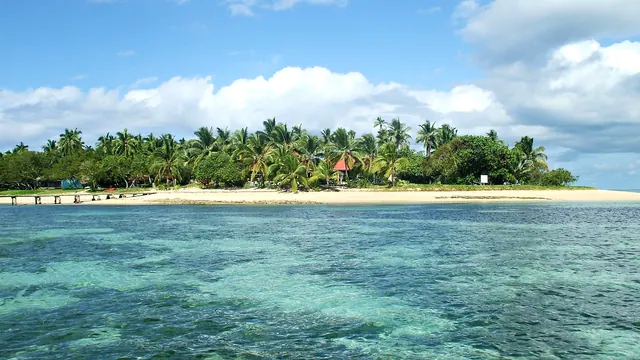 Fiji vs Tonga
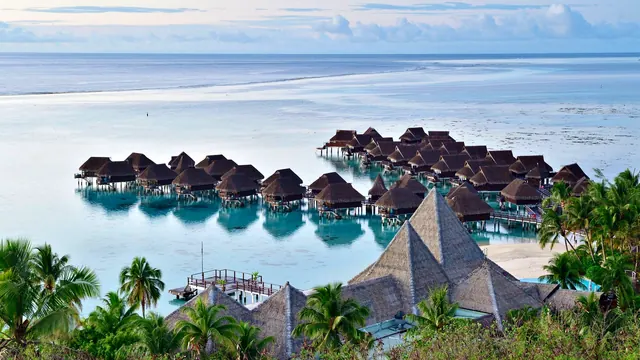 French Polynesia vs Fiji
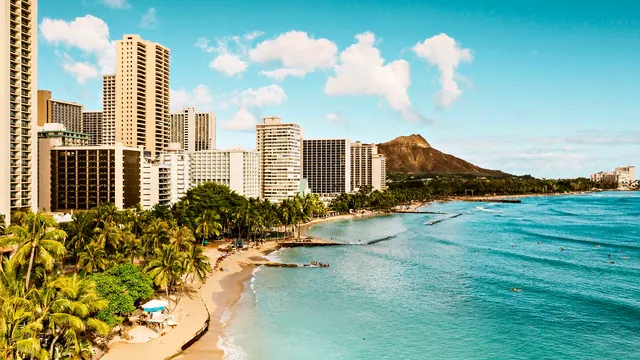 Hawaii vs Fiji
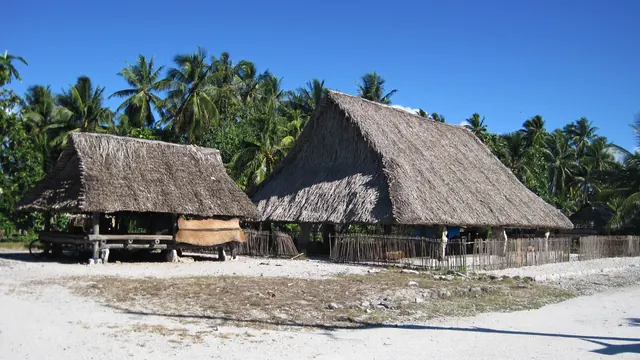 Kiribati vs Fiji
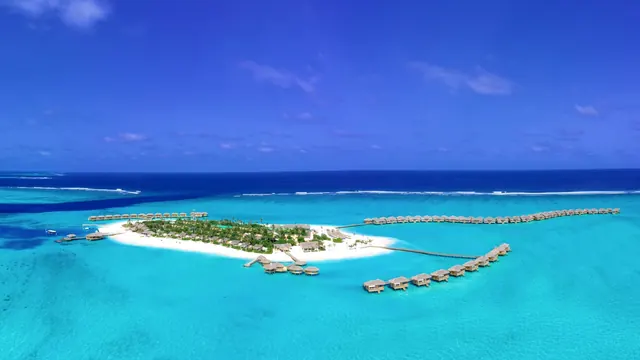 Maldives vs Fiji
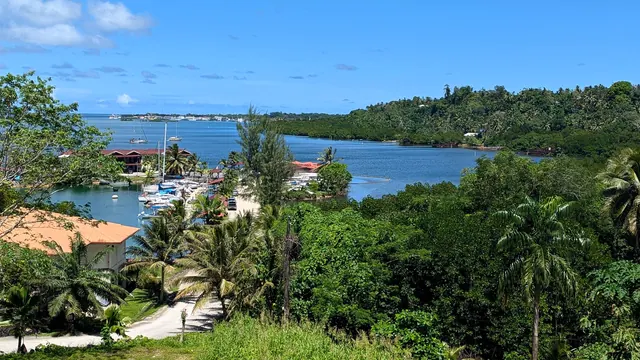
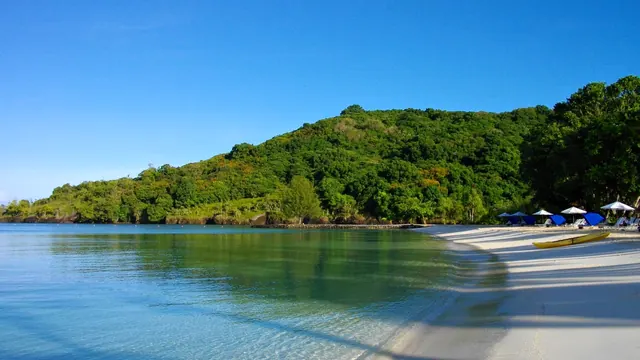 Micronesia vs Palau
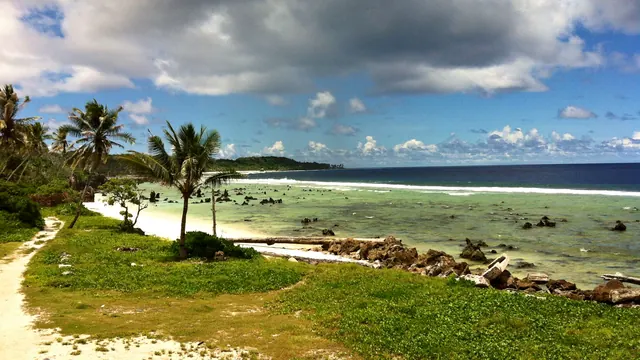 Nauru vs Palau
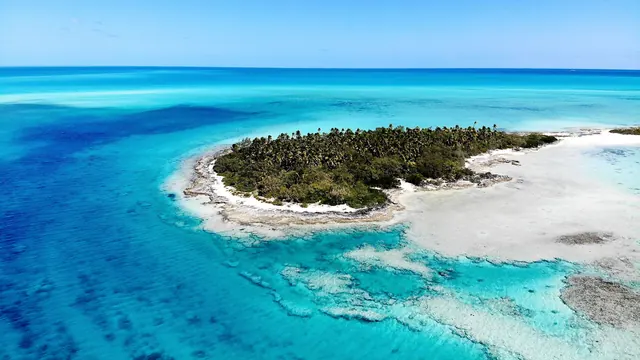 New Caledonia vs Fiji
- Palau vs Bora Bora
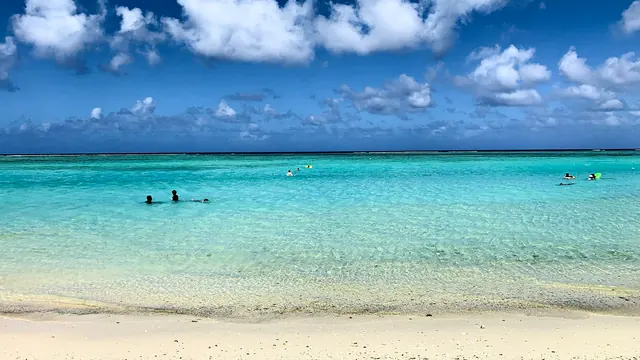 Palau vs Guam
- Palau vs Maldives
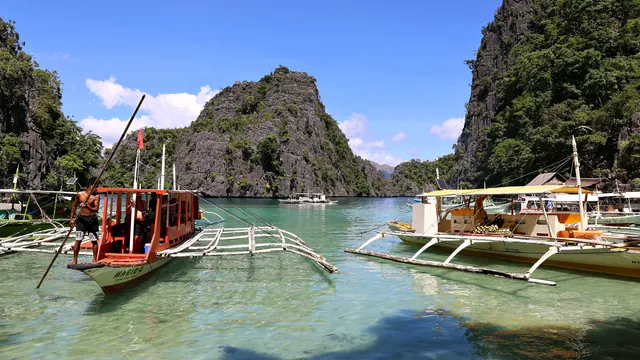 Palau vs Palawan
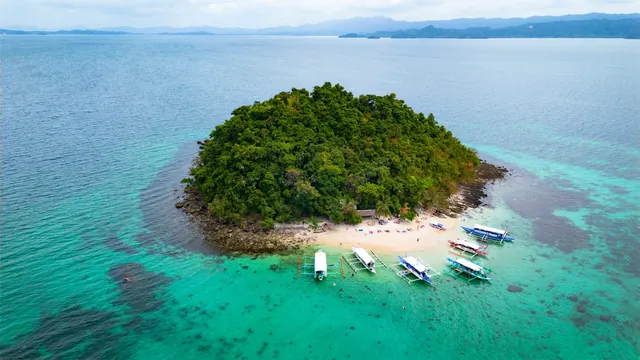 Palau vs Philippines
 Palau vs Raja Ampat
 Papua New Guinea vs Fiji
 Solomon Islands vs Fiji
 Tahiti vs Fiji
 Tuvalu vs Fiji
 Vanuatu vs Fiji
Where else could you go?
Set Palau or Fiji against any other country.