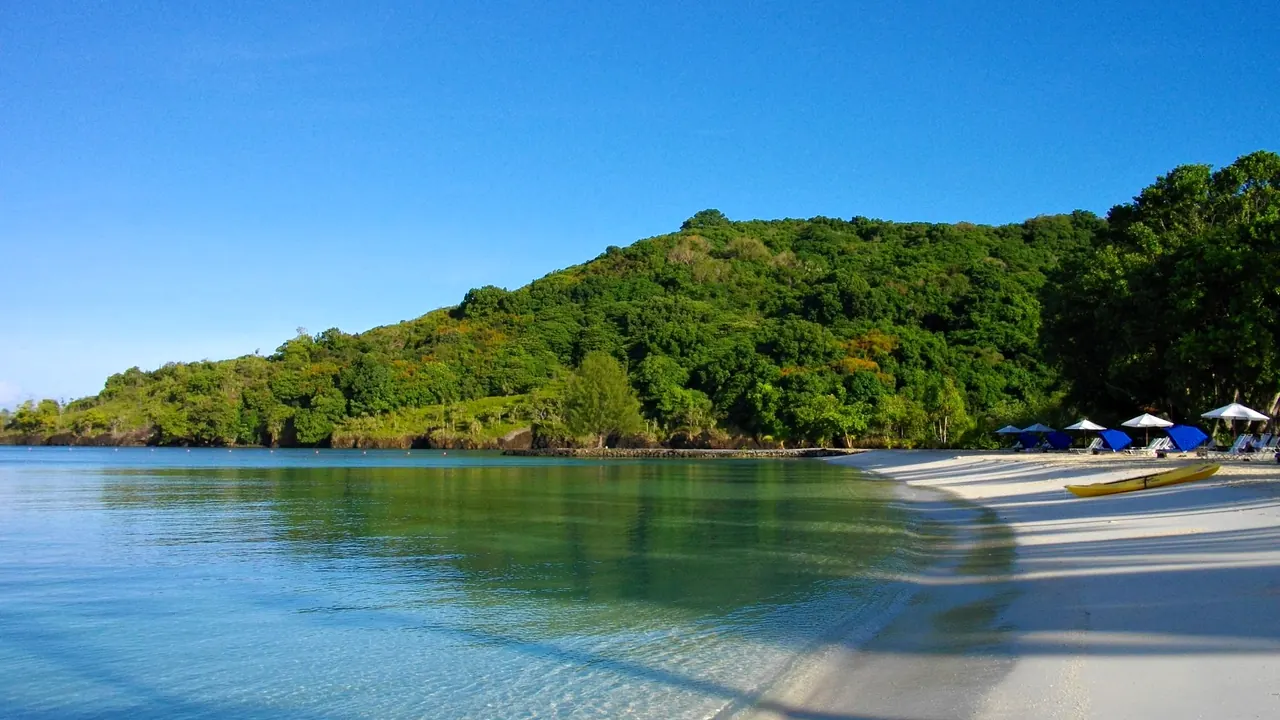
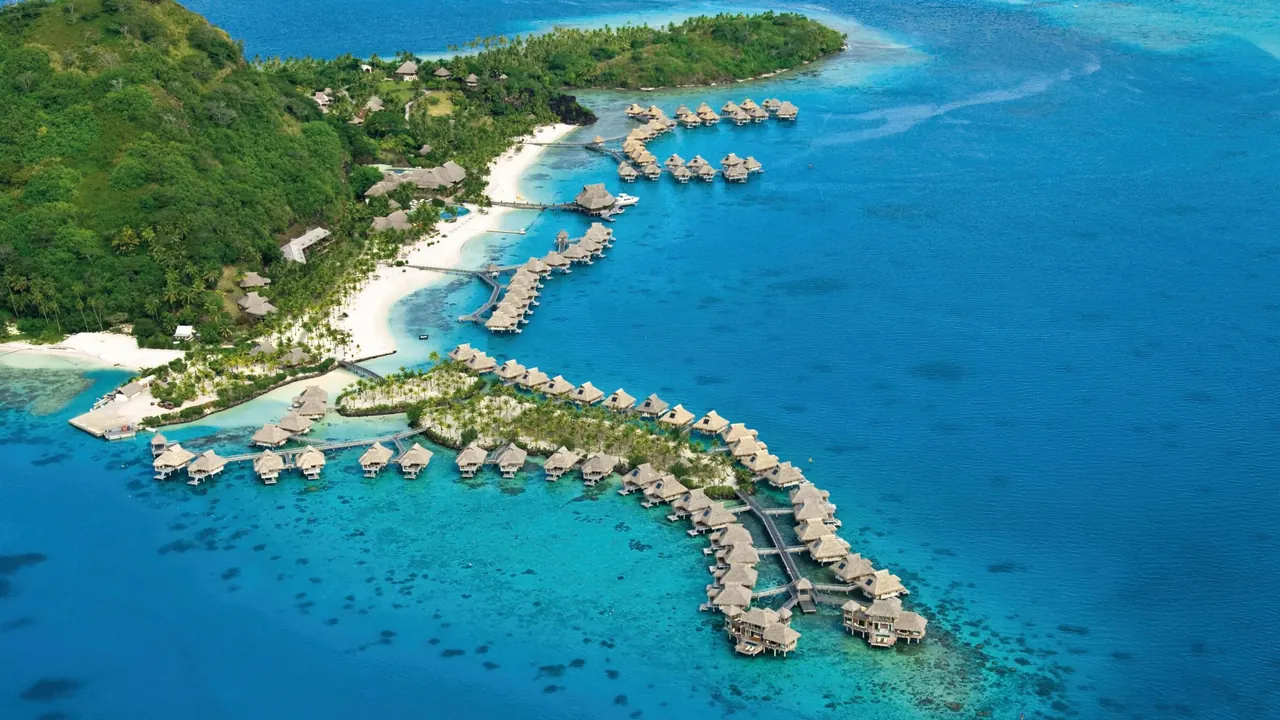
Photos: Palau by Abasaa, Public domain; Bora Bora by Mauro Soares, CC BY-SA 3.0, cropped.
Palau or Bora Bora?
Our verdict in twelve categories, each scored against the same fixed benchmark cities, and the climate month by month, so you can choose for your trip.
Choose Palau for
- culture and sights
- prices
- nature and the outdoors
Palau is for travellers who want to spend their days in the water rather than beside it. The reefs and walls around the Rock Islands, the sharks of Blue Corner, the mantas of German Channel and the wartime wrecks make it a diving and snorkelling trip first. Peleliu's battlefield and the old meeting houses of Babeldaob fill the days ashore. It is still an expensive trip, but it costs less than Bora Bora. In return you get rain in every season and very little going on in Koror after dark.
Choose Bora Bora for
- beaches
- wellness
- getting around
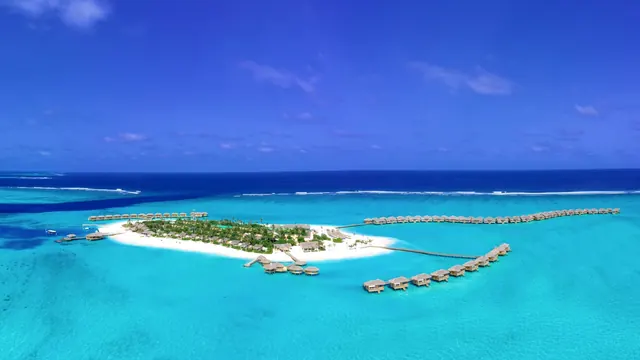
Couples after the classic lagoon vacation will be happier on Bora Bora. You swim from your own bungalow deck, walk the long sand at Matira Point, book a spa over the water and look up at Mount Otemanu, and the dry season is reliably sunny. That makes for a softer, more beach-centred stay than Palau offers. The cost is very high, and the diving, though good, is less of a reason to come.
Scoreboard
Twelve categories on one fixed scale from 0 to 100. The shaded stretch is the gap between the two.
Your match
Pick a travel style or drag the sliders, and both match scores follow your weighting.
Too close to call, 1 point apart
Wins on culture and sights and prices with your weighting.
Wins on beaches and wellness with your weighting.
What matters to you?
Category by category
What the scores mean for a trip.
Beaches & swimming
Palau's beaches are small crescents of white sand under the limestone of the Rock Islands, plus a sandbar near Ngemelis that appears at low tide. You reach them on a boat trip from Koror, which has little sand of its own. Kayangel's long, empty beaches are a separate overnight trip.
Bora Bora gives you the water on your doorstep. You can swim from a bungalow deck or the sand of a motu, and Matira Point has a long, soft public beach where the shallows run far out. If the beach itself is the point, it is the better choice.
Where in Palau: Rock Islands, Kayangel, Peleliu, Koror
Food & drink
Neither place is a reason to travel for food, but they eat differently. Koror has a small mix of Japanese, Filipino, Korean and American-style restaurants serving tuna sashimi, mangrove crab and reef fish, with fruit bat soup as the local curiosity.
On Bora Bora most meals are French with Polynesian touches, eaten in resort dining rooms that start to feel small on a long stay. The best local food is poisson cru from the snack counters around Vaitape.
Where in Palau: Koror
Culture & sights
Palau has more to fill a day off the water. In Koror, the Belau National Museum explains clan life and storyboard carving. On Babeldaob you can see the steep-roofed bai at Airai and Melekeok and the Badrulchau monoliths, and Peleliu is a whole island of 1944 battlefield.
Bora Bora's history takes a few hours of an island tour. You see a few restored marae, rusting wartime guns above the lagoon and the church at Vaitape.
Where in Palau: Koror, Babeldaob, Peleliu
Nightlife
Both places go quiet soon after dinner. In Koror the evening is a beer with other divers, or one of a few bars and karaoke rooms, before an early boat. On Bora Bora it is a sunset cocktail at a resort bar over the lagoon and a long dinner. Neither has a club.
Where in Palau: Koror
Nature & outdoors
Palau's underwater world is the stronger draw. The hundreds of forested limestone islets of the Rock Islands hide marine lakes you can kayak into, Blue Corner brings sharks and strong currents, and German Channel has mantas. Wrecks, wall dives and stingless jellyfish add variety that few places can match. Babeldaob adds jungle walks to the Ngardmau waterfall.
Bora Bora's beauty is more about the view: the green peak of Otemanu above a lagoon ringed with motu. You can swim with stingrays and blacktips in the shallows, kitesurf, or dive the passes for lemon sharks. On land there is little beyond 4x4 tracks and a guided climb of Mount Pahia.
Where in Palau: Rock Islands, Blue Corner and German Channel, Jellyfish Lake, Babeldaob
Day trips
Neither has much beyond its own lagoon, but Palau's outings are easier to reach. Babeldaob is joined to Koror by bridge, so you can drive to the Capitol at Melekeok and the monoliths. Peleliu's battlefield is about an hour away by boat.
From Bora Bora, every outing means another island and a boat or flight to get there. Tahaa has vanilla and pearl farms, Raiatea has the great marae of Taputapuatea, and Maupiti is quieter still.
Where in Palau: Peleliu, Babeldaob, Angaur
Good for families
Both work best for older children who love the water, and both have little made for children on land. Palau suits teenagers who want adventure. They can kayak between islets and swim in the jellyfish lake, and Koror's reef aquarium is a good first look at what lives out there. Boat days are long, though, and there is little shade.
Bora Bora is gentler for small children at Matira, where toddlers can paddle a long way out. Overwater bungalows are a risk for children who cannot swim, so a resort with a pool and kids' club matters.
Where in Palau: Koror, Rock Islands
Getting around
Bora Bora is a little easier to explore on your own. The coast road of about 32km around the main island is easy to ride by bicycle or scooter, although if you stay on an outer motu, every trip depends on the hotel boat.
Palau has no real public transport. Koror is strung along a hot main road, so you rely on taxis, a hire car or operator pick-ups. Every reef, and the outer islands, can only be reached on an organised boat or a small plane.
Where in Palau: Koror, Babeldaob
Shopping & style
A carved storyboard is the one thing worth carrying home from Palau. It is a wooden panel telling a Palauan legend, sold in Koror's few handicraft stores beside woven goods and shell jewellery. Apart from that, the town has supermarkets and dive shops.
Bora Bora gives a shopper a little more to look for: Tahitian black pearls, loose or set as jewellery, in showrooms around Vaitape and in the resorts. The craft stalls by the quay add pareos, carved wood and monoi oil, and a morning covers all of it.
Where in Palau: Koror
Affordability
Both are costly, but Bora Bora is in another league. Overwater bungalows are priced as a once-in-a-lifetime treat, and resort meals and boat transfers add more. Guesthouses and self-catering from Vaitape's grocery stores only help so much.
Palau is expensive too. Daily dive boats and permit fees are the biggest costs, but simple guesthouses and local meals in Koror make a careful trip more realistic.
Where in Palau: Koror
Live music & performing arts
Bora Bora is the more likely place to see Polynesian dance. Resort dinner shows bring drumming, fire dancing and ori tahiti, and every July the Heiva fills Vaitape with dance and singing contests. In Palau, traditional dance and chant are mostly seen by chance at community celebrations or independence festivities.
Wellness & relaxation
Bora Bora is built for doing nothing. Its motu resorts run polished spas, some with treatment rooms over the lagoon, using monoi, coconut and tiare in Polynesian massage. With no traffic, the days drift between spa, hammock and deck.
Palau is restful in a more active way, with early boat starts and long hours at sea. Its own ritual is the Milky Way lagoon in the Rock Islands, where you coat yourself in white limestone mud and rinse off in warm water.
Where in Palau: Koror, Rock Islands
When should you go?
Pick your month, and for a country the place in it. The climate figures are measured averages, not a forecast.
Koror (Palau) in July
Bora Bora in July
Daytime high, °C
Rainfall in the month, mm
Temperature and rainfall are climate normals, averaged over the years shown. Koror (Palau): 1991-2020 normals, Babelthuap Island, Babelthuap/Koror Airport (6.4 km from centre). Bora Bora: 1991-2020 (sunshine 1981-2010) normals, Bora-Bora / Faanui (6.1 km from centre).
Palau barely changes temperature. Koror sits around 31°C all year and the sea stays near 29°C, so swimming and diving never stop. Rain is the thing that changes, and it is heavy in every month. February to April is the drier, calmer and sunnier stretch, the best time for long boat days. From June to August the rain peaks, with July bringing over 400mm and fewer clear hours.
Bora Bora has a much clearer dry season. From about May to October the rain drops sharply, to around 75mm in July, and the sun is out for more of the day than in any month on Palau. The lagoon cools slightly but is still pleasant for swimming. December and January are the wet months, with more than 260mm. That makes the two easy to pair: Palau is at its best in early spring, Bora Bora through the middle of the year.
Which traveller are you?
For a beach and sun trip, Bora Bora is the clear pick. You swim straight off the deck or the sand of a resort motu, Matira Point gives you a proper public beach, and the dry season brings long sunny days, while Palau's sand mostly means a boat ride.
On an outdoors trip, especially one built around diving or snorkelling, Palau wins. Blue Corner, German Channel, the wrecks, kayaking among the Rock Islands and Jellyfish Lake give you more variety than Bora Bora's lagoon, good as its stingrays and reef sharks are.
For a relaxing and wellness trip, choose Bora Bora. Its motu resorts run polished spas with Polynesian massage and monoi oil, and the days drift between hammock and lagoon. Palau's rhythm of early boats and long hours at sea is more active.
More comparisons
Each shares a side with Palau or Bora Bora.
Where else could you go?
Set Palau against any other country.