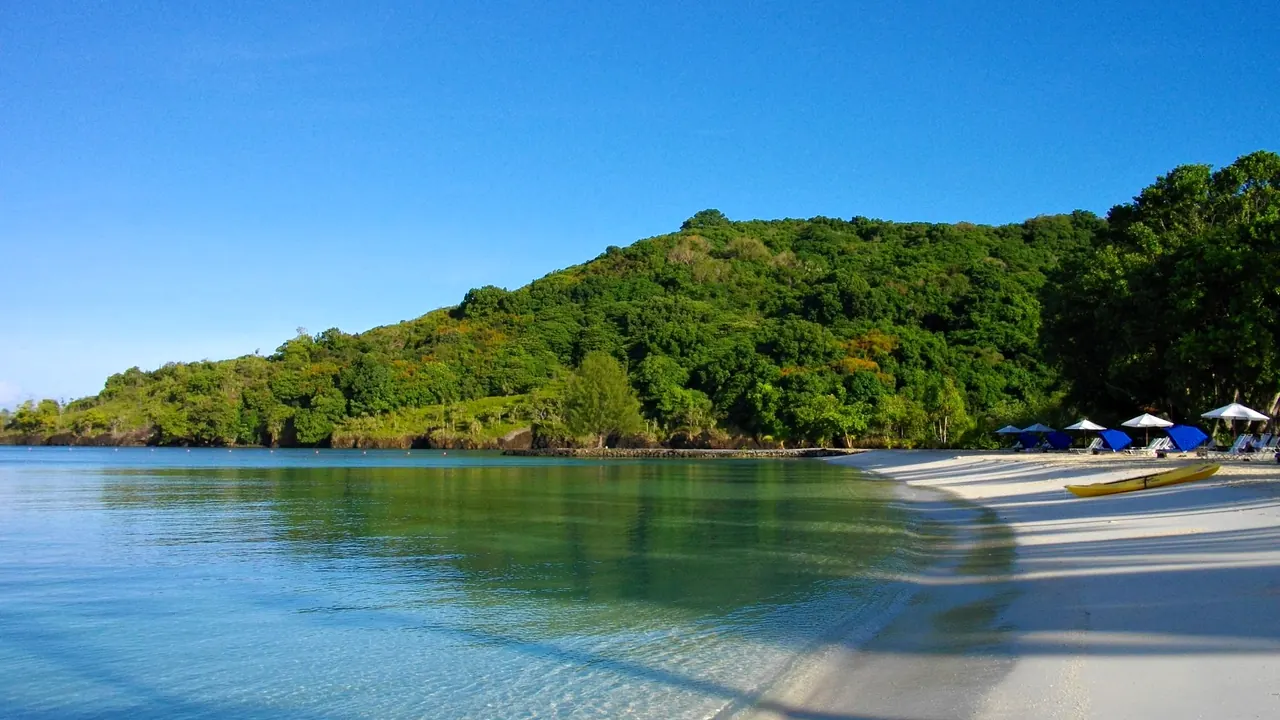
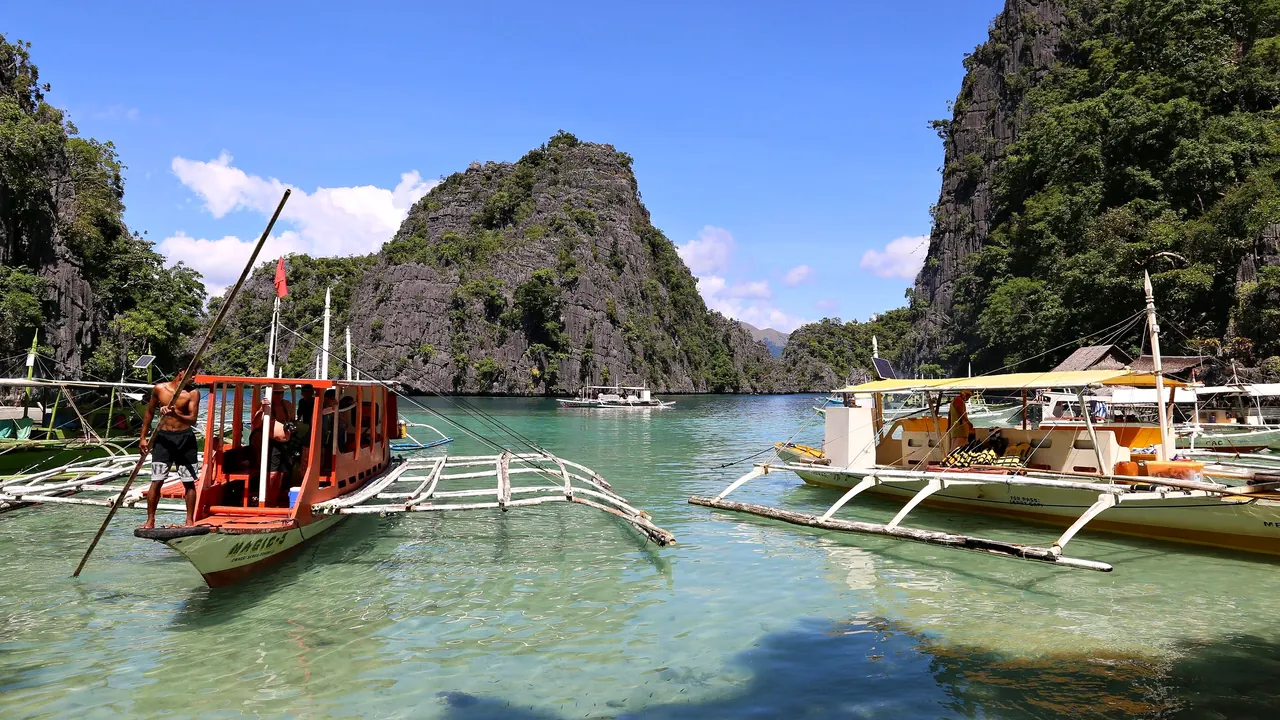
Photos: Palau by Abasaa, Public domain; Palawan by Sailko, CC BY 3.0, cropped.
Palau or Palawan?
Our verdict in twelve categories, each scored against the same fixed benchmark cities, and the climate month by month, so you can choose for your trip.
Choose Palau for
- culture and sights
- day trips
- getting around
Palau is for travellers whose vacation is mostly spent underwater and who don't mind paying for it. Everything runs from one small base in Koror. Day boats go out to the Rock Islands, the shark and manta dives of Blue Corner and German Channel, and the marine lakes. Between dives there is a little more history than Palawan offers, at the bai meeting houses of Babeldaob and on the battlefield of Peleliu. Evenings are quiet, and almost everything costs more.
Choose Palawan for
- prices
- beaches
- nightlife
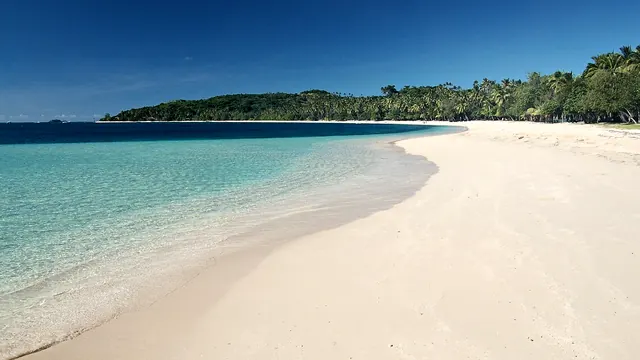
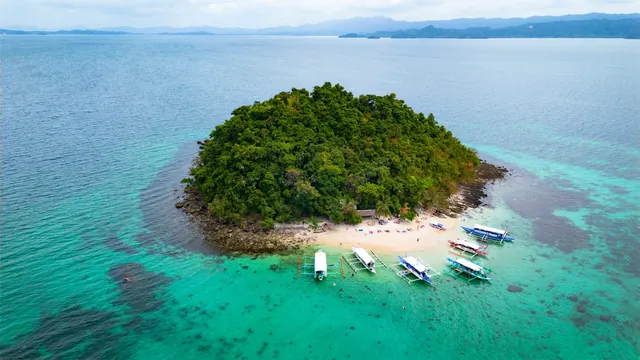
Anyone who wants to spend time on beaches rather than only in the water should choose Palawan. Bacuit Bay's coves, the long open sand at Nacpan and Duli, and quiet villages like Port Barton give far more places to stop. The scenery and snorkelling are just as good, it costs far less, and El Nido's beach bars give the evenings some company. In return, expect long road and ferry journeys between bases.
Scoreboard
Twelve categories on one fixed scale from 0 to 100. The shaded stretch is the gap between the two.
Your match
Pick a travel style or drag the sliders, and both match scores follow your weighting.
Wins on culture and sights and day trips with your weighting.
Wins on prices and beaches with your weighting.
What matters to you?
Category by category
What the scores mean for a trip.
Beaches & swimming
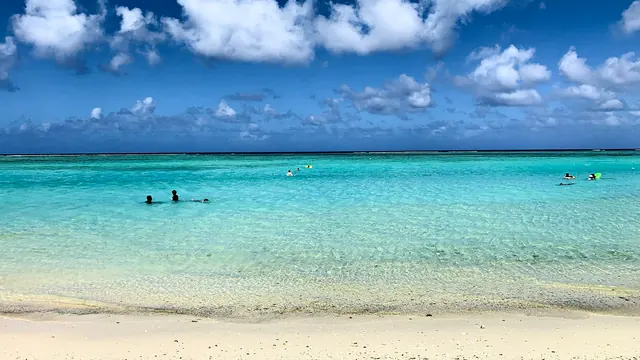
For beaches, Palawan is clearly ahead. Palau's sand comes in small doses: little white crescents under the Rock Islands' limestone and the low-tide sandbar near Ngemelis, all reached on a boat day from Koror, which has almost no beach of its own. Kayangel's long empty beaches are real, but they need a separate overnight trip.
Palawan has far more to choose from. Bacuit Bay hides dozens of coves and lagoons, and Nacpan and Duli are long, open beaches you can stay beside. Port Barton and San Vicente are quieter still. Its town waterfronts aren't for swimming, but you can go a whole trip with sand near your room.
Where in Palau: Rock Islands, Kayangel, Peleliu, Koror
Food & drink
Neither place is worth the trip for its food, but the meals differ. Palau's eating is all in Koror, where Japanese, Filipino, Korean and American influences meet tuna sashimi, mangrove crab, coconut crab and the curiosity of fruit bat soup. Palawan's best meals are grilled fish and squid on a beach during an island-hopping day, along with Puerto Princesa's chao long noodle soup and raw tamilok as a dare. In El Nido the menus lean towards pizza and smoothie bowls.
Where in Palau: Koror
Culture & sights
Palau has more to see on land, though neither place has a lot. Koror's Belau National Museum and Etpison Museum explain clan life and storyboard carving. The bai meeting houses at Airai and Melekeok and the Badrulchau monoliths on Babeldaob are a short drive away, and Peleliu's battlefield is a whole island of tanks, bunkers and caves.
Palawan's history is thinner and spread out. The Tabon Caves are a long journey south to mostly empty chambers, and the rest is Puerto Princesa's cathedral and Plaza Cuartel, plus the leper colony museum on Culion. Both places carry scars from 1944, but only Palau makes that history a full day out.
Where in Palau: Koror, Babeldaob, Peleliu
Nightlife
Palawan has the livelier evenings. El Nido has a short strip of bars on the town beach with reggae, acoustic sets, cheap rum and the odd party past midnight, and sunset drinks at Las Cabanas draw a sociable backpacker crowd in the dry season. Palau's evenings are a few bars, karaoke rooms and resort lounges in Koror, where divers have a beer and go to bed early.
Where in Palau: Koror
Nature & outdoors
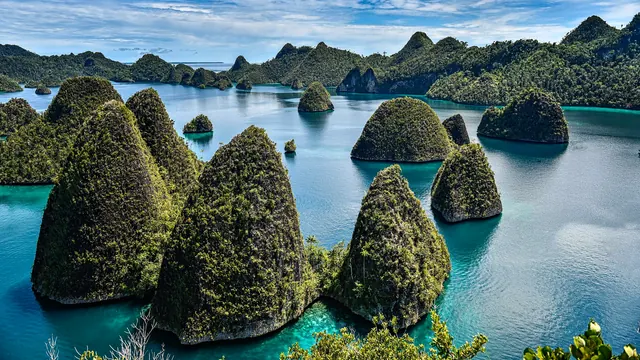
Nature is the reason to come to either place, and both are outstanding. Each has a lagoon full of forested limestone islands. The difference is what surrounds them. Palau is about the reef: sharks in the currents at Blue Corner, mantas in German Channel, wall dives, and swimming among stingless jellyfish in Jellyfish Lake. On land it is gentler, with jungle walks to the Ngardmau waterfall on Babeldaob and no real mountains.
Palawan has more variety on land and at sea. In Coron there are the Kayangan and Barracuda lakes between jagged cliffs and the Japanese wrecks sunk in 1944. Near Puerto Princesa, the Underground River runs for kilometres through a cave system into the sea, and you reach it on foot through forest where macaques and monitor lizards wander. Tubbataha Reef is reachable by liveaboard boat, and inland there is rainforest trekking on Cleopatra's Needle.
Where in Palau: Rock Islands, Blue Corner and German Channel, Jellyfish Lake, Babeldaob
Day trips
Neither place offers much beyond its boat trips, but Palau's few outings have more substance. Peleliu is about an hour away by boat and makes a moving day among its village and battlefield. Babeldaob is a drive over the bridge, with the Capitol at Melekeok and the old bai at Airai. In Palawan, the old Spanish fort at Taytay is a couple of hours by road from El Nido, and otherwise travellers move between bases rather than go out and back.
Where in Palau: Peleliu, Babeldaob, Angaur
Good for families
Both suit older children who swim confidently, and Palawan has a slight edge. Its calm, shallow lagoons are ideal for snorkelling and kayaking, there are plenty of beach resorts around El Nido and Bacuit Bay, and Filipinos are warm towards children. Honda Bay and the crocodile conservation centre near Puerto Princesa add a little variety. The downsides are long, winding transfers and basic medical care outside Puerto Princesa.
Palau's advantage is that Koror is small, safe and easy, with resort pools and a reef aquarium. Beyond that, family days are long boat trips in hot sun with little shade, so children who aren't keen on the sea will soon run out of things to do.
Where in Palau: Koror, Rock Islands
Getting around
Both are hard to get around without help, in different ways. Palau is compact: taxis, hotel shuttles or a hire car cover Koror and Babeldaob's easy ring road, and dive operators collect you from your hotel, but every reef trip depends on an organised boat. Palawan's problem is distance. A shared van from Puerto Princesa to El Nido takes five to six hours on a winding road, the ferry to Coron takes about four hours and can be cancelled in rough weather, and around town you move by tricycle or scooter.
Where in Palau: Koror, Babeldaob
Shopping & style
Neither is a place to shop. What differs is the one thing worth bringing home. In Palau it is a carved storyboard telling a Palauan legend, a real local craft found in Koror's handicraft stores. In Palawan it is South Sea pearl jewellery, cashew nuts or woven baskets from the Puerto Princesa markets, while El Nido and Coron mostly sell sarongs and beachwear.
Where in Palau: Koror
Affordability
Palawan costs much less, and the money goes in different places. In Palau, even the basics cost a lot because so much is imported. Then the reason for coming, a boat out to the reefs every day, becomes the biggest cost of the trip, with permit fees on top. Eating simply in Koror saves a little, but the boat days are unavoidable.
In Palawan, the everyday costs stay low: a room, a meal, a seat on a van or a place on a shared boat. The bills grow with the choices you make, such as flying instead of taking the long road, hiring a private banca, paying conservation fees for the lagoons and the Underground River, visiting El Nido in the dry season, or staying at a private-island resort.
Where in Palau: Koror
Live music & performing arts
In Palau, traditional dance and chant are something you come across rather than book. They appear at community celebrations, independence festivities and the occasional hotel dinner show, and when you do see them, they are genuine. Palawan's folk dance is more often staged for visitors, at shows and local festivals in Puerto Princesa. Elsewhere on the island, live music means a guitarist or cover band in an El Nido beach bar. Neither place has a theatre or a regular programme of performances.
Wellness & relaxation
Palawan is the better place to unwind. It has a real bathing spot in the Maquinit hot spring near Coron, best after dark, as well as cheap hilot and oil massage in simple huts in every town. Spas with over-water pavilions and sunrise yoga are found at the private-island resorts, and villages like Port Barton have a very slow pace.
Palau's relaxation comes from early nights after long days on the water, plus spa treatments at the Koror resort hotels. Its one local ritual is coating yourself in white limestone mud at the Milky Way lagoon in the Rock Islands.
Where in Palau: Koror, Rock Islands
When should you go?
Pick your month, and for a country the place in it. The climate figures are measured averages, not a forecast.
Koror (Palau) in July
Palawan in July
Daytime high, °C
Rainfall in the month, mm
Where the figures come from
Palawan has no weather station within reach, so its figures come from a gridded climate model rather than a measured record, and read a broad area rather than one spot.
Temperature and rainfall are climate normals, averaged over the years shown. Koror (Palau): 1991-2020 normals, Babelthuap Island, Babelthuap/Koror Airport (6.4 km from centre). Palawan: 2001-2020 normals, NASA POWER reanalysis grid, no weather station within 90 km.
Koror is hot all year, around 31°C by day, and has no true dry season. Its calmer, drier stretch runs from February to April, with March the sunniest month, yet even then it gets about 194mm of rain, roughly what Palawan sees in its monsoon. From June to September the rain is heavy, peaking near 411mm in July. The sea stays at about 29°C, so diving goes on in every month. It is the downpours rather than the heat that interrupt boat days and walks around town.
Palawan has two clear seasons and slightly milder days. January to April is properly dry, with only 34mm in February, calm seas and long beach afternoons. Rain builds through May, and from June to October the monsoon brings choppy water that can cancel island-hopping. November and December are still fairly wet, but the rain is easing. Both places are at their best early in the year, but Palawan from February to April is far drier than anything Koror offers.
Which traveller are you?
For a beach and sun trip, Palawan is the clear pick. You can wake beside the sand at Nacpan or on an island in Bacuit Bay and spend whole afternoons on the shore. In Palau, the beaches are short stops between swims on a boat day.
On an outdoors trip, both reward divers, snorkellers and kayakers. Palau is the pick for reef diving from one base, with sharks at Blue Corner and mantas in German Channel. Palawan adds more on land, from the caves of the Underground River to rainforest treks on Cleopatra's Needle.
On a tight budget, Palawan is the realistic choice, since even a frugal traveller can afford weeks of beach days and island-hopping. In Palau, the boat days that make the trip worth taking are exactly where the money goes, so most budgets only stretch to a short stay.
More comparisons
Each shares a side with Palau or Palawan.
Where else could you go?
Set Palau against any other country.