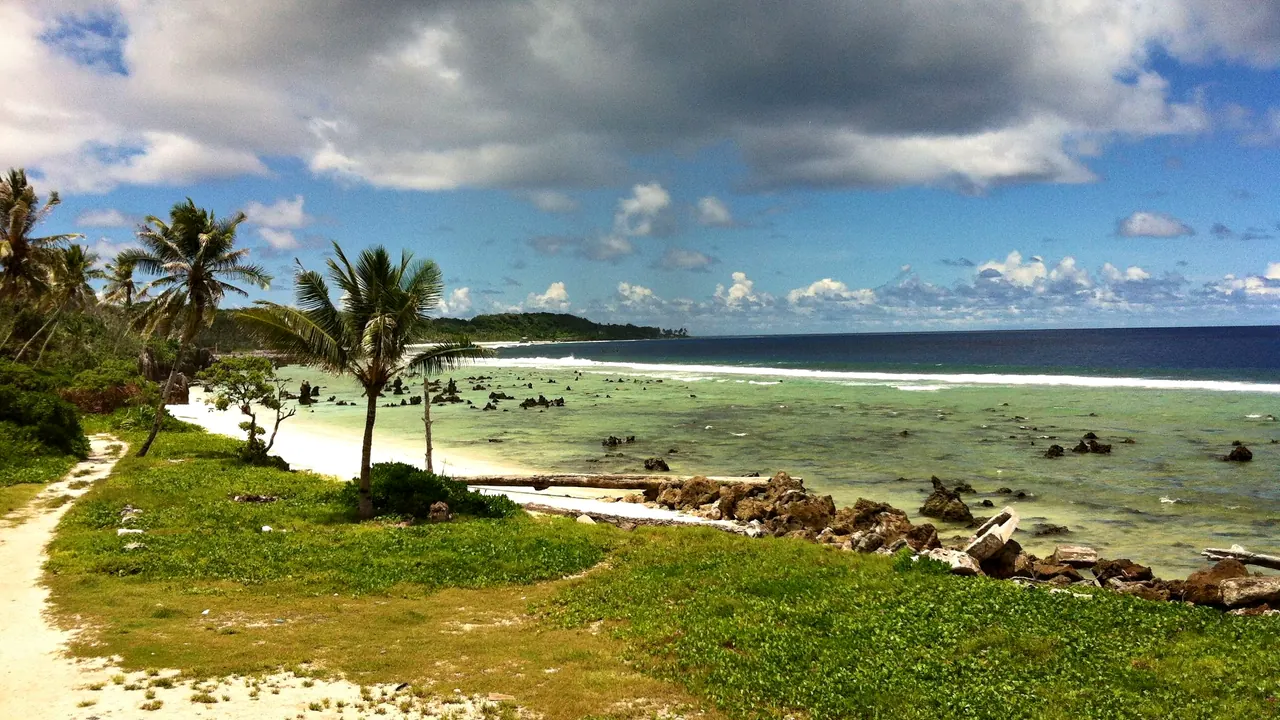
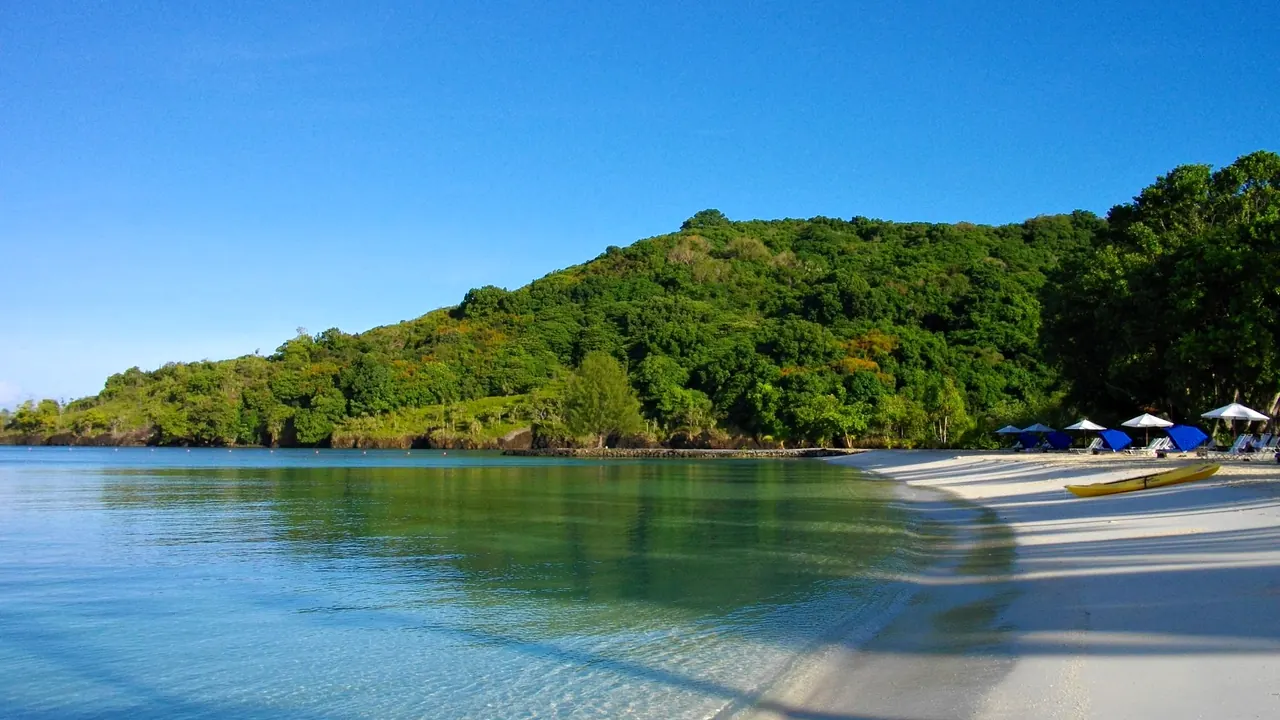
Photos: Nauru by Sean Kelleher, CC BY-SA 2.0, cropped; Palau by Abasaa, Public domain.
Nauru or Palau?
Our verdict in twelve categories, each scored against the same fixed benchmark cities, and the climate month by month, so you can choose for your trip.
Choose Nauru for
- getting around
- prices
Nauru suits a traveller who is curious about a lone island far out in the Pacific and happy with very little to do. In a day you can see the wartime guns on Command Ridge, the phosphate cantilevers at Aiwo and the mined-out pinnacles of Topside. The single ring road makes it simple to get around, and the quiet makes a few slow days easy. It also costs less than Palau once you are there, though nothing about it is cheap.
Choose Palau for
- nature and the outdoors
- beaches
- day trips
Anyone who lives for the water should pick Palau. The Rock Islands, Blue Corner and German Channel have world-famous reefs for diving and snorkelling. Kayaking, white-sand crescents and Peleliu's battlefield fill the days in between. Koror is the base for almost all of it, with Kayangel or Peleliu as overnight extras, and the price you pay is the boat trip every outing needs.
Scoreboard
Twelve categories on one fixed scale from 0 to 100. The shaded stretch is the gap between the two.
Your match
Pick a travel style or drag the sliders, and both match scores follow your weighting.
Wins on getting around and prices with your weighting.
Wins on nature and the outdoors and beaches with your weighting.
What matters to you?
Category by category
What the scores mean for a trip.
Beaches & swimming
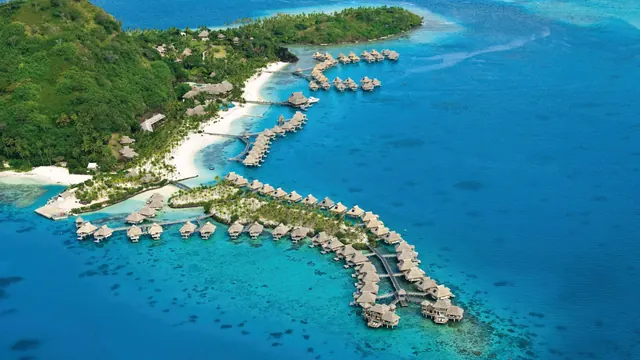
Both islands have sea that stays around 29°C, but Palau gives a swimmer far more to do with it. The white crescents under the Rock Islands, the low-tide sandbar near Ngemelis and Kayangel's long empty beaches turn every boat day into a swim and snorkel. Koror itself has little sand beyond its resort strips.
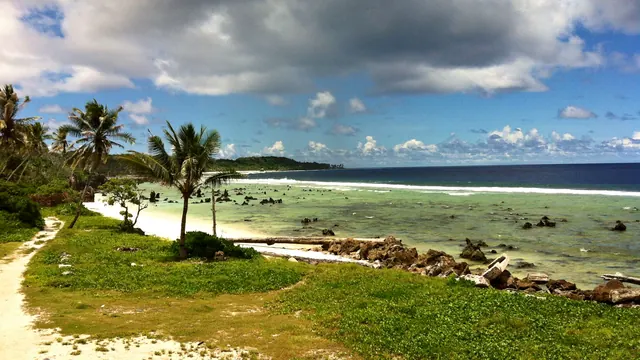
Nauru has Anibare Bay to admire, but the reef flat and the strong currents beyond its edge mean most swimming happens in the sheltered boat harbours at Anibare and Aiwo. At low tide there are rock pools to wade in. It makes a pleasant dip at the end of the day rather than a beach vacation.
Where in Palau: Rock Islands, Kayangel, Peleliu, Koror
Food & drink
Neither is a place to travel for food, but Koror offers clearly more. It has Japanese, Filipino, Korean and American-style kitchens, tuna sashimi, mangrove and coconut crab, and a local beer after the dive. On Nauru the choice comes down to Chinese-run takeaways on the ring road and a hotel dining room, and the meal worth seeking out is fresh tuna from beyond the reef, sometimes served raw in coconut.
Where in Palau: Koror
Culture & sights
Both islands carry the marks of the Second World War, but Palau has more to show and does more to explain it. Koror's Belau National Museum and Etpison Museum cover clan life and storyboard carving. On Babeldaob, the steep-roofed bai at Airai and Melekeok and the Badrulchau monoliths show traditional building, and Peleliu is a whole island of tanks, bunkers and caves.
Nauru's sights fit into a single day. There are the Japanese guns and command post on Command Ridge, the old jail, the phosphate cantilevers at Aiwo and the grey pinnacles of Topside, which show plainly what mining did to the island.
Where in Palau: Koror, Babeldaob, Peleliu
Nightlife
An evening on Nauru is a drink in a hotel bar or over dinner, perhaps with a local get-together at the weekend, and the island has gone quiet well before late. Koror gives you a few more choices: a handful of bars, some karaoke rooms and resort lounges where divers talk over the day's sharks and mantas with a beer. Even there the night is short, because the dive boats leave early and most visitors are asleep soon after dinner.
Where in Palau: Koror
Nature & outdoors
This is the widest gap between the two. Palau's Rock Islands, hundreds of forested limestone islets in a turquoise lagoon, sit among world-famous dive sites: sharks at Blue Corner, manta rays in German Channel, wrecks and wall dives. There is also kayaking through marine lakes and swimming in Jellyfish Lake when its population is healthy, and on Babeldaob jungle paths lead to the Ngardmau waterfall and along mangrove rivers.
Nauru's 21 square kilometres offer a scramble among the limestone pinnacles of Topside, the palm-ringed Buada Lagoon and frigatebirds overhead. The deep water close to shore brings tuna and marlin fishing and some diving on the reef wall, but an active visitor soon runs out of things to do.
Where in Palau: Rock Islands, Blue Corner and German Channel, Jellyfish Lake, Babeldaob
Day trips
Nauru has no day trips at all. It is a lone island with no ferries, and everything sits on the one coast road.
Palau has a few outings, all starting from Koror. Peleliu is an hour or so away by boat, with its village and battlefield. You can also drive across the bridge and around Babeldaob to the Capitol at Melekeok, the bai at Airai and the Badrulchau monoliths. Angaur and Kayangel work better as overnight stays, and most other days out are boat trips to the reefs.
Where in Palau: Peleliu, Babeldaob, Angaur
Good for families
Palau is the better choice for a family, provided the children love the water. Koror's resort pools and sheltered hotel shorelines suit younger ones, and the reef aquarium is a good introduction. Older children can snorkel shallow reefs and paddle kayaks in the Rock Islands, though these are long, hot days with little shade.
Nauru offers much less. Children can splash in the boat harbours alongside local families, but there are no attractions for them, few playgrounds and only basic medical care, and the currents need watching. On either island, a family that does not care for the sea will soon struggle for things to do.
Where in Palau: Koror, Rock Islands
Getting around
Nauru is the easier island to cover. Its single 19km ring road, with a spur up to Topside, can be driven in under half an hour. A hire car or scooter arranged through the hotel puts every sight within a few minutes.
Palau has no buses either, and Koror's hot main road makes walking hard work, but the bigger difference is that its best places are out on the water. The Rock Islands and reefs can only be reached by boat, and Peleliu, Angaur and Kayangel by boat or small plane. Most days therefore depend on an organised trip with a hotel pick-up.
Where in Palau: Koror, Babeldaob
Shopping & style
Neither island is somewhere to shop, but Palau at least gives you something to bring home, and Nauru does not. Nauru's stores stock tins, frozen food and household basics for the people who live there, with nothing made on the island and nothing meant for visitors. In Koror, a few handicraft stores sell carved storyboards, which are wooden panels showing Palauan legends and a real local craft, along with woven goods and shell jewellery, so one afternoon there will turn up a souvenir with a story behind it.
Where in Palau: Koror
Affordability
Both islands are expensive, but Nauru costs less once you are there. Its couple of hotels and lodges charge a lot for basic rooms, but the sights are free, the Chinese-run takeaways are reasonable and car hire is the main extra.
In Palau, the reason for the trip is also the biggest cost: daily boat outings for diving and snorkelling, plus entry and Rock Islands permit fees. Koror's guesthouses and simple local meals help, but a budget trip is still hard to put together.
Where in Palau: Koror
Live music & performing arts
Neither place has a theatre or a concert venue, and the two are much alike here. Both keep traditional song and dance for community events and national days. Palau adds the occasional hotel dinner show in Koror, which gives a visitor a slightly better chance of seeing a performance on an ordinary evening.
Wellness & relaxation
On Nauru, rest simply happens. There are no spas or treatments and the hotels are basic, but with almost no traffic, no crowds and so little to fill the day, a week with a book slows down by itself. Nauru has quiet to offer and nothing beyond it.
Palau has the quiet and more besides. The resorts around Koror have spa treatments for anyone who wants pampering. Out in the Rock Islands, the boats pause at the Milky Way, a pale lagoon whose bed is fine white limestone. Visitors scoop up the mud, smear it on their skin and then wash it off in the warm water, a natural treatment that Nauru's reef flat cannot match.
Where in Palau: Koror, Rock Islands
When should you go?
Pick your month, and for a country the place in it. The climate figures are measured averages, not a forecast.
Nauru in July
Koror (Palau) in July
Daytime high, °C
Rainfall in the month, mm
Where the figures come from
Nauru has no weather station within reach, so its figures come from a gridded climate model rather than a measured record, and read a broad area rather than one spot.
Temperature and rainfall are climate normals, averaged over the years shown. Nauru: 2001-2020 normals, NASA POWER reanalysis grid, no weather station within 90 km. Koror (Palau): 1991-2020 normals, Babelthuap Island, Babelthuap/Koror Airport (6.4 km from centre).
Nauru's weather barely changes. Daytime highs and the sea both sit around 29°C every month, so a swim in the harbours works all year. The wetter season runs from December to March, at about 200mm a month, and May to October is noticeably drier. The shadeless coast road is a hot walk in any month.
Palau's climate figures are for Koror. It is a degree or two hotter than Nauru and far wetter, and the sea is warm enough for swimming all year. The rain is heaviest from May to September and reaches 411mm in July. March is the driest month and also the sunniest, with 203 hours of sunshine, so February to April is the most comfortable window. The two islands run on opposite rhythms: Nauru's drier months fall in Palau's wettest stretch.
Which traveller are you?
For an outdoors trip, Palau wins outright. Diving at Blue Corner and German Channel, kayaking through the Rock Islands and walking to the Ngardmau waterfall on Babeldaob can fill a week or more. Nauru's Topside pinnacles and deep-sea fishing are done within days.
On a beach and sun trip, Palau is again the choice, as long as you are happy to reach the sand by boat. The white crescents of the Rock Islands and Kayangel's lagoon beat Nauru, where the reef flat and currents keep swimmers in the boat harbours.
On a trip on a tight budget, Nauru is the cheaper of two expensive islands. Its sights are free, the takeaway meals are reasonable and a hire car covers the ring road. Palau adds daily boat trips and permit fees to its pricey rooms.
More comparisons
Each shares a side with Nauru or Palau.
Where else could you go?
Set Nauru or Palau against any other country.