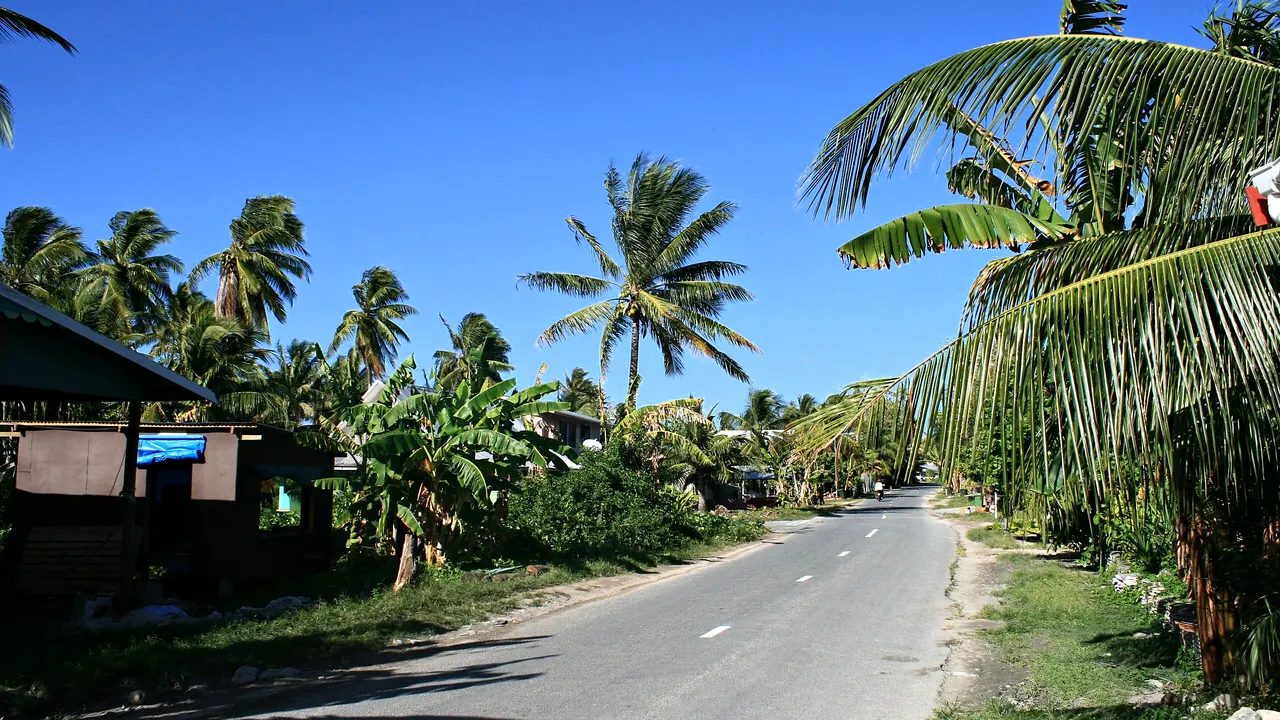
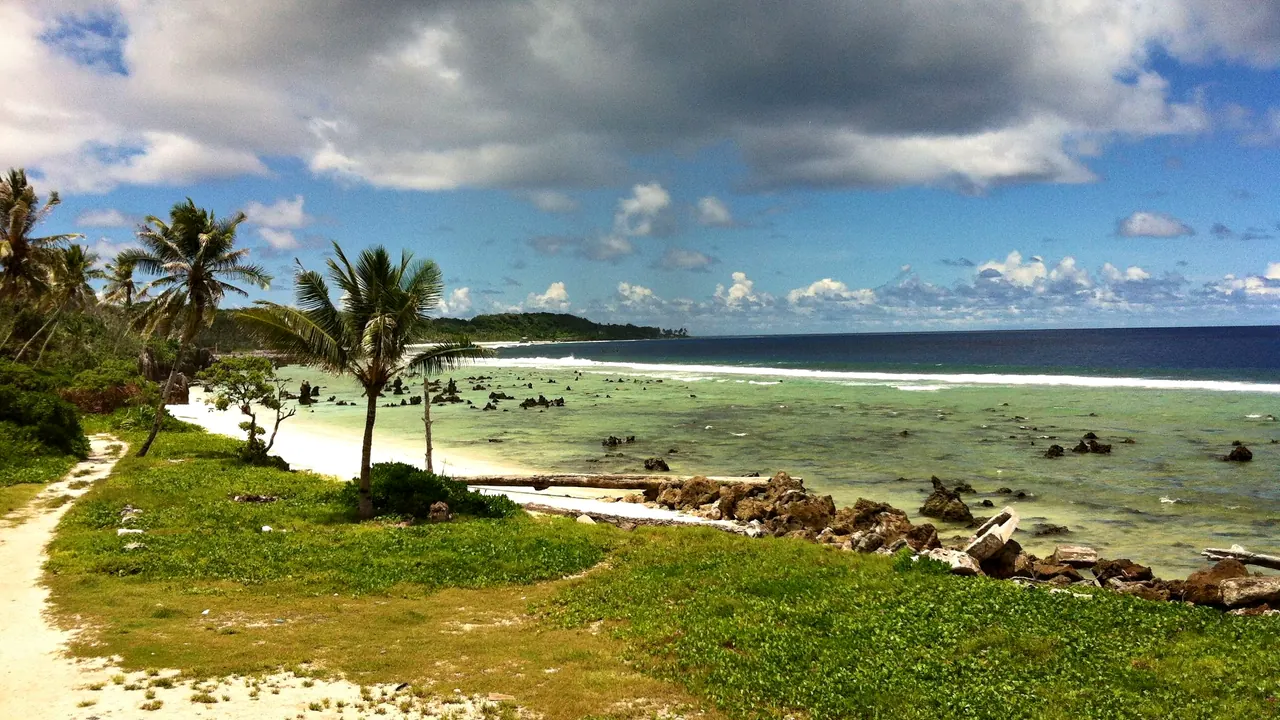
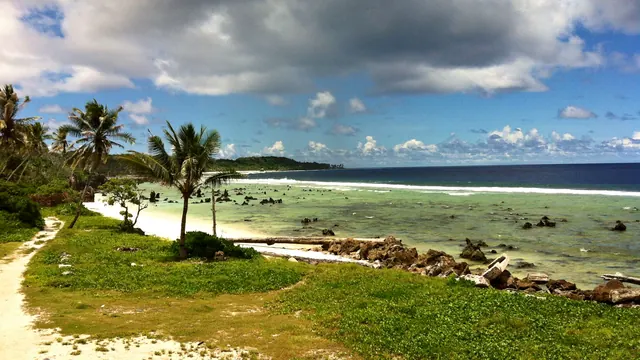
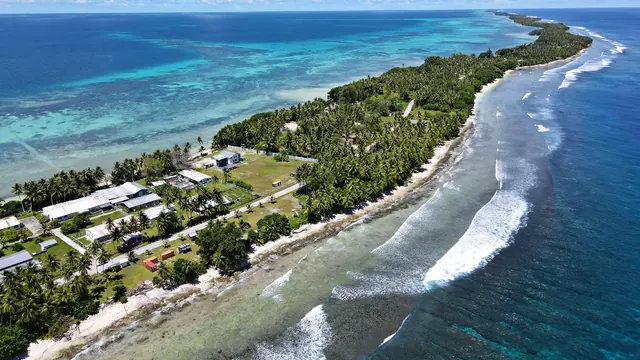
Photos: Tuvalu by Davidarfonjones, CC BY-SA 3.0, cropped; Nauru by Sean Kelleher, CC BY-SA 2.0, cropped.
Tuvalu or Nauru?
Our verdict in twelve categories, each scored against the same fixed benchmark cities, and the climate month by month, so you can choose for your trip.
Choose Tuvalu for
- nature and the outdoors
- beaches
- live music and the arts
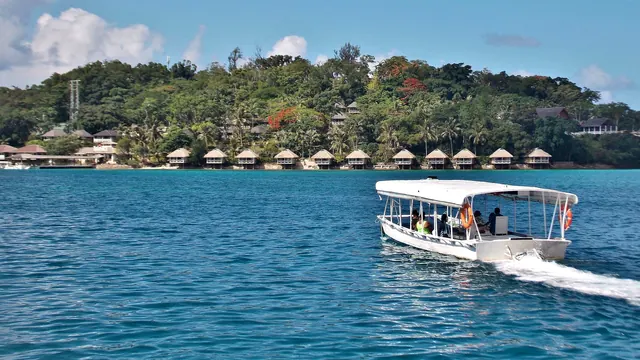
Tuvalu is for the traveller who comes for the lagoon. From a guesthouse on Fongafale you hire a boat across to the empty white-sand islets of the Funafuti Conservation Area, snorkel over coral with turtles and reef fish, and if you are lucky you watch a fatele building to its climax in a maneapa. It is also a little kinder to the budget, and it suits someone who is happy with heat, rain and very little to organise.
Choose Nauru for
- getting around
- culture and sights
- food and drink
Nauru makes more sense for a short, self-contained visit that is about curiosity more than beauty. One ring road with a spur up to Topside links everything, so with a hire car you can see the Japanese guns on Command Ridge, the phosphate cantilevers at Aiwo and the grey limestone pinnacles of the mined interior without any fuss. You swim in reef harbours rather than off sandy islets, and the drier, slightly cooler weather makes the days easier to bear.
Scoreboard
Twelve categories on one fixed scale from 0 to 100. The shaded stretch is the gap between the two.
Your match
Pick a travel style or drag the sliders, and both match scores follow your weighting.
Wins on nature and the outdoors and beaches with your weighting.
Wins on getting around and culture and sights with your weighting.
What matters to you?
Category by category
What the scores mean for a trip.
Beaches & swimming
Tuvalu has the better swimming, but you have to go out and get it. The good sand is not on Fongafale, where the built-up lagoon shore is less clean. It is on the palm-covered islets of the Funafuti Conservation Area and Funafala, reached by a hired boat, where the water is calm and shallow and you will probably have it to yourself.
Nauru has no lagoon to shelter it. A raised reef flat runs right round the island, Anibare Bay's white sand is more for looking at than swimming, and beyond the reef edge the currents are strong. Most people swim in the boat harbours at Anibare and Aiwo or wade in the rock pools at low tide. Neither place has beach bars or loungers.
Where in Tuvalu: Funafuti Conservation Area, Funafala islet, Fongafale lagoon shore
Food & drink
Both are equally thin for food, because almost everything arrives by ship. On Fongafale you eat fried fish, rice and noodles at a few small eateries and guesthouse kitchens. Tuvalu's own food of pulaka, breadfruit and coconut crab is something you meet at a community feast or in a family home, not in a restaurant.
Nauru's eating is in Chinese-run takeaways around the ring road and a hotel dining room or two. Its best offering is tuna from the deep water just off the reef, grilled or served raw in coconut. Neither has a market or a café culture worth planning a day around.
Where in Tuvalu: Funafuti
Culture & sights
Neither is a sightseeing destination, but Nauru gives you slightly more to look at, and all of it is close together. Japanese coastal guns and a command post sit on Command Ridge, there is the old Japanese jail and the phosphate cantilevers at Aiwo, and the mined-out pinnacles of Topside make a stark lesson in what mining does to an island. A modest display on Nauruan history fills out a single day.
In Tuvalu the interest is mostly in how people live. Funafuti's Second World War airstrip, the borrow pits and a few bunkers are the wartime remains. The maneapa meeting houses and the big white churches show how the community is organised, and the stamp bureau is a small curiosity of its own. Nanumea has more relics, but getting there means a voyage by ship.
Where in Tuvalu: Funafuti, Nanumea
Nightlife
Evenings are early and quiet in both. On Fongafale there are a couple of simple bars and the odd weekend dance, but the real social life is on the airstrip after the last flight, where people talk, play sport and ride scooters. Nauru has little beyond a drink in a hotel bar or restaurant, and perhaps a weekend gathering.
Where in Tuvalu: Funafuti
Nature & outdoors
Tuvalu has far more for anyone who loves the sea. Funafuti is a wide ring of reef and palm-covered islets around calm turquoise water. A boat trip to the Conservation Area on the western rim brings good snorkelling over coral, with green turtles and nesting noddies and terns. On land there is nothing to hike.
Nauru's landscape is strange rather than lovely. You can scramble among the grey limestone pinnacles of Topside or sit by the palm-ringed Buada Lagoon. The real draw is the deep water just off the reef, which offers fishing for tuna and marlin and some diving along the reef wall. Most visitors run out of things to do quickly.
Where in Tuvalu: Funafuti Conservation Area, Funafuti lagoon
Day trips
There are effectively no day trips from either. From Funafuti an outing means a boat across the lagoon to empty islets, and the outer atolls are a day or more away by government ship. Nauru is a lone island with no ferry links at all, so anywhere else means a flight.
Good for families
Both are safe, friendly and almost entirely without anything made for children. On Fongafale, local children use the airstrip and the calm lagoon shore as a playground in the evening. Older children who enjoy boat trips and snorkelling get the most from it, but the heat is constant and serious medical care is a flight away.
On Nauru, small children can splash in the sheltered boat harbours alongside local families, though the currents beyond the reef mean they need close watching. Supplies for babies are limited. Either way, the family has to make its own entertainment.
Where in Tuvalu: Funafuti
Getting around
Nauru is the easier island to get around. A single ring road of about 19km circles it, with a spur up to Topside. A hire car or scooter arranged through your hotel covers the whole circuit in under half an hour, with no traffic, and every sight is just off that road.
On Funafuti you ride a scooter up and down Fongafale, a strip about 12km long, and there are no buses and only a few taxis. The difference shows once you want to leave the main islet. The lagoon islets need a hired boat, and the outer islands depend on government ships that sail at irregular intervals, so any wider trip has to be planned around the shipping schedule.
Where in Tuvalu: Funafuti
Shopping & style
There is almost nothing to buy in either. Tuvalu has a slight edge in the kind of things on offer, with woven mats, fans, baskets and shell necklaces from a small handicraft outlet near the airstrip, plus stamps from the philatelic bureau. Nauru has only general stores selling imported goods, so your souvenirs are photographs and a passport stamp.
Where in Tuvalu: Funafuti
Affordability
Tuvalu works out a little kinder to the wallet, though the real limit there is choice. Funafuti has one modest hotel and a few family guesthouses, so you take whatever is free rather than shopping around. Because most food is imported, groceries and restaurant meals cost more than their simplicity suggests. There are no entry fees, mostly because there is little to pay for.
On Nauru, transport shapes the daily spending. With no bus service and few taxis, a hire car is a running cost for the whole stay. Meals at the Chinese-run takeaways are reasonable and the sights cost nothing, but imported goods in the shops are priced high. Reaching either island is a large expense of its own, and Nauru's limited flights add to its bill.
Where in Tuvalu: Funafuti
Live music & performing arts
Tuvalu has a living performance tradition that is worth timing a trip around. In the fatele, seated singers and drummers beating a wooden box speed up as the dancers rise. You can see it in the maneapa at weddings, church events and national days, and visitors are usually welcome. On Sunday mornings the church choirs are another chance to hear Tuvaluan singing.
On Nauru, traditional song and dance appear only at community events and national days such as Independence Day and Constitution Day. On an ordinary evening there is nothing to go to.
Where in Tuvalu: Funafuti
Wellness & relaxation
On both islands, relaxing comes down to the pace of life, because neither has spas, massage houses or bathing traditions. On Funafuti the community sets the rhythm. Sundays are given over to church and rest, and the rest of the week passes slowly in the shade by the lagoon, though some visitors find the isolation and basic facilities more tiring than soothing.
Nauru's quiet comes from what is missing rather than from custom. There is little traffic, there are no crowds and nothing needs booking, so the days slow down without any effort. Neither island offers treatments or a structured wellness stay.
Where in Tuvalu: Funafuti
When should you go?
Pick your month, and for a country the place in it. The climate figures are measured averages, not a forecast.
Funafuti (Tuvalu) in July
Nauru in July
Daytime high, °C
Rainfall in the month, mm
Where the figures come from
Nauru has no weather station within reach, so its figures come from a gridded climate model rather than a measured record, and read a broad area rather than one spot.
Temperature and rainfall are climate normals, averaged over the years shown. Funafuti (Tuvalu): 1991-2020 normals, Funafuti (2.1 km from centre). Nauru: 2001-2020 normals, NASA POWER reanalysis grid, no weather station within 90 km.
Neither island has a season in the usual sense. Both are hot every month and the sea stays warm enough to swim all year, so the real choice is about rain. Funafuti is the hotter of the two, with daytime highs around 32°C all year, and it is very wet. December to March is the wettest stretch, reaching 368mm in January and March. May to November is somewhat drier and sunnier, and August is the brightest month. Walking around Fongafale in the middle of the day is hard work whenever you go.
Nauru's highs are a few degrees lower, at around 29°C, and it gets roughly half as much rain as Funafuti. Its wetter spell also runs from December to March, at about 200mm a month, and May to October is the driest and most comfortable time. The sea stays at 29°C all year, so for swimming at the reef edge a calm day matters more than the month.
Which traveller are you?
On a beach and sun trip, Tuvalu wins. Across the Funafuti lagoon there are uninhabited islets with narrow strips of white coral sand and calm, clear water. Nauru has Anibare Bay to look at, but you swim in harbours cut through the reef.
For a trip on a tight budget, Tuvalu is the less painful choice. Scooter hire and simple local meals on Fongafale cost little, though boat charters add up. On Nauru, basic rooms in a couple of hotels and lodges cost a good deal and there is no cheaper tier.
For a short break, Nauru is easier. You can drive the whole ring road in under half an hour, and its wartime and phosphate sights fit into one day. On Tuvalu, anything beyond Fongafale needs a boat you arrange locally, or else days on the government ship.
More comparisons
Each shares a side with Tuvalu or Nauru.
Where else could you go?
Set Tuvalu or Nauru against any other country.