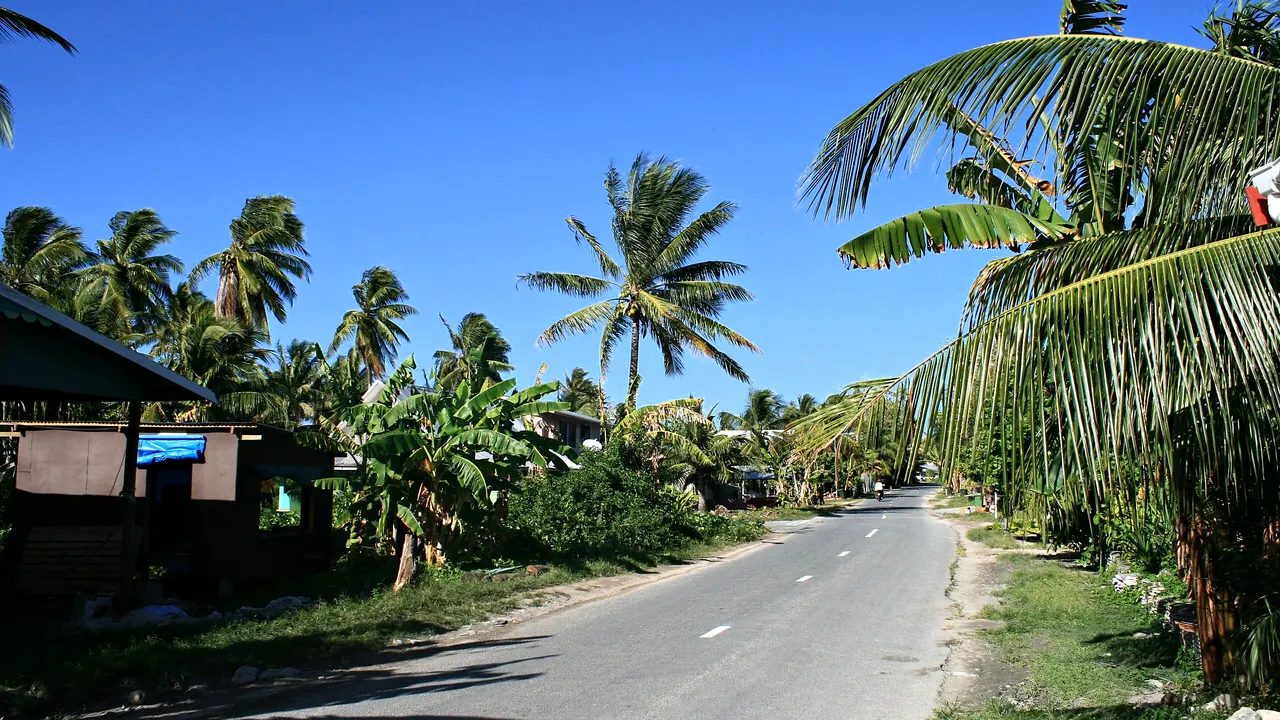
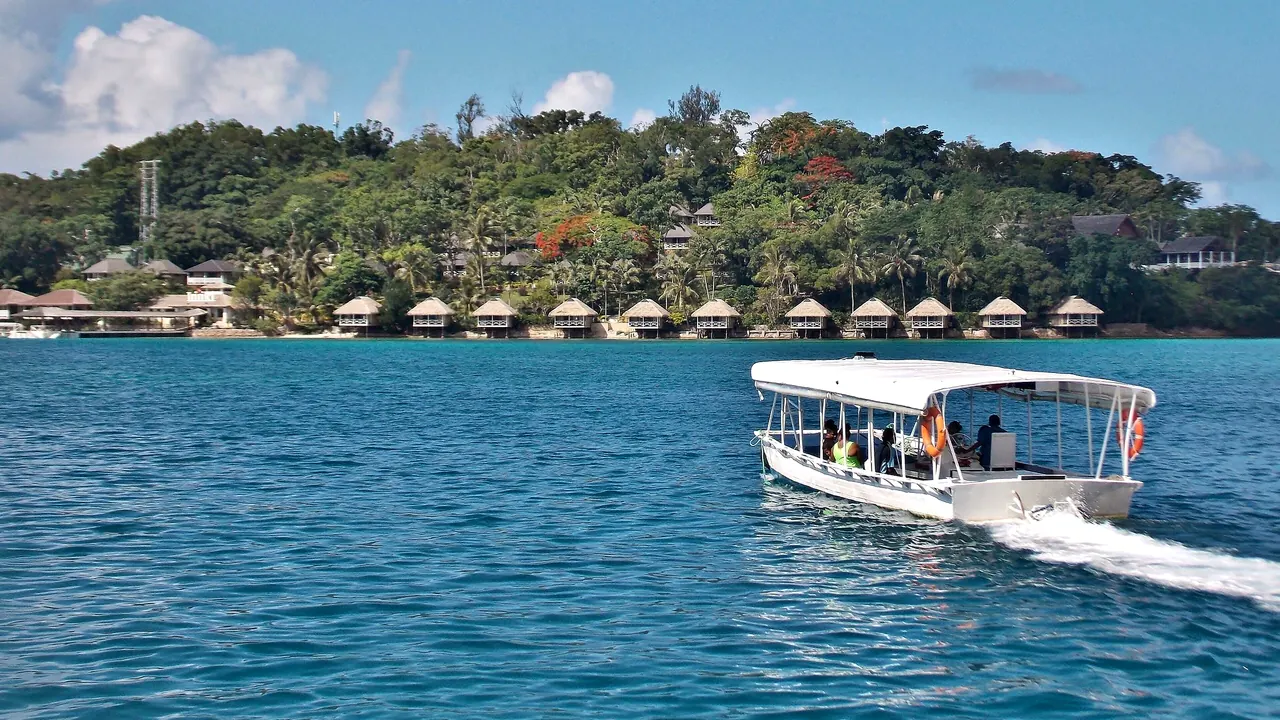
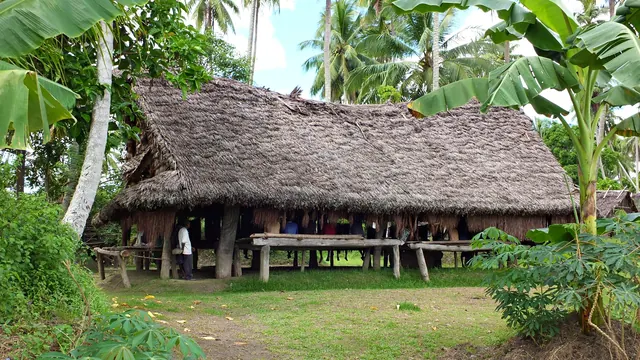
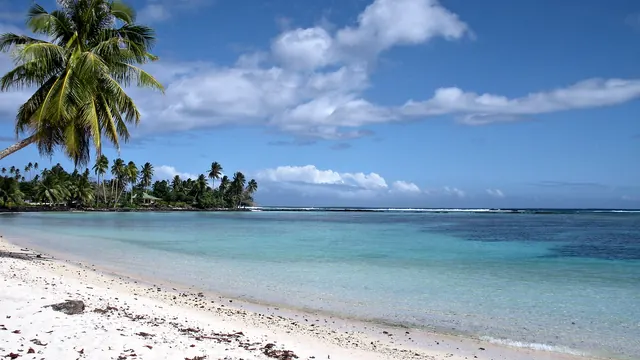
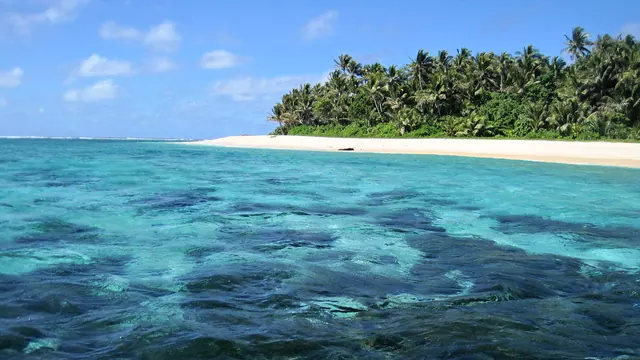
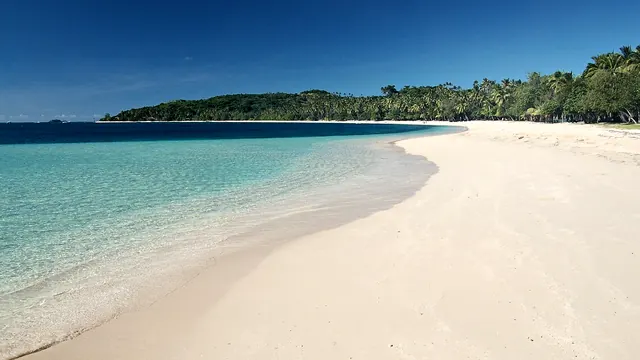
Photos: Tuvalu by Davidarfonjones, CC BY-SA 3.0, cropped; Vanuatu by gérard from Nouméa, (Nouvelle-Calédonie), CC BY-SA 2.0, cropped.
Tuvalu or Vanuatu?
Our verdict in twelve categories, each scored against the same fixed benchmark cities, and the climate month by month, so you can choose for your trip.
Choose Tuvalu for
- prices
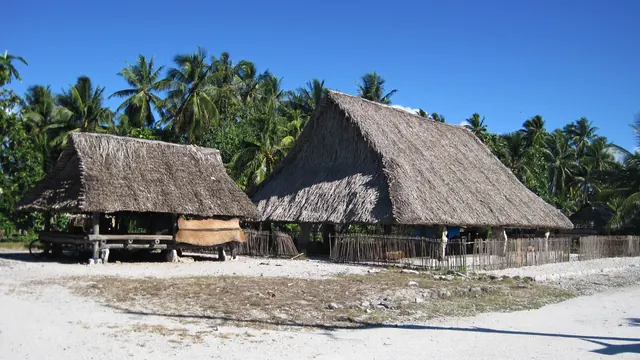
Tuvalu suits a traveller who wants to see a very small Polynesian nation going about its everyday life, and who is happy with one atoll, a scooter and a boat out to an empty islet. For almost every visitor Funafuti is the whole trip, and what draws people is the pace: church singing on Sunday, evenings on the airstrip, and a fatele in a maneapa if you happen to be there at the right time. Come for remoteness and quiet, not for things to do.
Choose Vanuatu for
- nature and the outdoors
- families
- culture and sights
For almost any trip built around doing things, Vanuatu is the stronger choice. It has active volcanoes on Tanna and Ambrym, the blue holes and Millennium Cave of Espiritu Santo, the Coolidge wreck dive and the white sand of Champagne Beach, as well as Port Vila's French-influenced cooking and family resorts on Efate. The cost is planning. Small planes link the islands, so a good trip means picking two or three of them and leaving slack between flights.
Scoreboard
Twelve categories on one fixed scale from 0 to 100. The shaded stretch is the gap between the two.
Your match
Pick a travel style or drag the sliders, and both match scores follow your weighting.
Wins on prices with your weighting.
Wins on nature and the outdoors and families with your weighting.
What matters to you?
Category by category
What the scores mean for a trip.
Beaches & swimming
Both countries have warm, calm lagoon water, but Vanuatu has the beaches worth planning a trip around. On Espiritu Santo's east coast, Champagne Beach, Port Olry and Lonnoc have fine white sand on glassy water, and Efate adds snorkelling shores such as Eton.
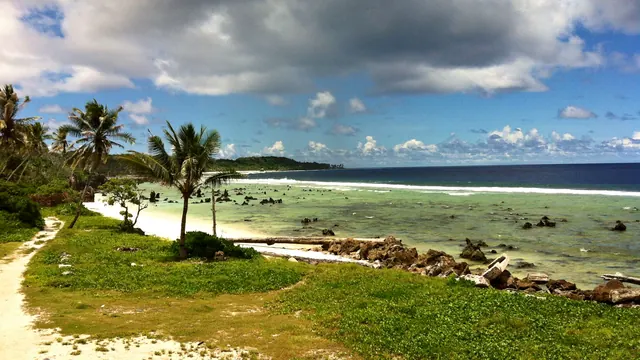
In Tuvalu the good sand is on the empty islets of the Funafuti Conservation Area: narrow white strips you can only reach by a boat you arrange yourself, with nothing there but what you bring. Locals swim off the lagoon shore of Fongafale, but along the built-up stretch the water is less clean.
Where in Tuvalu: Funafuti Conservation Area, Funafala islet, Fongafale lagoon shore
Where in Vanuatu: Espiritu Santo east coast, Efate
Food & drink
Vanuatu gives a visitor far more to eat. Port Vila keeps a French habit of good bread and bistro cooking, and its waterfront market sells root crops, fruit and simple cooked plates. Then there is Santo beef, lap lap baked over hot stones, and kava at dusk in a nakamal.
Eating out in Tuvalu means a few small places on Fongafale serving fried fish, rice and noodles, much of it shipped in. The real island food, pulaka, breadfruit, reef fish and coconut crab, turns up at a community feast or in a family home, not on a menu.
Where in Tuvalu: Funafuti
Where in Vanuatu: Port Vila, Luganville
Culture & sights
Neither country has historic towns or grand buildings, but Vanuatu has much more to go and see. Port Vila's national cultural centre shows slit drums, masks and sand drawing, a tradition recognised by UNESCO, and Chief Roi Mata's Domain lies off Efate's west coast. The land diving on Pentecost from April to June is the most striking sight of all, though you need a small plane to get there. Tanna and Ambrym have kastom villages that welcome visitors.
Tuvalu's sights are the wartime traces on Funafuti, including the airstrip itself, the borrow pits and a few bunkers, plus the white churches, the maneapa and the stamp bureau. The interest lies in watching how a tiny nation lives rather than in visiting anything.
Where in Tuvalu: Funafuti, Nanumea
Where in Vanuatu: Port Vila, Efate west coast, Pentecost, Tanna
Nightlife
Neither is a place to go out, but Port Vila at least gives you a choice. It has harbourfront bars at sunset, a couple of places to dance on weekend nights and a casino, usually after an evening that starts with kava. Funafuti has a couple of simple bars and the odd weekend dance. Its liveliest evening scene is the airstrip, where people talk and ride scooters once the day's flights are done.
Where in Tuvalu: Funafuti
Where in Vanuatu: Port Vila
Nature & outdoors
This is where the two differ most. Vanuatu has active volcanoes you can walk up to: Mount Yasur on Tanna at dusk, and the treks of several days across ash plains to Marum and Benbow on Ambrym. Santo adds jungle-ringed blue holes, the canyon of Millennium Cave and the Coolidge wreck, which you can dive from the shore.
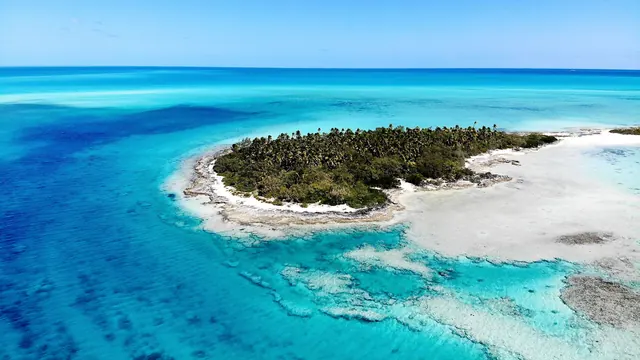
Tuvalu's nature is the Funafuti lagoon itself, a ring of palm islets around turquoise water. In the Conservation Area there is good snorkelling over coral with green turtles, and noddies and terns nest there. It is lovely, but there is nothing to hike and every outing depends on a local boat.
Where in Tuvalu: Funafuti Conservation Area, Funafuti lagoon
Where in Vanuatu: Tanna, Espiritu Santo, Ambrym, Efate
Day trips
Vanuatu has modest day outings. From Port Vila you can follow the coast road round Efate past villages, visit the islands of Pele and Nguna, or go out to Artok Island off the west coast, and from Luganville you can reach Santo's east coast islets. Tuvalu has almost nothing of the kind, only boat rides to empty lagoon islets, and its outer islands are a voyage of a day or more by government ship. In both countries the other islands are separate trips rather than days out.
Where in Vanuatu: Efate, Nguna and Pele
Good for families
Vanuatu is the clear choice with children, mainly because of the lagoon-side resorts on Efate with pools, kids' clubs and shallow water for a first snorkel. Outside the resorts little is made for children, malaria is a risk on many outer islands, and Tanna's volcano and Santo's caves suit older children best.
Funafuti is safe and welcoming, and local children play on the airstrip and the lagoon shore every evening. But it has no attractions, parks or resort facilities at all. With constant heat and serious medical care a flight away, it works only for older children who are happy with boats and snorkelling.
Where in Tuvalu: Funafuti
Where in Vanuatu: Efate, Port Vila
Getting around
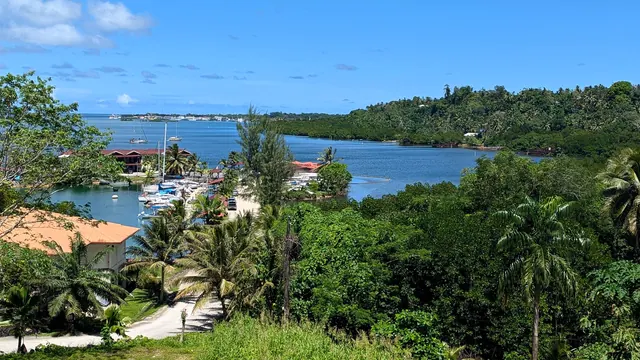
Vanuatu is a little easier to move around, though neither country is simple. Port Vila has its shared minibuses with a B on the plate and a harbour front you can walk, and Efate's ring road is sealed. Small domestic planes link Santo, Tanna and the other islands, but their schedules are thin, so leave slack before your flight home.
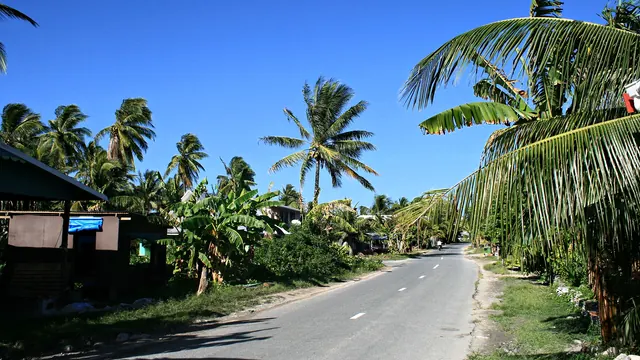
Funafuti is a single 12km strip that is easy to cover by scooter, though there are no buses and only a few taxis. Going beyond the atoll means waiting for irregular government ships, so seeing more of Tuvalu than Fongafale takes time few visitors have.
Where in Tuvalu: Funafuti
Where in Vanuatu: Port Vila, Efate
Shopping & style
Shopping is slight in both, but Vanuatu has more to bring home. Port Vila has a handicraft market and a few duty-free shops, and the crafts have real character: pandanus weaving, carved tam-tam figures and Ambrym masks, often best bought in the villages where they are made. Tuvalu offers woven mats, fans and shell necklaces at a small outlet near the Funafuti airstrip, plus stamps for collectors at the philatelic bureau.
Where in Tuvalu: Funafuti
Where in Vanuatu: Port Vila, Ambrym
Affordability
Tuvalu works out slightly cheaper day to day, mainly because Funafuti, the only place most visitors stay, offers so little to spend money on. The catch is choice. A modest hotel and a few family guesthouses are all there is, imported food makes eating dearer than it looks, and hiring a boat out to the islets of the Conservation Area is the one real outlay of a stay.
Vanuatu spreads its costs differently. A resort stay on Efate costs about what you would pay at home, but you can bring the bill down by moving on. On Tanna the family-run bungalows near Mount Yasur usually include meals, and in Luganville and along Santo's east coast the guesthouses and bungalows cost less than Efate. The extras push the bill back up: small village fees at the blue holes and beaches, truck transfers to the volcano and a dive on the Coolidge. The more of Vanuatu you see, the more you pay.
Where in Tuvalu: Funafuti
Where in Vanuatu: Tanna, Espiritu Santo, Port Vila
Live music & performing arts
On Funafuti, Tuvalu's performance comes down to one form, the fatele, a dance-song whose drumming speeds up as the dancers rise. It is performed in the atoll's maneapa at weddings, church events and national days such as Independence Day, with no stage or schedule, so catching it is largely luck. Sunday church choirs on Funafuti give you a steadier chance to hear Tuvaluan singing.
Vanuatu gives you a wider range and more chances to see it. Women on Santo make water music by slapping the river, and kastom groups on Tanna, Ambrym and Efate dance for visitors. The Rom dance of Ambrym is the best known. String bands play at markets, and Port Vila holds the long-running Fest'Napuan festival.
Where in Tuvalu: Funafuti
Where in Vanuatu: Espiritu Santo, Ambrym, Port Vila, Tanna
Wellness & relaxation
Vanuatu has more for a restful trip. There are resort spas around Port Vila and on the Efate lagoons, some using coconut oil and local plants, and the evening kava ritual slows everyone down. Tuvalu has no spas at all, so rest there comes only from the pace of Funafuti, its quiet Sundays and shade by the lagoon. Some visitors find that restorative, while others find it tiring in the heat.
Where in Tuvalu: Funafuti
Where in Vanuatu: Efate
When should you go?
Pick your month, and for a country the place in it. The climate figures are measured averages, not a forecast.
Funafuti (Tuvalu) in July
Port Vila (Vanuatu) in July
Daytime high, °C
Rainfall in the month, mm
Temperature and rainfall are climate normals, averaged over the years shown. Funafuti (Tuvalu): 1991-2020 normals, Funafuti (2.1 km from centre). Port Vila (Vanuatu): 1991-2020 normals, Bauerfield Efate (4.1 km from centre).
Funafuti barely changes through the year. Daytime highs sit around 32°C in every month and the lagoon stays bath-warm. Rain is heavy throughout and peaks at about 368mm in January and March. The drier, sunnier stretch runs roughly from May to October, which is the better time for boat trips to the islets, though even then the rain is frequent and the heat makes walking tiring.
Port Vila, on Efate, has a real change of seasons. From June to September highs ease to about 27°C and the sea stays warm enough to swim. Rain drops to around 85mm in September, which makes these the best months for volcano treks and Santo's caves. From December to April it is hotter and much wetter, with about 334mm in March, so beach days come with heavy showers. Both countries are at their best in the middle of the year, but Tuvalu's better months are only a little kinder than the rest, while Vanuatu's dry winter is a clearly cooler and drier season.
Which traveller are you?
On an outdoors trip, Vanuatu wins easily. You can stand on the rim of Mount Yasur at dusk, trek across Ambrym's ash plains, swim in Santo's blue holes and dive the Coolidge. Tuvalu offers a snorkel in the lagoon and no hiking at all.
On a family trip with children, Vanuatu is the safer bet, thanks to the lagoon resorts on Efate with pools, kids' clubs and calm, shallow water. Funafuti is friendly to children but has nothing built for them, and its medical care is basic.
On a trip on a tight budget, Tuvalu edges ahead, though neither country is cheap. Scooter hire and simple meals cost little and there is almost nothing to pay to see. In Vanuatu the flights, volcano tours and dives soon add up.
More comparisons
Each shares a side with Tuvalu or Vanuatu.
Where else could you go?
Set Tuvalu or Vanuatu against any other country.