Funafuti
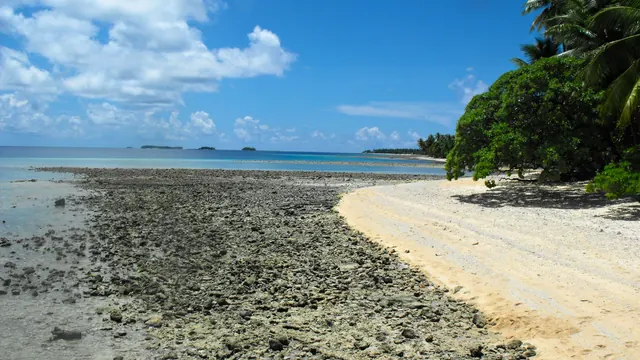
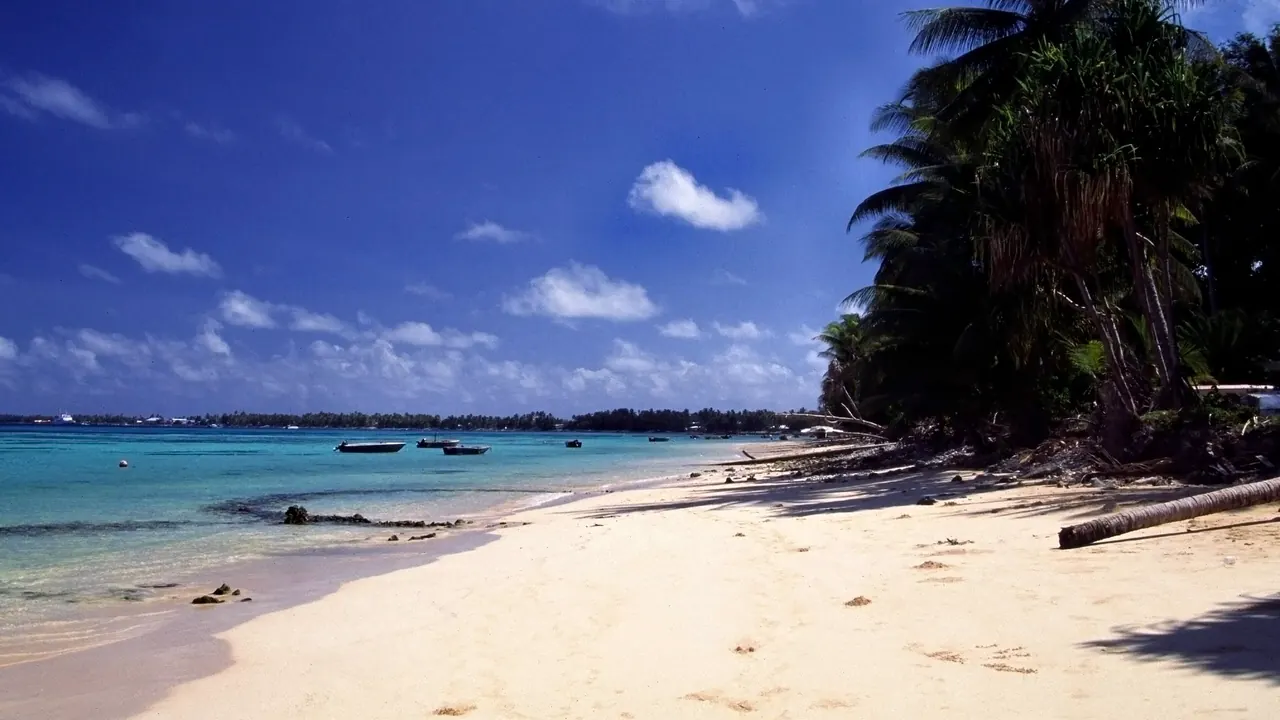
White sand, palms and the turquoise lagoon on Funafuti Atoll
- Beaches58
- Affordability40
- Nature & outdoors35
Match
22
Every category weighted equally
- Beach & sun28
- Culture & arts17
- Food & nightlife18
- Family trip27
- Outdoors25
- Relax & unwind26
- Shopping & style18
- On a budget24
Funafuti in twelve categories
Our verdict on each, scored 0 to 100 against the same fixed benchmark cities, so a score means the same thing on every page.
Beaches & swimming. Scores 58 out of 100.
Food & drink. Scores 15 out of 100.
Culture & sights. Scores 10 out of 100.
Nightlife. Scores 7 out of 100.
Nature & outdoors. Scores 35 out of 100.
Day trips. Scores 3 out of 100.
Good for families. Scores 22 out of 100.
Getting around. Scores 30 out of 100.
Shopping & style. Scores 5 out of 100.
Affordability. Scores 40 out of 100.
Live music & performing arts. Scores 12 out of 100.
Wellness & relaxation. Scores 28 out of 100.
Funafuti category by category
Beaches & swimming
58The lagoon is the reason to be here. It is a huge, sheltered sheet of turquoise water at around 29°C all year. On Fongafale, the main islet, people swim off the lagoon shore near Vaiaku and children jump in from the wharf in the evenings. The water near the settlement is not always clean, though, and the ocean side is a rough reef flat, not a beach.
The beaches worth the trip lie across the lagoon on the uninhabited islets of the Funafuti Conservation Area, where white coral sand runs into clear, shallow water. You reach them by hired boat, so plan for a half or full day out. There are no sunbeds or beach bars anywhere, only sand, palms and shade.
Food & drink
15Eating out in Funafuti means a few simple restaurants and takeaway counters, many of them Chinese-run, plus small stores stocked mainly with imported tinned and frozen food. The local diet is fish, coconut, breadfruit and pulaka, a swamp taro grown in pits. You are most likely to taste these at a community feast or through your guesthouse, not on a menu. Fresh tuna and reef fish are the highlight. Kaleve, the sweet coconut-sap toddy, is the local drink. Do not come expecting cafés, markets or any variety.
Culture & sights
10There is little here in the way of sights. The village maneapa, the open-sided meeting houses at the centre of community life, show the islands' social structure better than any exhibit. The runway itself was built by American forces in 1943, and wartime borrow pits and a few relics remain around Fongafale. A marker records the deep coral drilling of the 1890s, carried out to test Darwin's theory of how atolls form. The national library and archives keep a small collection. You can see it all in a morning.
Nightlife
7Evenings are quiet. Locals and visitors gather on the runway and the lagoon front once the heat fades. There are a couple of simple bars, and at weekends a dance may run until late, but that is the whole scene. Sundays are observed strictly and almost everything stops. Most visitors spend the evening over a drink at their guesthouse.
Nature & outdoors
35The landscape is lovely, but there is very little of it: a ring of low, narrow coral islets around a lagoon roughly 18km across, with no hill higher than a few metres. In places Fongafale is so narrow you can see the lagoon and the open Pacific at once. The Funafuti Conservation Area on the western rim protects reef, lagoon and several islets where seabirds nest and green turtles feed. With a hired boat you can snorkel coral heads and walk deserted islets.
There are no trails. Organised diving, kayaking and fishing trips are rare, and you arrange things through locals. King tides sometimes flood low ground, a reminder of how little land there is.
Day trips
3Funafuti has no day trips in the usual sense. The other atolls of Tuvalu are many hours away by an irregular cargo and passenger ship, and the next country is a flight away. The islets around the lagoon make a fine outing, but they are uninhabited nature, not places to visit. Plan your stay around Fongafale and the lagoon.
Good for families
22The place itself is gentle with children. Traffic is light, crime is rare, and in the evenings local families take over the runway to play volleyball, football and touch rugby. Visiting children are welcomed into this without fuss. Lagoon swimming in calm water is the main entertainment.
Otherwise nothing here is made for children: no playgrounds to speak of, no attractions, and little shade in strong equatorial sun. Medical facilities are basic, food choice is narrow, and the journey through Fiji is long. It suits adventurous families with older children, not a first trip abroad.
Getting around
30Fongafale is a single strip of land about 12km long, with one main road along it. The government buildings, guesthouses, shops and wharf cluster around the airfield at Vaiaku, so you can walk the core easily, apart from the heat at midday. There are no buses, and taxis are few. Most visitors rent a motorbike or bicycle to reach the islet's tips. Anywhere else in the lagoon means a boat, which your accommodation will help you find.
Shopping & style
5There is almost nothing to shop for. The one real souvenir is local handicraft: woven pandanus mats, fans and baskets, and shell necklaces, sold by women's groups near the airport. Collectors seek out Tuvalu's postage stamps. Beyond that, the stores sell basic imported goods.
Affordability
40Funafuti costs a moderate amount, but your money buys little. There are only a handful of places to stay, mostly simple guesthouses and one government-owned hotel, and prices are high for their standard. Imported food makes eating out pricier than the simple meals suggest. Day-to-day costs, like a scooter or a plate of fish and rice, stay modest. The big extra cost is a trip across the lagoon, since you charter the boat yourself and that is easier to share. Getting to Tuvalu at all is the larger part of the cost.
Live music & performing arts
12There is no theatre, concert hall or music venue. The living art form is fatele, a community dance in which singers seated around a box drum speed up the rhythm while the dancers stand and move. It is performed in the maneapa at weddings, church events and national celebrations such as Independence Day. A visitor sees it by chance or by invitation, not by buying a ticket. Church singing on Sunday mornings is another strong part of island life that anyone can hear.
Wellness & relaxation
28There are no spas, massage studios or bathing traditions to seek out. Any rest here comes from the pace of life: a small island where the day is set by heat and tide, little happens in a hurry and Sunday is a day of rest. Sitting under a breadfruit tree by the lagoon at sunset is the island's version of unwinding. You need to bring your own sense of comfort, though. The heat is constant and the facilities are basic.
When should you go?
Pick a month to see what it is like. The climate figures are measured averages, not a forecast.
Funafuti in July
Daytime high, °C
Rainfall in the month, mm
The whole year
Shaded against this destination’s own year: the deepest cell is its best month for that figure and the palest its weakest.
Temperature and rainfall are climate normals, averaged over the years shown. Funafuti: 1991-2020 normals, Funafuti (2.1 km from centre).
Before you go
| Measure | Funafuti |
|---|---|
| Official language | English, Tuvaluan |
| Currency | Australian Dollar (AUD) |
| Sockets | I220 V, 50 Hz |
| Driving side | Left |
| Time zone | UTC+12 |
| Emergency number | 911 |
| Elevation | 7 m |
| Main airport | Funafuti International Airport (FUN)0 km from centre2 non-stop destinations |
| Public holidays this year | 11 days |
By the numbers
| Measure | Funafuti |
|---|---|
| Population | 6,025 |
| People per km² | 2,510 |
| Museums within 10 km | 0 |
| UNESCO World Heritage sites within 50 km | 0 |
| Swim season, months above 21 °C | 12 months |
Compare Funafuti with
Every comparison with a written verdict behind it.