Tuvalu
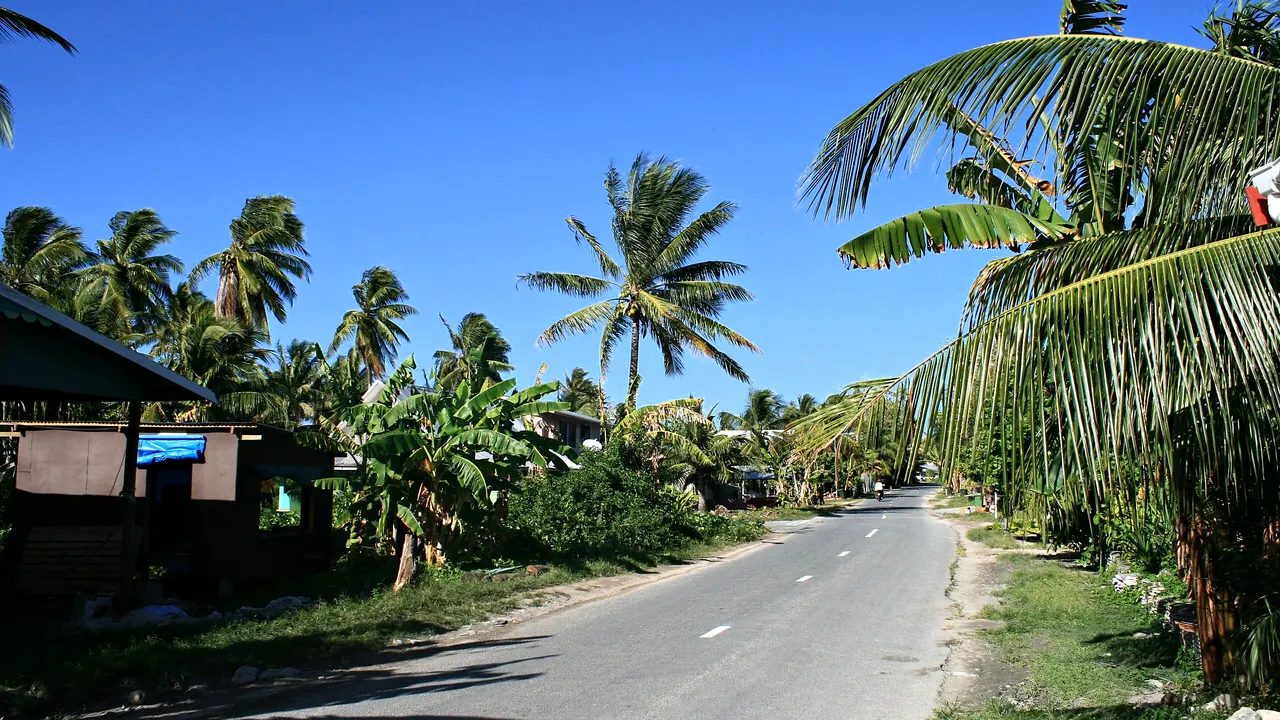
The main road through Funafuti between palms
- Beaches52
- Affordability42
- Nature & outdoors33
Photo: Davidarfonjones, CC BY-SA 3.0, cropped
Match
20
Every category weighted equally
- Beach & sun25
- Culture & arts16
- Food & nightlife17
- Family trip23
- Outdoors22
- Relax & unwind23
- Shopping & style16
- On a budget22
Tuvalu in twelve categories
Our verdict on the country as a whole, scored 0 to 100 against the same fixed benchmark cities as every destination, so a score means the same thing on every page.
Beaches & swimming. Scores 52 out of 100.
Food & drink. Scores 14 out of 100.
Culture & sights. Scores 10 out of 100.
Nightlife. Scores 6 out of 100.
Nature & outdoors. Scores 33 out of 100.
Day trips. Scores 4 out of 100.
Good for families. Scores 14 out of 100.
Getting around. Scores 20 out of 100.
Shopping & style. Scores 5 out of 100.
Affordability. Scores 42 out of 100.
Live music & performing arts. Scores 18 out of 100.
Wellness & relaxation. Scores 18 out of 100.
Tuvalu category by category
Under each: where in Tuvalu it is best, and our destinations in Tuvalu that score highest on it.
Beaches & swimming
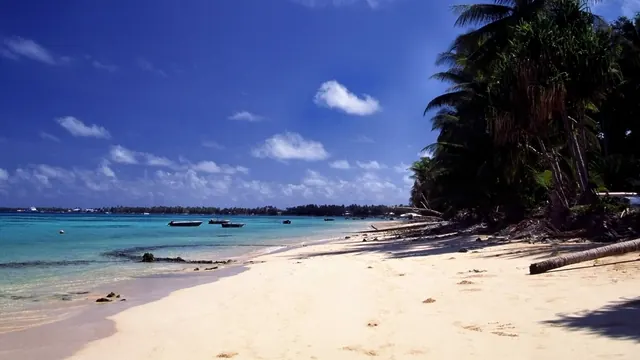
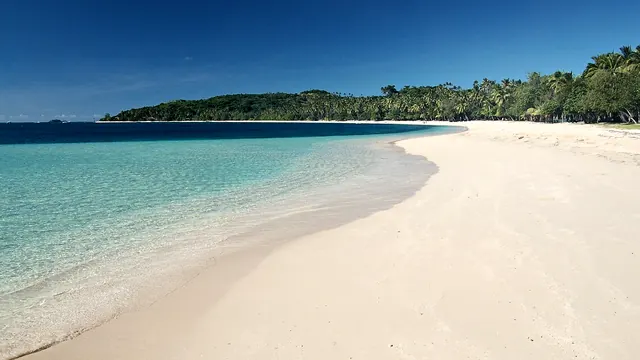
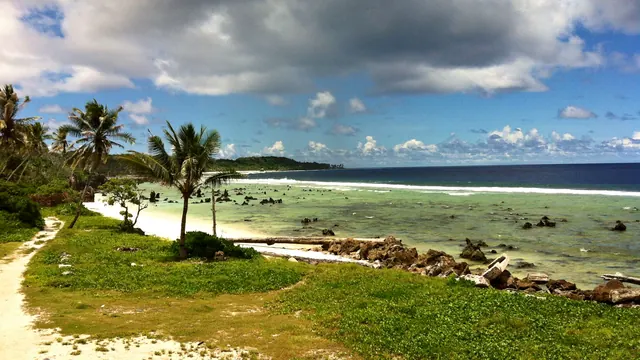
52The water around Funafuti is warm all year, close to 29°C, and the lagoon side of the atoll is calm and shallow. The best sand is not on Fongafale, the main islet, but on the uninhabited islets of the Funafuti Conservation Area across the lagoon: narrow strips of white coral sand, palms and clear water, reached by a boat you arrange locally. The ocean side of every islet is reef and surf and not for swimming.
On Fongafale people swim off the lagoon shore, but along the built-up stretch the water is less clean, and there are no beach bars, loungers or resort beaches. Swimming here means a quiet islet and whatever you bring with you.
Where: Funafuti Conservation Area, Funafala islet, Fongafale lagoon shore
Our top destinations in Tuvalu
Food & drink
14Eating out in Tuvalu means Funafuti, the capital atoll, and in practice the few small eateries and guesthouse kitchens along Fongafale, its main islet. They serve fried fish, rice, noodles and simple Chinese-style dishes, and much of what they cook comes in by ship. The traditional table is reef fish and tuna, breadfruit, pulaka (swamp taro), coconut and the occasional coconut crab. A visitor meets it mostly at a community feast in a maneapa or in a family home, not in a restaurant. There are no markets to speak of and no café or wine culture, and fresh produce is scarce.
Where: Funafuti
Our top destinations in Tuvalu
Culture & sights
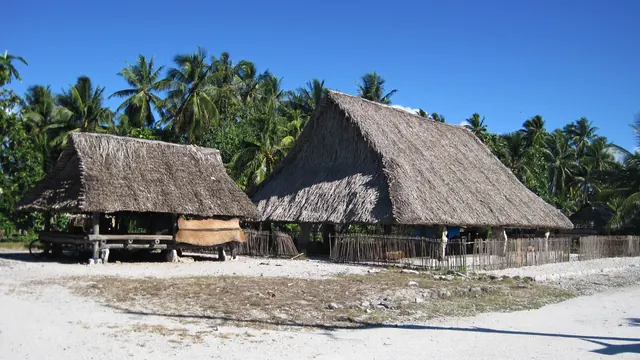
10There is little to visit in the usual sense. On Funafuti the airstrip itself dates from the Second World War, and around the atoll there are wartime remains: borrow pits, a few bunkers and wreckage. The maneapa, the open-sided community meeting houses, and the large white churches show how island life is organised, and the national stamp bureau is a small curiosity of its own. The outer islands have more wartime relics, Nanumea among them, but they are a separate trip by ship. The interest here is the everyday life of a small Polynesian nation, not its monuments.
Where: Funafuti, Nanumea
Our top destinations in Tuvalu
Nightlife
6What nightlife there is happens on Funafuti, the capital atoll, along the main islet of Fongafale: a couple of simple bars and the occasional weekend dance. In the evening the real social space is the airstrip, where people gather to talk, play sport and ride scooters once the day's flights are done. Most nights are early and quiet, and Sundays quieter still.
Where: Funafuti
Our top destinations in Tuvalu
Nature & outdoors
33Tuvalu is all low coral atolls, nowhere more than a few metres above the sea. The landscape is the lagoon: a wide ring of reef and palm-covered islets around calm turquoise water, with the Pacific breaking on the outer side. The Funafuti Conservation Area protects part of the western rim, and a boat trip there gives good snorkelling over coral, reef fish, green turtles and nesting seabirds such as noddies and terns.
On land there is nothing to hike and the islets can be walked end to end in minutes. There are few organised outdoor activities, so trips are arranged with local boat owners. The outer atolls are wilder still but need days on the government ship.
Where: Funafuti Conservation Area, Funafuti lagoon
Our top destinations in Tuvalu
Day trips
4There are no other towns or heritage sites within a day's reach. Outings from Funafuti are boat trips across the lagoon to empty islets, which are about the sea and the reef rather than places to visit, and the small settlement on Funafala has little to see. The outer islands are reached only by the government ship, a voyage of a day or more each way, so they are a separate journey rather than a day out.
Our top destinations in Tuvalu
Good for families
14Funafuti, the capital atoll and the only place most visitors stay, is safe, relaxed and welcoming, and children are part of everything in community life. In the evenings local children treat the airstrip and the calm lagoon shore of Fongafale as a playground. Still, nothing here is made for visiting families: there are no parks, attractions or child-oriented activities, the heat is constant, and medical facilities are basic, with serious care a flight away. It suits older children happy with boat trips and snorkelling off the lagoon islets, not a family looking for things to do.
Where: Funafuti
Our top destinations in Tuvalu
Getting around
20Funafuti is the only island most visitors see. Fongafale is a thin strip of land about 12km long, and everyone gets around it by motor scooter, which guesthouses can arrange. There are no buses and only a few taxis, and walking is easy but hot. Reaching the lagoon islets means hiring a local boat. The outer islands are served only by government ships that sail at irregular intervals and take a day or more, so a trip beyond Funafuti has to be built around the shipping schedule and plenty of spare time.
Where: Funafuti
Our top destinations in Tuvalu
Shopping & style
5All the shopping is on Funafuti, the capital atoll, near the airstrip on Fongafale. Local women sell woven mats, fans, shell necklaces and baskets at a small handicraft outlet, and the philatelic bureau sells the stamps that Tuvalu is known for among collectors. The rest is small general stores stocked with imported groceries. There is nothing else to shop for.
Where: Funafuti
Our top destinations in Tuvalu
Affordability
42Tuvalu is not cheap for what it offers. There are only a handful of places to stay on Funafuti, a modest hotel and some family guesthouses, so there is little choice and nothing at the budget end in the usual sense. Most food is imported, which makes groceries and restaurant meals pricier than their simplicity suggests. Scooter hire and simple local meals cost little, and there are no entry fees because there is little to pay for, but boat charters to the lagoon islets add up. Getting there is a separate cost of its own.
Where: Funafuti
Our top destinations in Tuvalu
Live music & performing arts
18The living art form is the fatele, a group dance-song in which seated singers and drummers beating a wooden box speed up as the dancers rise. On Funafuti, the capital atoll, it is performed in the maneapa, the open-sided meeting houses, at weddings, church events, community celebrations and national days such as Independence Day, and visitors are usually welcome to watch. There are no theatres, concert halls or regular performances, so seeing it depends on being there at the right time. Church choirs on a Sunday morning are the other chance to hear Tuvaluan singing.
Where: Funafuti
Our top destinations in Tuvalu
Wellness & relaxation
18There are no spas, massage houses or bathing traditions to seek out, so wellness here means only the pace of the place. Life on Funafuti is slow, Sundays are given over to church and rest, and there is little to do beyond reading in the shade and watching the lagoon. Some visitors find that restorative. Others find the heat, the basic facilities and the isolation more tiring than relaxing.
Where: Funafuti
Our top destinations in Tuvalu
Where to go in Tuvalu
Almost every trip to Tuvalu is a trip to Funafuti, the capital atoll. In practice that means Fongafale, the thin islet about 12km long where the airstrip, the guesthouses, the few eateries and shops and the big white churches all sit. There is one base and one kind of stay. You have slow days, a scooter to get around, evenings on the airstrip once the flights are done and church choirs on a Sunday morning. It suits a quiet stay and anyone curious about everyday life in a small Polynesian nation: the maneapa, the fatele danced at weddings and community celebrations, the wartime remains around the atoll and the stamp bureau. It does not suit a trip built around sightseeing, food or nightlife.
For beach days and the outdoors, go across the lagoon. The Funafuti Conservation Area on the western rim, and islets such as Funafala, have the white coral sand and clear water that Fongafale lacks. There is good snorkelling over coral, with reef fish, green turtles and nesting seabirds. You hire a local boat for these outings and bring whatever you need with you. They are also the best thing for older children, who will find little else made for them.
The outer islands are a separate trip. Atolls such as Nanumea, which has more wartime relics, are wilder and quieter still. The only way there is the government ship, which takes a day or more each way and sails at irregular intervals. A visit means planning the whole journey around the sailings and allowing plenty of spare time, so most visitors make Funafuti the whole trip.
When should you go?
Tuvalu has no single climate. Its months are measured at Funafuti; pick one to see it. The figures are measured averages, not a forecast.
Funafuti in July
Daytime high, °C
Rainfall in the month, mm
Temperature and rainfall are climate normals, averaged over the years shown. Funafuti: 1991-2020 normals, Funafuti (2.1 km from centre).
Compare Tuvalu with
Every comparison with a written verdict behind it, and any other country below.
Our destinations in Tuvalu
Every place in Tuvalu with its own page: its twelve scores, its texts and its months.