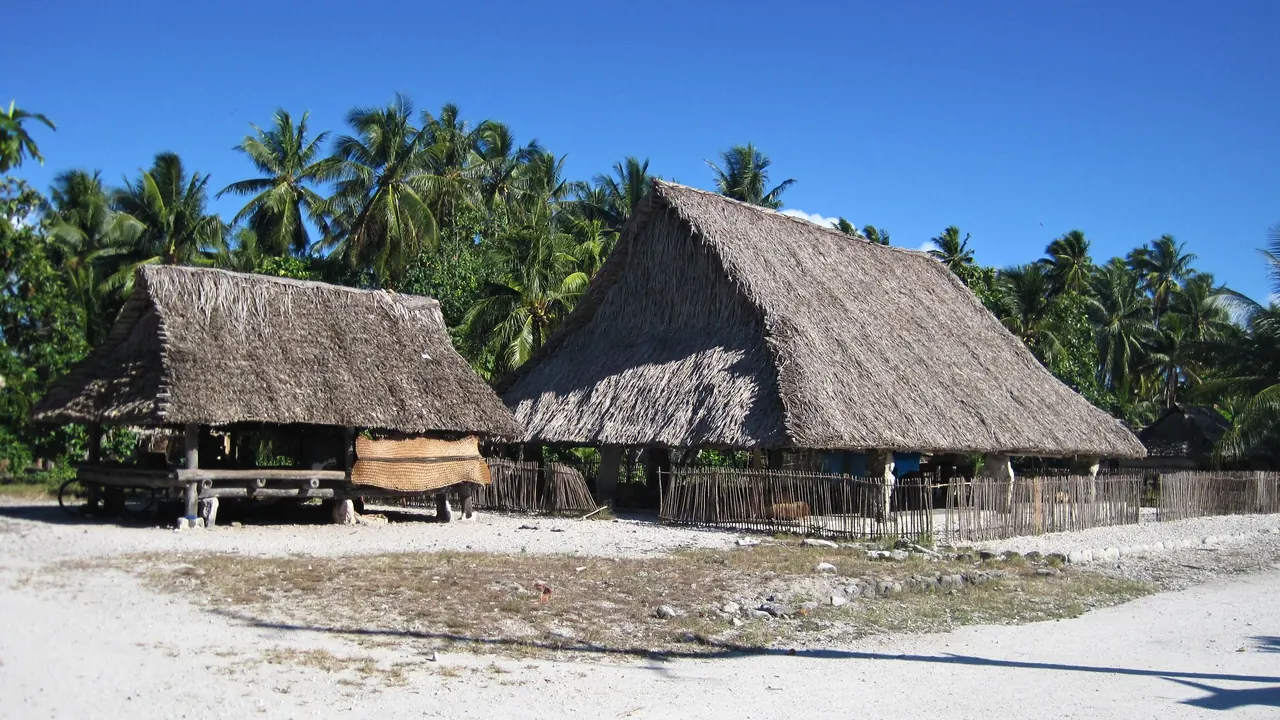
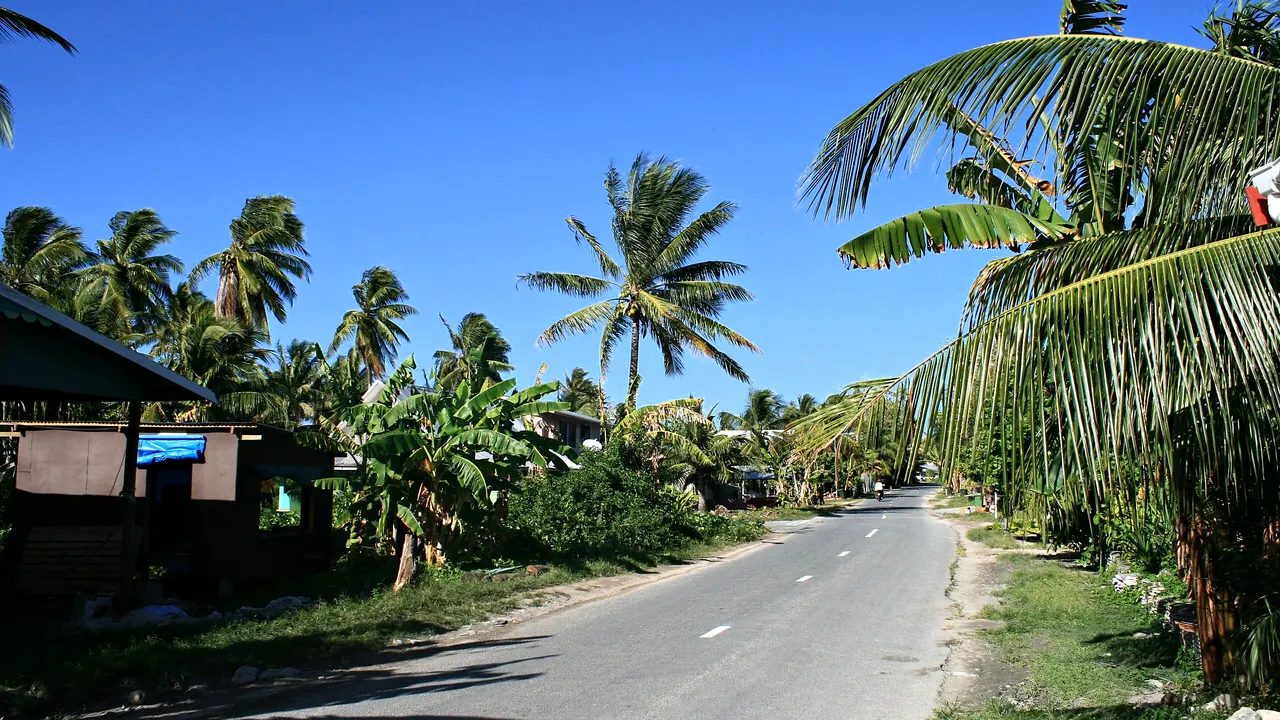
Photos: Kiribati by Rafael Ávila Coya, CC BY-SA 3.0, cropped; Tuvalu by Davidarfonjones, CC BY-SA 3.0, cropped.
Kiribati or Tuvalu?
Our verdict in twelve categories, each scored against the same fixed benchmark cities, and the climate month by month, so you can choose for your trip.
Choose Kiribati for
- nature and the outdoors
- culture and sights
- day trips
Kiribati is the better choice for a traveller who wants the sea and the outdoors to carry the trip and has some reason to be there beyond the stillness. Kiritimati's lagoon flats and seabird colonies draw fly-fishers and birdwatchers, the outer Gilberts such as Abaiang add reef snorkelling and outrigger sailing, and the Second World War battlefield on Betio gives the trip a historic anchor. The cost of all that is choice: the Gilberts and Kiritimati are two separate trips, so you have to pick one.
Choose Tuvalu for
- wellness
- getting around
- beaches
Tuvalu suits someone who wants a single small atoll and nothing to organise. Nearly everyone stays on Funafuti, gets about by scooter and spends the days watching the lagoon, with a boat out to the islets of the Conservation Area for swimming and snorkelling. There is less to do than in Kiribati, but that is the point, and its slow Sundays and evenings on the airstrip are the whole appeal.
Scoreboard
Twelve categories on one fixed scale from 0 to 100. The shaded stretch is the gap between the two.
Your match
Pick a travel style or drag the sliders, and both match scores follow your weighting.
Wins on nature and the outdoors and culture and sights with your weighting.
Wins on wellness and getting around with your weighting.
What matters to you?
Category by category
What the scores mean for a trip.
Beaches & swimming
The two are evenly matched, with warm, clear water and white coral sand in both. What differs is how you reach it. In Kiribati, good swimming is spread across several places, the lagoon beaches of Abaiang and North Tarawa in the Gilberts and the long empty shores of Kiritimati, so where you swim depends on which island group you travel to.
In Tuvalu, it all comes down to one outing: a boat across Funafuti lagoon to the uninhabited islets of the Conservation Area, Funafala among them. In both countries the water near the main settlement is best avoided, the ocean sides are reef and surf, and you bring your own shade.
Where in Kiribati: Kiritimati, Abaiang, North Tarawa
Where in Tuvalu: Funafuti Conservation Area, Funafala islet, Fongafale lagoon shore
Food & drink
Neither is a place to travel for food, but Kiribati gives you more chances to eat well. Abaiang's guesthouses cook lagoon fish and pit-grown swamp taro, South Tarawa has a few more small restaurants and hotel dining rooms, and coconut toddy is part of the table.
In Tuvalu you eat at a handful of eateries and guesthouse kitchens on Fongafale, mostly fried fish, rice and noodles made with imported ingredients. Pulaka and coconut crab turn up mainly at a maneapa feast, if you are invited.
Where in Kiribati: South Tarawa, Abaiang, Kiritimati
Where in Tuvalu: Funafuti
Culture & sights
Kiribati has the one sight worth crossing an ocean for. Betio was the scene of the 1943 Battle of Tarawa, and its coastal guns, bunkers, Japanese command post and landing craft rusting on the reef flat draw visitors with family or military ties. On the outer islands you can also see maneaba life, with permission.
Tuvalu's wartime traces are slighter: the airstrip itself, borrow pits and a little wreckage, with more relics on Nanumea, which is a voyage away by ship. Beyond those, the interest lies in its white churches, the meeting houses and the stamp bureau, and an afternoon covers it.
Where in Kiribati: Betio, South Tarawa
Where in Tuvalu: Funafuti, Nanumea
Nightlife
There is almost nothing to go out for in either country. In Kiribati, a hotel bar or an occasional dance night on South Tarawa is all there is. Tuvalu has a couple of simple bars on Fongafale, but the real evening scene is the airstrip after the last flight, where people play sport, ride scooters and talk.
Where in Kiribati: South Tarawa
Where in Tuvalu: Funafuti
Nature & outdoors
Kiribati gives you two quite different outdoor trips, and Tuvalu gives you one. Kiritimati is worth the journey in its own right: anglers come to wade its enormous shallow flats after bonefish and giant trevally, and birdwatchers come for the huge colonies of sooty terns, frigatebirds and boobies on its islets. The Gilberts are gentler. On outer atolls such as Abaiang and North Tarawa you spend the days on the water, snorkelling the reef or paddling and sailing an outrigger across a calm lagoon.
In Tuvalu the outdoors means Funafuti lagoon and little else. A boat to the Conservation Area on the western rim gives good snorkelling, with green turtles over the coral and noddies and terns nesting on the islets, but you arrange it with a local boat owner and it fills a day, not a whole trip. Neither country has hills or trails, so on land there is no walking beyond the length of an islet.
Where in Kiribati: Kiritimati, Abaiang, North Tarawa
Where in Tuvalu: Funafuti Conservation Area, Funafuti lagoon
Day trips
Kiribati at least gives you a few outings from South Tarawa. You can ride the causeway road to Betio's battle sites, cross by boat or wade at low tide to the villages of North Tarawa, or take the boat to Abaiang and its old Catholic mission church.
Tuvalu has no day trips in this sense. Leaving Funafuti means a boat to an empty islet, and the outer islands are more than a day away by government ship.
Where in Kiribati: North Tarawa, Abaiang, Betio
Good for families
Neither is set up for children, and in both medical care is basic and far from specialist help. Kiribati gives a family the choice of Abaiang or North Tarawa, with calm, shallow lagoon water and village guesthouses, but getting there means a boat or a short flight. Tuvalu keeps everything on Funafuti, where local children play on the airstrip and the lagoon shore every evening, which is easier to manage but has even less to do. Both suit older, adaptable children rather than young ones.
Where in Kiribati: Abaiang, North Tarawa
Where in Tuvalu: Funafuti
Getting around
Both are simple on the main islet and hard beyond it, though Tuvalu is a little easier because most visitors never leave Funafuti. You get around Fongafale, a strip about 12km long, by scooter from your guesthouse, and hire a boat for the lagoon.
On South Tarawa the minibuses running along the causeway road stop wherever you flag them. The trouble starts once you want more: domestic flights to the outer Gilberts are irregular, and Kiritimati lies some 3,000km away, normally reached via Fiji, so you need slack in your plans.
Where in Kiribati: South Tarawa, Kiritimati
Where in Tuvalu: Funafuti
Shopping & style
Neither country is a place to shop, and both sell much the same handicrafts: woven pandanus mats, fans, baskets and shell jewellery. Kiribati adds replicas of the old shark-tooth weapons. Tuvalu's own speciality is its postage stamps from the philatelic bureau on Fongafale, which collectors seek out.
Where in Kiribati: South Tarawa
Where in Tuvalu: Funafuti
Affordability
Both are expensive for what you get, and for the same reasons: imported food, little choice of rooms and the long journey to get there. Kiribati has more range. Abaiang's guesthouses with meals included are the gentler option, while Kiritimati's all-inclusive fishing lodges are a serious outlay.
Tuvalu's costs are narrower and easier to predict: a modest hotel or a family guesthouse on Funafuti, cheap scooter hire, and boat charters to the islets as the main extra.
Where in Kiribati: South Tarawa, Abaiang
Where in Tuvalu: Funafuti
Live music & performing arts
Dance is the living art in both, and neither has theatres or concert halls, so seeing it comes down to timing. In Kiribati you might see the ruoia, a standing dance with stiff, outstretched arms and bird-like movements of the head, or the seated te bino, at their best during the July Independence competitions on South Tarawa. In Tuvalu it is the fatele, where drummers beat a wooden box and speed up as the dancers rise, performed in Funafuti's maneapa at weddings and national days. Sunday church choirs are worth hearing in either country.
Where in Kiribati: South Tarawa, Abaiang
Where in Tuvalu: Funafuti
Wellness & relaxation
Neither country has a spa, a massage house or a bathing tradition, so relaxing comes down to the pace of island life, and Tuvalu has a little more of it. On Funafuti the week winds down to a Sunday of church and rest. There is so little to do that the stillness is hard to avoid, though some visitors find the constant heat and the isolation more draining than restful.\n\nIn Kiribati the slow rhythm belongs to the outer islands, where the tides and the midday heat set the shape of the day. A book in the shade on Abaiang or a quiet evening on Kiritimati is as close as it comes to a retreat. The calm is the same, with nobody pampering you, but you have to go out to the islands to find it.
Where in Kiribati: Abaiang, Kiritimati
Where in Tuvalu: Funafuti
When should you go?
Pick your month, and for a country the place in it. The climate figures are measured averages, not a forecast.
Where in Kiribati
Tarawa (Kiribati) in July
Funafuti (Tuvalu) in July
Daytime high, °C
Rainfall in the month, mm
Temperature and rainfall are climate normals, averaged over the years shown. Tarawa (Kiribati): 1991-2020 (sunshine 1981-2010) normals, Tarawa (7.2 km from centre). Funafuti (Tuvalu): 1991-2020 normals, Funafuti (2.1 km from centre).
Heat is never the deciding factor. Tarawa, Kiritimati and Funafuti all stay at around 31°C by day every month, and the sea is warm enough for swimming all year in both countries. Rain is what tells the seasons apart. Kiritimati has the clearest dry season: from June to November it barely rains, down to 27mm in October, while March is its wettest month. Tarawa is wettest from December to April and driest from September to November, falling to 88mm in November, and October is its sunniest month.
Tuvalu has no real dry season. Funafuti gets heavy rain all year, peaking at 368mm in January and March, and even its driest month, September at 209mm, is wetter than any month on Tarawa from July to November. The best stretch there is June to November, when it is a little less wet and August has the most sunshine. If you want the most reliable weather, go to Kiritimati in the middle of the year.
Which traveller are you?
For an outdoors trip, Kiribati is the clear pick. Kiritimati's vast lagoon flats are famous for bonefish and giant trevally and have huge seabird colonies, and Abaiang adds kayaking and sailing. Tuvalu's outdoors comes down to one snorkelling boat trip.
On a culture and arts trip, Kiribati has more substance. The guns, bunkers and landing craft from the Battle of Tarawa on Betio are real sights, and Independence in July brings competitive dancing. Tuvalu offers mostly wartime borrow pits and its stamp bureau.
For a relaxing and wellness trip, Tuvalu edges ahead. Funafuti is a single small atoll with church-quiet Sundays and no travel to plan. In Kiribati the calm of Abaiang or Kiritimati comes only after crowded South Tarawa and an awkward onward flight.
More comparisons
Each shares a side with Kiribati or Tuvalu.
Where else could you go?
Set Kiribati or Tuvalu against any other country.