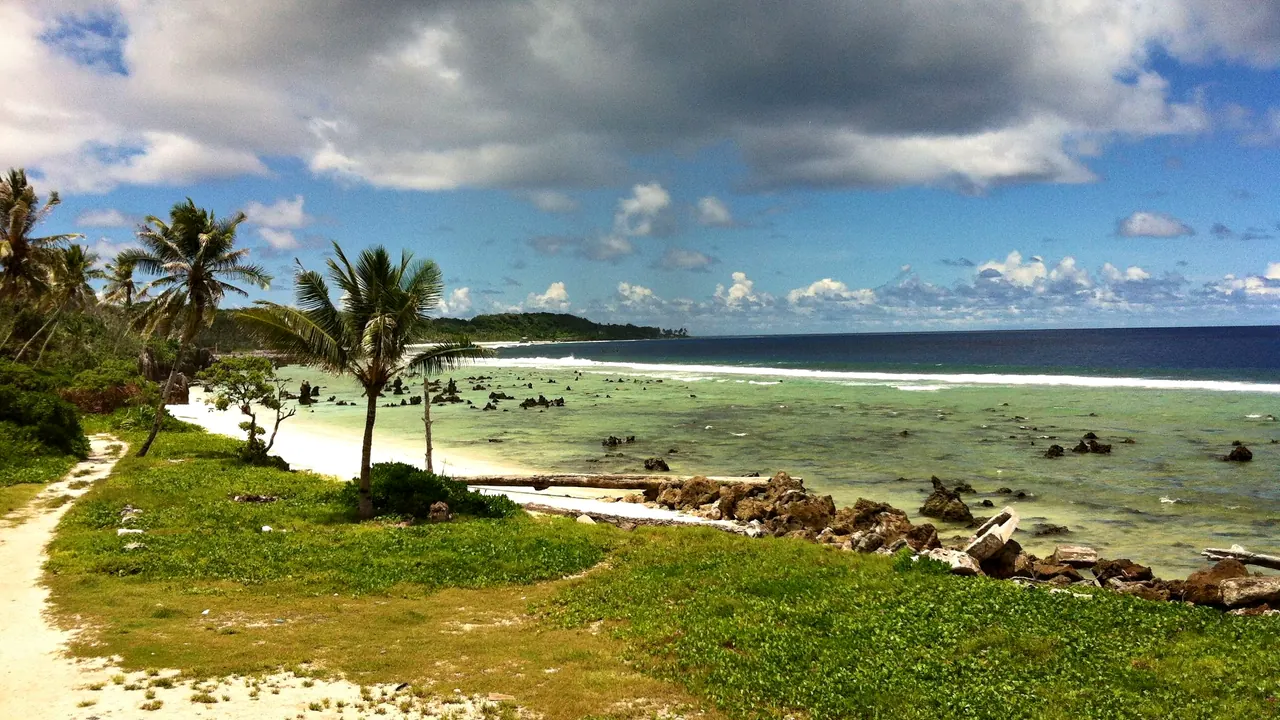
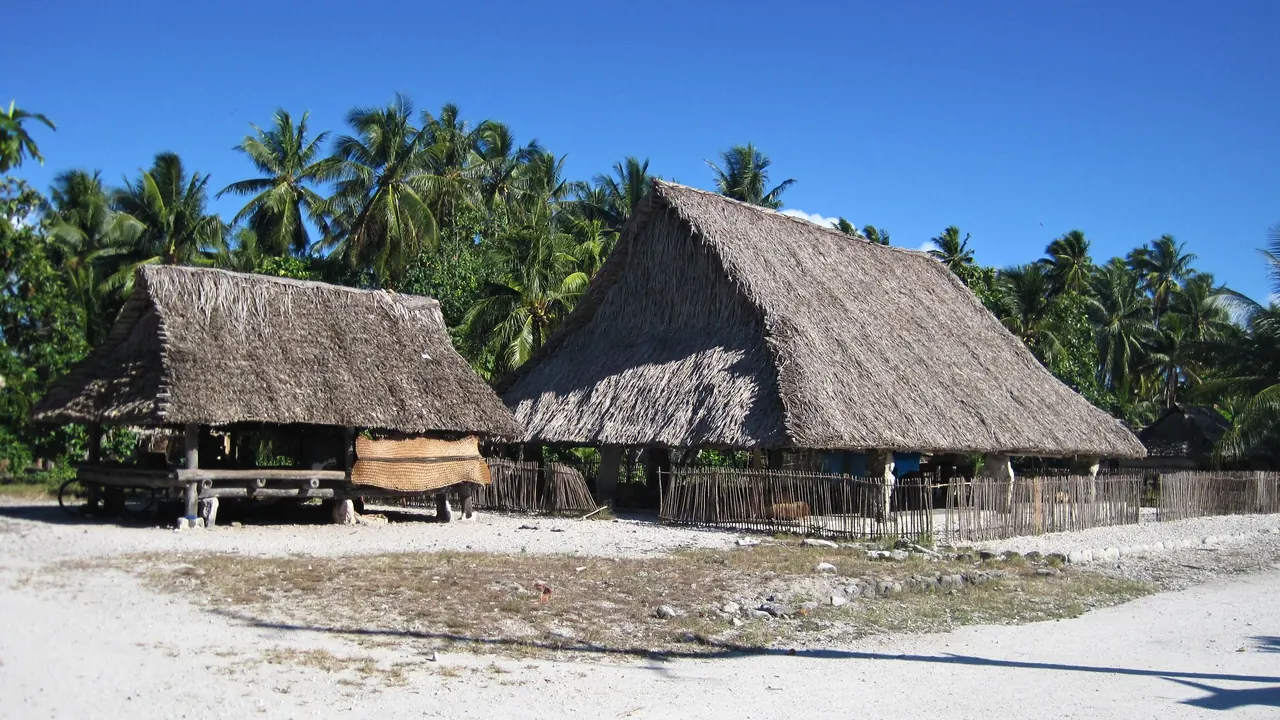
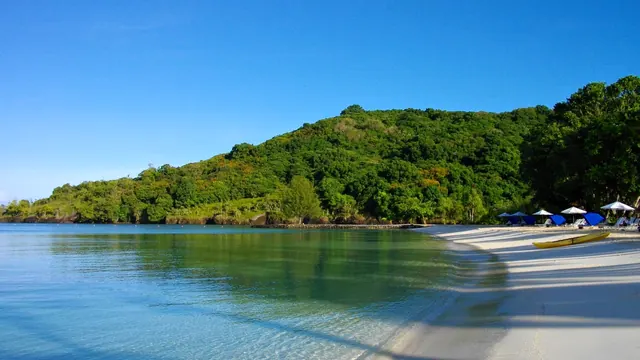
Photos: Nauru by Sean Kelleher, CC BY-SA 2.0, cropped; Kiribati by Rafael Ávila Coya, CC BY-SA 3.0, cropped.
Nauru or Kiribati?
Our verdict in twelve categories, each scored against the same fixed benchmark cities, and the climate month by month, so you can choose for your trip.
Choose Nauru for
- getting around
- wellness
- families
Nauru suits a traveller who wants one small island they can take in fully over a few unhurried days. A single ring road links everything, from the wartime guns on Command Ridge to the grey limestone pinnacles of Topside, and there is no second island to fly on to. You come for the quiet and the oddity of the place, with a swim in the boat harbour at the end of the day.
Choose Kiribati for
- nature and the outdoors
- beaches
- prices
Kiribati is the better pick for anyone drawn by water and wildlife, and willing to put up with harder travel to get them. Kiritimati's lagoon flats and bird colonies and the calm lagoons of Abaiang and North Tarawa give it far more to do outdoors. Village dance and choirs add a living culture, and day-to-day costs run a little lower. Be ready to choose one island group and to build slack into your plans.
Scoreboard
Twelve categories on one fixed scale from 0 to 100. The shaded stretch is the gap between the two.
Your match
Pick a travel style or drag the sliders, and both match scores follow your weighting.
Wins on getting around and wellness with your weighting.
Wins on nature and the outdoors and beaches with your weighting.
What matters to you?
Category by category
What the scores mean for a trip.
Beaches & swimming
Kiribati has the better swimming, though only once you leave South Tarawa, where the lagoon near town is too built up for a swim you would choose. On Abaiang, North Tarawa and Kiritimati there are long white coral-sand lagoon beaches with calm, clear water and hardly anyone else around.
Nauru has Anibare Bay's one pretty stretch of sand, but the reef drops away steeply and the currents are strong. Most swimming happens in the sheltered harbours cut through the reef at Anibare and Aiwo, or in rock pools at low tide. Neither place has sunbeds or lifeguards.
Where in Kiribati: Kiritimati, Abaiang, North Tarawa
Food & drink
Both are places where you eat plainly. On Nauru that means Chinese-run takeaways along the ring road and imported tins, with tuna or raw fish in coconut as the highlight.
Kiribati offers more chances to eat local food, as long as you get out of South Tarawa. Guesthouses on Abaiang serve lagoon fish, breadfruit and pit-grown swamp taro, and a village feast after a gathering in the maneaba, with coconut toddy, is the best meal either country can give you.
Where in Kiribati: South Tarawa, Abaiang, Kiritimati
Culture & sights
The Pacific war shapes both. Nauru has the Japanese guns and command post on Command Ridge and the old jail. Kiribati has Betio, where the 1943 Battle of Tarawa was fought and landing craft still rust on the reef flat, a site people travel to see for its own sake.
Beyond that they differ. Nauru adds industry: the phosphate cantilevers at Aiwo and the mined-out moonscape of Topside. Kiribati adds a living tradition in the maneaba meeting houses of the outer islands, which you can visit with permission. Neither has a real museum or historic town.
Where in Kiribati: Betio, South Tarawa
Nightlife
There is almost nothing to go out for in either place. Nauru offers a hotel bar and perhaps a weekend gathering. South Tarawa adds the occasional dance night, but the outer islands and Kiritimati are as quiet after dark as Nauru, and church matters more there than bars do.
Where in Kiribati: South Tarawa
Nature & outdoors
Here Kiribati is in a different league. Kiritimati, the largest coral atoll on earth, has lagoon flats that rank among the world's great fly-fishing grounds and islets full of terns, boobies, frigatebirds and tropicbirds. In the Gilberts, Abaiang and North Tarawa add reef snorkelling, lagoon kayaking and outrigger sailing in calm water.
Nauru's landscape is more a curiosity than a pleasure. You can scramble among the limestone pinnacles of Topside, walk round palm-ringed Buada Lagoon, and go deep-sea fishing or dive along the reef wall. Someone who likes the outdoors would run through it all in a couple of days.
Where in Kiribati: Kiritimati, Abaiang, North Tarawa
Day trips
Nauru has no outings at all: one island, no neighbours, no ferries. From South Tarawa, Kiribati at least gives you a few village-scale days out. You can ride the causeway to Betio's battle sites, wade across to North Tarawa's villages at low tide, or take a boat or short flight to Abaiang and its old Catholic mission church.
Where in Kiribati: North Tarawa, Abaiang, Betio
Good for families
Neither is set up for children. Nauru is slightly easier because it is one small island with short distances. Children can splash with local families in the sheltered harbours, though medical care is basic and the reef edge needs watching.
Kiribati asks more of a family: long, infrequent flights and care that is far from specialist help. It does give older, adaptable children better water, with shallow lagoon paddling and snorkelling on Abaiang and North Tarawa and village guesthouses where children are made very welcome.
Where in Kiribati: Abaiang, North Tarawa
Getting around
Nauru is far simpler. A 19km ring road takes under half an hour to drive and passes every sight, though you will need a hire car or scooter arranged through your hotel, because there are no buses for visitors.
South Tarawa is actually easy on its own, with minibuses you can flag down along its single road. The trouble starts beyond it. Outer Gilbert islands depend on irregular small planes or slow boats, and Kiritimati lies some 3,000km away, normally reached through Fiji, so most trips cover only one island group.
Where in Kiribati: South Tarawa, Kiritimati
Shopping & style
Neither is a place to shop. On Nauru, the small general stores sell imported groceries and household goods, and most visitors take home only photographs and a passport stamp.
Kiribati at least has things made on the islands. On South Tarawa, handicraft centres and village women sell woven pandanus mats, fans and baskets, shell jewellery and replicas of the old shark-tooth weapons. Beyond those, its shops carry the same imported everyday goods as Nauru's.
Where in Kiribati: South Tarawa
Affordability
Kiribati is the cheaper of the two day to day. On South Tarawa, minibuses and simple meals cost little, and Abaiang's guesthouses usually include meals. Kiritimati's all-inclusive fishing lodges are the expensive exception.
Nauru has no cheaper tier to fall back on. You choose between a couple of hotels and a few lodges, all costly for the standard, although takeaway meals are reasonable and car hire is the main extra. Getting to either country by limited flights takes a large share of the budget.
Where in Kiribati: South Tarawa, Abaiang
Live music & performing arts
Kiribati has far more to see. Its standing dances such as the ruoia, with their sharp, bird-like head and hand movements, and the seated te bino, are a source of real pride. Church choirs on South Tarawa sing in powerful harmony every Sunday, and in July island groups compete in dance for Independence.
Nauru's song and dance appear only at community events and national days, so most visitors will see nothing. Neither country has a theatre or concert hall.
Where in Kiribati: South Tarawa, Abaiang
Wellness & relaxation
Neither has spas, baths or treatments, so this comes down to quiet. Nauru gives you quiet from the moment you land: little traffic, no crowds and a whole island that slows down with no effort.
In Kiribati, quiet takes more work. South Tarawa is crowded, and the tide-set calm of Abaiang or Kiritimati means another flight or boat. Once you are there, it is just as restful.
Where in Kiribati: Abaiang, Kiritimati
When should you go?
Pick your month, and for a country the place in it. The climate figures are measured averages, not a forecast.
Where in Kiribati
Nauru in July
Tarawa (Kiribati) in July
Daytime high, °C
Rainfall in the month, mm
Where the figures come from
Nauru has no weather station within reach, so its figures come from a gridded climate model rather than a measured record, and read a broad area rather than one spot.
Temperature and rainfall are climate normals, averaged over the years shown. Nauru: 2001-2020 normals, NASA POWER reanalysis grid, no weather station within 90 km. Tarawa (Kiribati): 1991-2020 (sunshine 1981-2010) normals, Tarawa (7.2 km from centre).
Nauru barely changes through the year. Days sit at about 29°C and the sea stays just as warm, so swimming is possible in any month. The real difference is the rain. December to March is the wettest stretch, at close to 200mm a month, while May to October is noticeably drier. It is humid and hot for walking the coast road at any time, so early mornings and late afternoons are best.
Kiribati runs a little hotter, with Tarawa in the low 30s all year and a warm sea. On Tarawa the rain peaks in March, and September to November is the driest and sunniest spell. Kiritimati has the most marked dry season in either place, with under 60mm a month from June to November. That makes those months the clear choice for its lagoon flats, while its wet peak also falls in March.
Which traveller are you?
For an outdoors trip, Kiribati wins easily. Kiritimati's huge lagoon flats are famous for fly-fishing for bonefish and giant trevally, with vast seabird colonies on its islets. Nauru's pinnacle scramble on Topside and some deep-sea fishing are used up quickly.
On a beach and sun trip, Kiribati is the better choice. The outer lagoons of Abaiang, North Tarawa and Kiritimati have long, empty white-sand beaches with calm water. Nauru has a reef flat and currents, and most of its swimming happens in sheltered boat harbours.
On a relaxing and wellness trip, Nauru edges ahead. The whole island is quiet without any effort: little traffic, nothing to book and no onward journeys. In Kiribati you have to get away from crowded South Tarawa to Abaiang or Kiritimati to find the same stillness.
More comparisons
Each shares a side with Nauru or Kiribati.
Where else could you go?
Set Nauru or Kiribati against any other country.