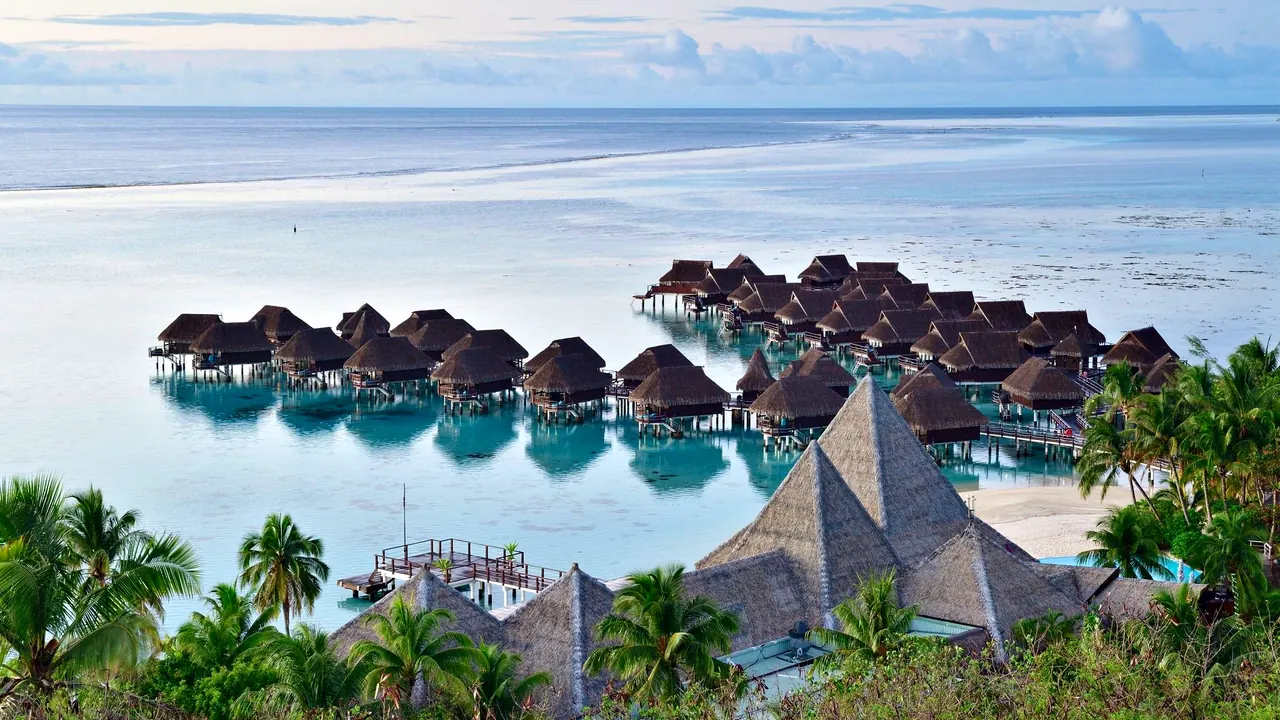
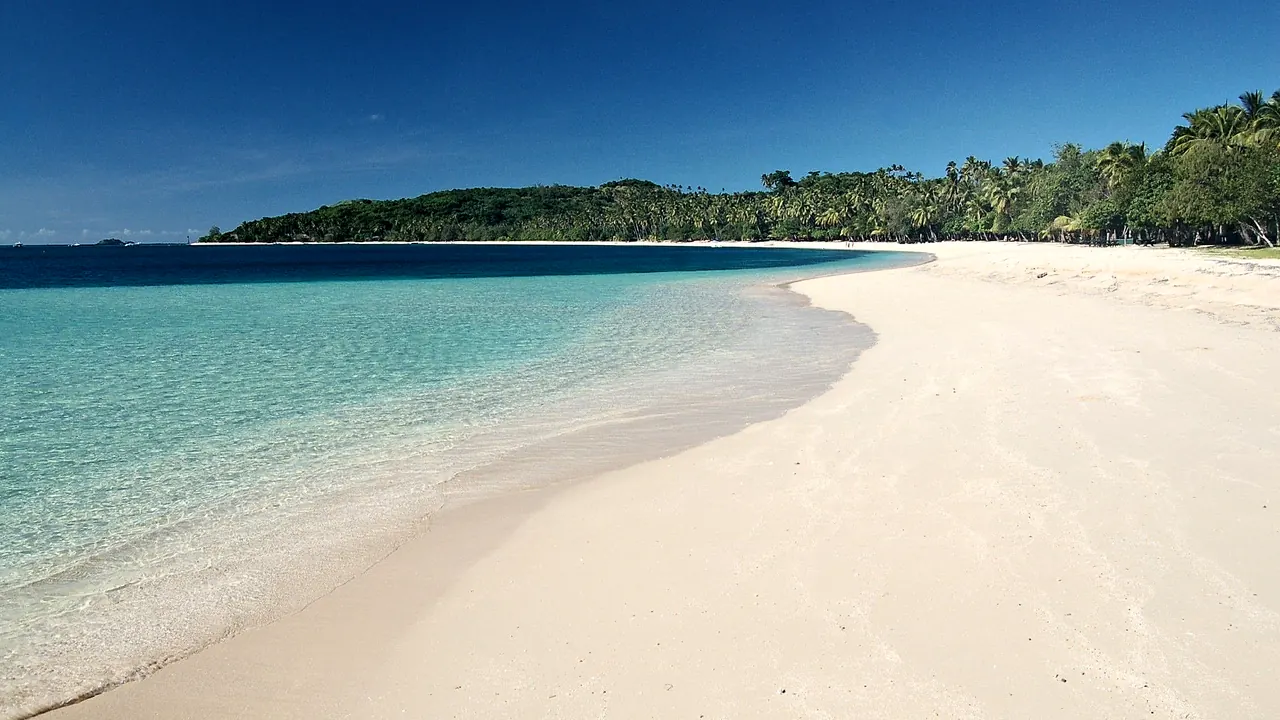
Photos: French Polynesia by Colon Freld, Pexels License; Fiji by Msdstefan at de.wikipedia, Public domain.
French Polynesia or Fiji?
Our verdict in twelve categories, each scored against the same fixed benchmark cities, and the climate month by month, so you can choose for your trip.
Choose French Polynesia for
- shopping
- live music and the arts
- nature and the outdoors
French Polynesia is the one to pick for the most dramatic scenery, if you are ready to pay for it. Green volcanic peaks rise straight out of the lagoons on Moorea and Bora Bora, the passes of the Tuamotu offer some of the world's best drift dives, and Papeete adds French bakeries, waterfront roulottes, black pearls and Tahitian dance. It suits couples and honeymooners planning a once-in-a-lifetime trip around two or three islands.
Choose Fiji for
- prices
- families
- wellness
Families, and anyone watching costs, will find Fiji easier. Its resorts on Denarau, the Coral Coast and the inner Mamanucas are built with children in mind, and the islands are a boat ride from Nadi rather than another flight. Backpacker lodges and Indo-Fijian canteens make a cheaper trip possible. It is also the more restful of the two, with small islands that have one resort, no roads and nothing to do but swim.
Scoreboard
Twelve categories on one fixed scale from 0 to 100. The shaded stretch is the gap between the two.
Your match
Pick a travel style or drag the sliders, and both match scores follow your weighting.
Too close to call, 2 points apart
Wins on shopping and live music and the arts with your weighting.
Wins on prices and families with your weighting.
What matters to you?
Category by category
What the scores mean for a trip.
Beaches & swimming
The beaches are about equally fine and the sea is warm all year in both countries. What differs is how you swim. In French Polynesia much of it happens off a pontoon or an overwater bungalow on Bora Bora and in the Tuamotu. Matira is the classic sand beach, and the pink-sand motu of Tikehau are reached by boat. Tahiti itself has mostly black sand and surf.
In Fiji you are more likely to walk off the sand and straight into the lagoon, on the small coral islands of the Mamanucas or the longer, quieter beaches of the Yasawas. The main island is the weak spot here too: Denarau's shore is murky, and on the Coral Coast a reef flat means swimming depends on the tide.
Where in French Polynesia: Bora Bora, Tikehau, Maupiti, Moorea
Where in Fiji: Yasawa Islands, Mamanuca Islands, Coral Coast, Taveuni
Food & drink
French Polynesia eats somewhat better. The French side adds baguettes, pastries and wine to poisson cru and Chinese-Tahitian chow mein, and Papeete's waterfront roulottes make for a lively evening. Away from Tahiti and Moorea, though, meals are mostly in hotel dining rooms, and much of the food is imported.
Fiji's two traditions are worth seeking out in town: iTaukei kokoda and lovo feasts, and Indo-Fijian curries, roti and dhal in the canteens of Nadi, Lautoka and Suva. The catch is that most visitors stay on an island where the resort buffet or set menu is all there is.
Where in French Polynesia: Papeete, Moorea
Where in Fiji: Suva, Nadi, Lautoka
Culture & sights
Neither country is a sightseeing destination, and their short lists of sights are different in kind. French Polynesia's heritage is Polynesian and mostly outdoors: the stone marae platforms of Taputapuatea on Raiatea, restored marae in the valleys of Tahiti and Moorea, and the Museum of Tahiti and Its Islands. The great stone tiki of the Marquesas need a separate trip.
Fiji's best sights are as much colonial and Indian as Pacific. Levuka has a 19th-century wooden waterfront, the Fiji Museum stands in Suva's Thurston Gardens and Nadi has its painted Hindu temple. A village visit with a sevusevu welcome shows you living custom rather than monuments.
Where in French Polynesia: Raiatea, Tahiti, Marquesas Islands
Where in Fiji: Levuka, Suva, Nadi
Nightlife
Both countries go to bed early. In French Polynesia, a few waterfront bars and clubs in Papeete stay open late at weekends, and elsewhere the evening means a sunset drink and a hotel dance show. Fiji has a little more variety: Suva's bars fill with locals and students on Friday and Saturday nights, and backpacker islands in the Mamanucas and Yasawas hold beach parties for a young crowd.
Where in French Polynesia: Papeete
Where in Fiji: Suva, Mamanuca Islands, Nadi
Nature & outdoors
Scenery is where French Polynesia pulls ahead. The volcanic peaks of Moorea and Bora Bora rising out of the lagoons are more dramatic, and Moorea's ridge trails and Tahiti's guided valley walks give you more to do on land. Underwater, the grey-shark drift dives in the passes of Rangiroa and Fakarava are world-famous, and humpback whales calve offshore from July to October.
Fiji is also strongest below the surface, with the soft corals of Taveuni's Rainbow Reef, shark dives in Beqa Lagoon, manta rays in the Yasawas and rafting in the Navua gorges. Its hills are lower and its trails are short, though, and as in French Polynesia, the best diving means a domestic flight.
Where in French Polynesia: Moorea, Rangiroa and Fakarava, Bora Bora, Tahiti
Where in Fiji: Taveuni, Kadavu, Beqa Lagoon, Yasawa Islands
Day trips
Neither country is made for day trips, but French Polynesia has the one classic outing. The fast ferry from Papeete takes you to Moorea for a day of villages, pineapple plantations and views over its bays, and a drive around Tahiti reaches the peninsula of Tahiti Iti. From Raiatea, a boat across the lagoon to the vanilla and pearl farms of Taha'a makes another good day.
In Fiji, a day out from Nadi or Denarau usually means a boat to a Mamanuca island for sand and snorkelling. On land there is Sigatoka on the Coral Coast, or Lautoka's market north of Nadi. Suva and Levuka are too far for a single day.
Where in French Polynesia: Tahiti, Moorea, Raiatea, Taha'a
Where in Fiji: Sigatoka, Lautoka, Suva
Good for families
Fiji is the far easier choice with children. Resorts on Denarau, the Coral Coast and the inner Mamanucas run kids' clubs with crafts, hermit-crab races and Fijian games, and the staff are known for their real warmth with young guests. There is even a small wildlife park with iguanas on the Coral Coast.
French Polynesia has the same calm, shallow lagoons and a safe, relaxed culture, with Moorea and Tahiti as the best bases. But nothing there is built for children, the island hops are longer, and Bora Bora's overwater resorts are aimed at honeymooners.
Where in French Polynesia: Moorea, Tahiti
Where in Fiji: Denarau, Mamanuca Islands, Coral Coast
Getting around
Fiji is simpler to travel around. Nearly every trip starts at Nadi, catamarans run out through the Mamanuca and Yasawa chains, and buses and taxis follow the coast road across Viti Levu to Suva.
French Polynesia's islands are spread far wider. Apart from the fast ferry between Tahiti and Moorea, most hops are domestic flights, often routed back through Papeete, and on the islands themselves you will want to rent a car, scooter or bicycle. Two or three islands are easy to plan; a longer route takes careful booking.
Where in French Polynesia: Tahiti, Moorea
Where in Fiji: Mamanuca Islands, Viti Levu, Yasawa Islands
Shopping & style
French Polynesia has one thing really worth buying, the Tahitian black pearl. You can buy pearls from dealers in Papeete or straight from the farms on Taha'a. Papeete's central market gathers pareos, monoi oil, vanilla and some Marquesan carvings under one roof.
Fiji's shopping is crafts and souvenirs. The markets of Suva and Nadi sell masi cloth, kava bowls and woven mats, Nadi's main street has duty-free shops and Denarau has resort wear. Look for pieces made by the seller.
Where in French Polynesia: Tahiti, Taha'a, Marquesas Islands
Where in Fiji: Suva, Nadi, Denarau
Affordability
Fiji is much the cheaper of the two, if you plan for it. A base on Viti Levu with canteen meals, local buses and day boats to the lagoons keeps a trip modest, and so does a Yasawa backpacker lodge with meals included. The island resorts are another matter, with compulsory meal plans and seaplane transfers.
In French Polynesia even careful travellers pay a lot. Almost everything is imported, inter-island flights add up quickly and Bora Bora's overwater rooms are among the costliest anywhere. Family-run pensions on Tahiti, Moorea and Huahine, roulottes and self-catering soften the cost but do not make it cheap.
Where in French Polynesia: Tahiti, Moorea, Huahine
Where in Fiji: Nadi, Coral Coast, Yasawa Islands
Live music & performing arts
Dance is the bigger draw in French Polynesia. Ori tahiti is a living art form, and in July the Heiva i Tahiti brings dance troupes and choirs to Papeete to compete over several weeks, which is worth timing a trip around. The rest of the year you will see dance at hotel dinner shows and hear himene singing in church on Sunday.
In Fiji, the meke dances and the Beqa firewalkers are mostly performed at resort lovo nights and around Pacific Harbour. The music you remember is often a church choir, or the farewell song the staff sing as you leave. Fiji has no festival to plan a trip around.
Where in French Polynesia: Papeete
Where in Fiji: Pacific Harbour, Coral Coast, Suva
Wellness & relaxation
Fiji is the better place to switch off. A small Mamanuca island with one resort and no roads, an adults-only island, or a remote lodge on Taveuni or Vanua Levu is about as quiet as travel gets. It also has a modest bathing side in the Sabeto mud pools behind Nadi and the hot springs along the shore at Savusavu.
French Polynesia has no springs or baths at all. Its strength is the resort spas of Bora Bora and Moorea, where monoi and taurumi massage are given in garden or over-water pavilions. Outside the resorts there is little to choose from.
Where in French Polynesia: Bora Bora, Moorea, Tahiti
Where in Fiji: Mamanuca Islands, Savusavu, Taveuni, Sabeto Valley
When should you go?
Pick your month, and for a country the place in it. The climate figures are measured averages, not a forecast.
Where in French Polynesia
Tahiti (French Polynesia) in July
Mamanuca Islands (Fiji) in July
Daytime high, °C
Rainfall in the month, mm
Where the figures come from
Mamanuca Islands (Fiji)'s temperatures are measured 35 km from the centre, at Nandi.
Mamanuca Islands (Fiji) has no rain gauge within 25 km of the centre, so its rainfall comes from a gridded climate dataset read at the destination rather than from a gauge further away.
Temperature and rainfall are climate normals, averaged over the years shown. Tahiti (French Polynesia): 1991-2020 normals, Tahiti-Faaa (5.3 km from centre). Mamanuca Islands (Fiji): 1991-2020 normals, Nandi (35.3 km from centre).
Both places are hot every month and the lagoons are warm enough to swim all year, so the season mostly decides how much rain you get. On Tahiti and Bora Bora the best stretch runs from June to September. Tahiti gets only about 43mm of rain in July and August, and sunshine is at its longest. The wet months are December to February, with around 280mm on Tahiti in December. April, May, October and November fall in between and are still good.
The Mamanuca Islands, off Fiji's western side, follow a similar pattern, but their rain comes later. It is heaviest from January to March, reaching about 274mm in March, and still heavy in April. December there is noticeably lighter. The dry, sunny spell runs from May to September, with July down to about 51mm. So in December the Mamanucas are the drier choice, and in April Tahiti and Bora Bora have dried out sooner. There is no data for the wetter east of Fiji around Suva and Taveuni.
Which traveller are you?
On a family trip with young children, Fiji asks less of you. Choose one resort close to Nadi and stay there. The transfer is short, the days run themselves and staff help with the children. French Polynesia's long hops wear young travellers out.
On a tight budget, choose Fiji, and expect to give up the private island in return. Simple lodges and life on the main island make a modest trip possible. French Polynesia has no truly cheap version, only less expensive ones.
For an outdoors trip, French Polynesia comes out ahead, especially if you want both hiking and diving. Its volcanic peaks give you proper climbs, and from July to October the whale season falls in the drier months. If you only dive, Fiji's reefs are a strong alternative.
More comparisons
Each shares a side with French Polynesia or Fiji.
 Bora Bora vs Fiji
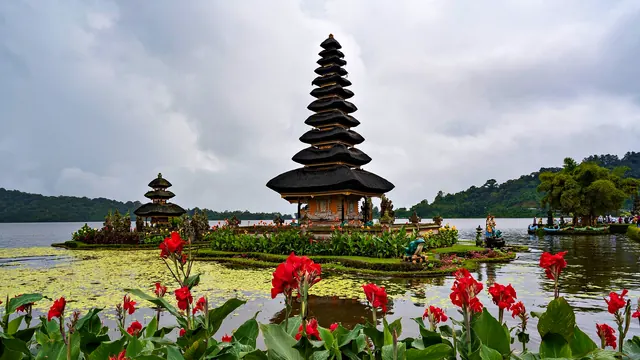 Fiji vs Bali
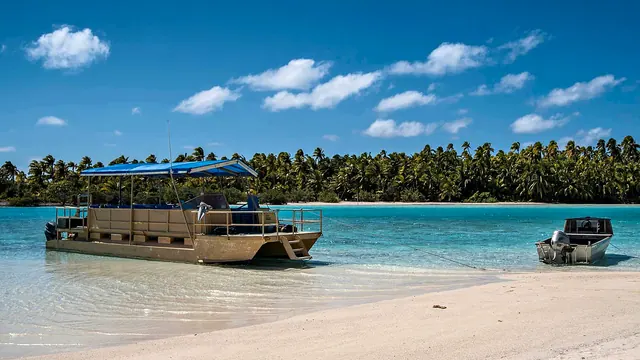 Fiji vs Cook Islands
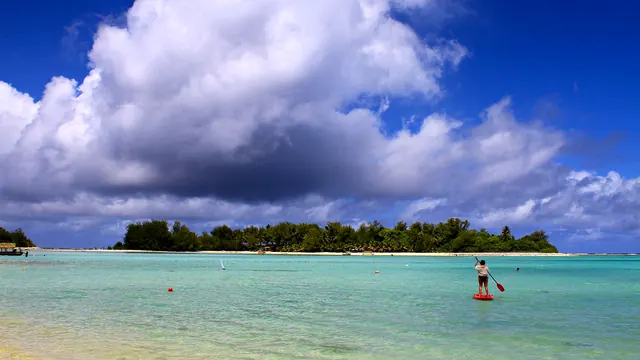 Fiji vs Rarotonga
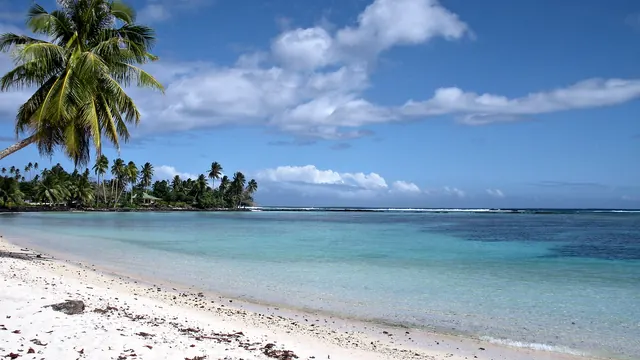 Fiji vs Samoa
 Fiji vs Tonga
 French Polynesia vs Cook Islands
 French Polynesia vs Hawaii
 French Polynesia vs Maldives
 French Polynesia vs New Caledonia
- Hawaii vs Fiji
 Kiribati vs Fiji
- Maldives vs Fiji
- New Caledonia vs Fiji
 Palau vs Fiji
 Papua New Guinea vs Fiji
 Solomon Islands vs Fiji
 Tahiti vs Fiji
 Tuvalu vs Fiji
 Vanuatu vs Fiji
Where else could you go?
Set French Polynesia or Fiji against any other country.