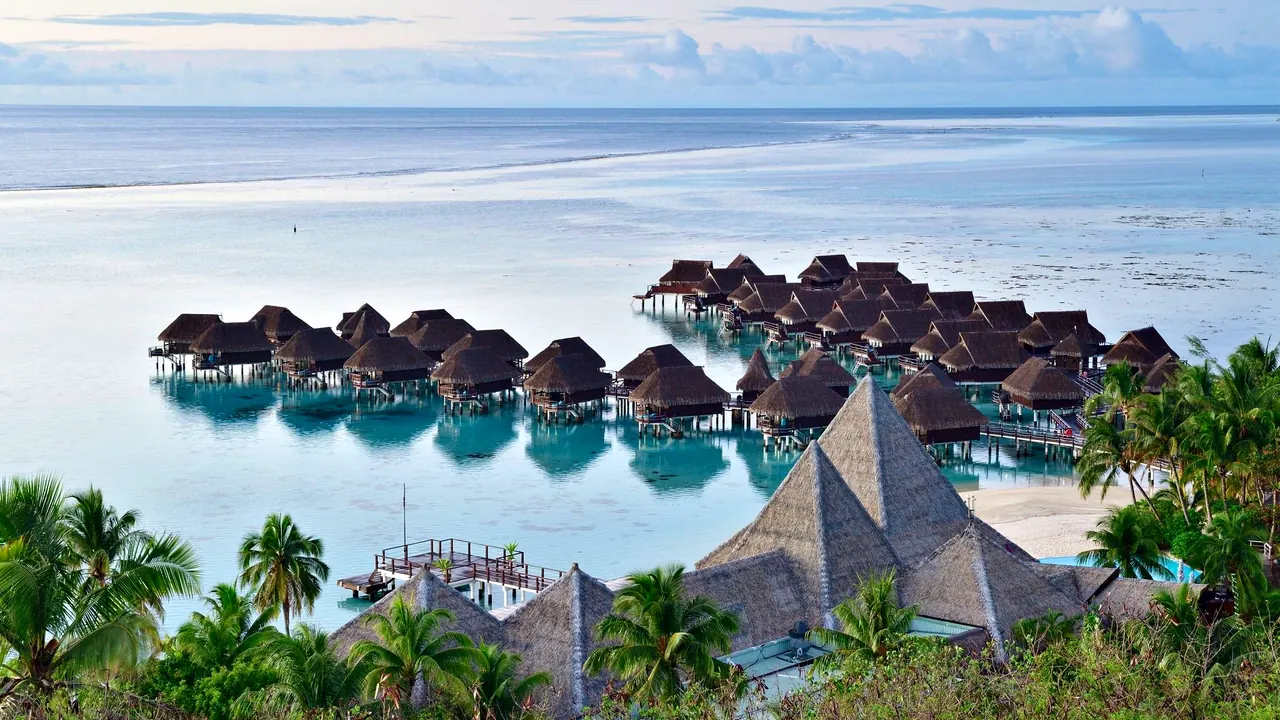
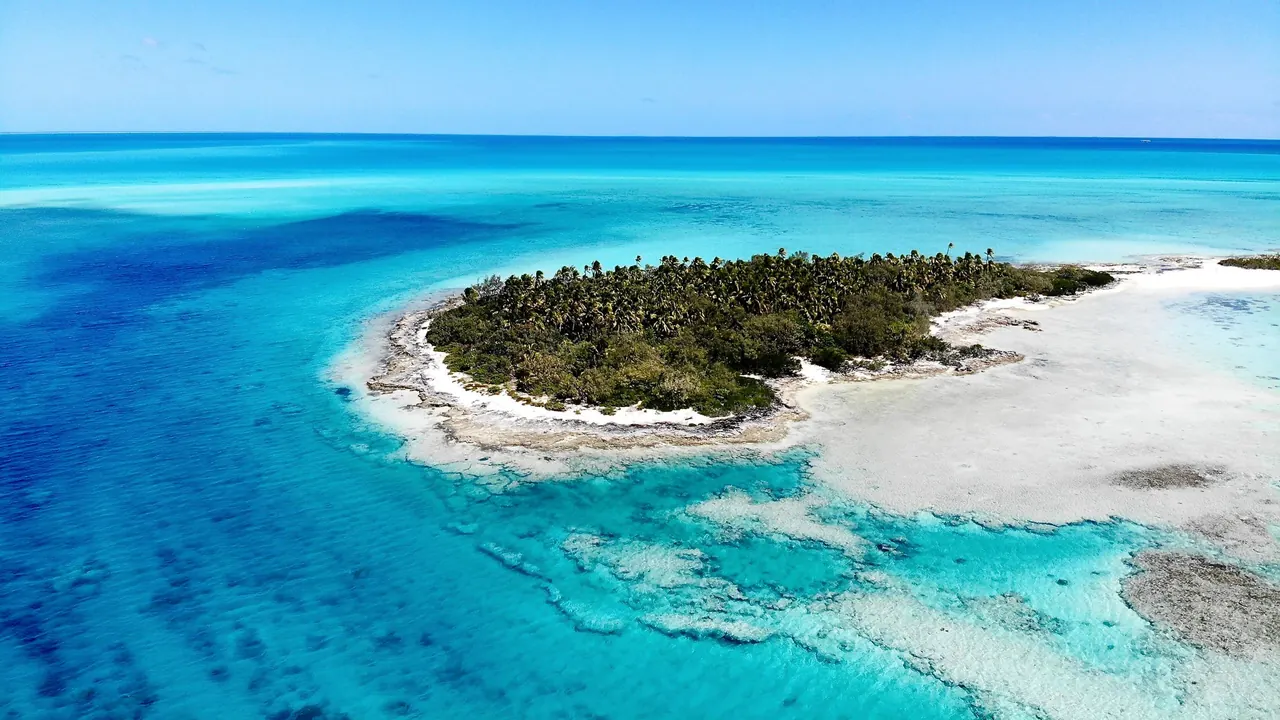
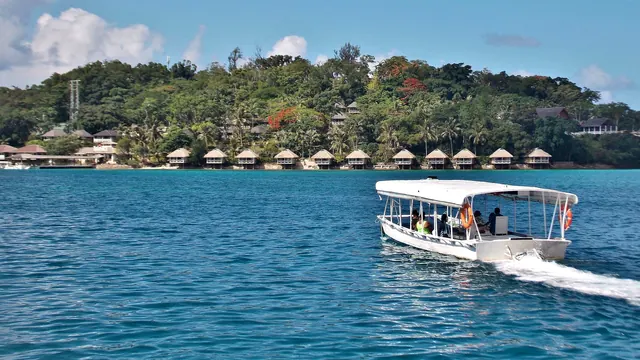
Photos: French Polynesia by Colon Freld, Pexels License; New Caledonia by Pacificbluefilm, CC BY-SA 4.0, cropped.
French Polynesia or New Caledonia?
Our verdict in twelve categories, each scored against the same fixed benchmark cities, and the climate month by month, so you can choose for your trip.
Choose French Polynesia for
- live music and the arts
- nature and the outdoors
- shopping
For a couple or honeymooners after the lagoon in its most famous form, French Polynesia is the pick: green volcanic peaks over turquoise water, a swim straight off the bungalow deck on Bora Bora, ridge walks on Moorea and some of the world's great drift diving in the passes of Rangiroa and Fakarava. Tahitian dance is a living art here, at its best during the Heiva in July. What you give up is evenings out and anything built for children. It is also one of the costliest trips anywhere, with flights to plan between islands.
Choose New Caledonia for
- families
- nightlife
- culture and sights
A family or a slower beach trip is better served by New Caledonia. Nouméa is a real town to base yourself in, with calm swimming at Anse Vata, an aquarium and a zoo for children, French bakeries and a few bars that stay busy at weekends. For heritage, the Tjibaou Cultural Centre and the penal colony ruins give a fuller picture of the place than French Polynesia's marae at Taputapuatea and the Museum of Tahiti. The Isle of Pines and the Loyalty Islands are close enough for outings by plane or ferry. Its nature is less dramatic than French Polynesia's peaks: a vast UNESCO-listed lagoon with turtles and dugongs, the red earth of the Grand Sud and the rainforest around Hienghène. It is still expensive, if not quite as punishing.
Scoreboard
Twelve categories on one fixed scale from 0 to 100. The shaded stretch is the gap between the two.
Your match
Pick a travel style or drag the sliders, and both match scores follow your weighting.
Too close to call, 2 points apart
Wins on live music and the arts and nature and the outdoors with your weighting.
Wins on families and nightlife with your weighting.
What matters to you?
Category by category
What the scores mean for a trip.
Beaches & swimming
Both are lagoon country of the highest order, and the difference is in how you swim. In French Polynesia you often step straight off a pontoon or a stilted bungalow on Bora Bora or in the Tuamotu, with Matira beach, the pink and white motu of Tikehau and the quiet shore of Maupiti for sand. Tahiti itself has mostly black volcanic sand, so you swim elsewhere.
New Caledonia is more about classic beach days. Anse Vata and the Baie des Citrons are right in town, and the outer islands have the white bays of the Isle of Pines under their columnar pines, the natural pool at Oro and Ouvéa's single beach, which runs for about 25km. Its sea gets noticeably cooler in winter, dropping towards 22°C, while French Polynesia's lagoons stay warm all year. Some of its beaches carry shark warnings, so swimmers follow the local signs.
Where in French Polynesia: Bora Bora, Tikehau, Maupiti, Moorea
Food & drink
The two are close, and both are French cooking with a Pacific layer. French Polynesia's signature is poisson cru, and Papeete's evening roulottes on the waterfront are its most local and sociable way to eat. Beyond Tahiti and Moorea, meals mostly mean hotel dining rooms.
New Caledonia's table rests on Nouméa, with proper bistros, lagoon crab and its farmed blue prawns, plus bami and nems from long-settled Vietnamese and Indonesian families. Its dish to seek out is bougna, cooked on hot stones at a tribal homestay on the Isle of Pines or the Loyalty Islands. In both, the choice shrinks fast once you leave the main town.
Where in French Polynesia: Papeete, Moorea
Culture & sights
New Caledonia gives the curious visitor more. The Tjibaou Cultural Centre, Renzo Piano's wooden shells modelled on Kanak great houses, is a landmark in its own right, and the Museum of New Caledonia and the penal colony ruins on Nouville and the Isle of Pines add a colonial history you can walk through.
French Polynesia's heritage is mostly outdoor stone. The marae of Taputapuatea on Raiatea is the high point, and the Museum of Tahiti and Its Islands explains navigation and tattooing. The great tiki of the Marquesas need a separate long flight. In neither place will sights fill more than a few days.
Where in French Polynesia: Raiatea, Tahiti, Marquesas Islands
Nightlife
Neither is a place to go out, but New Caledonia has a little more. Nouméa's beach bars on the Baie des Citrons and Anse Vata fill at sunset, and a handful of bars and small clubs stay busy past midnight on Fridays and Saturdays. In French Polynesia only Papeete has anything late, a few waterfront bars with a local crowd. On Bora Bora or Moorea the night ends with dinner and perhaps a hotel dance show.
Where in French Polynesia: Papeete
Nature & outdoors
French Polynesia comes out ahead because it has both great scenery and great diving. The jagged green peaks over Moorea's two bays and Bora Bora's Mount Otemanu are the views people travel for, Tahiti has guided valley and waterfall walks, and the passes of Rangiroa and Fakarava are known worldwide for walls of grey sharks and drift dives.
New Caledonia's strength is a UNESCO-listed lagoon with turtles, dugongs and an enormous range of coral, plus steady trade winds that make Anse Vata a kitesurfing spot. On land it is stranger than it is dramatic: the red earth of the Grand Sud, kagu and kauri in Blue River Park, and the rainforest and rock towers around Hienghène, five hours' drive north. Both get humpback whales in the austral winter.
Where in French Polynesia: Moorea, Rangiroa and Fakarava, Bora Bora, Tahiti
Day trips
New Caledonia makes better use of a single base. From Nouméa you can fly or ferry to the Isle of Pines for the day, drive the west coast to Bourail and Fort Teremba, or make the shorter outing to the convict village at Prony.
French Polynesia's islands are mostly too far apart for day outings. The real exception is the ferry from Papeete to Moorea in under an hour, along with a drive round Tahiti to Tahiti Iti. From Raiatea there are boats to the vanilla and pearl farms of Taha'a. Elsewhere a day out means a lagoon trip, and people move between islands instead.
Good for families
New Caledonia is clearly the easier family choice. Nouméa has shallow, calm water at Anse Vata, the Aquarium of the Lagoons with its nautilus, a zoo and forest park, and lifeguarded islet beaches a short boat ride away, all in a town with French supermarkets and pharmacies.
French Polynesia offers the same calm lagoons and gentle snorkelling, best on Moorea and Tahiti with their family guesthouses. But it has nothing built for children, the flights and island hops tire young ones out, and Bora Bora's overwater resorts are aimed squarely at couples.
Getting around
Getting around is about equally awkward in both, for different reasons. French Polynesia's problem is distance across the ocean. Inter-island travel means domestic flights, often routed back through Papeete, though Tahiti and Moorea are joined by frequent fast ferries and hotels on motu are reached by boat.
In New Caledonia the trouble is mostly on land. Nouméa is spread around its bays, so most visitors take taxis or hire a car, and the east coast is several hours over the mountains. The Isle of Pines and the Loyalty Islands are a short flight or fast ferry away. Expect to hire a car or scooter on the islands in both places.
Shopping & style
French Polynesia has a little more worth buying, chiefly the Tahitian black pearl, which you can buy straight from the farms on Taha'a. Papeete's central market gathers pareos, monoi oil, vanilla and woven hats under one roof, and Marquesan carvings are the most distinctive craft of all. New Caledonia's shopping is French boutiques and duty-free in central Nouméa plus Kanak carvings, Loyalty Islands vanilla and sandalwood from the Port Moselle market. Beyond those, both are thin.
Where in French Polynesia: Tahiti, Taha'a, Marquesas Islands
Affordability
Both are among the most expensive trips a traveller can take, because nearly everything is imported, and the gap between them is small. French Polynesia is the more extreme, with Bora Bora's overwater rooms among the costliest anywhere and inter-island flights adding up fast. The family-run pensions on Tahiti, Moorea and Huahine, together with roulotte meals, are how to keep costs down.
New Caledonia runs above mainland French prices. Its savings come from tribal homestays and simple bungalows on the Loyalty Islands and the Isle of Pines, and from self-catering out of Nouméa's supermarkets.
Live music & performing arts
French Polynesia has the stronger draw here, because ori tahiti is a living dance tradition you can plan a trip around. The Heiva i Tahiti in July brings weeks of competing troupes and choirs to Papeete, and on Sunday the churches fill with himene singing. Outside July, though, most visitors only see hotel dinner shows.
New Caledonia's scene is smaller and harder to catch. The Tjibaou Cultural Centre stages Kanak dance, theatre and concerts, and kaneka, the local reggae-tinged music, is best heard at festivals and community celebrations, which are not on a fixed calendar for visitors.
Where in French Polynesia: Papeete
Wellness & relaxation
The two are level, and neither has a real bathing culture. French Polynesia's version is the resort spa, often in an overwater or garden pavilion on Bora Bora or Moorea, with monoi oil and taurumi massage. New Caledonia relies more on slowness, with tide-paced days on the Isle of Pines, Ouvéa and Maré and resort massages with niaouli and tamanu oils. It also has the one thermal spring between them, at La Crouen on the east coast, though it is a long drive.
When should you go?
Pick your month, and for a country the place in it. The climate figures are measured averages, not a forecast.
Where in French Polynesia
Tahiti (French Polynesia) in July
New Caledonia in July
Daytime high, °C
Rainfall in the month, mm
Temperature and rainfall are climate normals, averaged over the years shown. Tahiti (French Polynesia): 1991-2020 normals, Tahiti-Faaa (5.3 km from centre). New Caledonia: 1991-2020 normals, Noumea Nlle-Caledonie (1.3 km from centre).
French Polynesia is hot all year, with highs around 30°C on both Tahiti and Bora Bora and a lagoon warm enough to swim in every month. The thing to plan around is rain. December to February is the wet season, with Tahiti getting close to 280mm in December. From June to September it is far drier and slightly fresher, the best stretch for hiking on Moorea and Tahiti, and the sea is still warm then.
New Caledonia has a clearer change of seasons. Its winter, June to August, brings highs of about 23°C and a sea that drops to 22°C: good for walking, cool for long swims. March is its wettest month. September to December is the sweet spot, dry and very sunny, with the water warming back up for the beach. When French Polynesia is at its wettest around the turn of the year, New Caledonia is hot and sunny, though that is also the start of its cyclone season.
Which traveller are you?
On a family trip with children, New Caledonia works better. Nouméa has calm town beaches, the Aquarium of the Lagoons and a zoo with kagu, plus supermarkets and pharmacies close by. French Polynesia's resorts lean towards honeymooners, and its island hops are hard going with young ones.
On a food and nightlife trip, New Caledonia has the edge. Nouméa's bistros, blue prawns and Vietnamese snack bars come with weekend bars along the Baie des Citrons. French Polynesia's evenings are a sunset drink and dinner, and only Papeete stays open late at all.
More comparisons
Each shares a side with French Polynesia or New Caledonia.
Where else could you go?
Set French Polynesia against any other country.