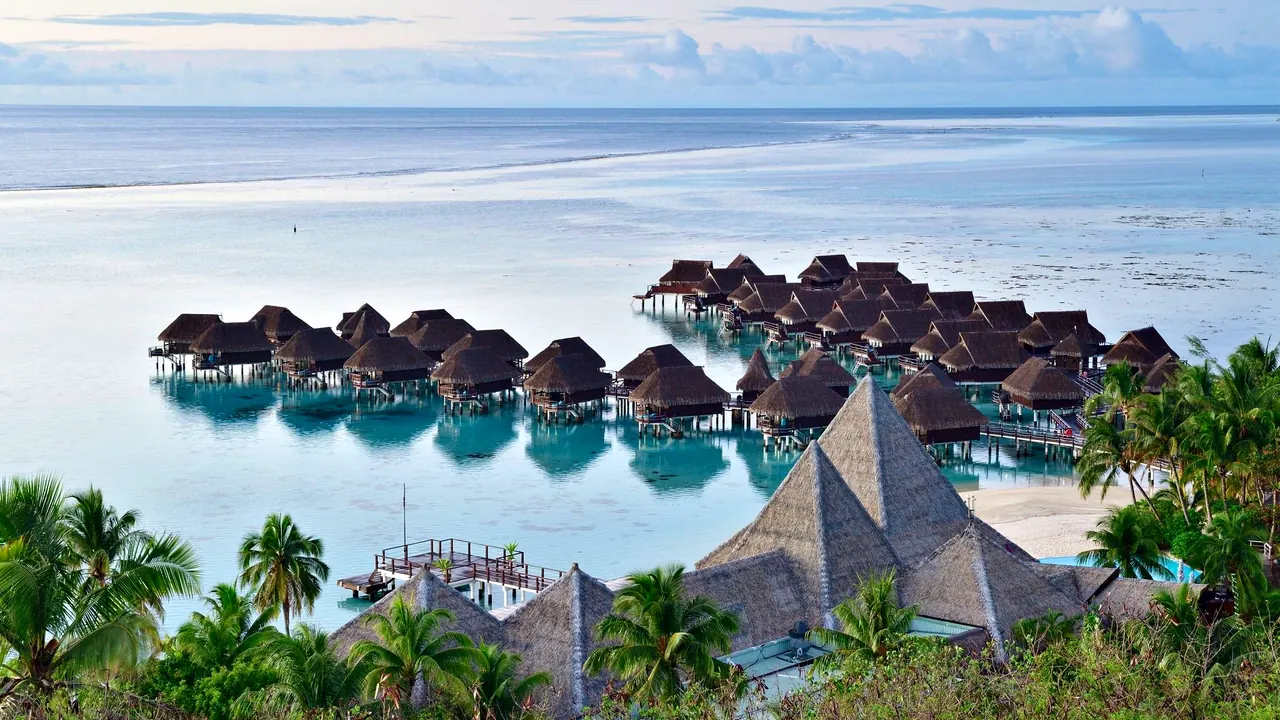
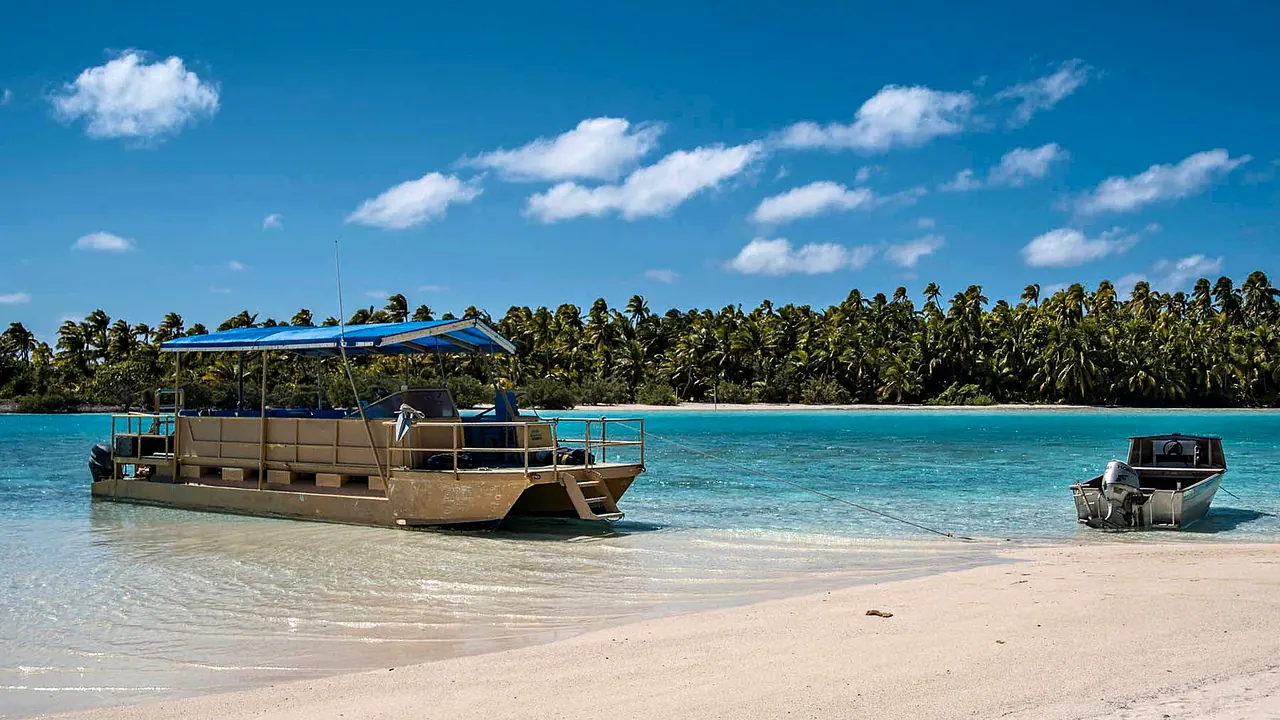
Photos: French Polynesia by Colon Freld, Pexels License; Cook Islands by Frank Winkler, CC BY-SA 4.0, cropped.
French Polynesia or Cook Islands?
Our verdict in twelve categories, each scored against the same fixed benchmark cities, and the climate month by month, so you can choose for your trip.
Choose French Polynesia for
- nature and the outdoors
- food and drink
- shopping
When the landscape is the point of the trip, French Polynesia is the one to choose. It has the green peaks of Moorea and Tahiti, Bora Bora's lagoon seen from a stilted bungalow, and the Tuamotu passes at Rangiroa and Fakarava, where divers drift among sharks. It suits couples and divers who are happy to fly between islands and can afford it, because few places cost more. Papeete also gives it a little more to eat and buy.
Choose Cook Islands for
- getting around
- families
- prices
For an easy trip rather than a grand one, the Cook Islands make more sense. Rarotonga is one compact island with a bus on its coast road, the sheltered lagoon at Muri is ideal for children, and the costs, though high, are lower. One short flight to Aitutaki adds a lagoon as fine as any in French Polynesia, without the run of separate flights that a trip across several islands there involves.
Scoreboard
Twelve categories on one fixed scale from 0 to 100. The shaded stretch is the gap between the two.
Your match
Pick a travel style or drag the sliders, and both match scores follow your weighting.
Too close to call, 1 point apart
Wins on nature and the outdoors and food and drink with your weighting.
Wins on getting around and families with your weighting.
What matters to you?
Category by category
What the scores mean for a trip.
Beaches & swimming
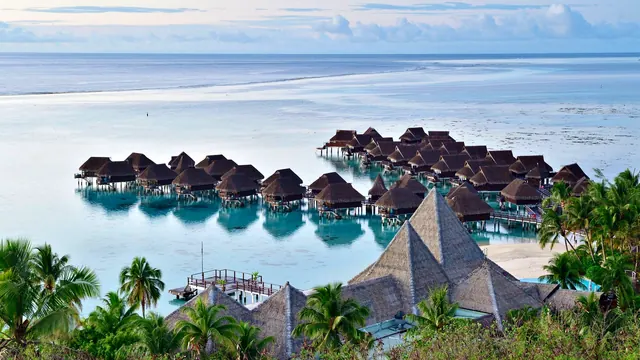
Both are lagoon destinations with warm, calm, clear water, and the difference is in how you use the lagoon. In French Polynesia much of the swimming on Bora Bora and the Tuamotu atolls is straight off a pontoon or a bungalow deck. For sand there is Matira Beach or the pink-tinged motu of Tikehau, while Tahiti's own black-sand beaches are mostly passed over.
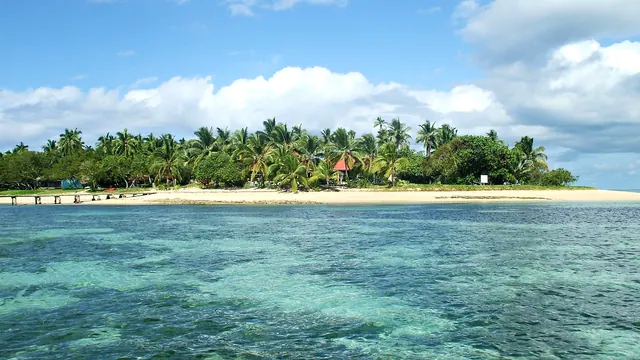
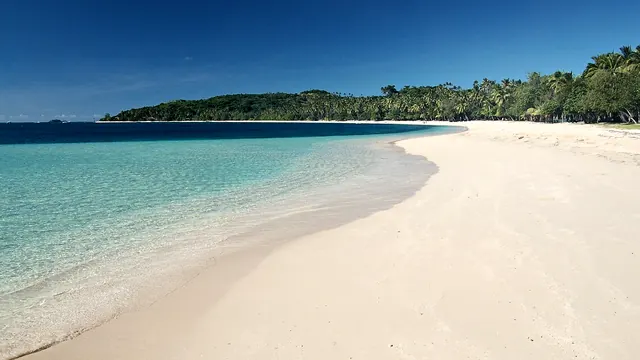
The Cook Islands suit swimming from the beach. At Muri you can wade out to small islets, and at Titikaveka good snorkelling starts right at the shore. Aitutaki's sandbars, One Foot Island among them, are the high point, though at low tide the water there can be very shallow.
Where in French Polynesia: Bora Bora, Tikehau, Maupiti, Moorea
Food & drink
French Polynesia eats better, mostly because of Papeete. It has the roulottes on the waterfront in the evening and the central market in the morning, and its French side adds baguettes, pastries and wine to poisson cru and Chinese-Tahitian chow mein. Away from Tahiti and Moorea, though, meals move into hotel dining rooms.
The Cook Islands have the same raw-fish dish, called ika mata here, and rely just as much on shipped-in food, with less on offer around it. The best eating is Saturday at the Punanga Nui market in Avarua and the evening stalls at Muri. The rest is mostly beach cafés and resort restaurants.
Where in French Polynesia: Papeete, Moorea
Culture & sights
Neither place offers much of a sightseeing list, and in both the heritage is mainly Polynesian marae, the old stone ceremonial grounds. French Polynesia has the most important single site, Taputapuatea on Raiatea, along with a proper museum on Tahiti and the great stone tiki of the Marquesas, though those need a separate long flight. The Cook Islands' heritage is smaller and closer to hand: Arai-te-Tonga by Rarotonga's inland road, coral-lime mission churches in the villages and a small museum in Avarua, all of which fit into one morning.
Where in French Polynesia: Raiatea, Tahiti, Marquesas Islands
Nightlife
Neither is a place for nights out, but the Cook Islands have a little more going on. On Friday the bars around Avarua fill with locals and visitors and stay busy until late. In French Polynesia, anything after dinner means Papeete, where a few waterfront bars and clubs stay open late at weekends. On Bora Bora and Moorea the evening usually ends with a sunset drink and perhaps a hotel dance show.
Where in French Polynesia: Papeete
Nature & outdoors
This is where French Polynesia pulls far ahead. It has ridge walks and the Belvedere lookout on Moorea, guided hikes into Tahiti's waterfall valleys and the surf at Teahupo'o. In the Tuamotu, the passes of Rangiroa and Fakarava offer drift dives along walls of grey sharks, and those dives alone justify the trip for many divers.
Rarotonga is a smaller version. It has one good half-day climb past the Needle, easy kayaking and snorkelling inside the reef, and diving and fishing beyond it. Humpback whales pass both from July to October, and on Rarotonga you can watch them from the shore. A few days covers the Cook Islands' main walks, while French Polynesia could fill weeks.
Where in French Polynesia: Moorea, Rangiroa and Fakarava, Bora Bora, Tahiti
Day trips
Day trips are limited in both, but French Polynesia has the better ones. From Papeete the fast ferry makes Moorea an easy day of plantations and views over its two bays, and a drive around Tahiti takes in Tahiti Iti. On Raiatea, a boat across the lagoon reaches the vanilla and pearl farms of Taha'a.
From Rarotonga the one real outing is a fly-in day to Aitutaki with a lagoon cruise, and even that works better as an overnight stay. Avarua is too small to count as a trip of its own.
Good for families
The Cook Islands are the easier choice with children. The shallow, sheltered water around Muri and Titikaveka is right for paddling and first snorkels, and many resorts have family rooms and kids' clubs. With everything on one compact island, there is no need to keep moving.
French Polynesia's lagoons are just as gentle, and Moorea and Tahiti have family guesthouses. But Bora Bora's overwater resorts are aimed at honeymooners, and hopping between islands by plane is hard going with young children. Neither place has zoos or theme parks.
Getting around
Rarotonga is far simpler to get around. One 32km road loops the coast, and a bus runs both ways and stops wherever you flag it down. Scooters and bicycles cover the rest, and Aitutaki, a short flight away, is small enough to see on two wheels.
French Polynesia is spread across a huge stretch of ocean, so seeing several islands means domestic flights, often routed back through Papeete. Buses on the islands are sparse, so most visitors hire a car or scooter. Tahiti and Moorea, linked by frequent fast ferries, are the one easy pair.
Shopping & style
Black pearls are the main buy in both, but French Polynesia offers more ways to buy them, from dealers in Papeete or at farms on Taha'a and the atolls, where you can watch them being grown. Papeete's central market sells pareos, monoi oil, vanilla and woven hats under one roof, and Marquesan carving is the most distinctive craft of either place.
In the Cook Islands, shopping comes down to a few pearl shops and a short main street in Avarua, plus the Saturday Punanga Nui market for carvings, woven pandanus and printed fabrics. The tivaevae quilts are lovely but rarely for sale.
Where in French Polynesia: Tahiti, Taha'a, Marquesas Islands
Affordability
The Cook Islands cost a good deal less, though no one would call them cheap. On Rarotonga, self-catering bungalows, a few backpacker lodges, fresh fish and market meals, and the local bus keep a stay within reach. Costs climb with Aitutaki's resorts and the lagoon cruises.
French Polynesia is among the most expensive destinations anywhere. Imported food, inter-island flights and Bora Bora's overwater rooms add up fast. Family-run pensions on Tahiti, Moorea and Huahine and suppers at the roulottes help, but even a careful trip costs a lot.
Live music & performing arts
Dance is the main performance in both, and the two are close. French Polynesia has ori tahiti and its great showcase, the Heiva i Tahiti in Papeete in July, but the rest of the year most visitors see it at hotel dinner shows of mixed quality. The Cook Islands have log-drum ura dancing at island-night shows several evenings a week, and their competition is Te Maeva Nui in Avarua in late July and early August.
In both, Sunday church singing is worth hearing: himene choirs in French Polynesia and the unaccompanied imene tuki on Rarotonga. Formal theatre and concerts hardly exist in either.
Where in French Polynesia: Papeete
Wellness & relaxation
French Polynesia's idea of rest is the resort spa, often in a garden pavilion or over the water on Bora Bora and Moorea, with monoi oil and taurumi massage drawn from Polynesian healing. The Cook Islands relax you through the place itself: no building taller than a palm, Sundays given over to rest and an even slower pace on Aitutaki, with spas around Muri and a few yoga classes as well. Neither has thermal springs or any bathing tradition.
When should you go?
Pick your month, and for a country the place in it. The climate figures are measured averages, not a forecast.
Where in French Polynesia
Tahiti (French Polynesia) in July
Cook Islands in July
Daytime high, °C
Rainfall in the month, mm
Temperature and rainfall are climate normals, averaged over the years shown. Tahiti (French Polynesia): 1991-2020 normals, Tahiti-Faaa (5.3 km from centre). Cook Islands: 1991-2020 normals, Rarotonga (4.4 km from centre).
Both have a drier season from about June to October and a wetter one from December to April. French Polynesia is the hotter of the two. Daytime highs on Tahiti and Bora Bora stay near 29°C even in the coolest months, and the sea is warm enough for long swims all year. Tahiti is driest in July and August, with only about 43mm of rain, while December and January are the wettest months on both islands. Sunshine stays generous through the year.
The Cook Islands are milder. From June to September the days are around 26°C, comfortable for the climb across Rarotonga, and the lagoon cools to about 24°C. That is still fine for swimming but noticeably fresher than Bora Bora. The warm season brings more humidity and much more rain, about 211mm in January, and April stays wet too. The Cook Islands also get somewhat fewer sunshine hours in most months. June to October suits both places best.
Which traveller are you?
On a family trip with children, the Cook Islands are the safer bet. Both have the same gentle lagoon water, so what decides it is effort: one small island as a single base, against a run of flights and transfers in French Polynesia, where the best-known resorts are built around couples.
For an outdoors trip, French Polynesia wins clearly, and the gap is one of scale. The Cook Islands' walks, reef snorkelling and dives make for several good days. French Polynesia's mountains on several islands, its surf and the Tuamotu drift dives can carry a whole trip on their own.
On a trip on a tight budget, the Cook Islands are the one to try, though neither is a bargain. A modest stay on Rarotonga can be done. In French Polynesia even careful choices still leave an expensive trip, and every extra island adds another flight.
More comparisons
Each shares a side with French Polynesia or Cook Islands.
Where else could you go?
Set French Polynesia or Cook Islands against any other country.