Photos: Martinique by G21designz, CC BY-SA 4.0, cropped; St Lucia by DavidMPyle, CC BY 4.0, cropped.
Martinique or St Lucia?
Our verdict in twelve categories, each scored against the same fixed benchmark cities, and the climate month by month, so you can choose for your trip.
Choose Martinique for
- food and drink
- culture and sights
- day trips
Martinique suits travellers who want more than the beach from one trip. You get Creole cooking with a French accent, rum estates across the north and centre, the ruins of Saint-Pierre beneath Mount Pelée and bèlè drumming in village halls. It is also the easier island with children, with calm southern bays, French healthcare and supermarkets, and it is a little kinder on the wallet if you rent a self-catering gîte.
Choose St Lucia for
- wellness
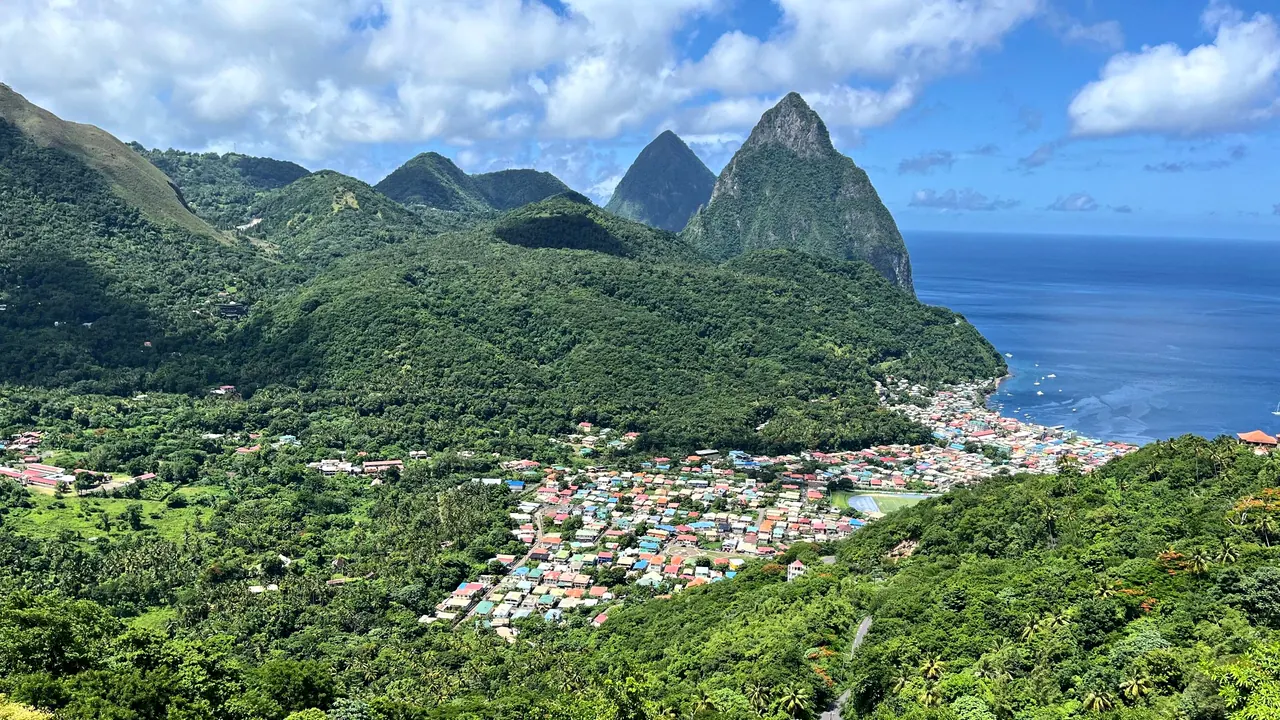
For a slower and more secluded stay, St Lucia is the stronger pick. The hillside resorts around Soufrière, the warm mud pools at Sulphur Springs and the Diamond mineral baths are built for unwinding beneath the Pitons, with reef snorkelling just offshore. Expect to pay more and do less sightseeing, and to choose between a base at Rodney Bay in the north or Soufrière in the south, because the winding road between them makes moving around tiring.
Scoreboard
Twelve categories on one fixed scale from 0 to 100. The shaded stretch is the gap between the two.
Your match
Pick a travel style or drag the sliders, and both match scores follow your weighting.
Wins on food and drink and culture and sights with your weighting.
Wins on wellness with your weighting.
What matters to you?
Category by category
What the scores mean for a trip.
Beaches & swimming
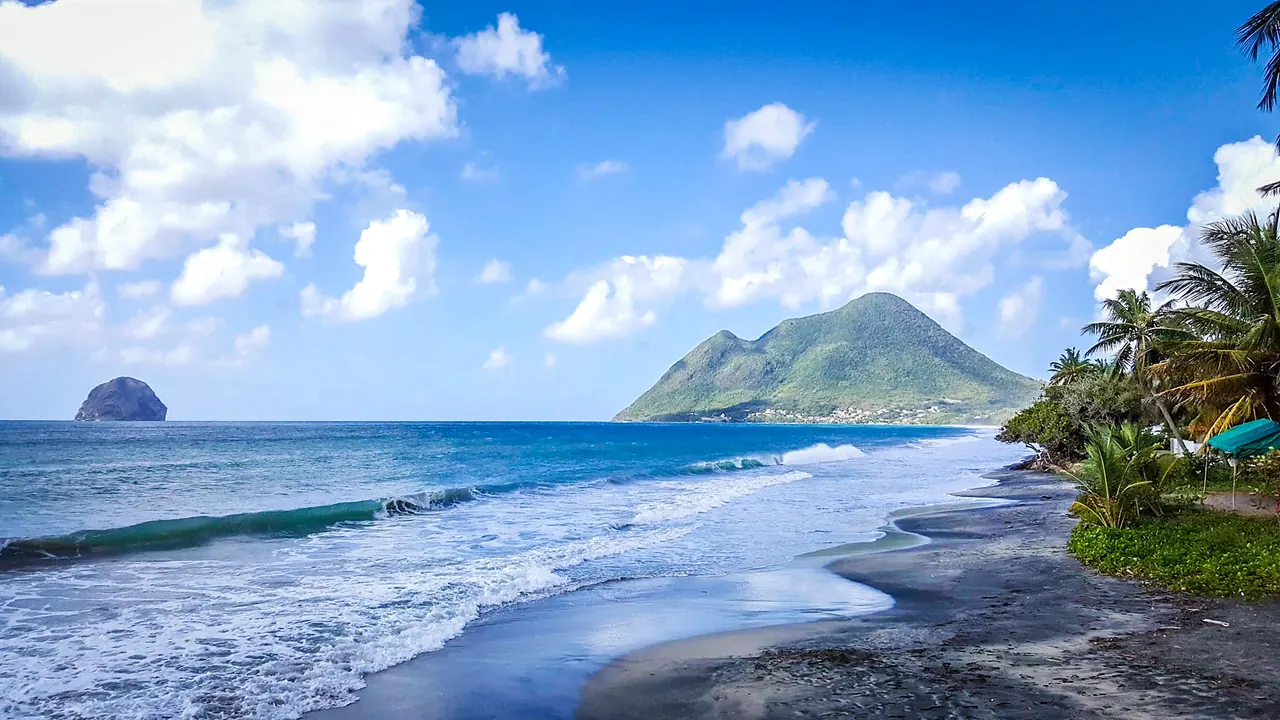
Both islands have excellent beaches, all on their calm Caribbean side, while the Atlantic coasts are too rough for swimming. Martinique's classic is Grande Anse des Salines near Sainte-Anne, a long curve of pale sand under palms. Further up its west coast you can choose between small coves: turtles graze off Les Anses-d'Arlet, and at Anse Noire and Anse Dufour black sand and gold lie side by side.
St Lucia's easiest beach is Reduit Beach at Rodney Bay. In the south the beaches get more dramatic, with Anse Chastanet and Anse des Pitons beneath the peaks and reef snorkelling straight from the sand. The catch is that Anse Cochon and Marigot Bay are reached by boat or a steep road.
Where in St Lucia: Rodney Bay, Soufrière and the Pitons coast, Marigot Bay, Anse Cochon
Food & drink
Martinique eats noticeably better. Its Creole cooking has a French accent, from colombo curries and blaff of poached fish to proper baguettes. It also makes rhum agricole under its own appellation, and you can taste it at old cane estates across the north and centre, with a ti-punch before almost every meal.
St Lucia's best food is at street level: green fig and saltfish at the weekly fish fry in Anse La Raye, the stalls of Castries Market, and estate chocolate made from cocoa grown around Soufrière. Beyond that many visitors eat at their resort, and independent restaurants cluster in a few places such as Rodney Bay and the hillsides with views of the Pitons.
Where in St Lucia: Anse La Raye, Castries, Soufrière, Rodney Bay
Culture & sights
Martinique has more history to visit. The ruins of Saint-Pierre, the old capital wiped out by Mount Pelée in 1902, are a sobering visit. Fort-de-France adds the ornate Schoelcher Library and the iron cathedral, and around the island you will find the Empress Joséphine's birthplace and the Anse Cafard slavery memorial.
St Lucia's past as a prize fought over by France and Britain left forts rather than towns: Fort Rodney on Pigeon Island and the batteries on Morne Fortune above Castries. The cathedral, painted with Dunstan St Omer's Caribbean saints, is the other main sight. There are few museums, so a few half-days cover it.
Where in St Lucia: Pigeon Island, Castries, Soufrière
Nightlife
Neither island is a place to go out every night, but their evenings differ. St Lucia has one dependable big night, Gros Islet's weekly jump-up, when the streets close for soca and grilled fish. Rodney Bay's short strip of bars is close by, so a night out stays in one walkable patch of the north.
Martinique's late nights happen in the zouk and kompa clubs around Fort-de-France, which mostly draw locals at weekends. They are spread out and you need a car to reach them. Its standout is Carnival, when the towns stay up for days of parades before King Vaval burns on Ash Wednesday.
Where in St Lucia: Gros Islet, Rodney Bay
Nature & outdoors
These two volcanic neighbours are equally good outdoors, and both have UNESCO-listed landscapes. The difference is in the details. In Martinique you climb Mount Pelée through cloud forest, walk the rainforest along the Route de la Trace and go canyoning in gorges like the Falaise. Divers head for the wrecks off Saint-Pierre, and Le Marin is a major sailing harbour.
St Lucia's emblem is the Pitons, with a guided climb up Gros Piton or the easier trail at Tet Paul. Its inland rainforest is home to the endemic St Lucia parrot. The Soufrière marine reserve has some of the eastern Caribbean's finest reef, and kitesurfers head for the windy Atlantic shore at Vieux Fort.
Where in St Lucia: Soufrière and the Pitons, Central rainforest reserves, Soufrière Marine Management Area, Vieux Fort
Day trips
Martinique has more for days out. You can drive a loop of rum distilleries and cane estates around Sainte-Marie, Le Robert and Macouba, much like a wine route, or head out to fishing villages such as Grand-Rivière at the end of the north coast road. Fast ferries also reach Dominica as well as St Lucia.
On St Lucia, the main outing is the trip from the north down to Soufrière, with stops at Anse La Raye or Canaries along the coast road. Beyond that, the best day out is the fast ferry to Martinique and the ruins of Saint-Pierre.
Where in St Lucia: Soufrière, Martinique, Castries, Anse La Raye
Good for families
Martinique is the easier island with children. Bays such as Sainte-Anne and Anse Mitan have shallow water where children can snorkel beside turtles, and French healthcare and supermarkets make everyday needs simple. There is also a small zoo set in a ruined estate at Le Carbet.
St Lucia works best as a resort stay at Rodney Bay, with kids' clubs and gentle water at Reduit Beach. Older children can try the ziplines and mud pools around Soufrière, and English is spoken everywhere. Hilly, winding roads tire young children on both islands.
Where in St Lucia: Rodney Bay, Pigeon Island, Soufrière
Getting around
On both islands you really need a car, but Martinique is a little easier. Passenger ferries cross the bay from Fort-de-France to Les Trois-Îlets and Anse Mitan, avoiding the rush-hour jams around Le Lamentin. Staying in the south and driving north on a few chosen days works well.
On St Lucia, most long-haul flights land at Hewanorra in the far south, more than an hour from Rodney Bay. Visitors drive on the left or rely on taxis and tours, as minibuses keep no timetable. Water taxis help around Soufrière, but only Rodney Bay and Soufrière town are walkable.
Where in St Lucia: Rodney Bay, Soufrière
Shopping & style
Neither island is worth visiting for shopping, and both are at their best for things made locally. In Martinique, that means aged rum bought at the estates and madras cotton, with French chain stores in malls outside town. St Lucia has hand-printed batik, clay pottery from Choiseul and estate chocolate, and duty-free jewellery at the Castries cruise terminals.
Where in St Lucia: Castries, Choiseul, Rodney Bay
Affordability
Neither is cheap, but Martinique is easier to do on less. A self-catering gîte, market fish and fruit, beach snack bars and mostly free rum tastings keep daily costs down, though a hire car still adds to them.
St Lucia's accommodation leans towards upmarket resorts and villas, and taxis and organised excursions add up quickly. Guesthouses in Gros Islet, fish fries and minibuses can cut costs a lot. Rooms are also cheaper from June to November, in the rainy season.
Where in St Lucia: Gros Islet, Soufrière
Live music & performing arts
Bèlè makes the difference. On Martinique this drum-and-dance tradition with African roots fills village halls across the north and centre all year, and visitors are often pulled into the circle. Fort-de-France adds a national arts centre with theatre, dance and music through the year and a long-running cultural festival in July, though most formal performances are in French.
St Lucia's live music gathers around two annual events: the Jazz and Arts Festival on Pigeon Island in spring and the calypso and soca contests of Carnival in Castries in summer. The rest of the year there are steel pan bands and resort entertainers, while the La Rose and La Marguerite flower festivals keep the island's folk songs going.
Where in St Lucia: Pigeon Island, Castries
Wellness & relaxation
St Lucia is the better place to unwind. The resorts on the hills around Soufrière are built for quiet, with plunge pools and spas using cocoa and volcanic mud. You can also soak in the warm pools at Sulphur Springs or bathe in the Diamond mineral baths, first built for French soldiers.
Martinique offers hotel spas and beach yoga around Les Trois-Îlets and Sainte-Anne, plus a few warm springs in the northern forest. Its real help is the slow pace of a villa on the southern Caribbean coast.
Where in St Lucia: Soufrière
When should you go?
Pick your month, and for a country the place in it. The climate figures are measured averages, not a forecast.
Martinique in July
Castries (St Lucia) in July
Daytime high, °C
Rainfall in the month, mm
Where the figures come from
Castries (St Lucia)'s temperatures are measured 29 km from the centre, at Hewanorra International Airport.
Castries (St Lucia) has no rain gauge within 25 km of the centre, so its rainfall comes from a gridded climate dataset read at the destination rather than from a gauge further away.
Castries (St Lucia)'s sunshine is measured 66 km from the centre, at Le Lamentin.
Temperature and rainfall are climate normals, averaged over the years shown. Martinique: 1991-2020 normals, Le Lamentin (7.7 km from centre). Castries (St Lucia): 2005-2020 (sunshine 1991-2020, rainfall 1991-2020) normals, Hewanorra International Airport (29.3 km from centre).
Both islands are hot every month, and the midday heat makes mornings the better time for town walks and hikes. The sea stays between 27°C and 29°C all year, so the beach is never out of season, and Martinique and Castries get about the same sunshine month by month. What shapes the calendar is the rain.
Martinique is driest in February and March, with about 75mm in March. By April it is already wetter, at 124mm, so for climbing Mount Pelée or touring the north, those two months are the best window. In Castries the dry spell lasts longer, from February to April, and May there is still fairly moderate, which suits a late-spring beach stay in the north of St Lucia. On both islands the rain builds from June and is heaviest from August to November, with Castries getting about 311mm in October.
Which traveller are you?
On a food and nightlife trip, Martinique gives you more: accras and boudin créole at roadside stalls, grilled lambi at beach shacks and lively marina bars in Le Marin. St Lucia's advantage is compactness, with Gros Islet and Rodney Bay a short walk apart.
For a culture and arts trip, choose Martinique. You can see the shell of the cell in Saint-Pierre where a survivor of the eruption was found, tour restored sugar estates and join a bèlè evening. St Lucia's forts and painted Castries cathedral fill a few half-days.
On a relaxing and wellness trip, St Lucia suits better, as long as you are happy to settle in one place. Open-walled rooms look out over the Pitons, and yoga is easy to find. Martinique's northern springs make a pleasant dip but not a reason to go.
More comparisons
Each shares a side with Martinique or St Lucia.
 Antigua and Barbuda vs St Lucia
 Barbados vs St Lucia
 Dominica vs Martinique
- Dominica vs St Lucia
 Dominican Republic vs St Lucia
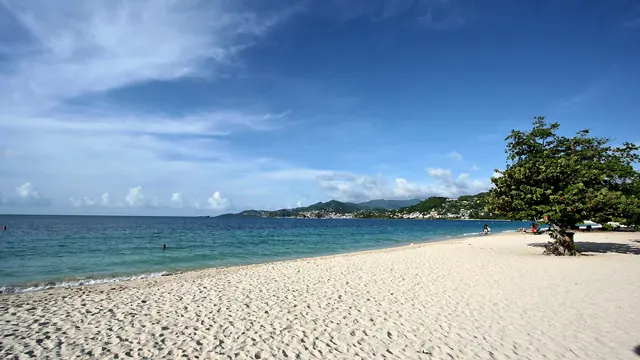 Grenada vs St Lucia
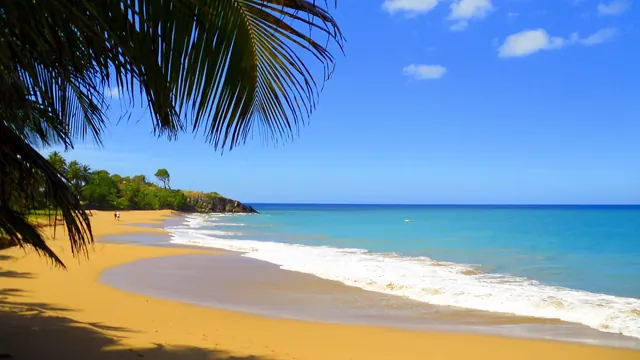 Guadeloupe vs St Lucia
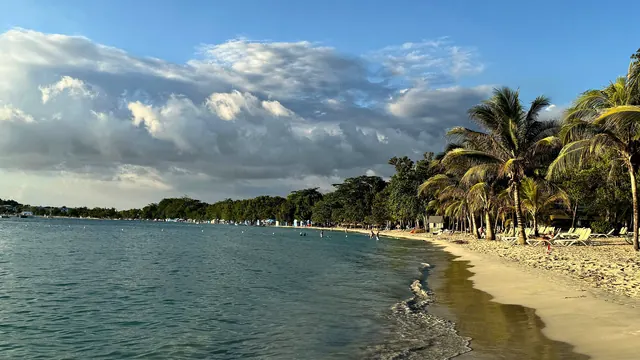 Jamaica vs St Lucia
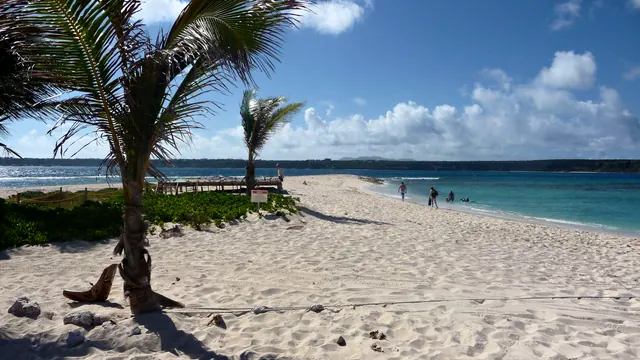 St Lucia vs Anguilla
 St Lucia vs Aruba
 St Lucia vs Saint-Martin
 St Lucia vs Sint Maarten
 St Lucia vs St Kitts and Nevis
 St Lucia vs St Thomas
 St Lucia vs Turks and Caicos
 St Vincent and the Grenadines vs St Lucia
Where else could you go?
Set St Lucia against any other country.