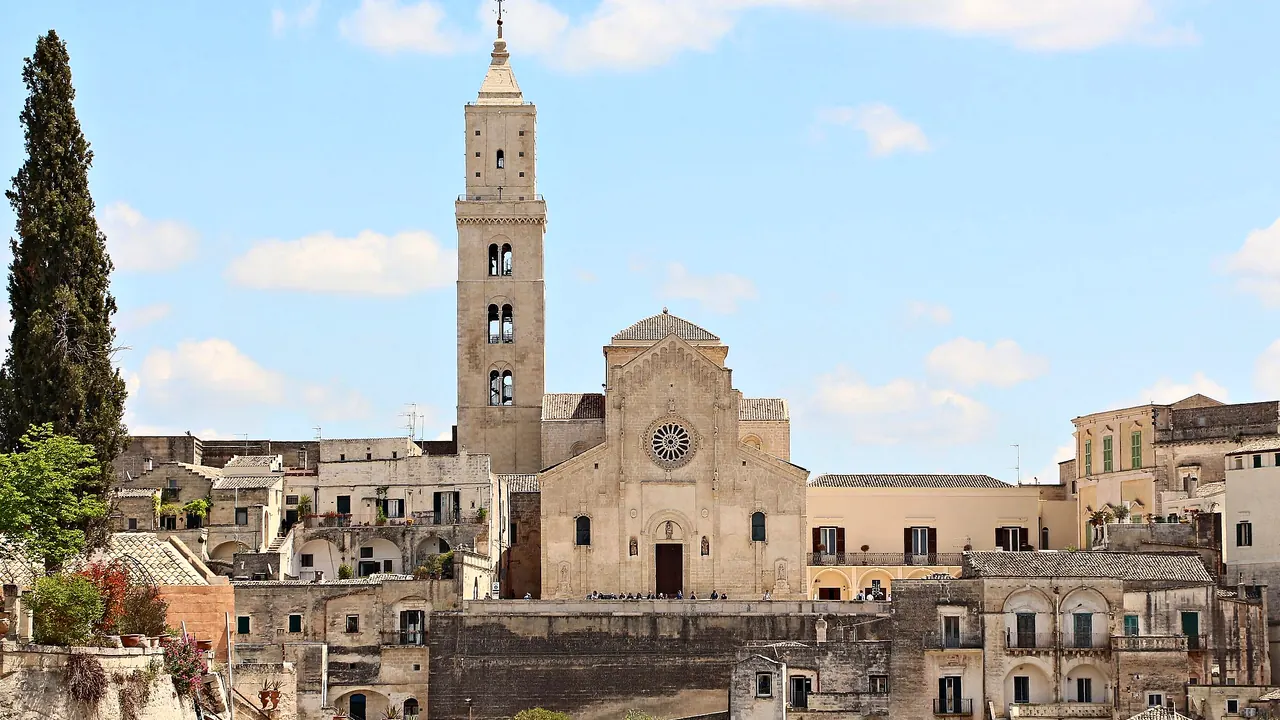
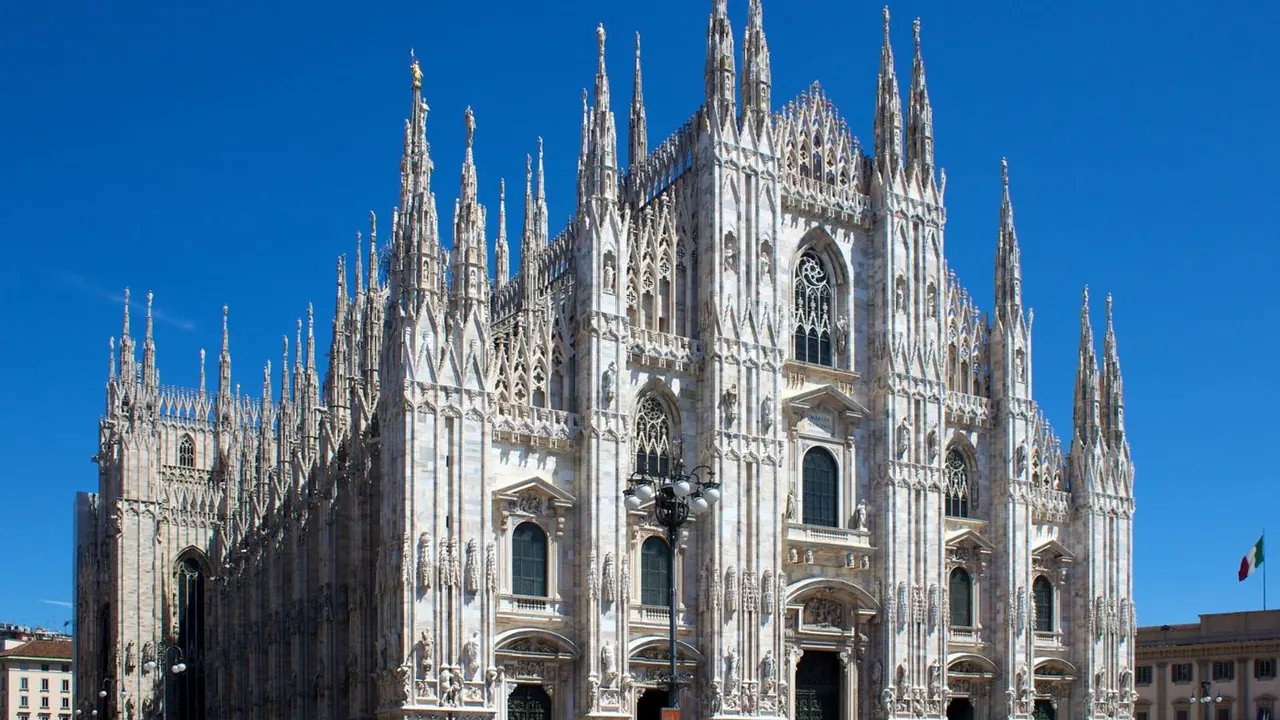
Photos: Matera by Bernard Gagnon, CC BY 4.0, cropped; Milan by Jiuguang Wang, CC BY-SA 3.0, cropped.
Matera or Milan?
Our verdict in twelve categories, each scored against the same fixed benchmark cities, and the climate month by month, so you can choose for your trip.
Choose Matera for
- prices
- beaches
Matera suits travellers who want one extraordinary place rather than a long list of sights. The cave districts of the Sassi, the gorge below them and the slow evenings on a terrace make a quiet, atmospheric stay of a few days. It works best for couples and walkers with a hire car, who can add the trulli, the white towns of Puglia and the empty hill country of Basilicata. Food and rooms outside the Sassi also cost noticeably less.
Choose Milan for
- shopping
- live music and the arts
- nightlife
If you want a big city with plenty to do, Milan is the better choice. It has La Scala, the Last Supper, aperitivo along the canals, serious fashion shopping and fast trains that put Lake Como, Verona and Turin within a day out, all without a car. It costs more and has less charm on the surface, but it gives you far more to fill each day and each evening.
Scoreboard
Twelve categories on one fixed scale from 0 to 100. The shaded stretch is the gap between the two.
Your match
Pick a travel style or drag the sliders, and both match scores follow your weighting.
Wins on prices and beaches with your weighting.
Wins on shopping and live music and the arts with your weighting.
What matters to you?
Category by category
What the scores mean for a trip.
Beaches & swimming
Neither city is on the coast, but Matera is closer to proper sand. The Ionian shore at Metaponto and Policoro is about 45 minutes away by car, with wide sandy beaches backed by pine woods and calm, shallow water that suits small children. Without a car, though, it is very hard to get there.
In Milan, swimming means pools or lakes. Locals use the Idroscalo basin and the open-air pools, and Lake Como and Lake Maggiore are about an hour away by train, with pebbly lidos and cooler water. The sea in Liguria is too far for an afternoon.
Food & drink
Matera's cooking is honest and narrow: the horn-shaped durum loaf, crapiata, fave e cicoria, crackling peperoni cruschi and a glass of Aglianico, often eaten in a cave room in the Sassi. It is worth tasting, but after a few meals there is little else on offer.
Milan has more depth. Saffron risotto, ossobuco and cotoletta sit alongside good Neapolitan pizza, Sicilian pastry and serious fine dining, and historic pasticcerie set the daytime rhythm. Early-evening aperitivo in Brera, Isola or on the Navigli is a reason to come in itself.
Culture & sights
Matera has one great sight, and nowhere in Italy is quite like it. The cave houses and rock churches of the Sassi have faded Byzantine frescoes, and you can walk through the Palombaro Lungo cistern, all spread across a ravine that people have lived in since prehistoric times. It is a place to wander and take in, rather than a place of great collections.
Milan has more art of the highest rank. The rooftop of the Duomo, Leonardo's Last Supper, the paintings at the Brera and Michelangelo's Rondanini Pietà at the Castello Sforzesco add up to several days of major sights. They are scattered across a modern business city, but there is more of them.
Nightlife
In Matera, a night out means the passeggiata on Via del Corso, a long dinner and wine on a terrace looking across the lit Sassi. A few cave bars stay open later in summer, but there are no clubs.
Milan has a real night scene. Bars spill onto the canal towpaths of the Navigli, Porta Venezia mixes a relaxed crowd with the city's gay scene, and evenings run on to dressy clubs around Corso Como or warehouse nights on the city's edge. The city empties in August, though.
Nature & outdoors
These two are about level, but the landscapes are very different. In Matera the wild country starts at the edge of town: a path drops from Sasso Caveoso into the Gravina gorge and climbs to Murgia Timone, past abandoned rock churches and Neolithic sites, with kestrels in the cliffs. The Lucanian Dolomites are a drive away.
Milan itself is flat and hazy, and its greenery is limited to parks and canal towpaths. An hour away by train, though, are steep wooded lakeshores, sailing, ridge hikes and via ferrata in the Grigne, and skiing in winter.
Day trips
Both cities make good bases, but Milan is easier and offers more. Fast trains reach Verona, Turin, Bergamo and the villages of Lake Como in about an hour, Bologna and Lugano are not much further, and boats run out to the Borromean Islands, all without a car.
Matera's day trips are also excellent: Alberobello, Ostuni and the Valle d'Itria, Castel del Monte, the ghost town of Craco and the mountain villages of Castelmezzano. But you need a car for almost all of them.
Good for families
Milan is the easier city with children. The science and technology museum has a submarine and hands-on labs, Parco Sempione has playgrounds and the aquarium, the flat centre and the trams are easy with a pushchair, and Gardaland is within reach.
Older children will enjoy Matera's caves, the underground cistern and the climb into the gorge. But the Sassi are steep, uneven steps with little summer shade, so bring a baby carrier rather than a pushchair and keep the stay short.
Getting around
Getting around is much simpler in Milan. Five easy metro lines, a dense tram network and direct trains to the lakes mean you never need a car. The main drawbacks are hot metro platforms in summer and the long ride in from Malpensa.
Matera is easy on foot, although the stairways down into the Sassi tire the legs. Leaving town is the problem: the city is off the national rail network, a slow narrow-gauge line runs to Bari and buses are infrequent, so a hire car makes a real difference.
Shopping & style
This is where the two differ most. Milan is a world fashion capital, with flagship stores around Via Montenapoleone, old shops under the Galleria's glass roof, design showrooms, vintage shops in Brera and Porta Ticinese, and antique markets along the Navigli.
Matera's shopping fits in an afternoon: painted cuccù whistles, small tufa carvings of the town and ordinary high-street shops. The best things to take home are its food and wine.
Affordability
Matera is clearly the cheaper of the two. Upper-town trattorias and guesthouses a few minutes' walk from the old districts cost little, and the gorge and the Sassi lanes are free. Staying in a cave hotel in the Sassi is the one real expense.
Milan is Italy's most expensive city, and hotel rooms are hard to find at fair rates during trade fairs and fashion weeks. You can save by making an aperitivo spread your supper, eating office-worker set lunches and staying near a metro stop outside the centre.
Live music & performing arts
Milan is one of Europe's great cities for performance. La Scala's season opens each December on the feast of Sant'Ambrogio. The Piccolo Teatro, a fine symphony orchestra at the Auditorium and summer concerts at San Siro add to it, and gallery seats at La Scala are a realistic aim.
Matera has conservatory concerts, a summer jazz festival with the Sassi as a backdrop, and the procession and float-wrecking of the Festa della Bruna. On most evenings, the entertainment is the view.
Wellness & relaxation
Milan has more ways to unwind. A thermal spa complex south of the centre has outdoor pools and saunas, the restored 1930s Bagni Misteriosi open in summer, and the lakeside villas are an hour away.
Matera has no thermal baths, only hotel spas, some with pools cut into the rock in candlelit caves. Its calm comes from the pace of the town: quiet early mornings in the Sassi and slow evenings over the gorge, which are at their best outside summer.
When should you go?
Pick your month. The climate figures are measured averages, not a forecast.
Matera in July
Milan in July
Daytime high, °C
Rainfall in the month, mm
Where the figures come from
Matera has no rain gauge within 25 km of the centre, so its rainfall comes from a gridded climate dataset read at the city rather than from a gauge further away.
Milan's sunshine is measured 41 km from the centre, at Novara / Cameri.
Temperature and rainfall are climate normals, averaged over the years shown. Matera: 2005-2025, 10 years observed (rainfall 1991-2020) normals, Matera / Martella (4.8 km from centre). Milan: 1991-2020 (rainfall 1971-2000) normals, Milano / Linate (8 km from centre).
Matera is best in May and from September into mid-October, when it is warm enough to walk the Sassi and the Murgia comfortably. July and August reach about 32°C on a bare plateau with little shade, so sightseeing then means early mornings and late evenings. Those hot months are also the time for the Ionian beaches, where the sea reaches about 26°C in August. Rain builds through autumn to a peak of about 89mm in November, and winter days are cool but rarely harsh.
Milan has the wetter climate. Rain is heavy in May and heaviest in autumn, with about 75mm in November, and winter is grey and cold, with highs around 7°C. Summer is the sunniest season, but it is humid and close in the streets and on the metro. Late April to June and September are the most comfortable months for the city, and summer is better spent on day trips to the lakes.
Which traveller are you?
For a shopping trip, choose Milan. The Quadrilatero della Moda, the Galleria and La Rinascente put Italy's great fashion houses and design showrooms within a short walk of each other. Matera mostly sells terracotta whistles, tufa carvings and dried peppers.
On a food and nightlife trip, Milan offers much more. Aperitivo along the Navigli leads on to bars in Isola and Porta Venezia and clubs around Corso Como, and you can eat almost any regional Italian cuisine. Evenings in Matera end soon after dinner.
On a trip on a tight budget, Matera is easier on the wallet. Simple trattorias in the upper town and guesthouses a short walk from the Sassi cost far less than Milan's hotels and Brera restaurants, and walking the Sassi and the gorge is free.
Before you go
| Measure | Matera | Milan |
|---|---|---|
| Official language | Italian | Italian |
| Currency | Euro (EUR) | Euro (EUR) |
| Sockets | CFL230 V, 50 Hz | CFL230 V, 50 Hz |
| Driving side | Right | Right |
| Time zone | UTC+1, UTC+2 in summer | UTC+1, UTC+2 in summer |
| Emergency number | 112 | 112 |
| Elevation | 401 m | 138 m |
| Main airport | Bari Karol Wojtyła International Airport (BRI)54 km from centre104 non-stop destinations | Milan Malpensa International Airport (MXP)40 km from centre208 non-stop destinations |
| Public holidays this year | 13 days | 13 days |
By the numbers
| Measure | Matera | Milan |
|---|---|---|
| City population | 59,685 | 1,354,196 |
| People per km² | 152 | 7,453 |
| Museums within 10 km | 8 | 88 |
| UNESCO World Heritage sites within 50 km | 1 | 4 |
| Swim season, months above 21 °C | 5 months | - |
Where else could you go?
Every comparison below shares a destination with this one, so you can follow Matera or Milan somewhere new.