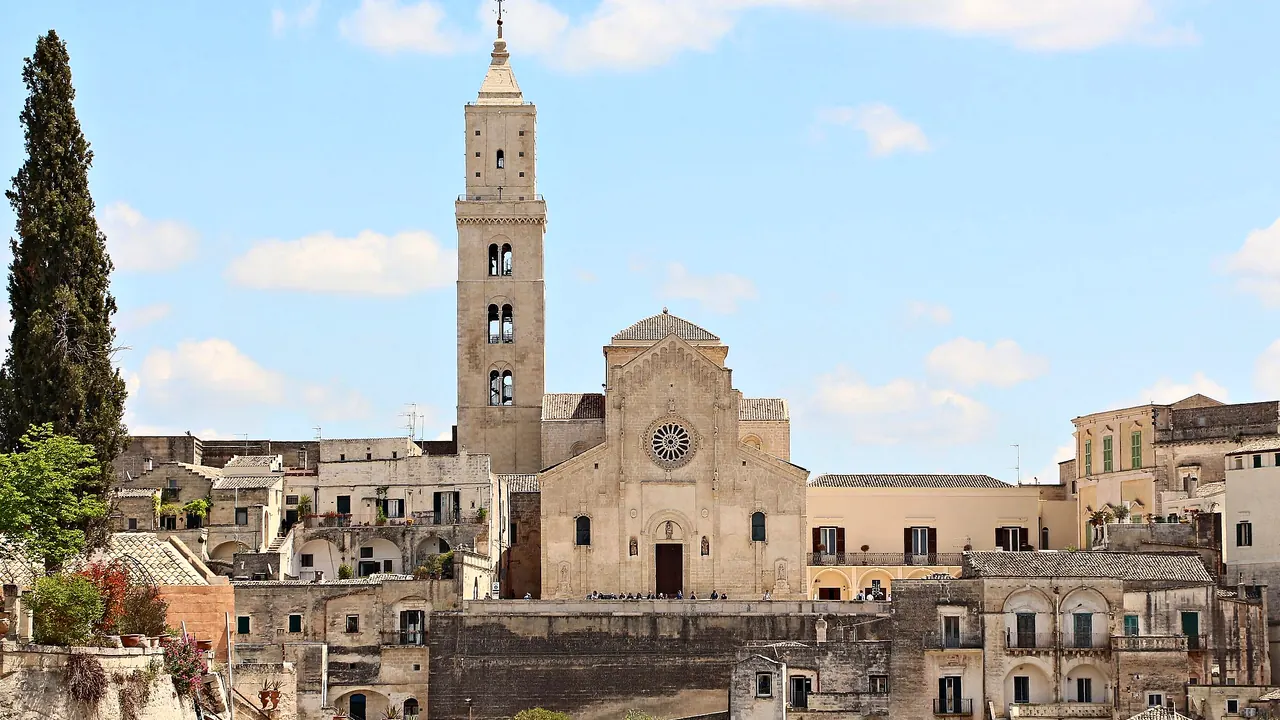
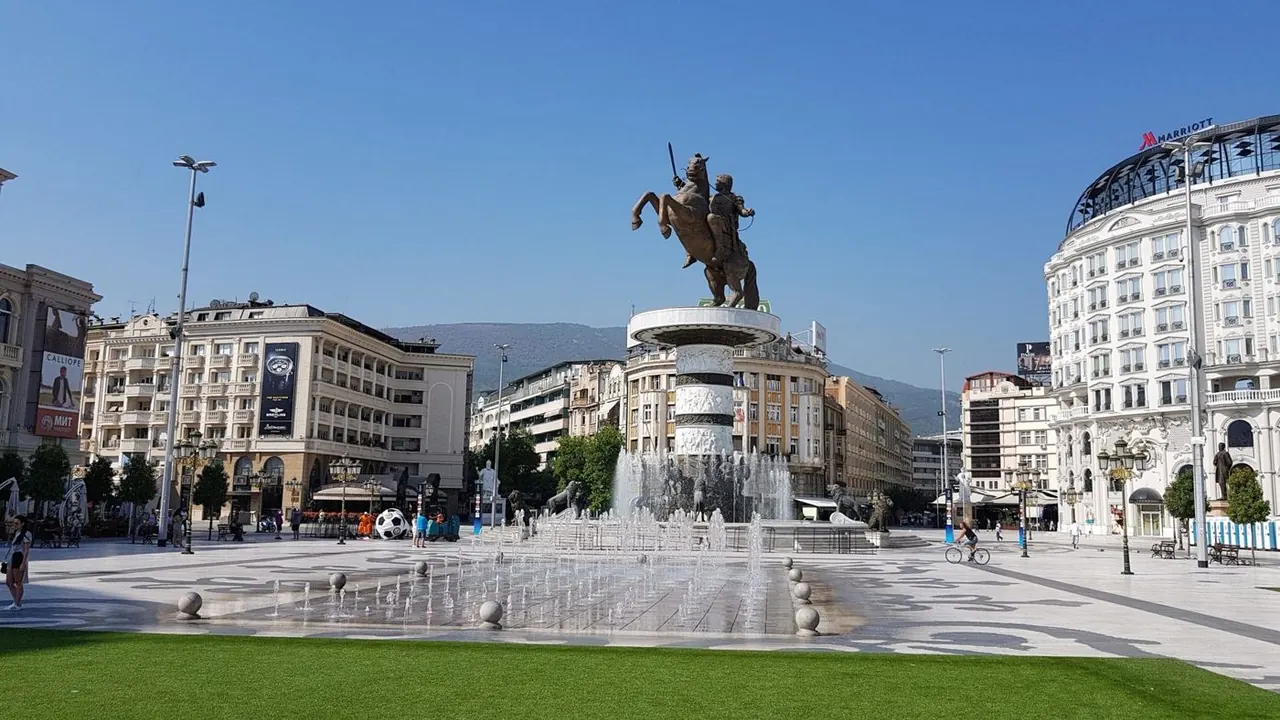
Photos: Matera by Bernard Gagnon, CC BY 4.0, cropped; Skopje by George M. Groutas, CC BY 2.0, cropped.
Matera or Skopje?
Our verdict in twelve categories, each scored against the same fixed benchmark cities, and the climate month by month, so you can choose for your trip.
Choose Matera for
- beaches
- day trips
- culture and sights
Matera is the choice for travellers who want one extraordinary place and a car to explore from it. The cave districts of the Sassi, their rock churches and the gorge below make a setting like nowhere else, and the trulli, the white towns of the Valle d'Itria and the sandy Ionian shore are all within reach. It suits couples and slow travellers who would rather spend the evening over a view than go out.
Choose Skopje for
- prices
- nightlife
- live music and the arts
Pick Skopje if your money needs to go further and you want more happening after dark. The Ottoman bazaar, the tavern quarter of Debar Maalo and the busy café-bar terraces make for livelier evenings. The opera, the philharmonic and an autumn jazz festival give it a cultural calendar, and Mount Vodno and Matka Canyon put real walking close to the centre. If you want to swim, add a stay at Lake Ohrid.
Scoreboard
Twelve categories on one fixed scale from 0 to 100. The shaded stretch is the gap between the two.
Your match
Pick a travel style or drag the sliders, and both match scores follow your weighting.
Too close to call, 2 points apart
Wins on beaches and day trips with your weighting.
Wins on prices and nightlife with your weighting.
What matters to you?
Category by category
What the scores mean for a trip.
Beaches & swimming
Neither city is a beach destination, but Matera at least has sand within reach. The long, pine-backed beaches of the Ionian coast near Metaponto and Policoro are about three-quarters of an hour away by car, with calm, shallow water that suits children. With a hire car, a beach afternoon fits easily into a stay.
Skopje has nothing like it. Summer swimming means hotel or public pools, the reservoir at Matka is cold, and Lake Ohrid is three hours away. Swimming there means moving on for a few nights rather than going for the day.
Food & drink
Both cities serve rustic regional cooking with little range beyond it, so the difference is one of style. Matera's table is built on bread, pulses and pasta: the horn-shaped pane di Matera, crapiata, hand-made cavatelli and crackling peperoni cruschi, with Aglianico to drink, often eaten in cave rooms in the Sassi.
Skopje's food is meatier and more sociable. There are grill houses and burek bakeries in the Old Bazaar, beans baked in clay dishes, ajvar with sheep's cheese, and long tavern tables in Debar Maalo with Tikves wine and rakija. It also has the everyday market life Matera lacks, with Bit Pazar piled high with produce.
Culture & sights
Matera's Sassi are unique. Whole ravine-side districts of cave houses and rock churches with Byzantine frescoes have been lived in since prehistoric times. The walk-through Palombaro Lungo cistern and the sculpture in MUSMA's carved rooms add to them. The collection is small, but the setting is the draw, and it is best at dusk.
Skopje offers more variety but less sense of wonder. The Ottoman Old Bazaar with its caravanserais and the carved iconostasis of the Holy Saviour are its highlights, while the Skopje 2014 statues south of the river divide opinion. The story of the 1963 earthquake gives the city depth, and two or three days covers it.
Nightlife
Skopje has the livelier evenings. Its café-bars in and around Debar Maalo fill up at weekends, with terraces moving from coffee to rakija and cocktails. In summer the Old Bazaar courtyards stay busy late and there are a few open-air parties, though weeknights are quiet.
In Matera, the evening is a passeggiata along Via del Corso, a long dinner and a drink above the floodlit Sassi, with a few cave bars staying open late in summer. There are no clubs, and outside the warm months the town goes quiet soon after dinner.
Nature & outdoors
Skopje has more of the outdoors close at hand. Mount Vodno rises straight from the suburbs, with a cable car to the summit. Matka Canyon, with its cliffs, kayaking and Vrelo Cave, is half an hour away, and Mavrovo and the Sar mountains add high ridges and winter skiing.
Matera's landscape is starker and closer still: the Gravina gorge below the Sassi and the Murgia plateau opposite, where paths lead past abandoned rock churches and Neolithic sites. The Lucanian Dolomites and Pollino need a long drive, and there is no skiing.
Day trips
Matera is the stronger base. Within about an hour you can reach the trulli of Alberobello, Ostuni and the other Valle d'Itria towns, old Bari, Castel del Monte and Polignano a Mare. Altamura and Gravina are closer still, and Craco and the mountain villages of Castelmezzano and Pietrapertosa lie on the Basilicata side. Nearly all of them need a car.
Skopje's outings are fewer and further apart: the painted mosque at Tetovo, the mosaics of Stobi, the Tikves wineries and the crater town of Kratovo, plus Pristina and Prizren across the border. Ohrid, the country's best-known town, is too far for a day trip.
Good for families
Neither city is built around children, though both welcome them warmly, and the difference lies in the ground underfoot. Matera's Sassi are steep stone steps where a pushchair is useless. Older children love the caves and the cistern, and the shallow Ionian beaches are a short drive away.
Skopje's centre is flatter, with a riverside promenade, City Park, a small zoo and funfair, and the Vodno cable car. Busy roads, hot afternoons and no swimming nearby make long days tiring all the same.
Getting around
Both are walking cities with poor links beyond the centre. Matera's flat upper town drops to the Sassi by stairways that tire the legs. The town is off the national rail network, so a hire car is the practical way to reach the coast and Puglia.
Skopje's centre is a flat stroll along the Vardar. Plentiful, inexpensive taxis cover Vodno, Matka and the bus station, so a car only matters for the mountains and the wine country.
Shopping & style
Skopje has more to browse. Workshops in the Old Bazaar sell silver filigree, copperware and embroidery, Bit Pazar is a real working market, and there are malls for chain fashion.
Matera's shopping is small-scale and aimed at visitors: cuccù whistles, tufa carvings and ceramics in the Sassi, and an ordinary high street in the upper town. Dried peppers and Aglianico are the best things to take home.
Affordability
Skopje is clearly the better choice on a tight budget. Tavern meals with wine, coffee, burek, taxis and central hotels all cost little, even in summer, and most sights are free or nearly so.
Matera costs less than Italy's big cities, especially in the simple trattorias of the upper town. But the cave hotels in the Sassi are its speciality and are priced to match, and summer pushes rates higher. Staying in the newer town keeps costs down.
Live music & performing arts
Skopje has a proper season. The Macedonian Opera and Ballet, the Philharmonic and the National Theatre all perform there. There is also a jazz festival held every autumn since the early 1980s, a summer festival at the fortress and in the bazaar, and starogradska music in the taverns of Debar Maalo.
Matera offers conservatory concerts, open-air events in summer and a small jazz festival. Its big night is the Festa della Bruna, when the papier-mâché float is torn apart.
Wellness & relaxation
Neither city has a bathing tradition, but Matera offers the more memorable way to unwind. Some hotel spas are set in candlelit cave rooms with pools cut into the rock, and the town moves slowly, from quiet early mornings in the Sassi to evenings watching the gorge darken.
Skopje's hamams serve as galleries rather than baths, and its thermal option, Katlanovska Banja, is a plain sanatorium half an hour out of town. Its real rest is a long coffee on a shaded terrace.
When should you go?
Pick your month. The climate figures are measured averages, not a forecast.
Matera in July
Skopje in July
Daytime high, °C
Rainfall in the month, mm
Where the figures come from
Matera has no rain gauge within 25 km of the centre, so its rainfall comes from a gridded climate dataset read at the city rather than from a gauge further away.
Skopje's sunshine is measured 68 km from the centre, at Stip.
Temperature and rainfall are climate normals, averaged over the years shown. Matera: 2005-2025, 10 years observed (rainfall 1991-2020) normals, Matera / Martella (4.8 km from centre). Skopje: 1991-2020 (sunshine 1961-1990, rainfall 1981-2010) normals, Skopje-Petrovec (18.3 km from centre).
Matera is at its best in May and from mid-September into October. Those months are warm enough for the Sassi's stairways without the heat of July, when afternoons reach 32°C. The Ionian beaches are for June to September, when the sea is around 25°C. From October the rain builds, peaking in November at 89mm, which makes late autumn the dampest time to visit.
Skopje has a sharper continental swing. Winter is much colder than in Matera, around 5°C by day in January, while July and August are just as hot and very sunny, with long bright days. Its rain is spread evenly through the year with no real wet season, so late spring and early autumn are the comfortable months for both the city streets and the mountains around it.
Which traveller are you?
For a beach and sun trip, Matera is the better base, though only with a car. The sandy Ionian shore is under an hour away, with warm, shallow water. Landlocked Skopje leaves you with city pools or a three-hour drive to Ohrid.
On a trip on a tight budget, Skopje stretches a modest sum across a longer stay, perhaps with a few extra nights at Lake Ohrid. Buses and taxis do the work of a hire car, which Matera's beaches and day trips almost demand.
For a food and nightlife trip, Skopje gives you the fuller evenings. Debar Maalo's taverns run late with live music, Tikves wine and rakija, and the café-bars fill at weekends. In Matera, a beautiful dinner above the Sassi is usually the end of the night.
Before you go
| Measure | Matera | Skopje |
|---|---|---|
| Official language | Italian | Albanian, Macedonian |
| Currency | Euro (EUR) | Denar (MKD) |
| Sockets | CFL230 V, 50 Hz | CF230 V, 50 Hz |
| Driving side | Right | Right |
| Time zone | UTC+1, UTC+2 in summer | UTC+1, UTC+2 in summer |
| Emergency number | 112 | 112 |
| Elevation | 401 m | 251 m |
| Main airport | Bari Karol Wojtyła International Airport (BRI)54 km from centre104 non-stop destinations | Skopje International Airport (SKP)16 km from centre52 non-stop destinations |
| Public holidays this year | 13 days | 12 days |
By the numbers
| Measure | Matera | Skopje |
|---|---|---|
| City population | 59,685 | 422,540 |
| People per km² | 152 | 739 |
| Museums within 10 km | 8 | 17 |
| UNESCO World Heritage sites within 50 km | 1 | 0 |
| Swim season, months above 21 °C | 5 months | - |
Where else could you go?
Every comparison below shares a destination with this one, so you can follow Matera or Skopje somewhere new.